

Key Takeaways
- The six signs that matter most: warping, cracks and holes, rot or soft spots, paint that won’t hold, chalky fading, and loose or missing panels.
- One sign in one spot is usually a repair. The same sign across several walls is a pattern, and a pattern is what points to replacement.
- Paint that fails soon after a good paint job, and panels that bulge from behind, usually mean moisture is coming through the wall. That’s the sign that changes the decision.
- Wind and impact damage is a fixable, single-event problem on sound siding. It only becomes a replacement question when the material was already brittle or worn.
- Check low on the wall, behind shrubs, and on the weather side first. That’s where New England snow and wind-driven rain do their work.
What are the signs you need new siding?
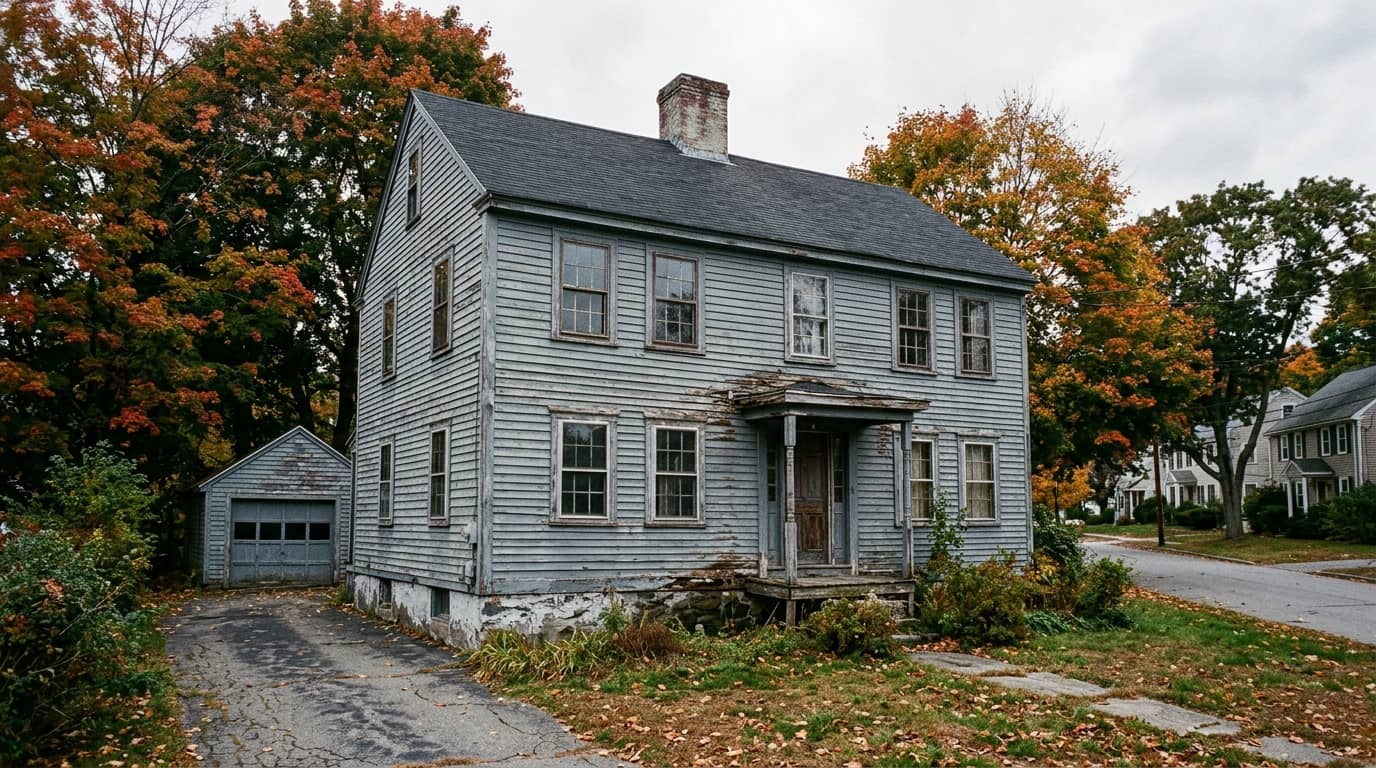
Siding tells you when it’s wearing out. The signs are physical and you can see most of them from the yard: panels that have warped or buckled, cracks and holes, wood that gives when you press it, paint that peels almost as soon as it’s applied, fading that leaves a chalky residue, and pieces that have worked loose.
The trick is reading them together. A single cracked panel is a repair. The same crack pattern on every wall is the material telling you it’s done. This article goes sign by sign so you can tell the two apart, and it builds on our full guide to whether you need new siding.
Why is my siding warping or buckling?
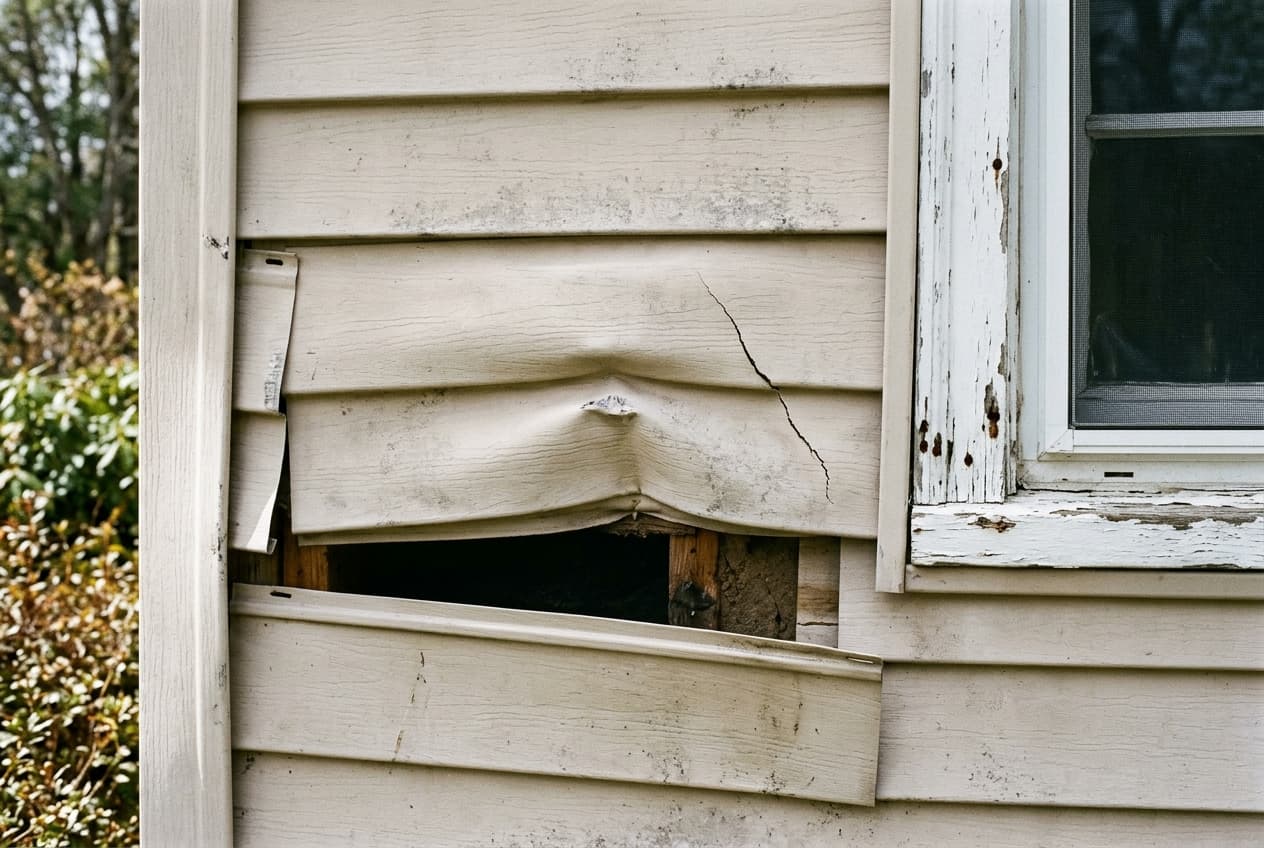
Waves, bulges, and panels pulling away from the wall are among the clearest signs something is wrong. On vinyl, the usual cause is heat and movement: vinyl expands and contracts with temperature, so it has to be nailed loosely enough to slide. Per the Vinyl Siding Institute’s installation guidance, panels nailed tight buckle when summer heat has nowhere to go. A neighbor’s energy-efficient windows can also focus enough reflected sun to distort one patch.
On wood and engineered wood, warping is almost always moisture. Boards that have taken on water swell, cup, and pull their nails, and siding that bulges outward on any material can mean a wet wall pushing from behind. One distorted panel is a fix. A whole wall of waves points to an installation problem or something happening underneath.
What do cracks, holes, and loose panels mean?
Cracks are open doors for water. On vinyl they tend to show up after a cold snap, when the material is brittle and an impact that would have bounced off in July splits it in January. Small round holes are usually hail, a stray rock from the mower, or a woodpecker. Long splits along the grain of wood or engineered wood mean the board has been wet and dry too many times. Consumer Reports notes impact resistance is one of the biggest differences between siding products, and older, thinner vinyl cracks most readily once it has aged.
Loose pieces belong in the same family. Panels that rattle in the wind or have popped their lock, corner posts separated from the wall, lifted J-channel, and caulk pulled away around windows all leave the sheathing exposed to wind-driven rain. A few scattered cracks or one unlocked panel is a repair. Cracks that follow a pattern across the house, especially on the south and west sides, mean the material has lost the flexibility it needs to survive a New England winter, and a panel that snaps when you re-lock it is telling you the same thing.
Seeing a few of these signs?
Our free in-person siding assessment looks at the actual condition, including the spots you can’t see from the driveway, and tells you honestly whether it’s a repair, a replacement, or fine for now.
Get a free siding assessmentHow do I check for rot and soft spots?
This is the sign worth getting your hands on. Press firmly on wood or engineered wood siding near the ground, at the bottom corners of windows, and where a deck or porch roof meets the wall. Sound siding pushes back. Rotting siding gives, flakes, or feels spongy. As the EPA’s moisture-control guidance for buildings explains, wood that stays wet loses its structure and rarely dries out on its own once water has a path in.
Rot almost never stays in one board, and its clues often show up indoors first: stains or bubbling paint on the inside of an exterior wall, a musty smell in one room, drywall that feels soft near a window, or sills that stay damp. New drafts and heating bills that climbed without a rate change can point the same way, which we take up in whether old siding raises energy bills. A soft spot moves the decision faster than any other visible sign, because the honest answer depends on whether water has been getting in behind the siding and for how long.
What do peeling paint and chalky fading mean?
Paint that has simply aged out is a repaint, not a siding problem. The sign to watch is paint that bubbles, blisters, or peels within a year or two of a good job. On wood and engineered wood, that usually means moisture is moving through the siding from behind and pushing the finish off from underneath. No amount of scraping and repainting fixes that, because the water is still there.
Fading works the same way. Even, gradual softening of the color is normal and mostly cosmetic. Uneven fading, where one wall looks a decade older than the others, and chalking, a white powdery residue that comes off on your hand, mean the outer layer of the material is breaking down. On older vinyl that comes with brittleness, so panels that used to flex now crack under a ladder or a hard frost. Fading alone rarely decides anything, but fading plus cracking is a material at the end of its life. Mold or mildew that returns within weeks of cleaning belongs on this list too, since it usually means moisture is feeding it from behind; we cover what mold and algae on siding actually mean separately.
“Homeowners show us the crack they can see from the driveway. We go around back and kneel down at the base of the weather side, because that’s where the snow sat all winter. If the siding is sound there, it’s usually sound everywhere. If it’s soft there, the crack out front was never the real story.”
Global Roofing field team — Massachusetts in-home siding assessments
How many signs is enough?
There is no magic number, and age alone isn’t a verdict. Two things decide it. The first is spread: damage on one wall or from one event is a repair, while the same problem on the weather side, around the windows, and near the ground is the material wearing out everywhere at once. The second is cause: a branch through a panel is bad luck, but paint that fails from behind or a soft spot at the base means water is in the wall, and that moves the decision toward replacement no matter how the rest of the house looks.
Wind and impact damage follows the same rule. A nor’easter that tears off panels or hail that pits one wall is a single-event problem, and on sound siding it’s a repair (and possibly an insurance matter — check with your insurer). It becomes a replacement question only when the storm reveals material that was already brittle or worn — see when a repair is enough and when it isn’t . Two or three signs on several walls means it’s time for a real look, and if replacement is the answer, our guide to hiring a siding contractor covers what a quality install looks like.
If fading brought you here, see does vinyl siding fade.
When replacement is the answer, price comes next: why siding quotes vary so much and how to get a custom siding design and quote for your home.
Frequently asked questions
What are the most common signs that siding needs to be replaced?
Warping or buckling, cracks and holes, rot or soft spots, paint that fails soon after it’s applied, chalky fading, and loose or missing panels. One in one spot is a repair. The same signs on several walls is a pattern, and a pattern points to replacement.
Why is my vinyl siding warping or buckling?
Vinyl has to be nailed loosely enough to expand in the heat. Panels nailed tight buckle in summer. Sunlight reflected off a neighbor’s windows can warp one spot, and moisture behind the wall can push panels out. One panel is a fix; a whole wall of waves points to an install or moisture problem underneath.
Does peeling paint mean I need new siding?
Not by itself. Old paint is a repaint. Paint that bubbles or peels within a year or two of a good job, especially on wood or engineered wood, usually means moisture is coming through from behind, and the moisture is the problem to solve.
How many signs of damage mean it’s time to replace siding?
What matters is spread and cause, not a count. Damage on one wall or from one event is a repair. The same problem across the house is the material wearing out. Any sign of water behind the siding moves the decision toward replacement.
How we wrote this guide
This article reflects what Global Roofing sees on real Massachusetts and New England homes, checked against Vinyl Siding Institute installation guidance, Consumer Reports’ siding testing, and EPA guidance on moisture control in building walls. It was reviewed for accuracy by a licensed Massachusetts contractor on our team. See our full editorial process for how we research and update every article.
Sources
- Vinyl Siding Institute — installation and maintenance guidance (fastening, expansion, and warping). vinylsiding.org
- Consumer Reports — Siding Buying Guide (impact resistance, fading, and durability by material). consumerreports.org
- U.S. Environmental Protection Agency — Moisture Control Guidance for Building Design, Construction and Maintenance (how water gets into walls and why trapped moisture damages them). epa.gov
- This Old House — All About Siding (repair, replacement, and warning signs). thisoldhouse.com