

Key Takeaways
- Repair when the damage is confined to one area, has a clear cause, and the siding around it is sound with real life left.
- Replace when the same problem shows up on several walls, the material is near the end of its service life, or water has gotten behind the siding.
- The most expensive path is usually the middle one: repairing siding that’s already done, one spot at a time, without ever fixing the wall.
- Re-siding a single wall is legitimate when that elevation has worn out ahead of the rest — common on the weather side of a New England home.
Should you repair or replace damaged siding?
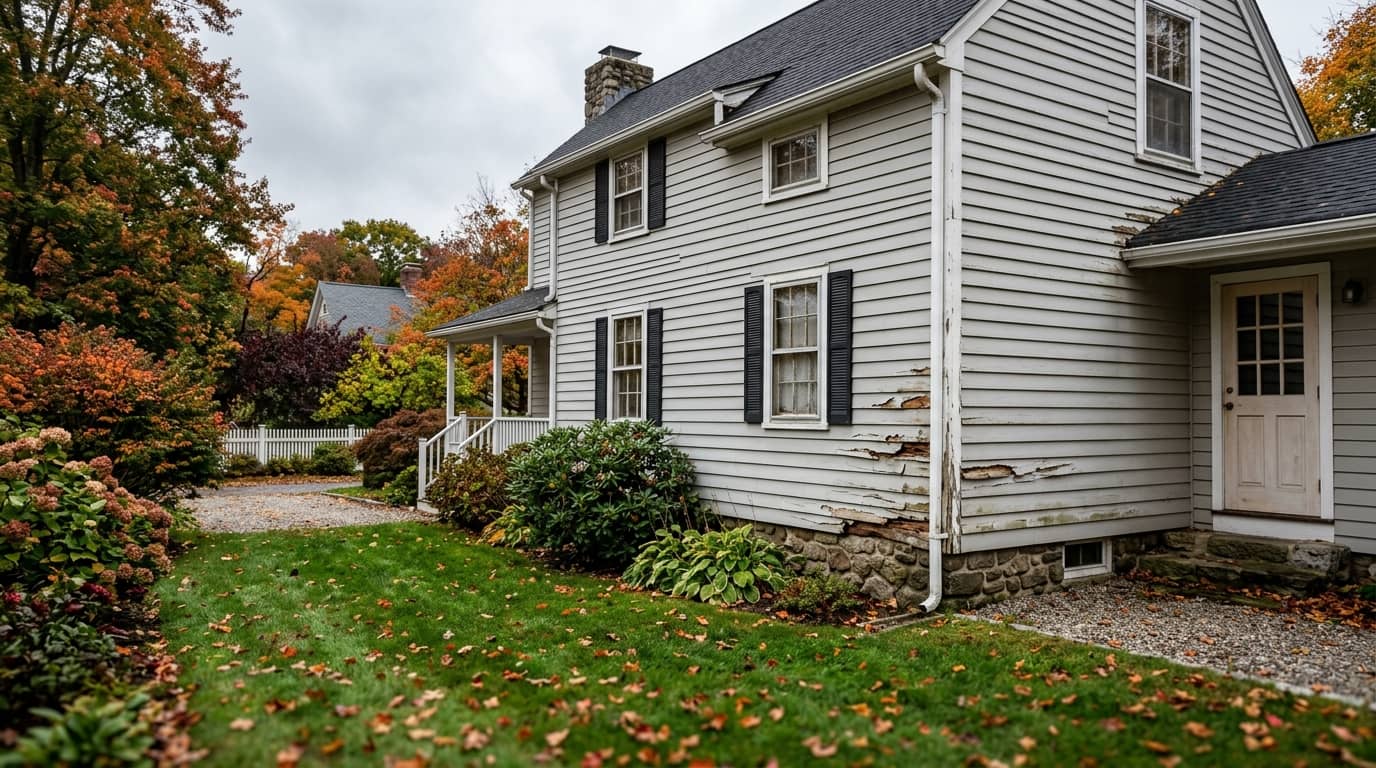
Repair it when the problem is isolated and the siding has life left. Replace it when the problem is a pattern, the material is worn out, or water has found its way behind it. Almost every case sorts itself out once you ask a handful of questions in the right order, and the answers are things you can see from the yard.
That’s the same split at the heart of our full guide to telling whether you need new siding. This article walks through the decision itself: what to look at, what each answer means, and where homeowners tend to get it wrong.
| Points to a repair | Points to replacement |
|---|---|
| Damage is in one area, on one wall | The same problem appears on several walls |
| A single event caused it — impact, wind, a branch | The material is wearing out on its own |
| The siding around it is sound with years left | The siding is near the end of its service life |
| The wall behind it is dry | Water, rot, or soft sheathing behind the siding |
| This is the first fix in years | You’ve repaired it two or three times already |
| Matching pieces are available | The color or profile is discontinued and patches show |
Is the damage in one spot or everywhere?
This is the question that settles most cases. Walk the whole house, not just the wall you noticed. One cracked panel by the driveway is an accident. Cracked, warped, or peeling siding on the south wall, the west wall, and around three windows is the material telling you it’s tired. A repair fixes a spot; it doesn’t change the condition of everything around it, so patching the first visible piece of a house-wide pattern buys a little time and nothing more. The signs that siding is failing tend to arrive together, which makes the pattern easy to spot.
Weigh how much life is left at the same time. A repair on sound siding buys real years; a repair on siding near the end of its run buys months. Vinyl, engineered wood, and fiber cement each wear in their own way, and New England winters shorten all of them. How long siding lasts here covers each material, but the short version is that condition beats age: faded color, brittle edges, and paint that won’t hold are past the point where a repair makes sense, whatever year it went on.
What caused the damage?
Damage with a clear, one-time cause is the best candidate for repair. A fallen limb, a ladder, a lawnmower throwing a rock, a grill parked too close to a vinyl wall, a single nor’easter that peeled off a few panels. The siding was fine before the event, so once the damaged pieces are replaced it’s fine again.
Damage with no single cause is different. Warping that crept in over several summers, rot that showed up at the base of the wall without a leak to explain it, paint that fails a year after every repaint. That’s wear, and wear doesn’t stop at the piece you replace.
If storm or impact damage is part of the picture, it may also be an insurance matter; coverage depends on your policy and the cause, so check with your insurer or agent before deciding.
Want a straight answer on repair vs. replace?
Our free in-person assessment looks at the whole house, checks for water behind the siding, and tells you honestly whether this is a repair, a replacement, or fine for now.
Get a free siding assessmentHas water gotten behind the siding?
This is the question that overrides the others. Siding is the outer layer of a wall system. Behind it sit a water-resistive barrier (the house wrap) and the sheathing, the boards or panels the siding is nailed to. When siding fails or was installed poorly, water gets past it and has nowhere to go. It sits against the sheathing and starts the rot, mold, and soft framing that turn a siding job into a wall job.
The tells: siding that bulges or feels soft when you press it, staining below windows, swollen or crumbling trim, a musty smell or stains on the inside of exterior walls. If any of those are present, a surface repair papers over the real problem. How to tell if water is getting behind your siding goes through the signs inside and out, and what a pro checks.
Are you repairing the same house again?
The costliest path isn’t repair or replacement. It’s the middle: patching siding that’s genuinely done, one wall at a time, for several years. Each fix feels reasonable on its own; together they add up to a meaningful share of a proper re-side, and the wall is still failing at the end of it.
A useful rule: if this is the second or third repair on the same house in a couple of years, stop treating them as separate problems. They’re one problem showing up in different places. At that point it’s worth understanding what actually drives the price of a full replacement so you’re comparing the real options instead of the next patch.
Two cost-side reads pair with this decision: what can surface once the old siding comes off, and, if you’ve been offered an install over the old siding, what pop-on siding is and when it makes sense.
“The call we hate making is the third repair on the same house. By then the homeowner has spent real money and the wall is no better off. If we’d had the honest conversation on the first visit, they’d have put that money toward the actual fix.”
Global Roofing field team — Massachusetts in-home siding assessments
When does re-siding one wall make sense?
There’s a middle option that’s legitimate more often than people think. The weather side of a New England home, usually the south or west wall, takes far more sun, wind-driven rain, and freeze-thaw than the others. It can be worn out while the north wall still looks new. Re-siding that one elevation with the closest available match is a reasonable, honest fix. It stops being a good fit when the other walls are only a year or two behind, because you’d be back doing the rest soon anyway, with a seam where two ages of siding meet.
Matching is the practical wrinkle in every partial job. Siding fades and manufacturers retire colors and profiles, so new panels in the “same” color can read brighter than the ten-year-old wall around them. A good installer pulls matching pieces from a hidden spot and puts the new ones there. When that isn’t possible on a front elevation, replacing the wall is a fair call if the rest of it is worn too. Rotted wood siding follows the same logic: a few rotted boards at the base of one wall are a repair; rot at the base of every wall means the whole system is holding water.
If the answer turns out to be replacement, the next question is who does it and what the job involves. What a siding project actually looks like, from tear-off to the final walk-through, is a good place to start.
Frequently asked questions
Can you replace just a few pieces of siding?
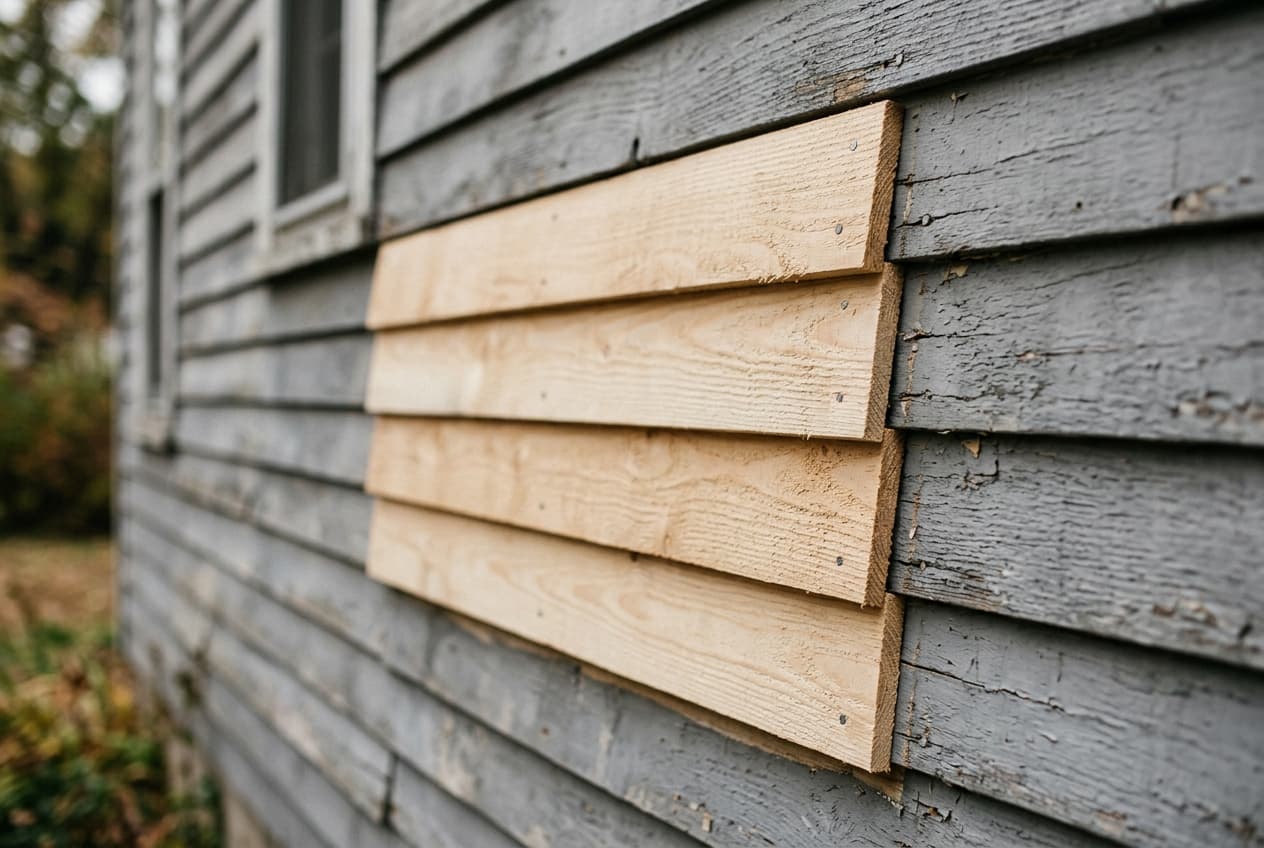
Yes. Individual vinyl panels, clapboards, and fiber cement planks can be swapped when the damage is small and the wall behind is dry. Matching is the catch: siding fades and colors get discontinued, so a good installer pulls matching pieces from a hidden spot and uses the new ones there.
How do I know if siding damage is bad enough to replace?
Look at the pattern, not the spot. The same problem on several walls means the material is wearing out. One area with a clear cause is a repair. Any sign of water behind the siding, such as soft sheathing, interior stains, or rot at the base, pushes the answer toward replacement.
Is it worth repairing old siding?
A repair on sound siding buys real years. A repair on siding near the end of its life buys months before the next spot fails, and those repairs add up without fixing the wall. Two or three repairs in a couple of years is the material telling you it’s done.
Does homeowners insurance cover siding repair?
Sometimes, when a specific event caused it, such as wind, hail, or a fallen tree. Wear and age generally aren’t covered. Coverage depends on your policy and the cause, so check with your insurer or agent before you decide.
How we wrote this guide
This article reflects what Global Roofing sees on real Massachusetts and New England homes, cross-checked against independent guidance from Consumer Reports and This Old House and Vinyl Siding Institute and manufacturer resources on siding repair and replacement. It was reviewed for accuracy by a licensed Massachusetts contractor on our team. See our full editorial process for how we research and update every article.
Sources
- This Old House — All About Siding (repair, replacement, and warning signs). thisoldhouse.com
- Consumer Reports — Siding Buying Guide (materials, durability, and condition). consumerreports.org
- Vinyl Siding Institute — installation and maintenance guidance for vinyl siding. vinylsiding.org
- James Hardie — Deciding to Re-Side (when repair isn’t enough). jameshardie.com