


Key Takeaways
- Pop-on siding is a method, not a product. New panels, usually vinyl, are installed over the siding already on the house and snapped together, sometimes over furring or a foam layer.
- It saves real labor and disposal up front. That’s the whole pitch, and it’s true.
- What it gives up is the wall itself: any rot or moisture stays sealed in, the house wrap and flashing can’t be rebuilt properly, and windows and trim end up buried behind an extra layer.
- Going over can be reasonable on a flat, dry, sound wall that a pro has actually checked. On older New England homes, a tear-off is usually the better long-term call.
- Cheaper today and cheaper over the life of the wall are two different questions. Ask both.
What is pop-on siding?
Pop-on siding is what a lot of homeowners are hearing about right now, and the name makes it sound like a product. It isn’t. It’s an installation method: instead of removing the old siding, the crew installs new panels directly over it. The panels lock together along their bottom edges, which is the “pop” in the name. Sometimes thin wood strips called furring go on first to give the new panels a flat surface to sit on, and sometimes a layer of foam does the same job.
Most of the time the new layer is vinyl or insulated vinyl. The old siding, whatever it is, stays on the house underneath, along with whatever condition it’s in. That’s why our guide to what drives the cost of a siding project treats the tear-off as the single biggest unknown on the job.
The pitch is real, at least on day one. Tearing off old siding is slow work and the old material has to be hauled away. Skip both and the job is faster, takes less labor, needs no dumpster, and never leaves the house stripped bare. A contractor who leads with those points isn’t lying to you. The fair question is what you’re trading for the lower number, and the answer lives behind the old siding.
What does pop-on siding give up?
Siding is the visible layer of a wall system that also includes the sheathing, a water-resistive barrier (house wrap), and the flashing at every window, door, and roofline. Covering the old siding leaves all of that exactly as it is. In practice:
- It seals in whatever is already wrong. On older homes, years of small leaks leave rot, soft sheathing, and trapped moisture behind siding that looks fine from the street. A new layer hides it and lets it keep going. If you’ve seen stains inside or swollen trim outside, read how to tell if water is getting in behind your siding before you consider going over anything.
- The water management can’t be rebuilt. A proper re-side repairs the house wrap and integrates new flashing with the windows and doors so water sheds outward. With the old siding in the way, that work is skipped or done around the edges. Pop-on siding leaves that drainage layer untouched.
- It can run against the manufacturer’s specs. Vinyl siding manufacturers publish installation guides that spell out what the panels must be fastened to and how the wall behind them must be prepared. An install that skips those steps because the old siding is in the way puts the warranty at risk. This is one of the reasons who installs your siding matters as much as what you pick.
- Everything gets thicker. Two layers of siding stand out further from the wall than one. Windows and doors end up recessed, trim gets buried or has to be built out, and the finishing details get harder to do well.
- You’re paying to side a wall nobody inspected. A new exterior on top of an unknown one is a bet, and you don’t find out which kind until something goes wrong.
The only way to know what’s behind your siding is to look
Our free in-person assessment checks the wall where problems start, low on the weather side and around the windows, and tells you honestly whether going over is an option or whether the wall needs to come open.
If the pop-on pitch is also the lowest bid, read whether to hire the cheapest siding bid before deciding.
Get a free siding assessment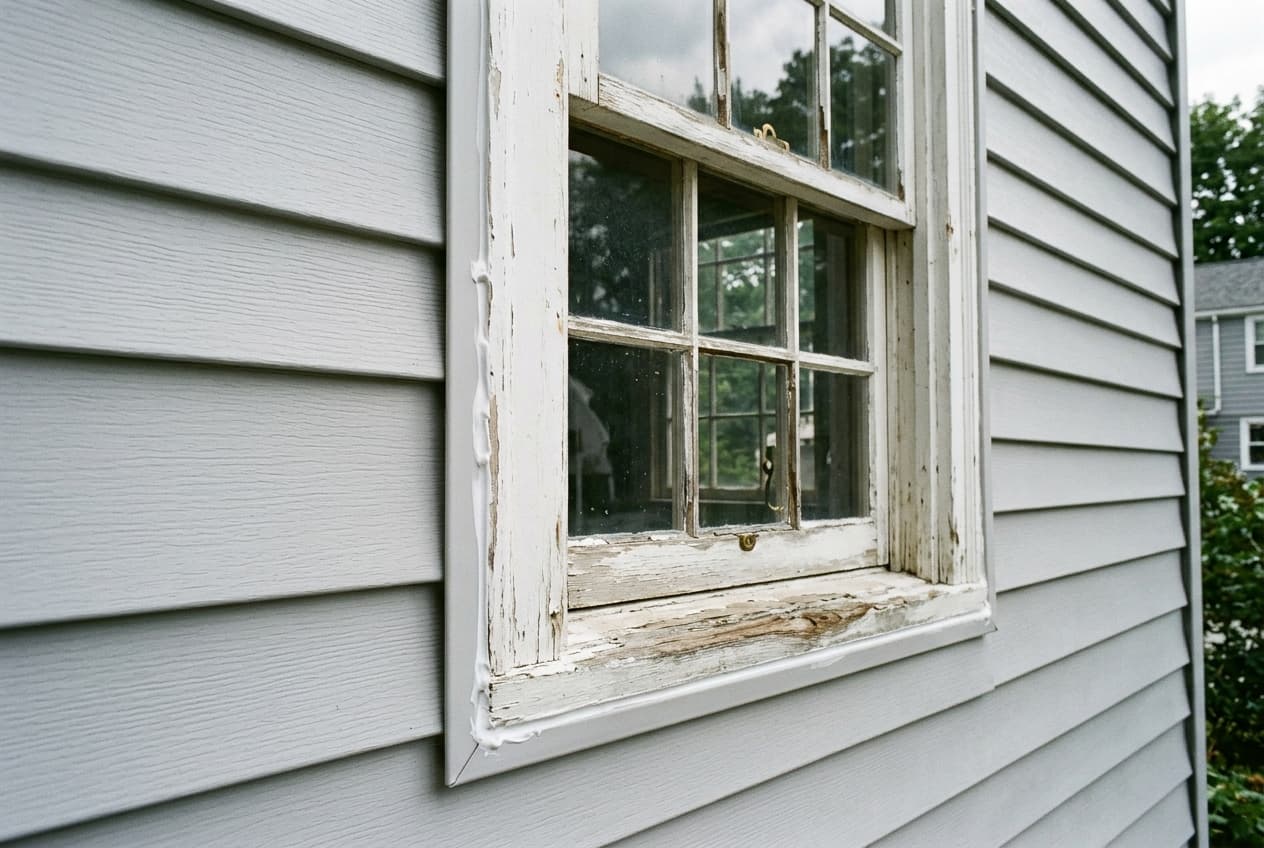
When can going over the old siding work?
We don’t think pop-on siding is never the answer. It can be a reasonable choice when all of the following are true, and a pro has actually confirmed them rather than assumed them:
- The existing siding is flat, tight, and dry, with no cupping, buckling, or loose pieces.
- The sheathing behind it has been checked at the usual trouble spots and is solid.
- There is no sign of moisture inside or out: no stains, no musty smell, no swollen trim, no soft spots.
- The manufacturer’s installation guide for the exact product allows installation over that substrate, and the crew will follow it.
- The windows, doors, and trim can be built out so the finished house doesn’t look like it’s wearing a coat that’s too big.
A newer home with sound siding can sometimes meet that list. A century-old New England house that has been through a hundred freeze-thaw winters rarely does.
“When we pull a course of old siding at the base of the weather side, we find something maybe half the time. Not always bad, but something. That’s the half you never learn about if you go over it. The other half is why I don’t say never.”
Global Roofing field team — Massachusetts in-home siding assessments
When is a tear-off the better call?
Most of the time on older housing stock, and any time the wall has shown a symptom. Tearing off is the only way to see the sheathing, replace what’s rotted, put down a proper barrier, flash every opening, and start on a clean, flat wall. It costs more because it is more work, and it’s the version of the job the manufacturer’s guide describes.
| Going over the old siding | Tearing off first |
|---|---|
| Lower up-front cost: no strip-out, no disposal. | Higher up-front cost: real labor and a dumpster. |
| The wall behind stays unknown and untouched. | The wall gets seen, and anything rotted gets fixed. |
| House wrap and flashing stay as they were. | New barrier and flashing integrated with every opening. |
| Extra thickness at windows, doors, and trim. | Openings and trim finish at their proper depth. |
| Warranty depends on whether the spec allows it. | The install the warranty was written for. |
| A later problem means removing two layers. | A later problem means removing one. |
The tear-off is also where the unknowns turn into line items in the scope. We cover what tends to surface once the old siding is off in the hidden costs of a siding project, and how a good contractor handles them before the work starts rather than mid-job.
Is pop-on siding actually cheaper?
On the day the quote is written, yes, because labor and disposal are a real share of any siding project. Over the life of the wall the answer is less clear. Moisture trapped behind two layers doesn’t get cheaper to fix with time, a simple patch becomes a two-layer excavation, and a buyer’s inspector may flag doubled-up siding at closing.
That’s why two quotes for “the same” vinyl job can land far apart: one includes the tear-off, the barrier, and the flashing, and the other doesn’t. Our piece on why siding quotes vary so much walks through how to line them up, and how your home’s size and shape set the price explains the part of the number that doesn’t change either way. A clear estimate gives you one total with a written scope that says plainly whether the old siding is coming off. If it’s not, ask why, and ask what was checked.
Frequently asked questions
What is pop-on siding?
An installation method, not a product. New siding panels, usually vinyl or insulated vinyl, go directly over the siding already on the house and snap together along their locking edges, sometimes over furring strips or a foam layer. The old siding stays underneath.
Is pop-on siding cheaper than tearing the old siding off?
Up front, usually yes, because it skips a day or more of labor and the disposal. Over the life of the wall it can cost more: anything wrong behind the old siding stays there, the barrier and flashing can’t be rebuilt properly, and later problems mean removing two layers instead of one.
Can you put new vinyl siding over old siding?
Often you physically can. Whether you should depends on what’s underneath. It only makes sense when the old siding is flat, tight, dry, and sound, the sheathing is confirmed solid, and the manufacturer’s installation guide allows it. On older New England homes that’s the exception.
Does installing siding over existing siding void the warranty?
It can. Manufacturer coverage depends on the siding being installed to the written specification, which covers the substrate, fastening, and water management behind the panels. Ask to see the installation guide for the exact product before agreeing to go over.
How we wrote this guide
This article reflects what Global Roofing finds when it opens up real Massachusetts and New England walls, checked against the Vinyl Siding Institute’s installation manual, CertainTeed’s vinyl siding installation guide, and Building Science Corporation’s guidance on rain control and drainage behind cladding. It was reviewed for accuracy by a licensed Massachusetts contractor on our team. See our full editorial process for how we research and update every article.
Sources
- Vinyl Siding Institute — Vinyl Siding Installation Manual (substrate preparation, fastening, and re-siding over existing walls). vinylsiding.org
- CertainTeed — Vinyl Siding Installation Guide (manufacturer requirements the warranty depends on). certainteed.com
- Building Science Corporation — BSD-013: Rain Control in Buildings (cladding as a rain screen and the drainage layer behind it). buildingscience.com
- This Old House — All About Siding (replacement versus covering over, and what to check first). thisoldhouse.com