
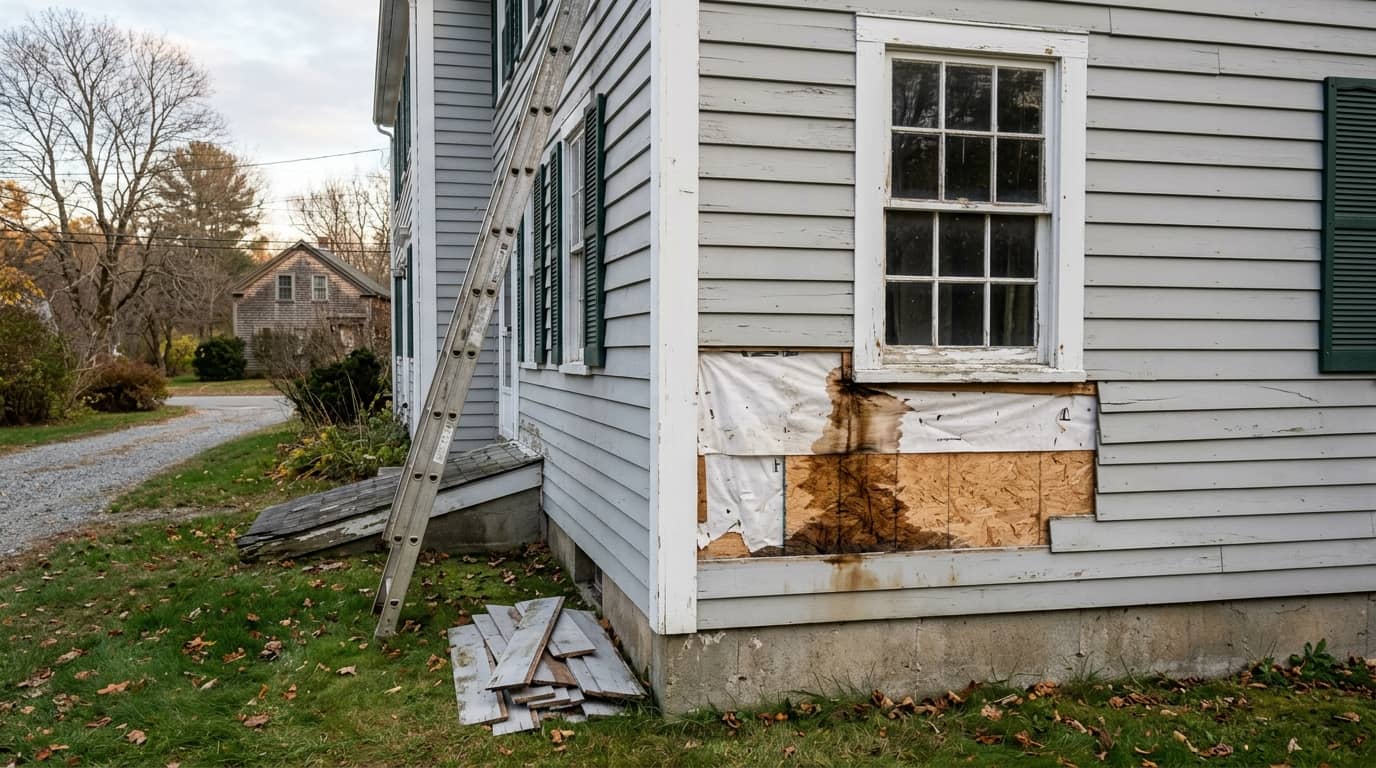

Key Takeaways
- The first signs of water behind siding are usually inside the house: a stain or bubbling paint on an exterior wall, a musty smell in one room, a window sill that never quite dries.
- Siding is the outer layer, not the seal. The house wrap and flashing behind it do the real work of keeping water out of the wall, and they can fail while the siding still looks fine.
- Water almost always gets in at the transitions: window and door corners, where a roof meets a wall, pipes and vents, and the bottom edge where snow sits.
- A proper check reads the sheathing with a moisture meter and, when the evidence calls for it, pulls a course of siding to see what’s underneath. The question is whether the wall is sound, not just the siding.
What are the signs inside the house that water is behind the siding?
Water that gets past siding rarely announces itself outside. It runs down inside the wall, soaks into the sheathing, and shows up in a room. These are the signs worth taking seriously:
- A stain on an exterior wall with no plumbing nearby. Tan or brown, often below a window or near the floor, and darker after a storm.
- Paint that bubbles or drywall that feels soft when you press it. Moisture is pushing through from behind.
- A musty smell in one room that cleaning doesn’t fix. That is damp wood or insulation somewhere in the wall.
- A window sill or trim that stays damp, swells, or shows black speckling at the corners.
Any one of these can have another cause. Two or three on the same wall usually mean water from outside, the sign that matters most in our full guide to whether you need new siding, and the one that turns “keep an eye on it” into “let’s find out.”
What does water damage behind siding look like from outside?
Once you know which wall to look at, check the same area outside at eye level and below. The tells cluster around openings and the base of the wall:
- Dark streaks or staining running down from the bottom corners of a window or door.
- Trim that is swollen, split, or peeling while the trim on other walls is fine.
- Soft or crumbling boards low on the wall, behind shrubs, or where a deck meets the house. Press gently with a thumb; sound siding pushes back.
- Siding that bulges, waves, or won’t sit flat in one spot. Wet sheathing swells, and the siding over it moves.
- Mildew that keeps returning on one section within weeks of cleaning is often fed from behind, as we explain in what mold and algae on siding actually mean.
Cracked, loose, or missing pieces belong on the broader list of signs your siding is wearing out. The harder cases are walls where the siding looks fine and the damage is entirely underneath, and that comes down to how a wall is built.
How does a wall keep water out?
Siding is not designed to be watertight. Wind-driven rain will always get past it somewhere, at a seam, a nail, a corner, and the wall is built to expect that. Three layers do the work:
- Siding sheds most of the rain and takes the sun and the weather. It is the rain screen, not the seal.
- The water-resistive barrier, usually called house wrap, is the sheet behind the siding. It catches whatever gets past the siding and drains it back out at the bottom. Building scientists call this the drainage plane.
- Flashing is the bent metal or membrane at every interruption in the wall: windows, doors, roof-to-wall joints, pipes. It steers water out over the house wrap instead of behind it.
Behind all of that is the sheathing, the plywood or OSB panels the wall is built on. When the outer layers work together, the sheathing stays dry. When the house wrap is torn or the flashing is missing or lapped the wrong way, water gets behind the drainage plane with nowhere to go but into the wood.
Find out what’s really going on in the wall
The only way to know whether water is behind your siding is to check. Our free in-person assessment reads the wall with a moisture meter and tells you honestly whether it’s a repair, a replacement, or fine for now.
Get a free siding assessmentWhere does water usually get behind siding?
Almost never in the middle of a wall. It gets in where the siding is interrupted and the flashing has to do its job:
- Window and door corners. The most common entry point. Flashing that was skipped or lapped the wrong way sends every rain straight into the wall below the window.
- Where a roof edge meets a wall. A small angled piece called kick-out flashing is supposed to throw roof runoff into the gutter. When it is missing, that one spot can rot a wall cavity floor to ceiling.
- Pipes, vents, deck ledgers, and fixtures. Anything that passes through or bolts to the wall needs flashing. Caulk alone dries out in a few winters.
- The bottom edge. Snow against the wall and splash-back keep the lowest courses wet for weeks. Rot starts low and climbs.
This is why one house can have one bad wall and three fine ones: the weather side takes the water, the others never see it.
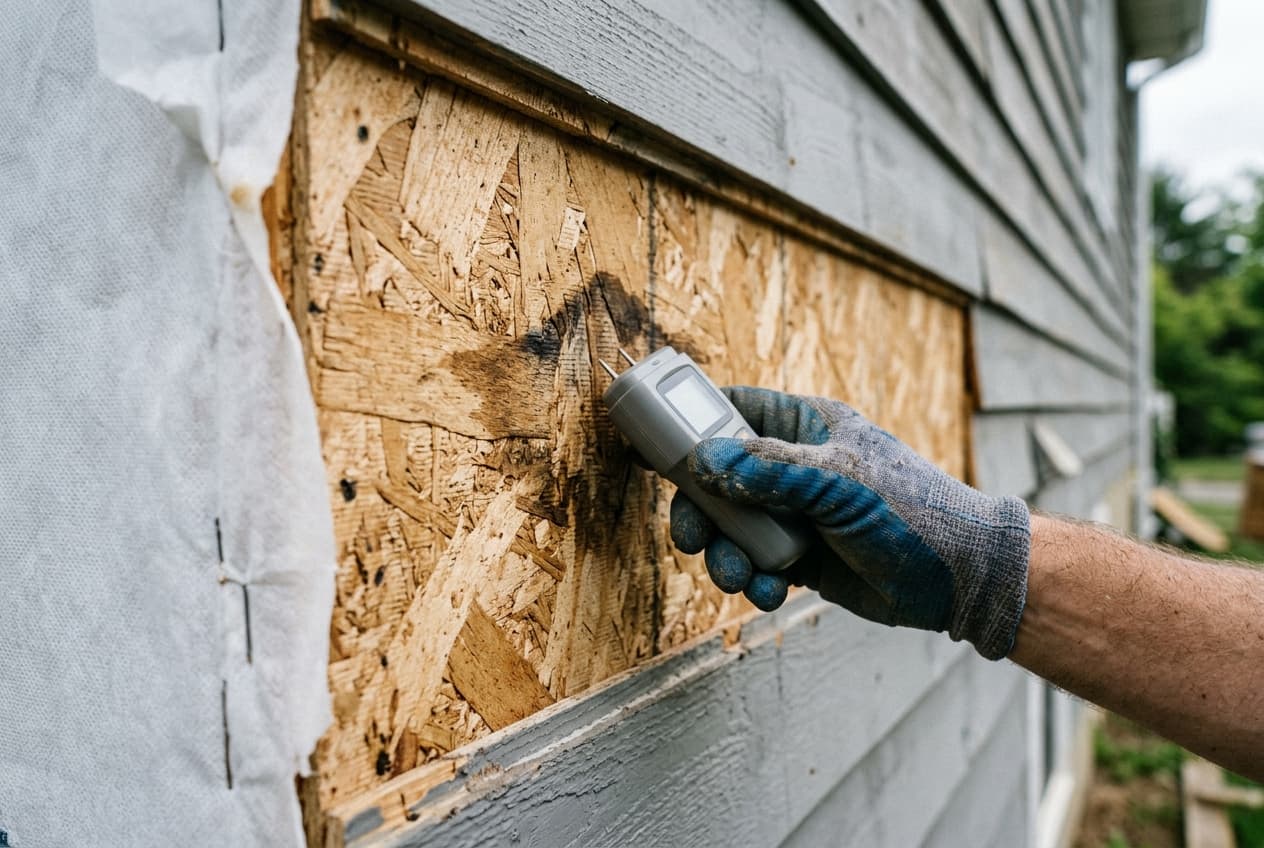
What does a pro check to find water behind siding?
A proper check answers one question: is the wall behind the siding still sound?
- Read the pattern first. Where the stains are inside, which wall faces the weather, what sits above the spot. That narrows a whole house to a few square feet.
- Meter the sheathing. A moisture meter reads how wet the wood is. Dry sheathing under stained siding is a very different situation from wet sheathing under clean siding.
- Probe the suspect spots. Trim corners, sills, the base of the wall, and below any roof-to-wall joint. Wood that gives under a probe is past the surface stage.
- Look at the flashing. At windows, doors, and roof edges: is it there, and does it lap so water runs out over the house wrap rather than behind it?
- Open the wall if the evidence calls for it. Pulling a course or two of siding near the damage shows the house wrap and sheathing directly, often the only way to know whether this is a flashing repair or a rebuild.
What the check finds sets the scope. Sound sheathing and a bad window flashing is a targeted repair. Soft sheathing on one wall is a partial re-side with new sheathing under it. Wet wood on three sides is a different conversation. The same flashing and house wrap details also separate a good installer from a bad one, which our guide on why the installer matters more than the material covers.
Timing matters because wet sheathing doesn’t dry out once siding is holding the moisture in. Rot spreads along the sill and up the studs, and wet insulation stops insulating, often noticed first as a colder room and a higher energy bill. Caught early, it’s flashing and a few courses. Caught late, it’s sheathing, framing, and insulation, which our guide to what drives siding cost explains. Knowing how to tell if it’s time to re-side starts with knowing what is behind it.
For what a wet wall can add, see the hidden costs of a siding project.
“The siding is the part everyone stares at, and it’s the part that matters least when there’s water in the wall. I’ve pulled perfect-looking vinyl off sheathing you could push a finger through. The meter and the flashing tell the story. The siding just covers it up.”
Global Roofing field team — Massachusetts in-home siding assessments
Frequently asked questions
What are the signs that water is getting behind siding?
Inside: stains, bubbling paint, or soft drywall on an exterior wall, a musty smell in one room, or a damp window sill. Outside: dark streaks below windows, swollen trim, soft boards low on the wall, and siding that bulges. One sign can have another cause; two or three on the same wall usually mean water is getting past the siding.
Can water get behind siding without any damage showing on the outside?
Yes, and it often does. If the house wrap or flashing behind the siding has a gap, water can run down inside the wall for years while the siding looks fine. That is why the first sign is often a stain or a smell indoors rather than anything visible from the yard.
How does a contractor check for water behind siding?
By reading the stain pattern, metering the sheathing for moisture, probing trim and the base of the wall, checking how the flashing is lapped, and, where the evidence warrants, removing a course of siding to see the house wrap and sheathing directly. The point is to learn whether the wall is sound, not just the siding.
Is water behind siding an emergency?
Not like a burst pipe, but it should not wait a season. Wet sheathing does not dry out on its own once siding is holding the moisture in, and rot spreads from the entry point. Finding the source in the fall is a much smaller job than opening a wall after another New England winter.
How we wrote this guide
This article reflects what Global Roofing finds behind siding on real Massachusetts and New England homes, checked against Building Science Corporation guidance on rain control and drainage planes, InterNACHI inspection guidance on roof-to-wall flashing, and the Vinyl Siding Institute’s installation standards. It was reviewed for accuracy by a licensed Massachusetts contractor on our team. See our full editorial process for how we research and update every article.
Sources
- Building Science Corporation — BSD-013: Rain Control in Buildings (drainage planes and water-resistive barriers). buildingscience.com
- InterNACHI — Kick-Out Flashing (why roof-to-wall intersections leak). nachi.org
- Vinyl Siding Institute — installation standards (house wrap, flashing, and drainage behind siding). vinylsiding.org