

Key Takeaways
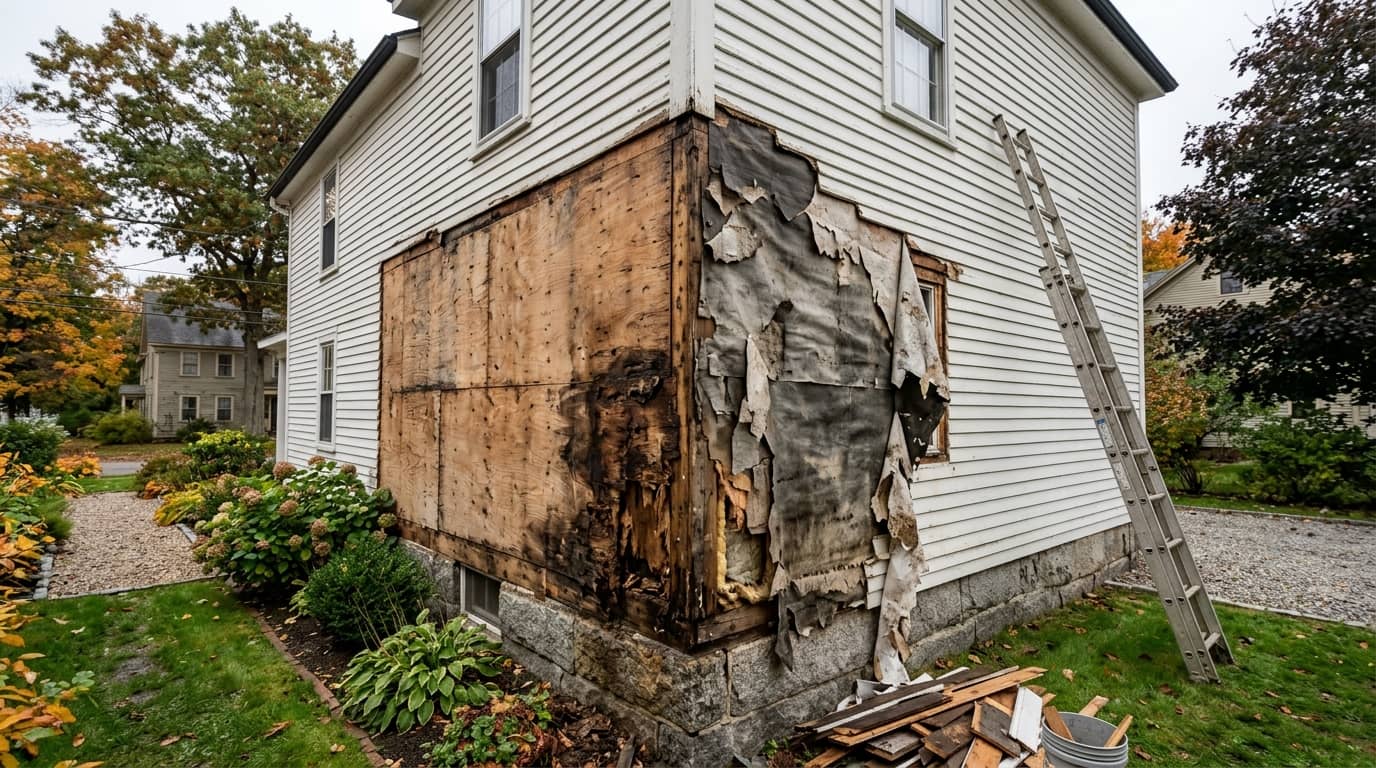
- The biggest hidden cost in siding is what the old siding has been covering — rotted sheathing, framing, and house wrap that failed or was never installed.
- Flashing at windows and doors, and the trim, soffit, fascia, and gutters around the walls, often have to be rebuilt or replaced along with the siding.
- On homes built before 1978, lead-safe work practices apply. Asbestos-cement siding is regulated removal work in Massachusetts. Both add care, time, and cost.
- Permits, disposal, and access — decks, air-conditioning units, landscaping — are part of every job, and a written scope should say so.
- None of this should be a mid-project surprise. An honest contractor talks it through before the work starts and puts the what-ifs in writing.
What hidden costs come up in a siding project?
Two siding prices for the same house usually differ in what each contractor has planned for once the old siding comes off. These are the costs that most often show up after the first day of a New England siding job:
- Rotted sheathing and framing behind the old siding, most often low on the wall and around openings.
- House wrap that has failed, or was never there on an older home.
- Window and door flashing that has to be rebuilt so the new wall sheds water correctly.
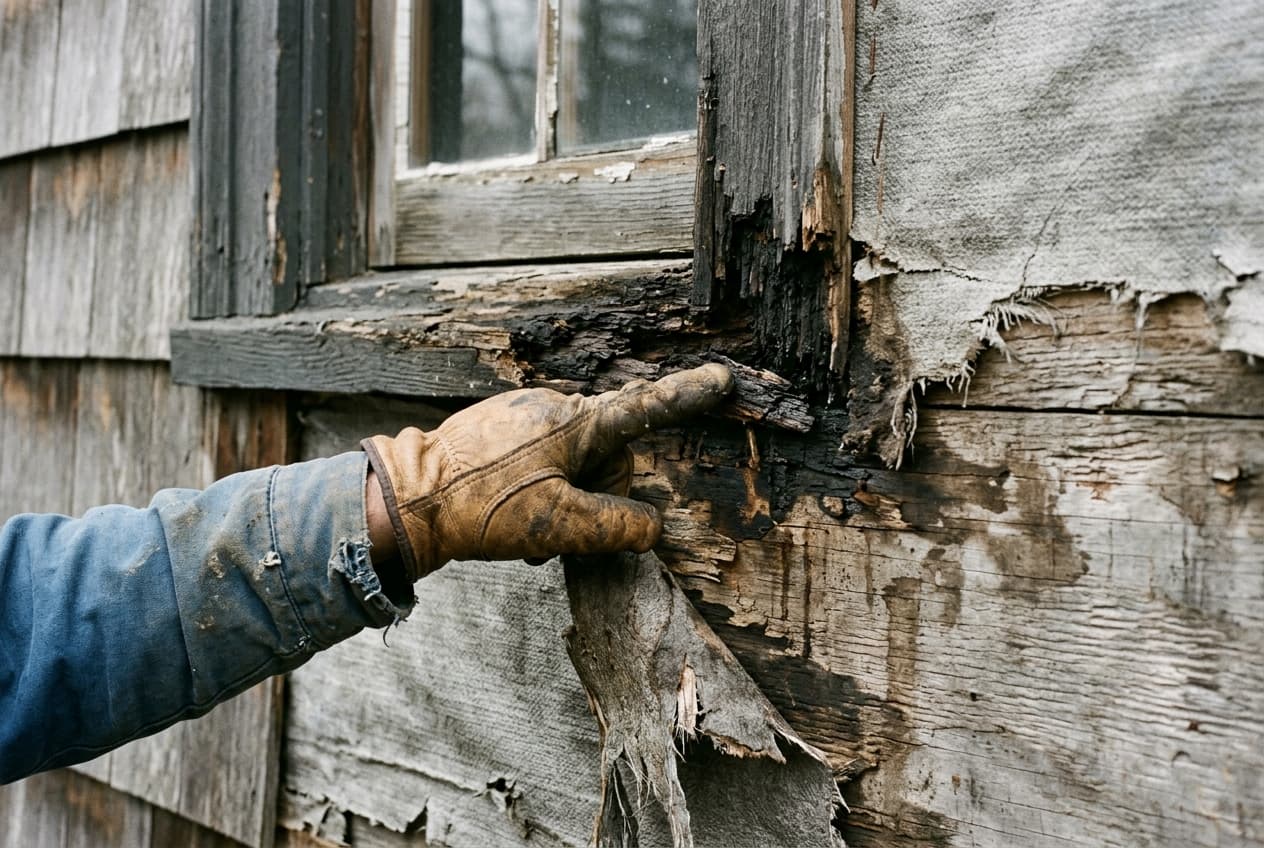
- Rotted trim, soffit, and fascia, and gutters that don’t survive removal.
- Lead paint on pre-1978 homes and asbestos-cement siding on some older ones — both come with rules.
- Permits, disposal, and access — the unglamorous work every project needs.
Each moves the total up. What matters is whether it was on the table when you got your price. Our full guide to what drives the cost of new siding covers the whole picture; this article takes the surprises one at a time.
What’s usually found once the old siding is off?
Siding is the outer layer of a system: behind it sit the house wrap, the sheathing, and the framing. When old siding has let water past for years, the damage is in those layers, where nobody can see it from the driveway. On New England’s older housing stock — much of it sided before modern house wrap and flashing, then worked over by decades of freeze-thaw and snow against the walls — that damage is common, which is why the pillar calls tear-off the big unknown behind the wall. The most common finds, in the order we see them:
- Soft or rotted sheathing at the base of the wall, below windows, and at corners. Damaged panels are cut out and replaced before anything new goes on.
- Rotted framing behind the worst sheathing — sills, studs, and the framing around openings. Less common, and the most involved repair.
- Failed or missing house wrap. Many homes sided before the 1990s have tar paper or nothing at all. A new barrier is part of doing the job right, not an upgrade.
- Flashing that has to be rebuilt. The pieces at every window, door, and roof-to-wall transition are where leaks start, and doing them correctly takes time at every opening.
If you’ve seen stains inside or swollen trim outside, some of this may already be underway. Our article on whether water is getting in behind your siding walks through the signs.
What about trim, soffit, fascia, and gutters?
Corner boards, window and door casings, soffit, and fascia all get disturbed by a re-side, and on an older home some of it is rotted or split. Tired trim next to new siding rarely looks right and often leaks at the joint, so most projects replace at least some of it — the pillar covers what rides along with the siding. Gutters are the quiet one: they hang on the fascia, often have to come down for the work, and older aluminum doesn’t always go back up straight. A complete scope says what happens to them.
What if the house has lead paint or asbestos siding?
Two situations on older homes come with rules, and the rules add care, time, and cost.
Lead paint (homes built before 1978). Painted clapboard and trim on pre-1978 homes may carry lead-based paint. Under the EPA’s Renovation, Repair, and Painting rule, a contractor disturbing it has to be certified and follow lead-safe practices: containing the work area, keeping dust and chips off the ground, and disposing of the debris correctly. It’s slower than a tear-off on a newer house, and it belongs in the scope from the start.
Asbestos-cement siding. Some mid-century New England homes are clad in asbestos-cement shingles. Left intact, they’re stable, which is why some projects side over them. Removing them in Massachusetts is regulated work: licensed abatement contractors, advance notification to MassDEP, and shingles handled and disposed of without breaking them up or bulk-loading them into a dumpster. Whether to remove or go over depends on the condition of the shingles and the wall behind them — the tradeoffs of going over are the ones we cover in our article on pop-on siding.
Find out what your walls are hiding
The only way to price a siding project honestly is to look at the actual house — the base of the walls, the openings, the age of what’s there. Our free in-person assessment does that and puts a clear, written scope in your hands.
Get a free siding assessmentDo permits, disposal, and access add to the cost?
Yes, and they should be in the price rather than added later.
- Permits and inspections. Re-siding a home in Massachusetts generally needs a building permit, and the inspection is your protection that the work meets code. A contractor who suggests skipping it is saving in the wrong place.
- Disposal. Old siding, trim, and rotted material have to be hauled away, and regulated materials have their own path. Dumpsters and tipping fees are real costs on every job.
- Access. Decks, air conditioning units, electrical and gas services, shrubs, and steep grades all slow the work, and so does staging for upper floors — our article on how home size and shape affect siding cost explains why two similar homes can price so differently.
How does an honest contractor handle surprises?
Nobody can promise what’s behind a wall. What a good contractor can promise is how it will be handled:
- Talk about it before the work starts. A real look at the base of the walls, the corners, and the openings, and a frank word about what the home’s age makes likely.
- Put the what-ifs in writing. Either an allowance for sheathing repair is built into the total, or the scope spells out a change order — a written approval you sign before any extra repair is made, not a bill afterward.
- Show you the damage. Photos of what was found and what was replaced, before it’s covered up again.
A price that leaves rot, flashing, lead-safe work, and disposal unmentioned isn’t cheaper — it’s incomplete. Our estimates are a single total with a full written description of the scope and the materials by brand, so the what-ifs are visible up front; the other reasons siding quotes vary so much get their own article. If storm or impact damage is part of your situation, check with your insurer first.
How those what-ifs should appear on paper — allowances, change orders, the permit — is in what a siding contract should include.
“The wall that worries us is never the one with the ugly siding. It’s the one that looks fine from the street and has had a slow leak under a window for fifteen years. We tell people before we start: here’s where we expect to find something, and here’s exactly what happens if we do.”
Global Roofing field team — Massachusetts in-home siding assessments
Frequently asked questions
What hidden costs come up in a siding project?
Rotted sheathing or framing, failed or missing house wrap, flashing that has to be rebuilt, rotted trim, soffit, and fascia, gutters that don’t survive removal, lead-safe practices on pre-1978 homes, regulated asbestos-cement removal, and the permit, disposal, and access work every job needs.
How do contractors handle rot found behind the siding?
The honest way is before the work starts: a written scope that says what happens if rot is found, as an allowance built into the total or a change order you approve before the repair is made. Avoid a low number that leaves it unmentioned.
Does old siding with lead paint cost more to replace?
It can. On homes built before 1978, federal rules require certified contractors and lead-safe practices for containment, cleanup, and disposal. That care takes time and adds to the total, but it protects your family and your yard.
Can you put new siding over asbestos siding?
Sometimes. Intact asbestos-cement shingles can be left in place and sided over. Removal in Massachusetts is regulated: licensed abatement contractors, advance notification to MassDEP, and careful handling and disposal. Either path affects the cost.
How we wrote this guide
This article reflects what Global Roofing finds behind the siding of real Massachusetts and New England homes, checked against EPA guidance on lead-safe renovation, MassDEP’s asbestos notification and work-practice requirements, Building Science Corporation’s guidance on how walls manage water, and This Old House’s siding coverage. It was reviewed for accuracy by a licensed Massachusetts contractor on our team. See our full editorial process for how we research and update every article.
Sources
- U.S. Environmental Protection Agency — Lead Renovation, Repair and Painting Program (certification and lead-safe work practices for pre-1978 homes). epa.gov
- MassDEP — Asbestos, Construction & Demolition Notifications (advance notification, licensed abatement, and handling requirements for asbestos-cement siding). mass.gov
- Building Science Corporation — BSD-013 Rain Control in Buildings (how walls manage water and why the layers behind siding matter). buildingscience.com
- This Old House — All About Siding (repair, replacement, and what to expect during a re-side). thisoldhouse.com