

Key Takeaways
- Siding quotes differ mostly in the parts you can’t see: whether the old siding comes off, what goes on the wall underneath, how windows and doors are flashed, and whether trim, soffit, and fascia are in the scope.
- Two quotes naming the same brand can describe very different projects. Grade, product line, and what surrounds the panels all change what you’re buying.
- A much lower number usually means something was left out — not that someone found a cheaper way to do the same job.
- How the number was made matters too. A price built from your home’s real measurements holds; a number guessed from the street tends to move later.
- Compare written scopes side by side, not bottom lines. A good estimate is one total plus a full description of the company, the scope, and the materials by brand.
Why do siding quotes vary so much?
Because a siding job isn’t a product with a sticker price. It’s a set of decisions about your walls, and two contractors can make them very differently while both calling the result “new siding.” One tears the old siding off, rebuilds the water management underneath, and re-flashes every opening. Another covers the old layer. The numbers are far apart because the projects are.
The gap is readable if you know where to look. Our full guide to what drives the cost of new siding covers the factors that set the price; this article is about why two contractors pricing the same house land in different places.
What’s different in the parts you can’t see?
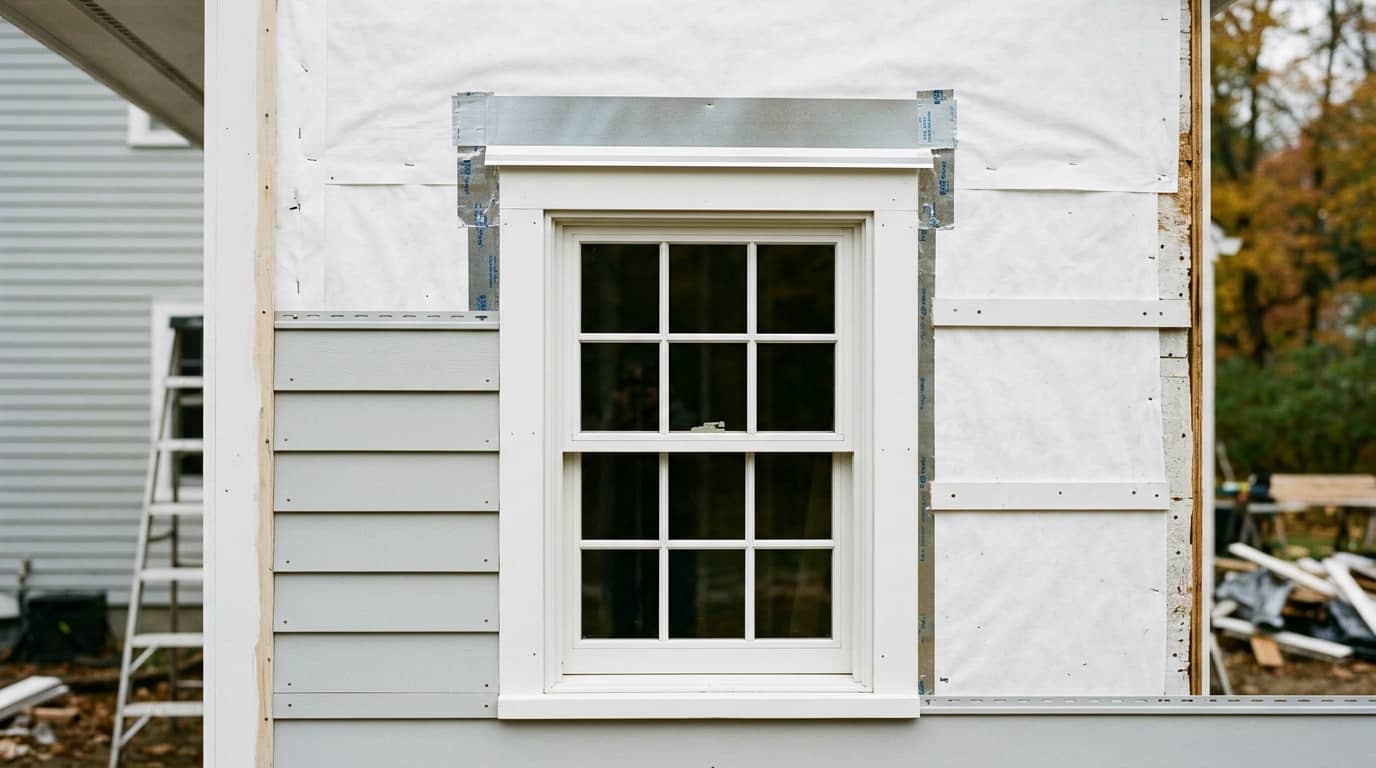
From the street, every finished siding job looks roughly the same. The differences live in the layers underneath and at the edges. These are the places where quotes most often diverge:
- Tear-off or go over the old siding. Removing the existing siding and hauling it away is real labor, so a quote that skips it comes in lower. It also means nobody looks at the wall underneath. Going over the old layer, sometimes called pop-on siding, is the single biggest reason two quotes can be far apart.
- The water-resistive barrier. House wrap is the layer that manages any water that gets past the siding. Some quotes include a new barrier over the sheathing; some reuse whatever is there; some don’t mention it at all.
- Flashing at every opening. Windows, doors, and roof-to-wall transitions are where siding leaks start. Proper flashing is careful, slow work at every single opening, and it either is or isn’t in the scope.
- Trim, soffit, and fascia. The finish pieces that frame the house. A quote that replaces them reads higher than one that wraps or leaves the old ones, but the finished house looks and lasts very differently.
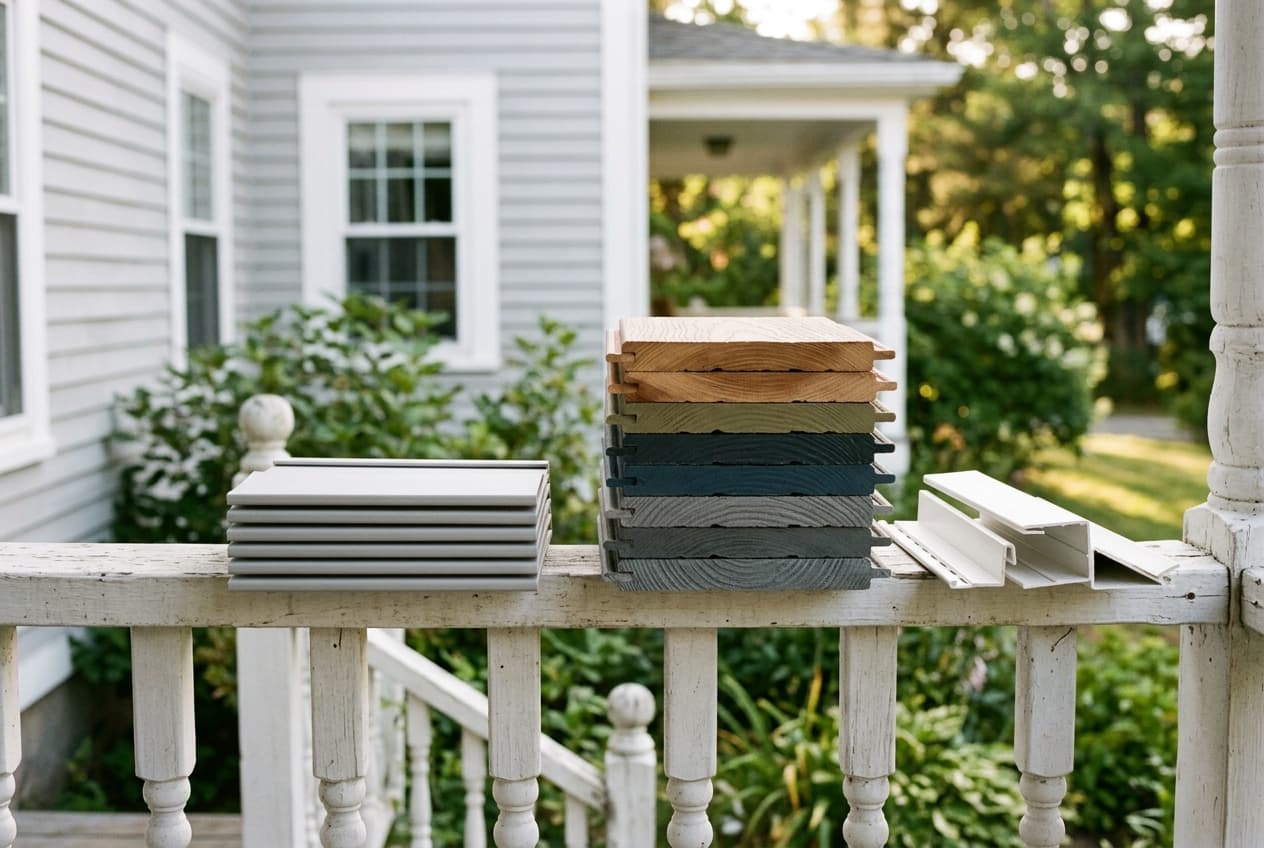
- Material grade and product line. “Vinyl siding” covers a wide range of thickness, rigidity, and finish within a single brand. Two quotes can name the same manufacturer and mean different products.
- Permits and disposal. Pulling the permit and paying to dispose of the old material are part of the job. Some quotes fold them in; some leave them as your problem.
None of these items shows up in the curb view a year later. All of them show up in how the wall performs through a New England winter, which is why the hidden costs of a siding project are worth understanding before you compare totals.
Who does the work, and how?
Quotes also differ because of the people behind them. One contractor sends its own crew, the same people who scoped the job. Another sells the job and hands it to a subcontractor who was never at your kitchen table. The second model is cheaper to run, so it can price lower, but the accountability is thinner.
The warranty works the same way. A manufacturer’s product warranty only holds if the siding was installed to its written specs, and a workmanship warranty only means something if the company is still around to honor it. A credentialed contractor that puts its own name on the install carries that backing; a lower quote often doesn’t. Our guide to the red flags to watch for when hiring a siding contractor lists the tells.
Two follow-ups from the hiring side: whether to hire the cheapest siding bid and what a siding contract should include.
“When a homeowner shows us a quote that’s way under ours, we don’t argue about the number. We ask them to find the tear-off, the house wrap, and the window flashing in the scope. Nine times out of ten, at least one of them isn’t there. That’s the difference — not the siding.”
Global Roofing field team — Massachusetts in-home siding assessments
How was the number made in the first place?
One more reason has nothing to do with scope: the method. A number worked up from a quick look at the front of the house is a guess about how much wall you have. A number built from the home’s actual measurements is a price. Guesses tend to be padded to be safe or low to win the job, and both kinds move once the work starts.
This is where our approach is different. We measure the home, build a 3D model of it, and design the project on that model with you in TruPro. Every change updates one total priced from what your house really measures, you can set a simpler version next to an upgraded one, and the number you sign is the number you get. If you’d like to see how a custom siding design and quote come together, we walk through it step by step.
Find your style, then see it on your own house
TruFit is a two-minute survey that tells you which siding style fits your home and your taste. TruPro then puts it on a 3D model of your actual house — mix and match styles, colors, and trim and watch one total update as you go. Both are part of our free in-person siding assessment.
Schedule a free assessmentIf one quote is much lower, what should you check?
A low number isn’t automatically a bad one. But before you treat it as the same job for less, put the written scope next to the others and check whether it:
| Check whether the low quote… | Why it matters |
|---|---|
| Goes over the old siding instead of removing it | Skips the labor and the look underneath. Whatever is wrong behind the wall stays there and gets worse. |
| Names a new water-resistive barrier | Without it, water that gets past the siding has nowhere to go but into the sheathing. |
| Describes flashing at windows, doors, and roof lines | Openings are where leaks start. “Caulk” is not flashing. |
| Includes trim, soffit, and fascia | Left out, the house looks half-finished and the old rot stays in place. |
| Specifies the product line, not just the brand | Same manufacturer, different thickness and grade, different result. |
| Says who installs it and who backs the workmanship | An in-house crew and a named workmanship warranty are worth paying for. A subcontracted job with a vague warranty isn’t. |
| Covers the permit and disposal | If not, those costs land on you later, and the quote was never as low as it looked. |
| Was priced from real measurements | A drive-by number can move once the crew is on site. A measured one shouldn’t. |
If the low quote passes every row, it may simply be a good value. If it fails several, you’re not comparing the same project. Put the written scopes side by side, not the totals, and ask each contractor the same questions: what happens to the old siding, what goes on the wall first, how the windows are flashed, and who answers the phone if something fails in year six. Our pillar guide explains how a good siding estimate actually works.
One more thing to ask any bidder: does the number change if you finance? We cover that in does financing siding cost more than paying cash.
Frequently asked questions
Why is one siding quote so much lower than another?
Usually because something is missing or different: the old siding stays on, the barrier or flashing is skipped, trim is left out, the product line is a lower grade, the work is subcontracted, or the number was guessed from the street. Compare what each quote includes before comparing totals.
Should a siding quote be itemized?
No. A good estimate is one total plus a full written description of the company, the exact scope, and the materials by brand and product line. A materials-versus-labor split looks precise but tells you little; a detailed scope tells you everything.
How many siding quotes should I get?
Two or three with written scopes you can line up beat five vague numbers. Once the scopes sit side by side, the right choice is usually obvious.
Can a siding quote change after the work starts?
Hidden damage behind the old siding is the one honest reason. A trustworthy contractor raises that possibility before the job and explains how it’s handled. A price built from real measurements and locked in writing shouldn’t move for any other reason.
How we wrote this guide
This article reflects how Global Roofing scopes and prices real siding projects on Massachusetts and New England homes, and what we see in the competing quotes homeowners share with us. It was checked against Vinyl Siding Institute installation guidance, This Old House, and Consumer Reports’ siding buying guide, and reviewed for accuracy by a licensed Massachusetts contractor on our team. See our full editorial process for how we research and update every article.
Sources
- Vinyl Siding Institute — installation standards (water management, flashing, and installation over existing siding). vinylsiding.org
- This Old House — Siding Replacement Cost (what drives the price and what a scope should include). thisoldhouse.com
- Consumer Reports — Siding Buying Guide (materials, grades, and what to know before you buy). consumerreports.org