

Key Takeaways
- Siding is priced as a complete system — not a stack of panels — so the cost reflects your home’s size and shape, the material, the tear-off, and the details behind the walls.
- The biggest swing factor no one can quote from the driveway is what’s under the old siding. On older New England homes, hidden rot or moisture damage is common.
- Premium materials cost more up front but can last longer and perform better — the value question is how long you’ll own the home.
- New siding is one of the highest-returning exterior projects at resale, and it helps a home show and sell better.
- A good estimate is a total price with a full written scope and the exact materials by brand — not a line-item breakdown, and never a number pulled from thin air.
What actually drives the cost of siding?
Homeowners usually want one number, and we understand why. But a siding project isn’t a product with a sticker price — it’s a complete system wrapped around your house, and its cost reflects everything that goes into it. Two homes on the same street can land at very different prices once you account for size, shape, the material, and what’s hiding behind the old siding.
Rather than quote a figure that can’t hold up until we see your home, this guide does something more useful: it walks through the factors that move the price, so you understand what you’re paying for and can compare quotes on equal footing. Here are the drivers that matter most.
How your home’s size and shape move the price
The most direct driver is simply how much wall you have. A larger home has more surface area to cover, which means more material and more labor. A second or third story adds staging and access work.
But shape matters as much as size. A simple box with long, clean walls goes quickly. Add gables, dormers, bump-outs, lots of corners, and detailed trim around windows and doors, and every one of those becomes a spot that has to be cut in and finished by hand. Two homes with the same square footage can involve very different amounts of work once you account for the details of the exterior.
We go through each of those factors — stories, corners, gables, openings, access — in how home size and shape affect siding cost.
The material you choose
Material is the cost factor you control most, and it shapes both the look and how long the exterior lasts. We install three, and they sit at different points on the up-front investment:
| Material | What you’re paying for | Relative investment |
|---|---|---|
| CertainTeed vinyl | A clean, updated look with the least upkeep and the lowest barrier to entry. | $ |
| LP SmartSide engineered wood | A real wood look and a noticeable curb-appeal upgrade at a mid-range investment. | $$ |
| James Hardie fiber cement | Maximum durability and a premium, long-term exterior — heavier and more exacting to install. | $$$ |
The dollar signs are relative, not price tags. As a rule, the more durable and premium the material, the higher the up-front cost — and often the longer it lasts. Which one is right comes down to the look you want, the upkeep you’ll do, and how long you plan to stay. We break that decision down in siding materials compared.
Two things worth knowing before you pick: a custom look built from these lines costs less extra than most people expect — see whether a custom siding design costs more than a plain one — and the up-front tier is only half the picture, because each material asks for different upkeep over its life on the house.
Tear-off, disposal, and the big unknown behind the wall
Here’s the factor that separates an honest quote from a hopeful one. Before new siding goes on, the old siding usually comes off — and tearing it off and hauling it away is real labor. Some contractors offer to install right over the existing siding to save that step. It can lower the up-front cost, but it hides whatever is underneath.
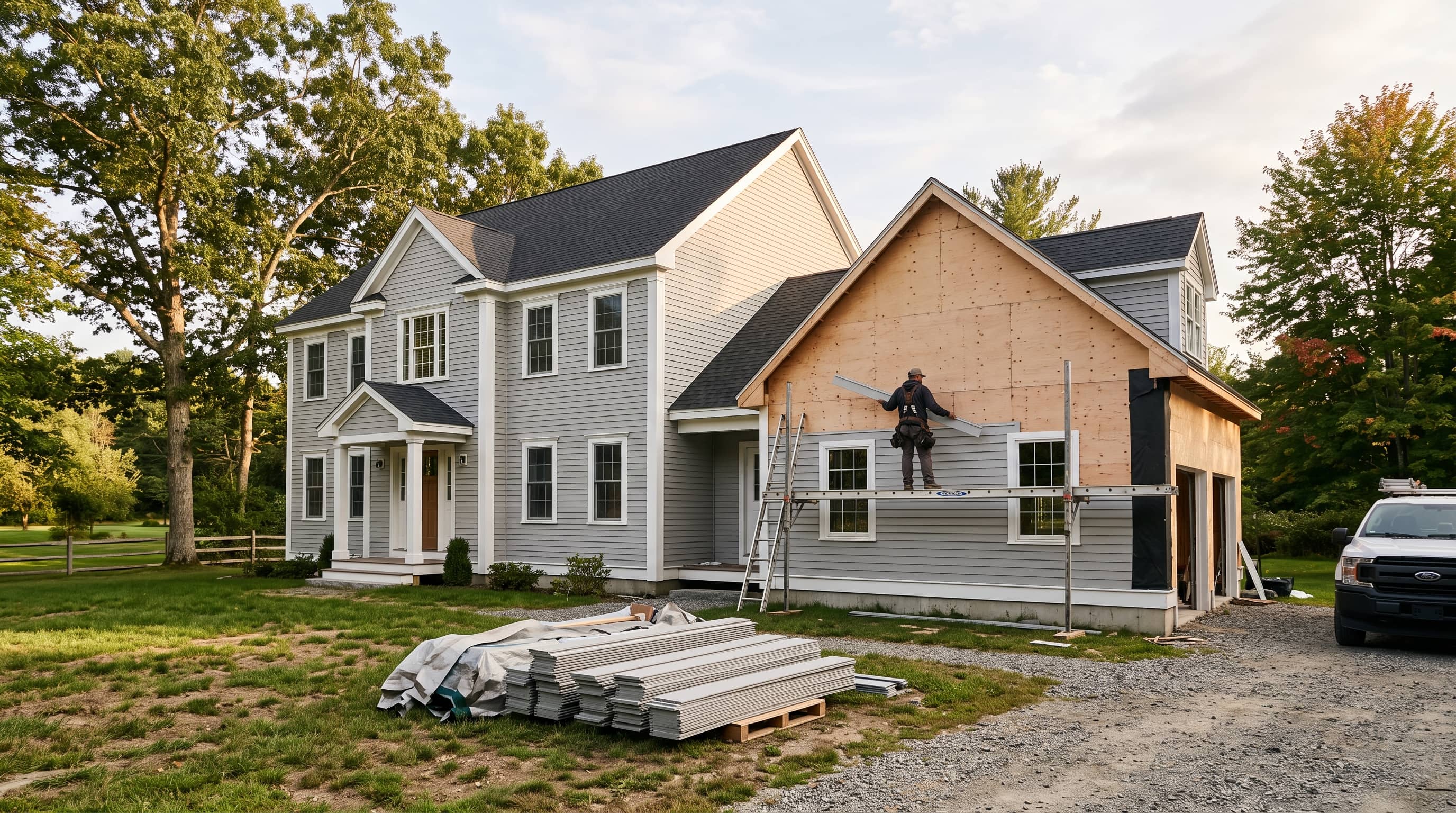
And on older New England housing stock, what’s underneath is the biggest unknown in the whole project. Years of small leaks, trapped moisture, or failing sheathing often hide behind siding that looks fine from the street. Cover that up with a new layer and it only gets worse. Tear-off lets us find and fix it, install a proper water-resistive barrier, and build the wall back correctly. It adds to the cost, and it’s usually the more honest long-term call — which is also why a bid can move once the wall is open. A thorough contractor talks that possibility through with you before the work starts, rather than springing it mid-project.
If you’ve been pitched an install over the old siding — often called pop-on siding — we lay out what it is and when it makes sense. And for the full list of what can surface once a wall is open, read the hidden costs of a siding project.
What rides along with the siding
The panels get the attention, but a siding project includes the pieces around and behind them — and those pieces are part of the price and a big part of whether the job lasts:
- Water-resistive barrier (house wrap). The layer over the sheathing that manages any water that gets past the siding. Skipping or skimping here is where cheap jobs cut.
- Flashing. The metal and membrane details at every window, door, and transition, where leaks most often start.
- Trim, soffit, and fascia. The finish work that frames the house. Refreshing it with the siding is what makes the whole exterior look finished rather than half-done.
- Insulation options. Insulated siding and added exterior insulation can cut winter heat loss by reducing thermal bridging — an energy angle worth weighing in a cold climate, and a choice that affects the cost.
Because so much of this happens where the walls meet the roof, it’s worth reading whether to replace the roof and siding at the same time before you scope the project.
How a good siding estimate actually works
A clear estimate is what lets you compare bids for what they really are. Here’s how we do it, and what to expect from any trustworthy contractor.
We give you a total price along with a full written description of three things: the company standing behind the work (our license, insurance, and the warranties we back), the exact scope of the project, and the specific materials by brand and product line. What we don’t do — and what you don’t need — is a line-item breakdown of materials versus labor. That kind of itemization looks precise but tells you little about quality; a detailed, honest scope tells you everything. When you compare quotes, put the scopes side by side, not just the bottom lines.
Two articles go deeper: how quotes for the same house can land so far apart, in why siding quotes vary so much, and the whole path from a look you like to a locked number, in how to get a custom siding design and quote for your home.
How we design and price a custom look: TruFit and TruPro
The old way to buy siding was a sample board, a binder, and a lot of imagination — with the price arriving later. We do it in two parts, both included in the free assessment.
TruFit is a two-minute survey. You answer a few questions about your home, your taste, and your plans, and it tells you which siding style and type fits you — no prices, no spec sheets.TruPro is the design builder. We build a 3D model of your actual house — every wall, window, door, and roofline at true size — and you dress it together with your designer: siding, colors, trim, corners, roof edge, stone, even the front door, wall by wall. One total updates as you go, priced from what your house actually measures, so you can put a simpler version and an upgraded one side by side and see the real difference. The number you sign is the number you get, and the crew builds from that same design.
It also settles the question this guide keeps coming back to: how much a custom look adds. A different color on the front, shake in the gables, or contrasting corners moves the total a little, not a lot — it’s the whole-house material tier and what’s behind the old siding that move it. We unpack that in whether a custom siding design costs more than a plain one.
Find your style, then see it on your own house
TruFit is a two-minute survey that tells you which siding style fits your home and your taste. TruPro then puts it on a 3D model of your actual house — mix and match styles, colors, and trim and watch one total update as you go. Both are part of our free in-person siding assessment.
Schedule a free assessmentIs new siding worth it?
Cost is only half the question. The other half is what you get back — and siding does well on both the practical and the financial side.
Financially, siding replacement is consistently one of the highest-returning exterior projects in Remodeling’s annual Cost vs. Value Report — near the top of the list for the share of cost recouped at resale, year after year. Beyond the numbers, fresh siding is one of the first things a buyer sees; it shapes the whole first impression, can help a home sell faster, and quietly clears the kind of exterior objections that stall a sale.
And there’s the value you enjoy while you live there: a home that looks the way you want it to, a tighter, better-protected wall, and — with the right material — years of low upkeep. Whether it “pays back” depends partly on resale and partly on how much you value living behind a finished, weather-tight exterior.
For the over-time side of that equation — what each material asks of you in upkeep — see what siding costs to maintain over its life.
And for the whole question of what comes back — at resale and while you live there — see does new siding increase home value.
“The homeowners who are happiest a year later aren’t the ones who found the cheapest number. They’re the ones who understood what went into the price — the tear-off, the wrap, the flashing — and chose the scope they actually wanted. That’s the conversation we try to have up front.”
Global Roofing field team — Massachusetts in-home estimates
How most people pay for it
You don’t have to cover a siding project all at once. Plenty of homeowners finance it and spread the cost over time, which can make a bigger, do-it-once-right scope realistic now instead of later. We connect homeowners with financing partners; approval generally starts around a 550 credit score, with a couple of programs around 650.
We’re a siding contractor, not a lender, so treat this as a starting point rather than financial advice — the right way to pay depends on your situation, and for the specifics it’s worth talking to the lender or your bank. Our guide to financing new siding walks through the options and the tradeoffs in plain English.
If the timing is the question, should you finance siding now or wait and save lays out what waiting tends to cost and when it’s fine.
Frequently asked questions
What affects the cost of new siding?
The size and shape of your home, the material you choose, whether the old siding is torn off and what’s found underneath, and the supporting details — house wrap, flashing, trim, soffit, and fascia. Because the condition behind the old siding can’t be fully known until it comes off, the most accurate price comes from an in-person assessment.
Does new siding increase home value?
It’s consistently one of the strongest-returning exterior projects in Remodeling’s Cost vs. Value Report, and fresh siding is one of the first things buyers notice — it can help a home sell faster and clear inspection objections. It pays back partly in dollars and partly in curb appeal. We take the question deeper in does new siding increase home value.
Is it cheaper to put new siding over the old siding?
Going over the existing siding can lower the up-front cost, but it hides whatever is underneath — and on older homes that can mean rot or moisture damage that only worsens behind a new layer. Tearing off lets us see and fix the wall and start clean. It costs more up front and is usually the more honest long-term call. More on the over-the-old approach in our article on pop-on siding.
Why is my siding quote higher than another contractor’s?
Usually because of the parts you can’t see: the water-resistive barrier, flashing at every opening, trim and fascia work, tear-off versus going over the old siding, and the crew. A much lower price often means one of those was left out or the material grade differs. Compare what each quote includes, not just the bottom line — we break the gap down in why siding quotes vary so much.
Does Global Roofing give an itemized siding estimate?
We give a total price with a full written description — the company, the exact scope, and the specific materials by brand and product line — not a line-item breakdown of materials versus labor. That lets you see exactly what you’re getting and compare it against any other quote on equal terms.
Can you finance a siding project?
Yes. We connect homeowners with financing partners, and approval generally starts around a 550 credit score, with a couple of programs around 650 — so you can move on the project now and spread the cost over time.
How we wrote this guide
This guide reflects how Global Roofing scopes and prices real siding projects on Massachusetts and New England homes, cross-checked against regional cost and home-value data from This Old House, Remodeling Magazine’s Cost vs. Value Report, and Consumer Reports’ siding buying guide. It was reviewed for accuracy by a licensed Massachusetts contractor on our team. See our full editorial process for how we research and update every guide.
Sources
- Remodeling Magazine — Cost vs. Value Report (siding cost-recouped benchmarks). remodeling.hw.net
- This Old House — Siding Replacement Cost (drivers and scope). thisoldhouse.com
- Consumer Reports — Siding Buying Guide (ROI, resale, and what to know before you buy). consumerreports.org
- ENERGY STAR — Seal and Insulate (exterior insulation and air sealing for cold climates). energystar.gov