
Key Takeaways
- There’s no single “best” siding — there’s the right fit for your home, your budget, and how much maintenance you want to sign up for.
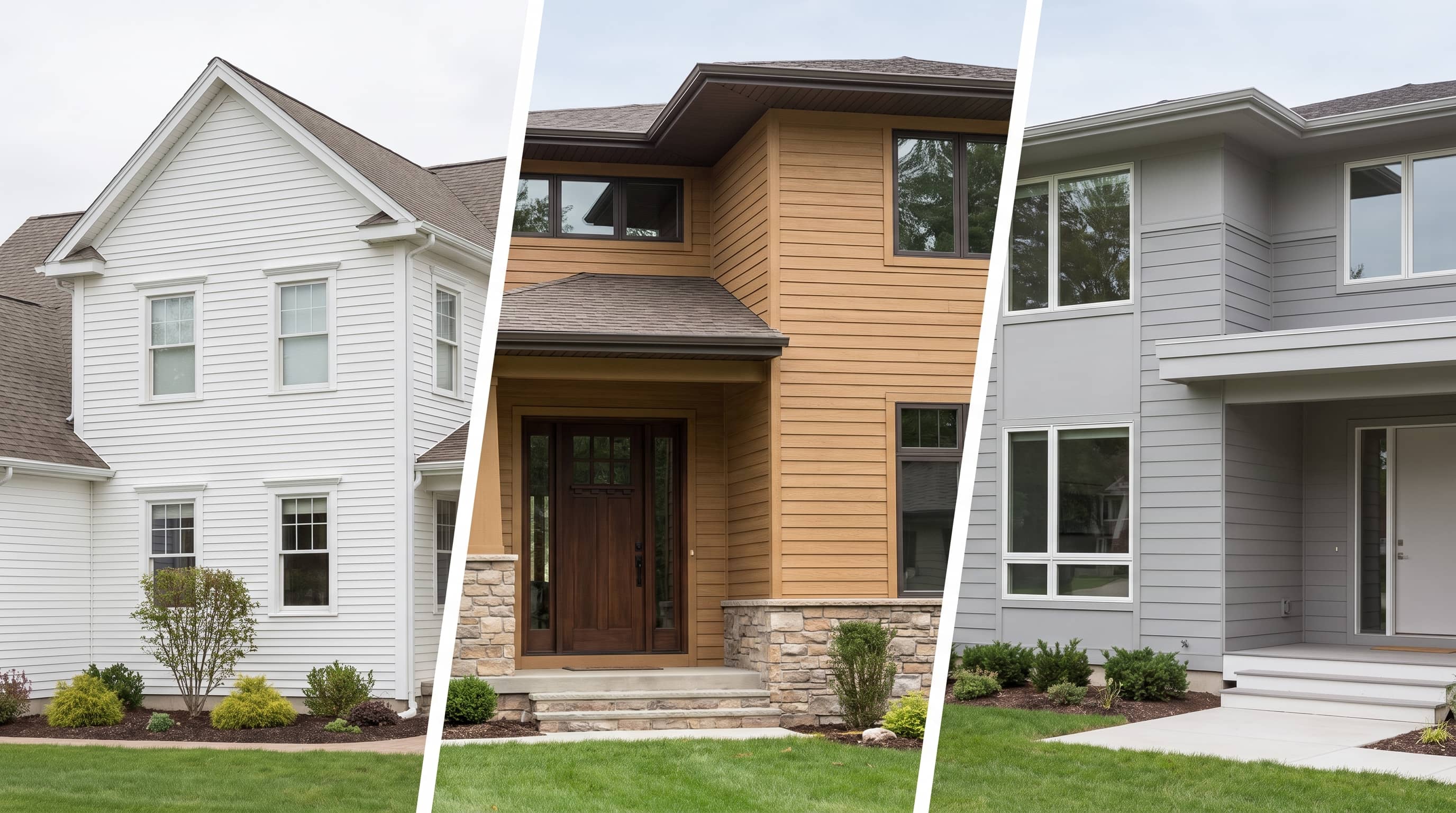
- Vinyl (CertainTeed) is the low-maintenance, value choice; engineered wood (LP SmartSide) is the balanced upgrade with a real wood look; and fiber cement (James Hardie) is the most durable, premium option.
- All three hold up well to New England winters when they’re installed right — the install matters as much as the material.
- Vinyl never needs paint; engineered wood and fiber cement come pre-finished but will want repainting down the road.
- The real decision isn’t “which material is best” — it’s which one matches your situation. This guide walks you there.
How to think about choosing siding
New siding is one of the biggest changes you can make to a home, and the material you pick shapes how it looks, how it holds up, and how much you’ll fuss over it for the next few decades. The good news: you don’t have to become a siding expert to get it right. You have to be honest about four things.
- The look you want. A clean, updated exterior? The warmth of real wood grain? A high-end, architectural finish?
- How much maintenance you’ll actually do. Some materials are truly hands-off; others reward a little care over the years.
- How long you plan to stay. A forever home and a five-year home point to different answers.
- Your budget — up front and over time. The cheapest material today isn’t always the best value across twenty years.
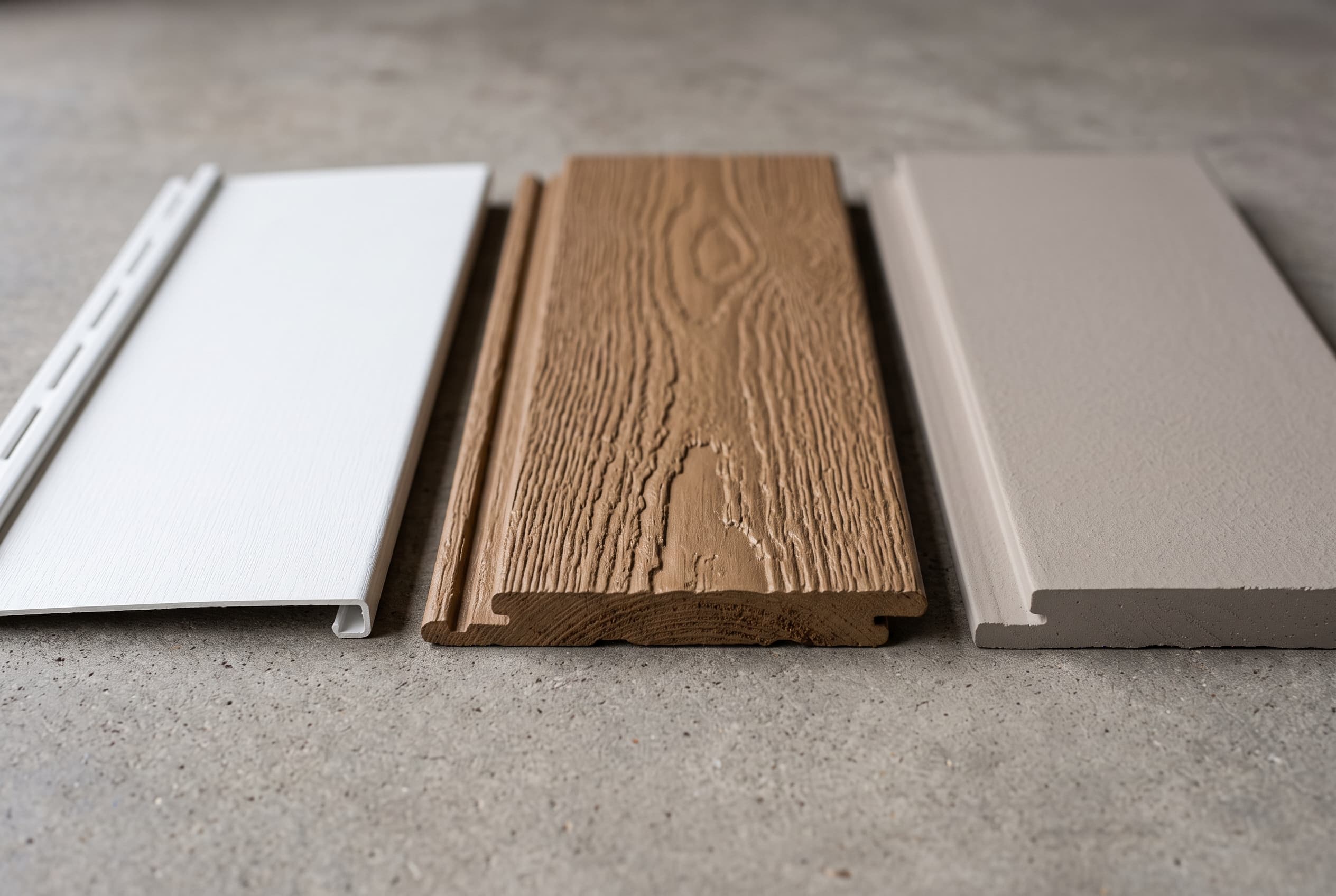
We install three materials, and they map cleanly onto those priorities: CertainTeed vinyl, LP SmartSide engineered wood, and James Hardie fiber cement. None of them is “better” than the others in the abstract. They’re different fits. Here’s who each one is for.
Vinyl siding — CertainTeed
Vinyl is the most popular siding in the country for a reason: it’s the simplest path to a clean, updated exterior, and it’s the easiest to live with. We install CertainTeed, one of the most established names in the category.
Who it’s for: the homeowner who wants the house to look fresh and current without over-investing, and who would rather not think about their siding again. If low maintenance is at the top of your list, vinyl is hard to beat.
- Maintenance: the lowest of the three. It never needs painting, and the color runs through the material, so it won’t chip. An occasional rinse is usually all it asks.
- Look: today’s vinyl comes in a wide range of colors and profiles — traditional clapboard, Dutch lap, shake, and vertical board-and-batten looks. Up close it doesn’t read as premium the way wood or fiber cement does, but from the street a good install looks sharp.
- Investment: the lowest barrier to entry of the three, which makes it the practical choice when the goal is a refresh rather than a transformation.
The honest tradeoff: vinyl’s look and feel up close won’t match real wood or fiber cement, and it carries a lower perceived value at resale than a premium exterior. For a lot of New England homes, that tradeoff is exactly the right call.
Engineered wood — LP SmartSide
Engineered wood is the balanced upgrade — the most flexible option in the lineup. We install LP SmartSide, which is built from wood strands that are treated and bonded for moisture and termite resistance, then finished with a deep, authentic wood grain.
Who it’s for: the homeowner who wants a noticeable jump in curb appeal — the look and warmth of real wood — without going all the way to the top of the budget, and who doesn’t mind a little upkeep to keep it looking its best.
- Maintenance: it comes pre-finished, but like any painted surface it will want repainting at some point to stay sharp. More upkeep than vinyl, less fuss than natural wood.
- Look: this is where engineered wood shines. The grain reads as real wood from the street and up close, and it takes bold trim and board-and-batten details beautifully.
- Investment: the middle of the three. A step up from vinyl, below fiber cement — often the sweet spot for a meaningful exterior upgrade.
The honest tradeoff: it isn’t “set it and forget it” the way vinyl is, and it isn’t quite as durable as fiber cement. What you get in return is genuine wood character at a friendlier price than the premium tier.
Fiber cement — James Hardie
Fiber cement is the premium end of the lineup — the most durable siding you can put on a house, and the one that reads as a true high-end exterior. We install James Hardie, made from a blend of cement, sand, and cellulose fibers.
Who it’s for: the homeowner investing in the home for the long haul, who wants maximum durability, a premium look, and the strongest perceived value at resale — and is willing to invest more up front to get it.
- Maintenance: pre-finished and long-lasting, it holds its color and finish for a long stretch, though it will eventually want repainting like any finished surface. It resists rot, insects, and impact better than the other two.
- Look: heavy, substantial, and architectural. Fiber cement gives you the crispest shadow lines and the most convincing high-end finish of the three — a real reason it shows up on premium and historically styled homes.
- Durability: the standout. It’s non-combustible — a genuine fire-resistance advantage — and shrugs off wind-driven debris and coastal weather.
- Investment: the highest of the three, in both material and labor. It’s heavier and more exacting to install, which is part of the cost — and part of why the install crew matters so much.
The honest tradeoff: it’s the biggest up-front investment, and it still needs repainting eventually. For the right home and the right owner, it’s the exterior that looks and performs like it will last a generation.
See these materials on your own home
Samples and swatches only get you so far. In a free in-person assessment we bring the options to your house, in your light, and help you picture the finished exterior — no obligation.
Weighing fiber cement against engineered wood specifically? See LP SmartSide versus James Hardie.
Get a free siding assessmentThe three, side by side
Here’s the quick version — the same four questions from the top, answered across all three materials.
| Material | Best for | Maintenance | Relative investment |
|---|---|---|---|
| CertainTeed vinyl | A clean, updated look with the least upkeep and the lowest cost. | Lowest — never needs paint, occasional rinse. | $ |
| LP SmartSide engineered wood | A real wood look and a noticeable curb-appeal upgrade at a mid-range budget. | Moderate — repaint down the road to keep it sharp. | $$ |
| James Hardie fiber cement | Maximum durability and a premium, long-term exterior. | Moderate — very long-lasting finish; repaint eventually. | $$$ |
The dollar signs are relative, not price tags — every project is priced on your home’s size, shape, and condition. For what actually moves the number, see what new siding costs and whether it’s worth it.
Two head-to-heads go deeper: vinyl versus fiber cement for the most common decision, and, for a vertical look, which material to use for board and batten.
And for what each material tends to give back — at resale and in years of upkeep — see the ROI on vinyl, engineered wood, and fiber cement siding.
What holds up in New England
Our climate is the real test. Freeze-thaw cycles, wind-driven rain, heavy snow, and — near the coast — salt air all work on a home’s exterior year after year. The reassuring part: all three of these materials are built to handle it. The differences are in the details.
- Vinyl handles cold well as long as it’s fastened with room to expand and contract. Its color won’t fade the way cheaper products once did, and it doesn’t absorb water.
- Engineered wood is treated specifically to resist the moisture and freeze-thaw that punish untreated wood. Kept properly sealed and painted, it holds up strongly here.
- Fiber cement is the most weather- and impact-resistant of the three, which is why you see it on exposed and coastal homes. It doesn’t burn, rot, or warp.
But the material is only half the story. In New England, what keeps water out of the wall is what decides how long any siding lasts — and that’s about how it’s installed.
For a threat-by-threat look at cold, snow, wind, salt air, and pests, read which siding holds up best to New England winters.
Why installation decides longevity
Here’s the thing most siding marketing skips: the best material in the world will fail early if the wall behind it isn’t built to manage water. Siding isn’t a raincoat — it’s the outer layer of a system. What’s underneath and how it’s detailed is what actually protects your home.
A proper install starts with a weather-resistant barrier (house wrap) over the sheathing, careful flashing at every window, door, and transition, and fastening to the manufacturer’s spec so the material can move without buckling. Done right, water that gets behind the siding is guided back out instead of trapped against the wall. Done wrong, it’s trapped — and trapped water is what causes rot, mold, and the failures homeowners blame on the “cheap siding” when the real problem was the install.
This is where an in-house crew that does this every day earns its keep. When you compare siding quotes, the price gap between two bids is often the difference in exactly these hidden details — the parts you can’t see once the job is done.
“People ask us which siding lasts longest. The honest answer is: the one that’s installed right. We’ve pulled premium siding off walls that rotted in a few years because the flashing was wrong — and seen basic vinyl look great after twenty because the water had somewhere to go.”
Global Roofing field team — Massachusetts in-home estimates
Install-to-spec is also what keeps the manufacturer coverage intact — what each brand’s warranty actually covers is in siding warranties compared.
So which one is right for you?
Come back to the four questions. If you want the least maintenance and the lowest cost, vinyl is your answer. If you want a real wood look and a clear step up in curb appeal without the top-tier budget, engineered wood is the sweet spot. If you’re investing for the long haul and want the most durable, most premium exterior, fiber cement is the call.
Most homeowners land on the right material in about ten minutes once they stop comparing spec sheets and start talking about how they actually want to live with the house. That’s the whole point of a free assessment — and if you’re still deciding whether you even need new siding yet, start with do I need new siding? Once you know the material, the fun part is the styles and colors.
If the deciding factor is how long you plan to be in the house, we frame the choice that way in how to choose siding if you plan to stay five years or twenty-five.
For what each material gives back for the money — and for whom — see the ROI on vinyl, engineered wood, and fiber cement siding.
Frequently asked questions
What is the best siding material for a New England home?
There isn’t one best material — there’s the right fit. Vinyl (CertainTeed) is the low-maintenance, value choice; engineered wood (LP SmartSide) gives you a real wood look at a mid-range investment; fiber cement (James Hardie) is the most durable and premium. All three do well through our winters when they’re installed correctly.
Is fiber cement worth the extra cost over vinyl?
It can be. Fiber cement costs more up front but is more durable, fire-resistant, and premium-looking. If you’re staying long term or want the most durable exterior, it’s often worth it. If low maintenance and value matter most, vinyl gets you a clean, updated look for less.
The long version is vinyl versus fiber cement siding: which is right for your home.
What’s the difference between engineered wood and fiber cement?
Engineered wood (LP SmartSide) is treated wood strands — lighter, with an authentic grain, in the middle of the lineup. Fiber cement (James Hardie) is cement-based — heavier, non-combustible, and the most durable option, at the top of the lineup.
Does vinyl siding crack in cold weather?
Quality vinyl, installed correctly, holds up fine here. It has to be fastened with a little play so it can expand and contract without buckling. Cracking is usually a sign of a rushed install, not the material.
Material by material, winter is covered in which siding holds up best to New England winters.
Which siding needs the least maintenance?
Vinyl — it never needs painting and usually just wants an occasional rinse. Engineered wood and fiber cement come pre-finished but will want repainting at some point to keep looking their best.
Color is the other upkeep question — see does vinyl siding fade, and which siding holds its color best.
Does Global Roofing install James Hardie and LP SmartSide?
Yes — we install CertainTeed vinyl, LP SmartSide engineered wood, and James Hardie fiber cement. In a free in-person assessment we help you land on the right one for your home.
How we wrote this guide
This guide reflects how Global Roofing specs and installs real siding on Massachusetts and New England homes, cross-checked against manufacturer product information from CertainTeed, LP SmartSide, and James Hardie, and independent material comparisons from Consumer Reports and This Old House. It was reviewed for accuracy by a licensed Massachusetts contractor on our team. See our full editorial process for how we research and update every guide.
Sources
- Consumer Reports — Siding Buying Guide (material comparison and performance). consumerreports.org
- This Old House — All About Siding (types and how to choose). thisoldhouse.com
- James Hardie — fiber cement product information. jameshardie.com
- LP SmartSide — engineered wood product information. lpcorp.com