

Key Takeaways
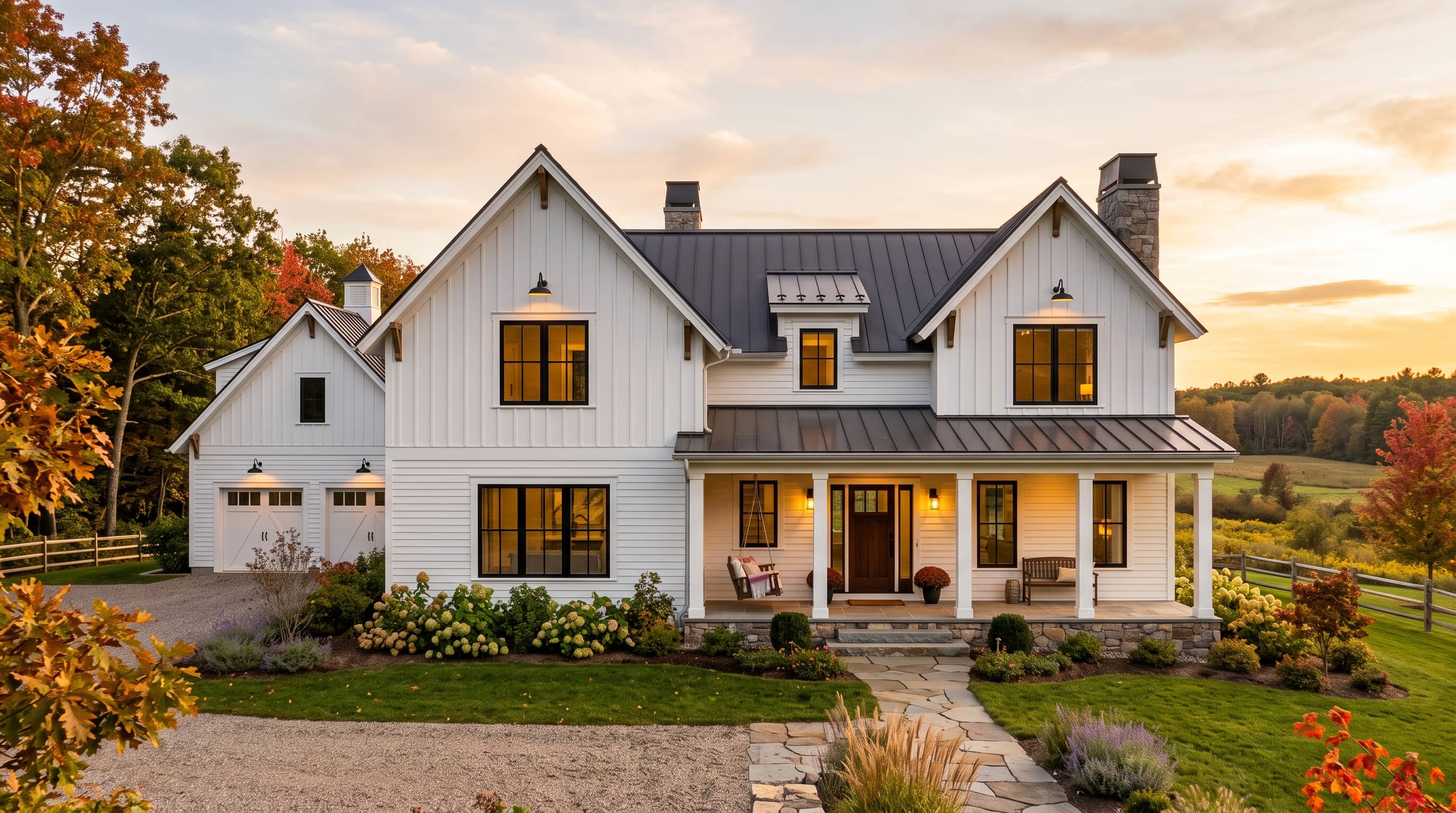
- Most homeowners start with a look — “classic New England,” “modern farmhouse,” “coastal” — and this guide translates that look into real profiles and colors.
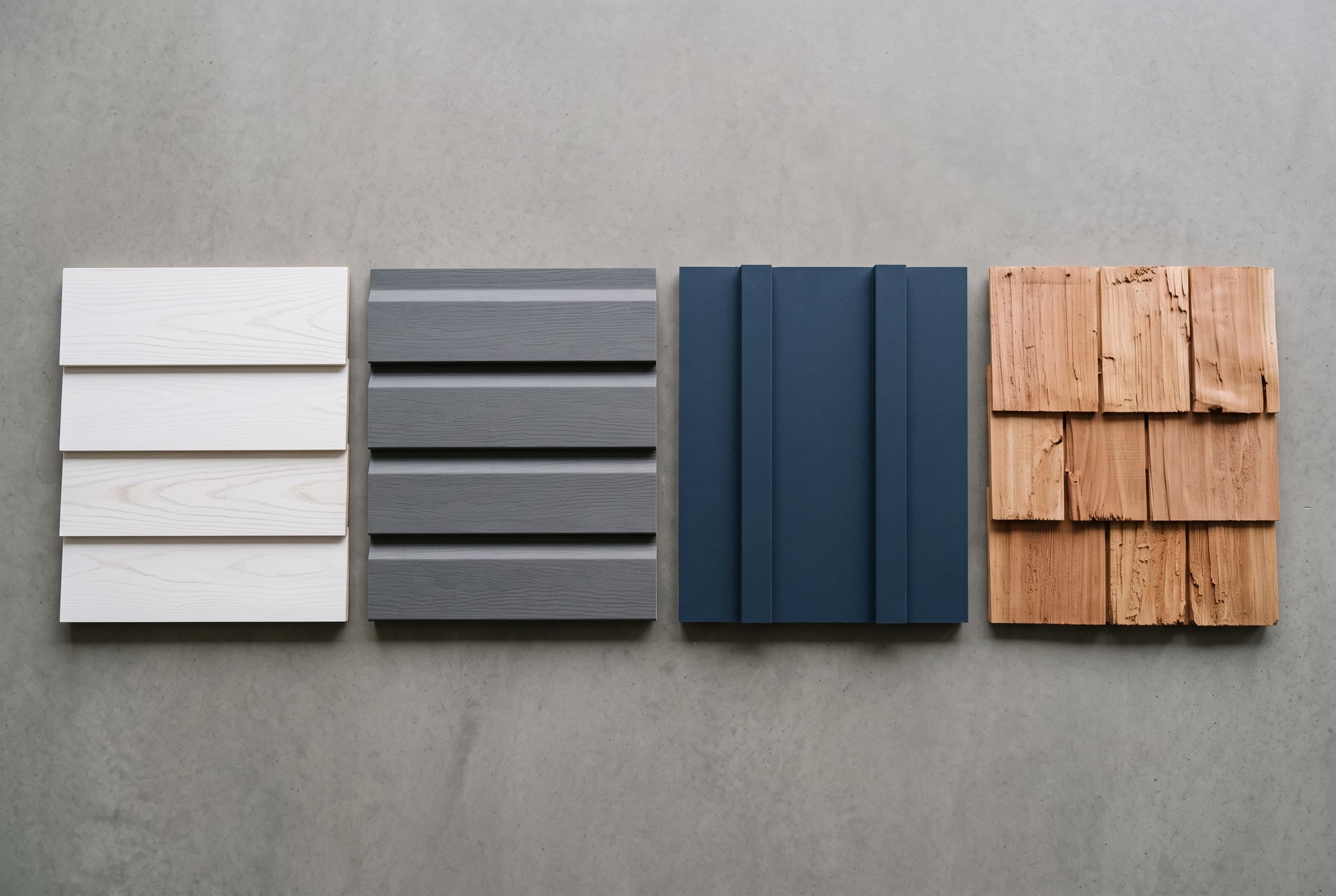
- The four profiles that cover almost everything: horizontal clapboard, Dutch lap, board-and-batten, and shake. All are available across the materials we install.
- Choose color around what you can’t change — your roof, stone, or brick — and let trim carry the contrast.
- Curb appeal is usually won by mixing: a lap field with board-and-batten or shake accents, a stone base, and sharp trim.
- For resale, timeless and broadly appealing beats bold — a color the next owner won’t feel they have to change.
Start with the look, not the material
Almost nobody wakes up wanting “fiber cement.” They want their house to look a certain way — cleaner, more current, more like the home two streets over that always catches their eye. The words that come out are usually a feeling: modern, classic, farmhouse, coastal. That’s the right place to start.
This guide works backward from the look. Once you can name the feel you’re after, translating it into a profile, a color, and a few well-placed accents is the fun part — and it’s where a siding project stops feeling like a repair and starts feeling like an upgrade. (If you haven’t landed on a material yet, our siding materials guide covers that side of the decision.)
Not sure which look is yours? How to find the siding style that fits your house walks through the five directions and how TruFit narrows them.
Siding profiles, explained
“Profile” just means the shape and pattern of the siding on the wall. Four cover the vast majority of New England homes, and every one of them is available in the materials we install — so you’re never choosing between the look you want and the material you want.
| Profile | The look | Where it suits |
|---|---|---|
| Clapboard (traditional lap) | Horizontal boards, clean and understated. The New England default. | Almost anything — colonials, Capes, and most everyday homes. |
| Dutch lap | Horizontal lap with a decorative groove that casts a soft shadow line. | Homes that want a touch more detail and depth than plain lap. |
| Board-and-batten | Vertical boards with narrow strips over the seams. Bold and architectural. | Modern farmhouses; as an accent on gables, dormers, and entry walls. |
| Shake & shingle | Textured, layered, weathered. The coastal-cottage look. | Cape Cod and coastal homes; accent gables and second stories. |
You don’t have to pick just one. Most standout exteriors use one profile across the main walls and a second as an accent — more on that below.
Two profile decisions get their own pages: board and batten vs. lap siding and shake and shingle siding for the coastal look.
Match the profile to your home
The fastest way to a look that feels right rather than busy is to let your home’s architecture lead. A style that fits the bones of the house reads as intentional; one that fights it reads as a renovation that tried too hard.
- Colonial: traditional horizontal clapboard, a restrained color, contrasting shutters, crisp white trim. Timeless and always right.
- Cape Cod: lap siding or shake, often in soft grays, weathered blues, or classic white — the quiet coastal New England palette.
- Farmhouse: board-and-batten shines here, whether full-height or mixed with lap. Black windows and a bold trim color complete it.
- Craftsman: a mix of lap and shake with heavy, detailed trim and earthy, natural colors.
- Coastal: shake and shingle, weathered tones, and a relaxed palette that looks at home near the water.
The cedar-shake, salt-weathered look is strongly tied to New England for a reason — it belongs here. Leaning into the regional vocabulary almost always ages better than chasing a trend from somewhere else.
For the houses this section skips, and for how the directions map to yours, see finding the siding style that fits your house.
How to choose a siding color
Color is the choice homeowners lose the most sleep over, and the one that’s easiest to get right with a simple rule: choose around what you can’t change.
Your roof, and any stone or brick on the house, are fixed. Start there. Pull the dominant temperature out of those materials — warm (browns, tans) or cool (grays, blacks, blues) — and keep your siding in the same family. A warm roof over cool-gray siding tends to fight; a warm roof over a cream or warm green sings. Then let the trim provide the contrast that makes it all pop.
A few practical rules that save regret:
- Dark colors read bold but show more. Deep navies and charcoals look striking, but they absorb heat and can show dust and pollen more than a mid-tone.
- Light colors are forgiving and timeless — and they make a house feel larger and cleaner from the street.
- Look at samples on your actual wall, at different times of day. A color that looks perfect on a chip at noon can go cold and flat in evening light. Big swatches, real light, north and south sides — always.
- Borrow from the neighborhood, don’t copy it. You want to fit in enough to feel settled and stand out just enough to feel fresh.
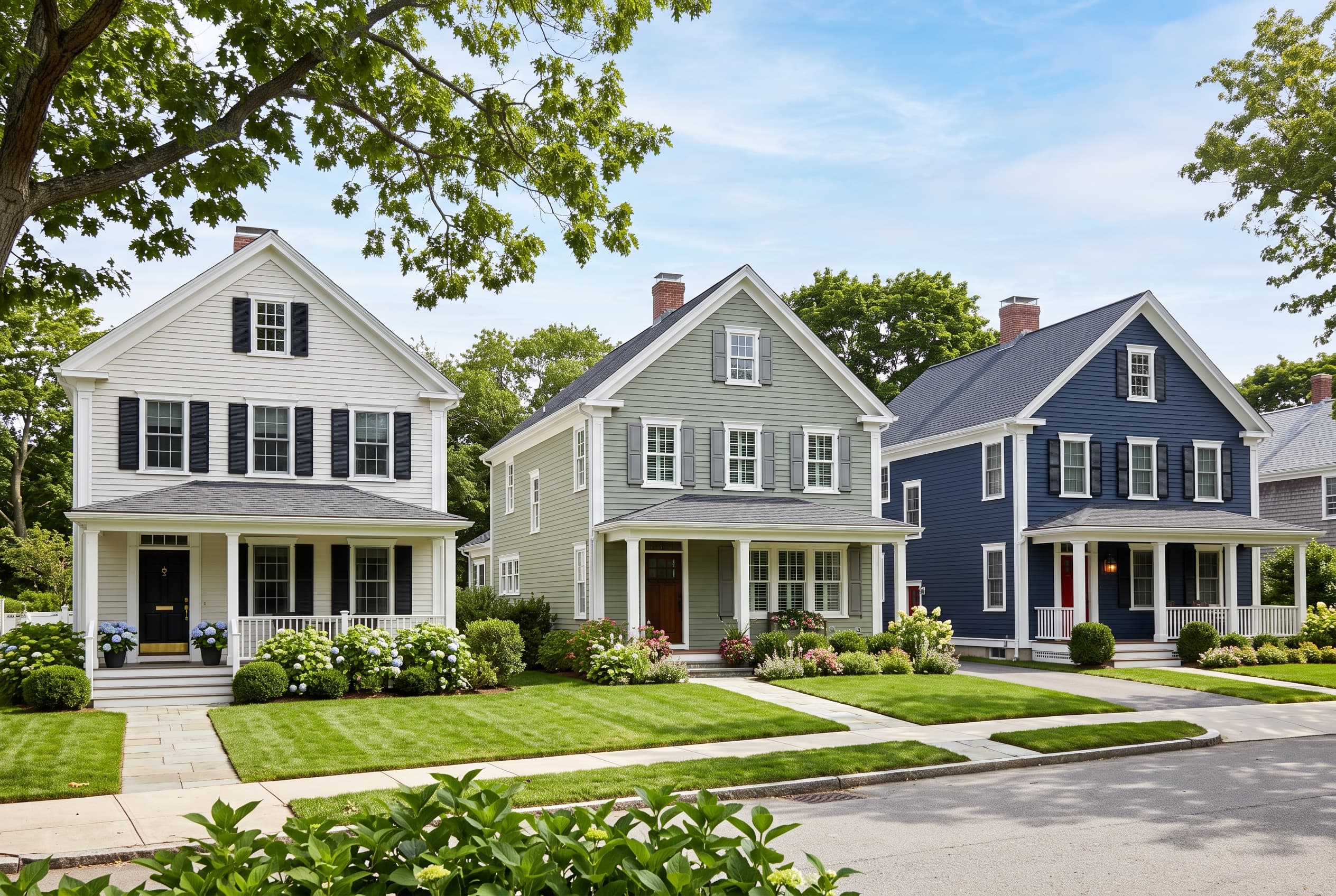
Two color questions we get most go deeper elsewhere: matching siding color to your roof, brick, and stone, and dark siding in New England.
Colors and resale
If part of why you’re re-siding is to sell — or you just want to protect the option — color matters more than almost any other single choice, and the guidance is simple: timeless beats bold.
Broadly appealing colors help a sale because they read as fresh and clean to the widest range of buyers: soft whites and creams, warm greiges, and the muted greens and blues that suit New England architecture. A very bold or unusual color can do the opposite — it narrows the buyers who love it and gives everyone else a project they’ll price into their offer. You don’t have to play it boring, but if you’re siding partly to sell, choose a color the next owner won’t feel they have to change. (For how the whole project pencils out at resale, see what new siding costs and whether it’s worth it.)
We take the resale question further in which siding colors hold their value.
Mixing styles, materials, and colors
Here’s the secret behind almost every exterior that stops you in your tracks: it’s not one thing. It’s a deliberate combination — and mixing is where curb appeal is really won.
The reliable formula is one field and a couple of accents:
- A field profile across the main walls — usually horizontal lap — that carries most of the house.
- An accent profile — board-and-batten or shake — on the gables, dormers, or a front-facing section, to add depth and draw the eye.
- A base material — stone or brick along the foundation or an entry — to ground the whole exterior.
- Trim that contrasts — crisp white against a darker field, or black against a light one — to sharpen every edge.
The one rule: restraint. One field, one or two accents, a disciplined palette. Five competing looks read as chaos; a couple of well-placed moves read as design.
The combinations by house type are in mixing siding styles on one house; using more than one color is covered in two-tone siding.
Find your style, then see it on your own house
TruFit is a two-minute survey that tells you which siding style fits your home and your taste. TruPro then puts it on a 3D model of your actual house — mix and match styles, colors, and trim and watch one total update as you go. Both are part of our free in-person siding assessment.
Schedule a free assessmentTrim, corners, and the details
Trim is the jewelry of an exterior — small in area, huge in impact. It frames the windows and doors, wraps the corners, and lines the rooflines, and its color does more heavy lifting than most homeowners expect.
Crisp, contrasting trim is what makes a house look finished. White trim against a colored field is the classic New England move; black or a deep tone against a light field feels more modern. Corner boards, window casings, and a substantial frieze along the roofline give the whole exterior a tailored, deliberate edge — the difference between siding that was installed and an exterior that was designed.
The pairings by palette — white trim on a colored field, dark trim on a light one, shutters and doors — are in siding and trim color combinations that work.
“The homeowners who love their siding a year later are the ones who obsessed over trim and accents, not just the main color. A single board-and-batten gable and the right white trim can make a plain house look custom. That’s where the magic is — the details, not the field.”
Global Roofing field team — Massachusetts in-home estimates
See it before you commit
You don’t have to hold the whole exterior in your head. The hardest part of choosing a look is imagining it at full scale, and that part is now the easy part. TruFit is a two-minute survey about your home, your taste, and your plans that tells you which siding style and type fits you — no prices, no spec sheets. TruPro then puts those picks on a 3D model of your actual house, every wall, window, and roofline at true size: mix and match styles, colors, trim, and corners wall by wall, see it from the street and the backyard, compare a simpler version and an upgraded one, and watch one total update as you design. Both are part of our free in-person siding assessment. How that plays out is in how to find the siding style that fits your house.
Once the look is settled, the practical questions — cost drivers, timeline, and hiring the right crew — are covered in what new siding costs and hiring a siding contractor.
Frequently asked questions
What are the most popular siding styles?
Horizontal clapboard (traditional lap), Dutch lap, board-and-batten (vertical), and shake or shingle. Lap is the everyday New England default; board-and-batten and shake are most often used as accents or to give a farmhouse or coastal home its character. All are available across the materials we install. More in board and batten vs. lap siding.
What siding color has the best resale value?
Broadly appealing, timeless colors — soft whites and creams, warm greiges, and muted greens and blues. They read as fresh to the most buyers. Very bold colors can hurt a sale by narrowing who loves them, so lean toward a color the next owner won’t feel they have to change. We go deeper in which siding colors hold their value.
Can you mix two siding styles on one house?
Yes, and the best exteriors usually do — typically a lap field with board-and-batten or shake accents on gables or dormers, often over a stone base. The key is restraint: one field, one or two deliberate accents. The combinations by house type are in mixing siding styles on one house.
How do I match my siding color to my roof?
Start with the roof, since you’re not changing it. Match the temperature — warm roofs with warm siding, cool roofs with cool siding — and let the trim carry the contrast. That’s what makes the whole house look intentional. Roof by roof: matching siding color to your roof.
What siding style suits a New England colonial?
Traditional horizontal clapboard, in a clean white, cream, or muted historic color, with contrasting shutters and crisp trim. It’s the profile the style was built around, so it always reads as authentic. For every house type, see finding the siding style that fits your house.
How we wrote this guide
This guide reflects how Global Roofing helps Massachusetts and New England homeowners choose siding profiles and colors on real projects, cross-checked against design and material references from This Old House, Consumer Reports, and manufacturer color and visualizer resources from CertainTeed and LP SmartSide. It was reviewed for accuracy by a licensed Massachusetts contractor on our team. See our full editorial process for how we research and update every guide.
Sources
- This Old House — All About Siding (profiles and styles). thisoldhouse.com
- Consumer Reports — Siding Buying Guide (appearance and features). consumerreports.org
- CertainTeed — siding color and visualization resources. certainteed.com
- LP SmartSide — engineered wood colors and design inspiration. lpcorp.com