


Key Takeaways
- A low siding bid isn’t automatically a bad one. A smaller scope, a lean crew, or an off-season slot can all produce an honest number.
- A bid far below the others usually gets there by leaving something out: tear-off, house wrap, flashing, trim, the permit, disposal, material grade, or insurance.
- The only way to know which you’re holding is to compare the written scopes, not the totals. Ask what’s excluded.
- What a very low bid saves up front, it tends to spend later, behind the wall, where repairs cost more than the gap.
Should you hire the cheapest siding bid?
Only if it describes the same job as the others. Three bids on the kitchen table rarely describe the same project, and the lowest one is usually low because it’s a smaller project, not because someone found a cheaper way to do the same work. That’s not a reason to pay the most. It’s a reason to read the scopes before you read the totals. Our guide to hiring a siding contractor covers the whole vetting process; this article is about the one bid that looks too good.
When is a low siding bid honest?
Often enough that you shouldn’t dismiss it. A few real reasons a good contractor lands lower:
- A smaller scope, on purpose. You asked one contractor to price the siding only and another to include new trim, soffit, and fascia. The first number will be lower and still honest.
- Low overhead. A company with its own crew and no showroom or sales layer can price the same work for less than one carrying both.
- Timing. A slot in a slow stretch of the calendar is worth something to a crew that would otherwise be idle.
- A different material at the same quality. One bid used a mid-tier vinyl line where another priced fiber cement. Neither is wrong; they’re different products.
In each case the written scope explains the gap. That’s the test. If the low bid can point to exactly why it’s lower, it’s a real option.
What does a low siding bid usually leave out?
When the scope doesn’t explain the gap, the savings are almost always coming from one of these, and none of them changes how the house looks on the day the crew leaves:
- Tear-off. The bid installs over the existing siding instead of removing it, which skips labor and disposal and skips the inspection of the wall underneath. We cover what that means in our article on pop-on siding.
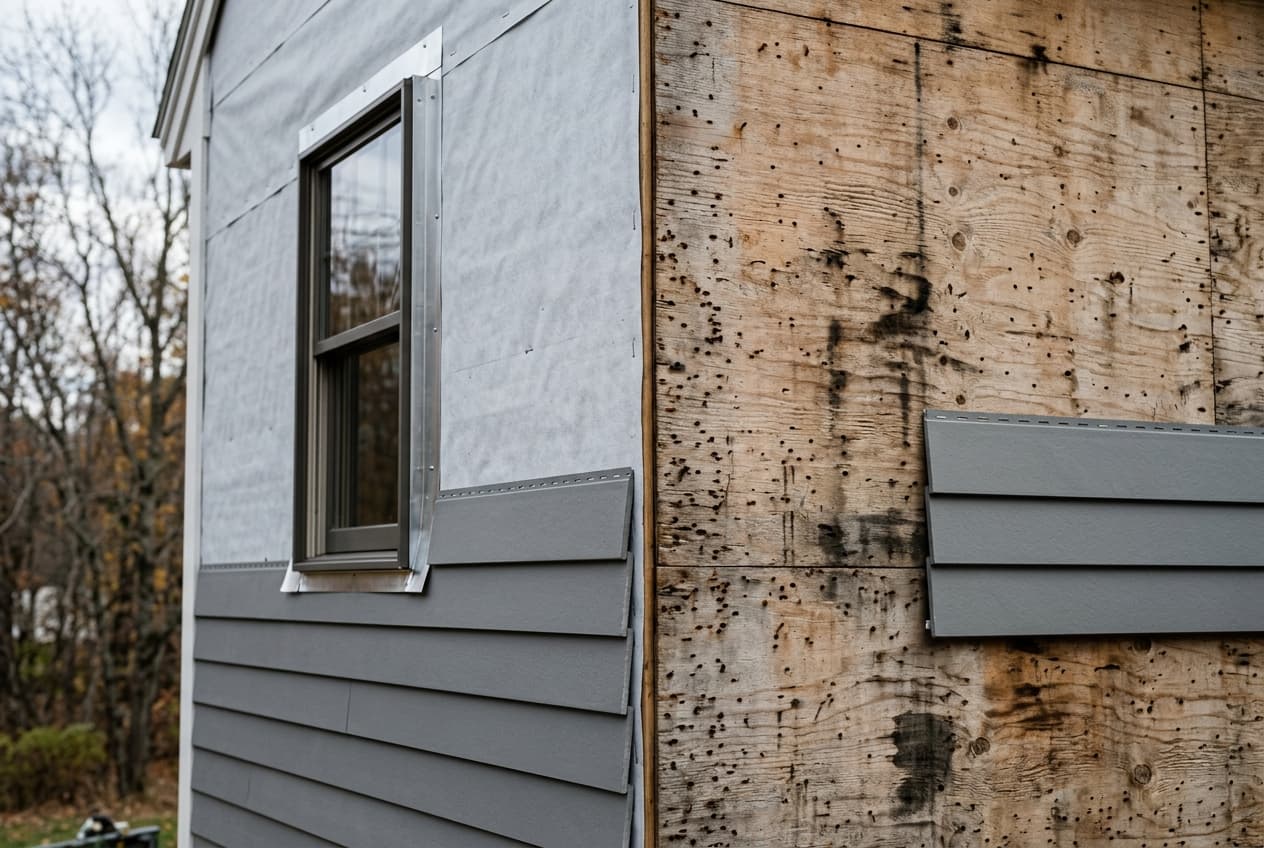
- The barrier and the flashing. No new house wrap, or old window flashing reused. These are the layers that keep water out of the sheathing, and they’re invisible once the siding is on.
- Trim, soffit, and fascia. Left as-is, so the new siding meets tired trim. It reads as unfinished within a season.
- The permit. Skipping it skips the town inspection, and a homeowner who pulls it themselves gives up state protections. Our article on what a siding contract should include explains why the contractor should pull it.
- Material grade. A thinner panel or a different product line than the one you were shown, described only as “vinyl.”
- Insurance and the crew. Less coverage, or a subcontracted crew nobody on the bid has met. Our article on in-house crews versus subcontractors covers what to ask.
How do you tell which bid you’re holding?
Compare scopes, not totals. A complete siding estimate is one total price plus a full written description of three things: the company standing behind the work, the exact scope, and the materials by brand and product line. Put the descriptions side by side. If a bid is short on description, that’s the first answer. Our siding estimate checklist is built for exactly this, and our article on why siding quotes vary so much walks through the usual gaps.
| If the low bid… | Ask |
|---|---|
| Doesn’t mention tear-off | “Does the old siding come off, and what happens if you find rot?” |
| Says “vinyl” with no brand or line | “Which product line and profile, and can I see the sample?” |
| Is silent on house wrap and flashing | “What goes behind the siding, and is window flashing new?” |
| Leaves out trim, soffit, and fascia | “Is that excluded, or included and not listed?” |
| Doesn’t name a permit or a warranty | “Who pulls the permit, and what does the workmanship warranty cover?” |
Good contractors answer these without flinching. The full list of questions to ask a siding contractor goes further, but these five settle most low bids.
Find your style, then see it on your own house
TruFit is a two-minute survey that tells you which siding style fits your home and your taste. TruPro then puts it on a 3D model of your actual house — mix and match styles, colors, and trim and watch one total update as you go. Both are part of our free in-person siding assessment.
Schedule a free assessmentWhat does a very low bid cost later?
The savings are immediate. The bill arrives behind the wall. Siding installed over rot keeps the rot going, out of sight, until a window sill goes soft. Wrap and flashing that were skipped or lapped the wrong way route water into the sheathing at every opening, which is how a hidden cost that a complete bid would have found on day one becomes a structural repair years later. And when the contractor has no workmanship warranty, or has moved on, the fix is yours to arrange and pay for, usually with a second crew undoing the first.
None of that is bad luck. It’s the predictable result of the specific items that were removed to reach the number. Our pillar’s section on red flags when hiring a siding contractor lists the other tells.
“The low bid we worry about isn’t the one that says less. It’s the one that says nothing. If a quote can’t tell you what’s behind the siding, the honest answer is usually ‘not much.’”
Global Roofing field team — Massachusetts in-home siding assessments
How do you get one number you can trust?
Start from the house, not from a guess. With TruPro, we build a 3D model of your actual home and price the design from what it measures, so the total reflects your walls, your windows, and your trim rather than a driveway estimate. You can put a simpler version and an upgraded one side by side and see exactly what changes. The number you sign is the number you get, and the crew builds from that same design. That’s the opposite of a low bid with nothing behind it: one total, fully described, from the real house. If you’re weighing a roofing bid the same way, our roofing version of this question follows the same logic.
Frequently asked questions
Should you hire the cheapest siding bid?
Only if it describes the same job as the others. A smaller scope, a lean crew, or an off-season slot can produce an honest low number. A bid far below the rest usually leaves out tear-off, house wrap, flashing, trim, the permit, disposal, material grade, or insurance. Compare written scopes first, then price.
Why is one siding quote so much lower than the others?
The gap is almost always in what you can’t see from the street: going over the old siding, a thinner or missing barrier, reused flashing, untouched trim, no permit, a different product line, or less insurance. Each lowers the number without changing how the house looks on day one.
How do you compare siding bids fairly?
Put the written scopes side by side. A complete estimate is one total plus a full description of the company, the scope, and the materials by brand and line. Ask what’s excluded, whether the old siding comes off, what goes behind the new siding, and who pulls the permit. Once the scopes match, the cheapest can be a good choice.
What happens if a cheap siding job is done wrong?
The problems show up behind the wall. Siding over rot keeps the rot going, and missing or misplaced wrap and flashing let water into the sheathing at the windows. Without a workmanship warranty or a contractor you can reach, the fix is yours. A fair bid for a complete job is usually cheaper over the years you own the home.
How we wrote this guide
This article reflects how Global Roofing scopes and prices real siding projects on Massachusetts and New England homes, checked against Vinyl Siding Institute installation guidance, the Massachusetts Home Improvement Contractor law’s contract requirements, and Consumer Reports’ siding buying guide. It was reviewed for accuracy by a licensed Massachusetts contractor on our team. See our full editorial process for how we research and update every article.
Sources
- Vinyl Siding Institute — installation standards (water-resistive barrier, flashing, and fastening). vinylsiding.org
- Mass.gov — Home Improvement Contract Requirements, Details, and Sample Language (what a Massachusetts contract must include). mass.gov
- Consumer Reports — Siding Buying Guide (materials, grades, and what to know before you buy). consumerreports.org