

Key Takeaways
- The label matters less than three answers: who trained the crew on the details behind the wall, whose insurance covers them, and who you call if something is wrong later.
- Subcontracted crews can do excellent work. The risks are accountability gaps, drift from the manufacturer’s spec, and insurance that may not cover the people on your ladder.
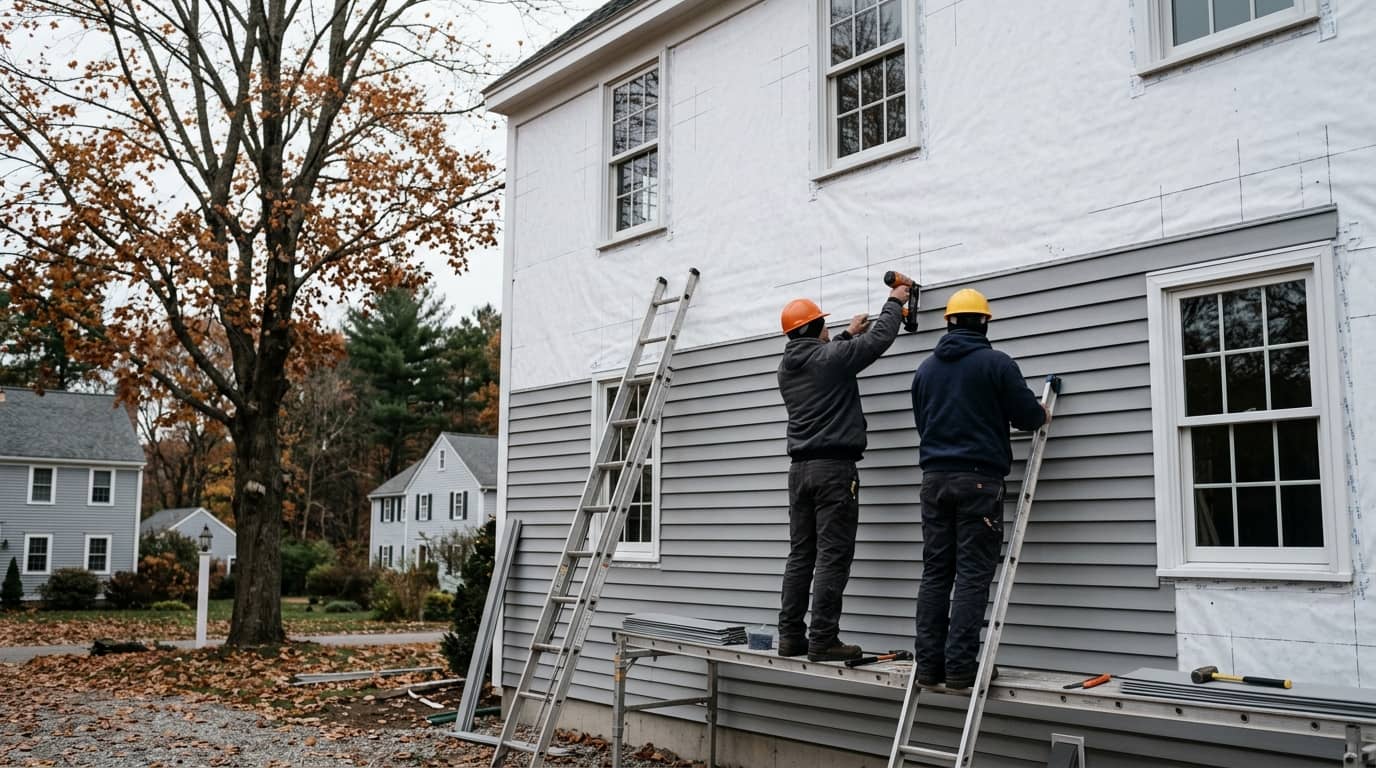
- Siding is where this matters most, because the house wrap, flashing, and fastening are hidden the day the job is done and decide how the wall handles water for decades.
- Manufacturer warranties survive only when siding is installed to spec, so whoever holds the nail gun decides whether your product coverage holds up.
- Get the crew answers in writing on the estimate or contract. Specific answers point to an accountable setup either way.
Does it matter who actually installs your siding?
You have two bids on the table. One company says its own crew will do the work. The other will send a crew it hires for the job. Neither answer tells you much on its own. What matters is whether the people on your ladder were trained on the details that keep water out of the wall, whether their insurance covers them while they’re on your property, and whether the company you signed with will send someone back when a piece of trim lifts two winters from now.
An in-house crew makes those three things easier to guarantee. A subcontracted crew makes them worth checking. That’s the honest difference, and it’s why the crew question sits near the top of our guide to hiring a siding contractor.
What does “in-house crew” actually mean?
It means the installers are employees of the company you hired. They’re trained on that company’s way of doing a wall, they work under its insurance, they show up in the same trucks, and the same faces are usually there from tear-off to the final walk-through. When the estimator promises a particular flashing detail, the people installing it heard the same promise.
The practical upside is consistency. A company that runs its own crews can tell you who the crew lead will be before the job starts, and it owns every mistake without a conversation about whose fault it was. The tradeoff is capacity: an in-house company can only take on as much work as its crews can do well, so the schedule may run a few weeks out.
What does subcontracting mean, and when is it fine?
A subcontracted crew works for itself and takes jobs from the company that sold you the project. Many are specialists who have sided hundreds of homes, and a well-run contractor keeps the same trusted crews for years. When that’s the arrangement, the work can be as good as anything an employee crew produces.
The problems show up when the arrangement is loose. A crew assigned the week before your job may install to its own habits rather than the spec you were sold, which is how house wrap gets lapped the wrong way and window flashing gets skipped. A crew paid by the square has a reason to move fast. And if the crew carries its own insurance, or doesn’t, the company you hired may not be the one covering an injury in your yard. None of that is inevitable. All of it is worth asking about.
Find your style, then see it on your own house
TruFit is a two-minute survey that tells you which siding style fits your home and your taste. TruPro then puts it on a 3D model of your actual house — mix and match styles, colors, and trim and watch one total update as you go. Both are part of our free in-person siding assessment.
Schedule a free assessmentWhy does the crew matter more on siding?
Because almost everything that decides how long siding lasts is invisible the day the job is done. The water-resistive barrier, the flashing at every window and door, the kick-out where a roof meets a wall, the gap left so vinyl can move with the temperature: those are done by whoever holds the nail gun, and no one can inspect them from the driveway afterward. When one is wrong, the first sign is usually water getting in behind the siding years later.
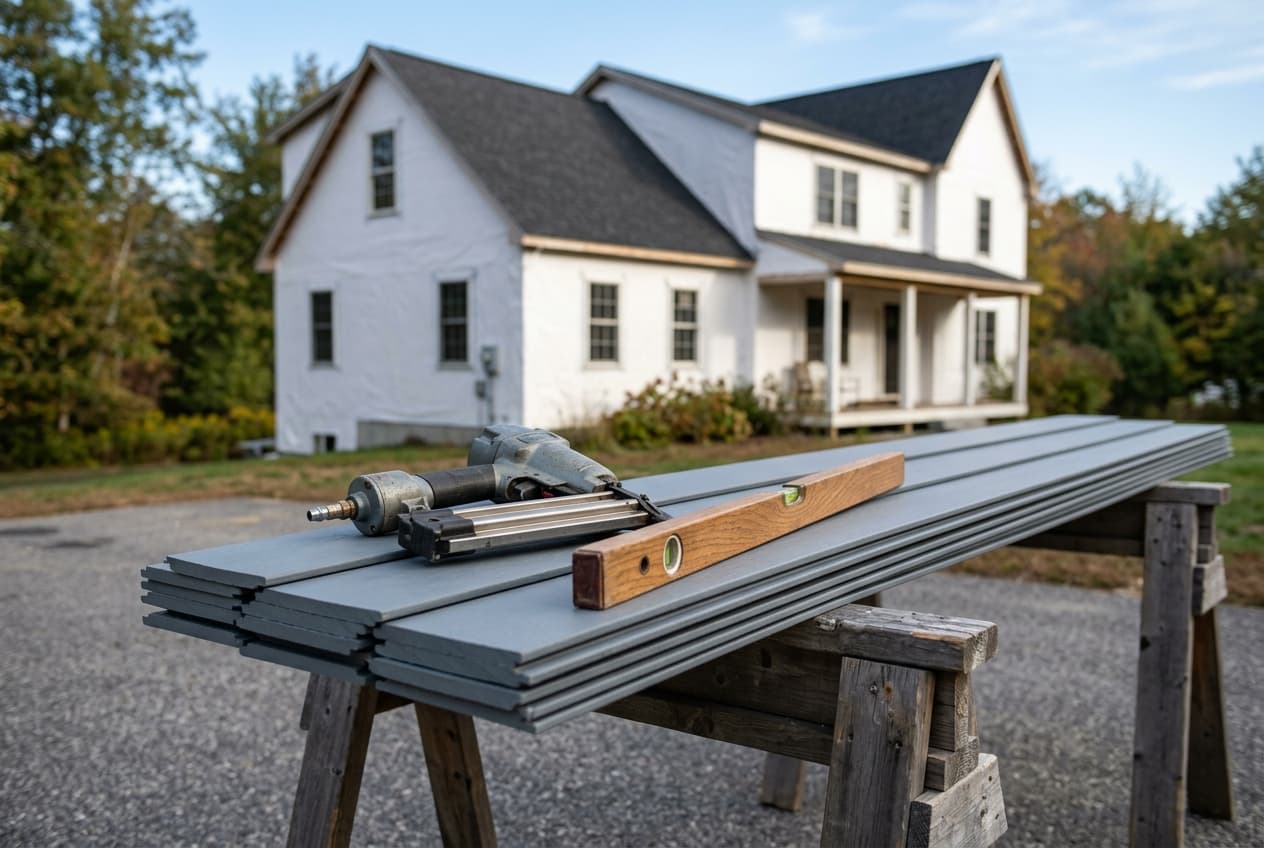
The warranty rides on the same details. Siding manufacturers back their products only when they’re installed to the published specification, which is the real reason the installer matters more than the brand. A crew that drifts from the spec can quietly void the product coverage you thought you were buying, and the workmanship warranty is only as good as the company’s willingness to come back.
How can you tell which crew you’re getting?
Ask plainly, and ask for the answers in writing. Most of the questions below belong on the same list as the rest of the questions to ask a siding contractor. The point isn’t to catch anyone out. It’s to make the arrangement specific before you sign.
| Ask | In-house answer | Subcontracted answer | What to verify |
|---|---|---|---|
| Who will be on my house? | A named crew lead, employed by the company. | A crew assigned when the job is scheduled. | A name and a start date, on the contract. |
| Whose insurance covers the workers? | The company’s liability and workers’ comp. | The sub’s own policy, or the company’s. | A certificate of insurance naming the covered party; call the carrier. |
| Who supervises day to day? | The crew lead or a project manager on site. | Varies; sometimes no one from the company. | Who inspects the wrap and flashing before siding covers them. |
| Will the same crew finish the job? | Yes, barring illness. | Usually, but crews can be reassigned. | A commitment in writing. |
| Who handles a callback? | The company, with its own people. | The company, if it can get the sub back. | The workmanship warranty and who signs it. |
The insurance line deserves a minute. A certificate of insurance lists who is covered and until when. If the workers on your property aren’t employees of the company on that certificate, ask what covers them. It’s a fair question, and a good contractor has a ready answer.
“The house wrap and the window flashing are covered by lunch on day two. Nobody is going to see them again for twenty years. So the only thing that protects that wall is whether the person nailing it up was trained to do it the right way and cares that it was. That’s the whole argument for knowing your crew.”
Global Roofing field team — Massachusetts in-home siding assessments
Who do you call when something’s wrong?
This is where the two setups separate most. When a company runs its own crews, the people who installed your siding are the people who come back to fix it, and the company has no one else to point at. When a company subcontracts, a callback depends on whether that crew is still available, still working with the company, and willing to return for a job that doesn’t pay. Good contractors handle it anyway. Ask how, before you need to.
Accountability also starts before the first nail. With TruPro, the design you approve on the 3D model of your house is the same design the crew builds from, wall by wall, with a materials list drawn straight from it. Nothing is re-typed or guessed on the way to the truck, so what you approved is what gets installed. Global Roofing installs siding with its own crews, which is one reason we can make that promise.
Whichever setup you choose, weigh it alongside the other signals: whether a bid is suspiciously low and what a local company and a national one each bring to the table. The crew question is one of the best ways to tell a careful contractor from a careless one, but it works best as part of the whole picture.
Frequently asked questions
Is it bad if a siding contractor uses subcontractors?
Not by itself. Plenty of subcontracted crews do excellent work. Ask who trained the crew on the details behind the wall, whose insurance covers them, and who you call a year later. Clear written answers make the arrangement fine; vague ones are the concern.
How do I know if a siding company uses its own crew?
Ask who will be on your house, whether they’re employees, and whether the same crew stays for the whole job. Then check the certificate of insurance to see whose workers’ compensation covers them. A company with its own crew can name the crew lead before the job starts.
Does a subcontractor’s work affect my siding warranty?
It can. Manufacturer warranties hold only when siding is installed to the published specification, so whoever holds the nail gun decides whether your product coverage survives. The workmanship warranty is a separate promise from the contractor, and it only counts if that company will send someone back.
What questions reveal who will actually install my siding?
Who is on the crew and are they employees; who supervises day to day; whose insurance covers the workers; whether the same crew finishes; and who handles a callback. Ask for each answer in writing on the estimate or contract.
How we wrote this guide
This article reflects how Global Roofing staffs and supervises real siding projects across Massachusetts and New England, checked against Vinyl Siding Institute installation guidance, Massachusetts home improvement contractor rules, and consumer guidance from the Better Business Bureau and the Federal Trade Commission on hiring a contractor. It was reviewed for accuracy by a licensed Massachusetts contractor on our team. See our full editorial process for how we research and update every article.
Sources
- Vinyl Siding Institute — installation standards and why installing to specification matters. vinylsiding.org
- Commonwealth of Massachusetts — Massachusetts law about home improvement (contractor registration, contracts, and consumer protections). mass.gov
- Better Business Bureau — Hiring a contractor: what to check before you sign. bbb.org
- Federal Trade Commission — Hiring a contractor (insurance, subcontractors, and written agreements). consumer.ftc.gov