

Key Takeaways
- Mold, mildew, or algae on siding is almost never a reason to replace it. It grows on the surface wherever siding stays damp and shaded, and on sound siding it washes off.
- Green film is algae and is cosmetic. Dark speckles or streaks are mildew. Both feed on moisture and airborne dust, not on the siding itself.
- Clean with mild detergent, water, and a soft brush. Go easy with pressure washers on vinyl, which can push water up behind the panels.
- The flag worth acting on is growth that keeps coming back in the same spot, stains that bleed through from behind, or soft siding nearby. That points to water in the wall, not on it.
Does mold on siding mean it needs replacing?
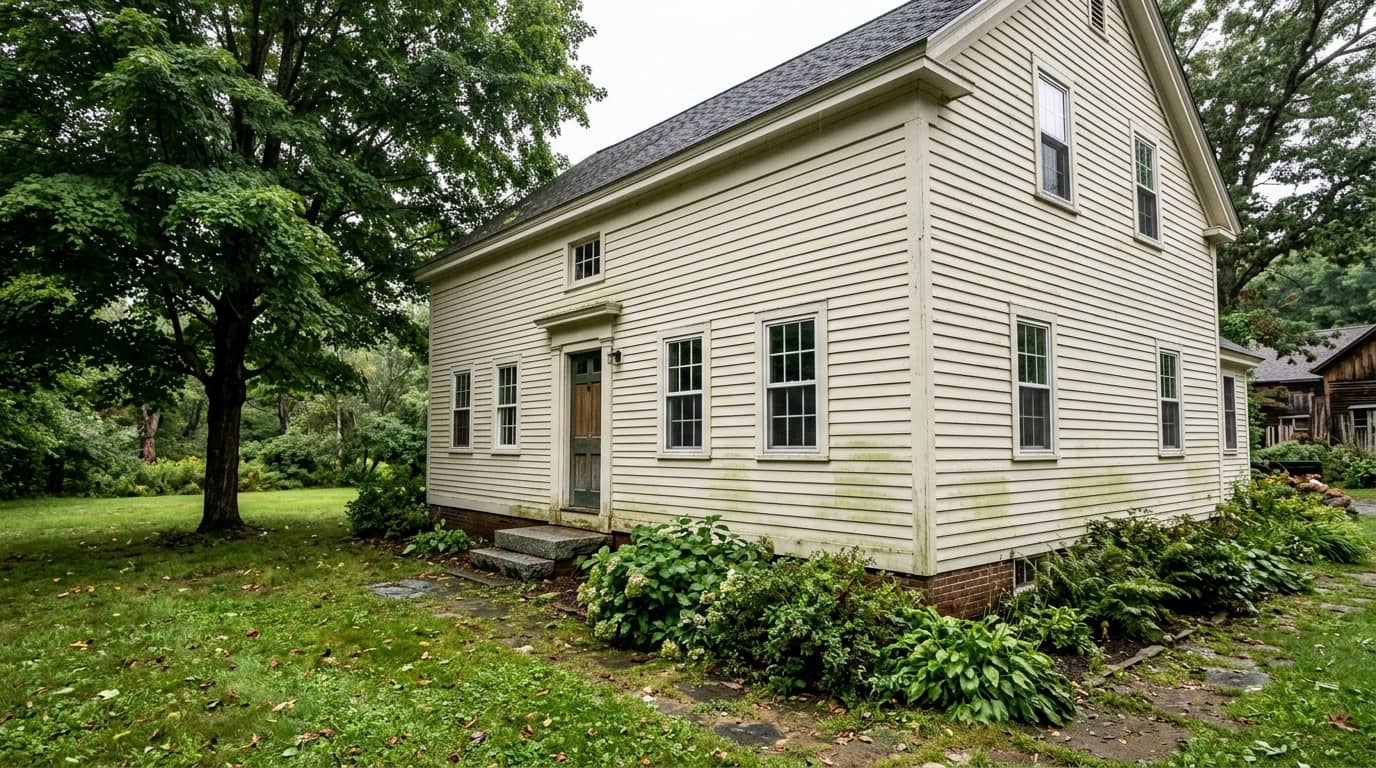
Usually not. What most homeowners call “mold” on the outside of a house is a thin layer of algae or mildew living on the surface of the siding. It shows up on the shady side, low on the wall, and behind shrubs, because that’s where the siding stays damp longest. It feeds on moisture and the dust that settles on the wall. It does not eat vinyl, fiber cement, or a painted finish, and on siding that’s otherwise in good shape it comes off with soap, water, and a soft brush.
So the growth itself isn’t the verdict. What matters is why that spot stays wet. Nine times out of ten the answer is shade or a dripping gutter, and the fix is a cleaning and a little drainage work. The other time, the moisture is coming from behind the siding, and that’s the case worth understanding before you decide anything about whether you need new siding.
Algae, mildew, or mold: what’s actually on your siding?
Three different things get lumped together, and they mean slightly different things about the wall:
| What you see | What it is | What it usually means |
|---|---|---|
| A thin green or gray-green film, often across a whole shaded wall | Algae | Shade and damp air. Cosmetic. Cleans off easily and does not mean the siding is failing. |
| Black or dark gray speckles and streaks, often in the grooves and under the lap edges | Mildew (a surface mold) | Moisture plus a food source such as dust, pollen, or a chalking paint film. A maintenance job on sound siding. |
| Dark staining that looks like it’s coming through the siding, returns fast after cleaning, or sits over a soft spot | Moisture from behind | Water is getting into the wall and feeding growth from the back. This is the pattern that needs a real look. |
The first two are about the surface. The third is about the wall, and telling them apart is the whole trick.
Why does New England siding grow so much of it?
Our climate does most of the work. Humid summers, long stretches of overcast weather, and mature trees shading the north and east sides of a house keep siding damp for hours after every rain. In winter, snow piled against the base of a wall holds the lowest courses wet for weeks at a time, which is why growth so often starts near the ground and works upward. Add a few common helpers and it spreads faster:
- Shrubs and trees close to the wall block sun and airflow, so the siding behind them never dries out.
- Overflowing gutters and short downspouts send a sheet of water down one section of wall every storm.
- A chalking or worn finish on older painted or vinyl siding gives mildew something to hold onto.
None of these mean the siding is done. They mean that wall lives wet.
Can’t tell if it’s surface or something more?
Our free in-person siding assessment checks the wall where the growth keeps returning, low on the house and around openings, and tells you honestly whether it’s a cleaning, a repair, or water behind the siding.
Get a free siding assessmentHow do you clean mold or algae off siding?
For surface growth on sound siding, the approach is the same gentle one across materials, with a couple of cautions:
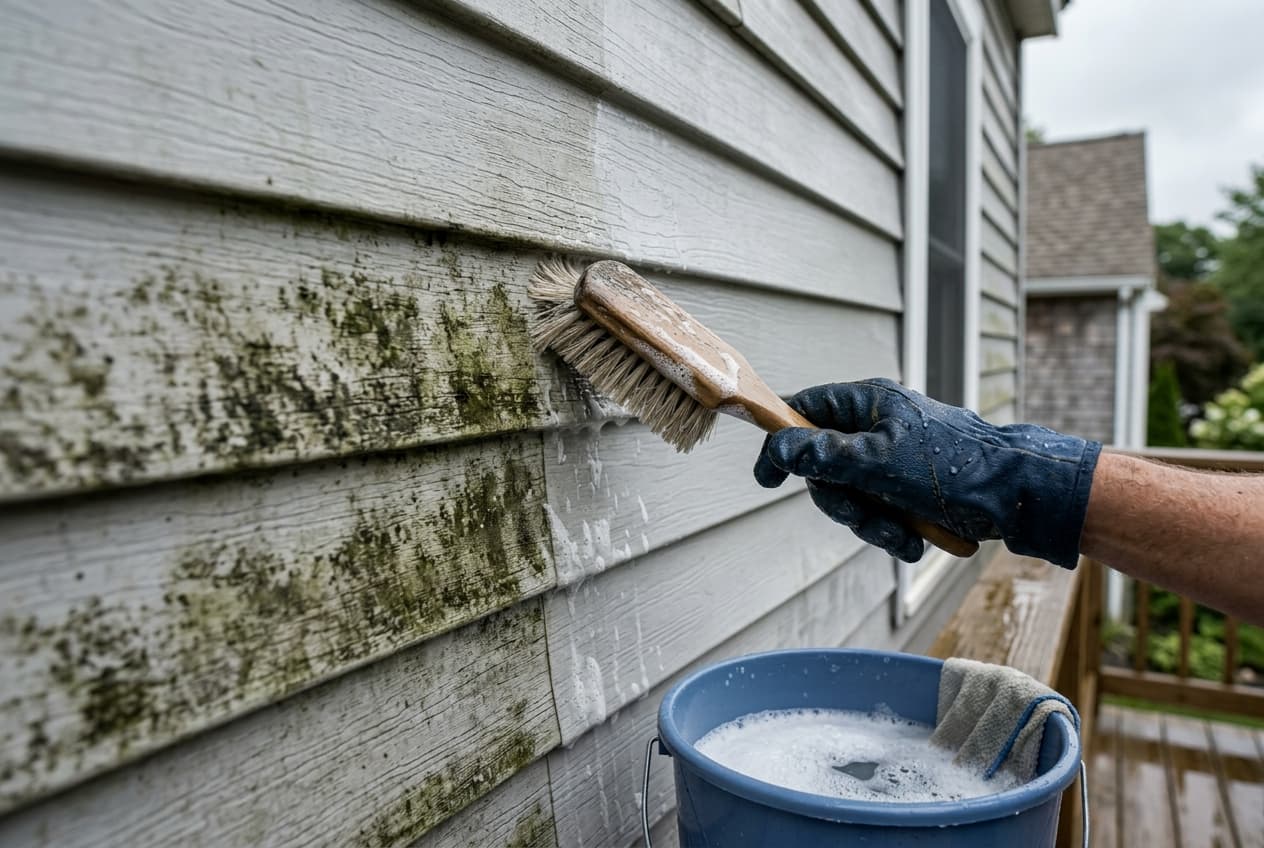
- Mix a mild cleaner. A general-purpose household cleaner or mild detergent in water handles algae and light mildew. For stubborn mildew, cleaning products made for exterior siding are widely available; follow the label and your siding manufacturer’s care guidance.
- Wet down nearby plants first and rinse them after if you use anything bleach-based, so runoff doesn’t burn them.
- Scrub gently, bottom to top, with a soft-bristle brush or a cloth. Working upward keeps dirty water from streaking the clean siding below.
- Rinse top to bottom with a garden hose so the water sheds the way the siding is designed to shed it.
Two cautions. Go easy with pressure washers, especially on vinyl: a close, high-pressure stream aimed upward can drive water behind the panels, the very problem you’re trying to rule out. And skip harsh solvents and abrasive pads, which dull a vinyl finish or scuff the factory coating on fiber cement and engineered wood.
When is it more than surface growth?
Here’s the distinction we care about on an assessment. Surface algae and mildew are fed from the outside by shade and rain. Growth fed from the inside of the wall behaves differently, and it leaves clues:
- It comes back fast. A cleaned wall that’s dark again within a few weeks, in the same place, has a steady water source. If you can’t find one outside (a gutter, a sprinkler, a downspout), suspect one behind the siding.
- It’s localized under an opening. A dark streak that starts at a window sill, a door head, or the joint where a roof meets a wall, and runs down from there, is often water getting past the flashing, not shade.
- The siding near it is soft or swollen. Press gently on wood or engineered wood siding and the trim around it. Give, bubbling paint, or swollen edges mean the material is wet through, not just wet on top.
- The stain looks like it’s bleeding through. Discoloration that won’t scrub off, or that shows on the panel face in a pattern matching what’s behind it, is coming from the back.
- There are signs inside. A musty smell, a stain or bubbling paint on the inside of that same exterior wall, or a sill that stays damp means water has made it through. Our article on how to tell if water is getting in behind your siding walks through those clues in detail.
When several of those line up, the growth isn’t the problem; it’s the messenger. That’s the point where a cleaning stops being the answer and it’s worth having someone look at what moisture behind the siding is doing to the wall. It may still be a repair at one window rather than a re-side, but you want to know which. And since growth follows water, prevention is mostly drying the wall out: trim shrubs back, clean the gutters, extend downspouts, aim sprinklers off the walls, and keep painted siding on its repainting schedule. While you’re looking, check for the other signs that siding is wearing out: growth alongside cracks, warping, or soft spots is a pattern, not a chore.
“A lot of the ‘mold’ calls we get are a garden hose and twenty minutes. What we actually look at is where it is. Green across the whole north wall is shade. A dark streak that starts under one window and comes back every spring is water, and that’s the one worth pulling a piece of siding to check.”
Global Roofing field team — Massachusetts in-home siding assessments
Frequently asked questions
Does mold on siding mean I need new siding?
Usually not. Algae and mildew grow on the surface wherever siding stays damp and shaded, and on sound siding they wash off. The exception is growth that returns in the same spot within weeks, staining that bleeds through from behind, or siding that feels soft nearby. Those point to moisture in the wall and deserve a closer look.
How do you clean mildew off vinyl siding?
Mild detergent or a general-purpose cleaner in water, a soft-bristle brush, scrub from the bottom up, rinse from the top down with a hose. Avoid harsh solvents, and go easy with pressure washers, which can drive water up behind vinyl panels. Follow your siding manufacturer’s care guidance.
Why does mold keep coming back on my siding?
Because something keeps that spot wet: an overflowing gutter, a short downspout, a sprinkler, shrubs against the wall, or water getting in behind the siding at a window, a roof-to-wall joint, or the base. Find and fix the water source and the growth stops. If there’s no source outside, look behind the siding.
Is mold on the outside of my house dangerous?
Exterior surface growth is a cosmetic and maintenance issue in most cases. For health questions, the EPA’s guidance on mold and moisture is the right source, and it deals mainly with indoor mold. The exterior concern is what returning growth may be telling you about moisture in the wall.
How we wrote this guide
This article reflects what Global Roofing sees on real Massachusetts and New England homes, checked against the U.S. Environmental Protection Agency’s guidance on mold and moisture, the Vinyl Siding Institute’s cleaning and maintenance guidance, and manufacturer care instructions for vinyl, engineered wood, and fiber cement siding. It was reviewed for accuracy by a licensed Massachusetts contractor on our team. See our full editorial process for how we research and update every article.
Sources
- U.S. Environmental Protection Agency — A Brief Guide to Mold, Moisture and Your Home. epa.gov
- Vinyl Siding Institute — cleaning and maintenance guidance for vinyl siding. vinylsiding.org
- U.S. Environmental Protection Agency — Moisture Control Guidance for Building Design, Construction and Maintenance (how water gets into walls and why trapped moisture damages them). epa.gov
- James Hardie — care and maintenance guidance for fiber cement siding. jameshardie.com