

Key Takeaways
- There is no single number. How long siding lasts depends on the material, the quality of the install, and whether water has been getting behind it — in roughly that order.
- Vinyl never rots or needs paint; engineered wood is durable but reaches its full life only with repainting on schedule; fiber cement is among the longest-lasting siding available and still gets repainted eventually.
- A warranty and a service life are different things. The manufacturers publish long limited warranties on the material; weather wear, install mistakes, and trapped moisture are what actually end most siding, and no warranty covers those.
- New England shortens every material’s range. Freeze-thaw, wind-driven rain, and snow sitting at the base of the wall do most of the damage — which is why condition tells you more than age.
How long does siding last in New England?
Long enough that most homeowners replace it for a reason other than age. A properly installed vinyl job doesn’t rot and never needs paint, and it usually outlives the owner’s time in the house. Engineered wood is a durable material that reaches its full life only if it’s repainted on schedule. Fiber cement is among the longest-lasting siding you can put on a house, and it too gets repainted eventually.
What moves any of those is our climate and the install. Water works into a small gap, freezes, and widens it; storms push rain sideways into seams; snow sits against the bottom courses for weeks. A wall built to handle that reaches the top of its range; one with skipped flashing or panels nailed too tight can fail a decade early whatever it’s made of. That’s why our full guide on whether you need new siding starts with condition, not the year it went on.
How long does each siding material last?
The three materials we install aren’t a ladder from worst to best; each is the right call for a different homeowner and wears out in its own way.
Vinyl (CertainTeed) is the fit when you want a clean, updated exterior with the least upkeep. It doesn’t absorb water, so it doesn’t rot, and the color runs through the panel, so there’s nothing to repaint. What ends it early is impact on a brittle winter panel, heat from a grill or reflected window glare, or panels pinned too tight at install.
Engineered wood (LP SmartSide) is the balanced option when you want the look of real wood and a noticeable curb-appeal upgrade. The boards are treated to resist decay and insects. The catch is that it’s a painted product: the finish is doing real protective work, and once it’s let go past its life, water gets into the board.
Fiber cement (James Hardie) is the long-haul choice when durability and a premium look are the priorities. It doesn’t burn or rot, shrugs off cold that would crack vinyl, and still gets repainted when the finish wears. When it fails early it’s almost never the board; it’s a flashing gap that let water behind it.
| Material | Right for | To reach its full life | What ends it early |
|---|---|---|---|
| Vinyl (CertainTeed) | A clean, updated look with the least upkeep, without over-investing | Rinse it once a year; keep grills and reflected window glare away from the panels | Impact cracks in deep cold, warping from heat or a too-tight install, chalky fading on old sun-facing walls |
| Engineered wood (LP SmartSide) | A noticeable curb-appeal upgrade that balances cost, look, and durability | Repaint on schedule; keep caulk at joints and trim sound; keep it clear of soil and snow | Paint neglected past its life, unsealed ends and joints, boards in contact with the ground |
| Fiber cement (James Hardie) | Maximum durability and a premium finish for the long haul | Repaint when the finish wears; keep flashing and caulk maintained | Install details that let water behind it — gaps, missing flashing, no clearance at the base |
Our guide on vinyl, engineered wood, and fiber cement side by side covers look, maintenance, and New England fit.
See also what each warranty covers, and which siding holds color best.
Weighing the three materials?
Our Siding Material Comparison Checklist puts vinyl, engineered wood, and fiber cement on one printable page — look, maintenance, durability, and what drives the price — so you can score them against your own house.
Get the checklist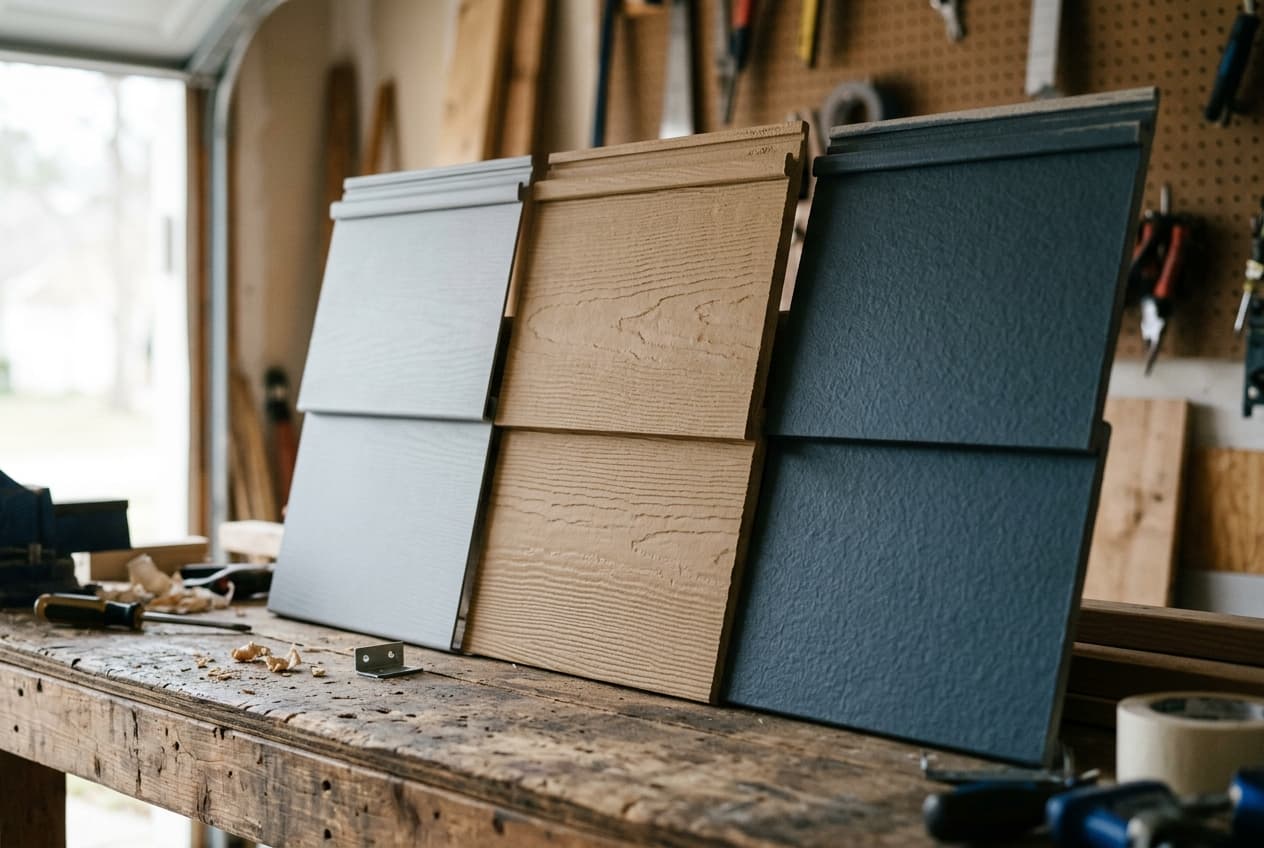
What does the warranty tell you about lifespan?
Less than it seems. A warranty is the manufacturer’s promise to stand behind defects in the material; service life is how long the siding actually performs on your house. The published terms are still worth knowing:
- CertainTeed backs its Monogram vinyl siding with a lifetime limited warranty.
- LP SmartSide carries what LP calls a 5/50 limited warranty: a five-year, 100% labor and material replacement feature, then a 50-year prorated material replacement feature.
- James Hardie backs its siding, trim, and soffit with a transferable 30-year, non-prorated substrate limited warranty, and its ColorPlus factory finishes carry a separate 15-year limited finish warranty against peeling, cracking, and chipping.
Notice what those cover: the material, and in some cases the factory finish. They don’t cover weather wear, an installer’s mistakes, or water that got behind the siding through a flashing gap. The other half of the picture is the installer’s workmanship warranty, which covers the install, and that’s a big part of why the installer matters more than the brand.
“We pull off thirty-year-old vinyl that’s still fine and ten-year-old siding that’s rotting the sheathing underneath. Same street, same weather. The difference is almost never the material. It’s whether somebody flashed the windows and left the panels room to move.”
Global Roofing field team — Massachusetts in-home siding assessments
What shortens or stretches siding’s life here?
Two identical houses can be decades apart in siding condition. The usual reasons:
- The install. Vinyl nailed tight instead of hung loose. Window and door flashing skipped. No kick-out flashing where a roof meets a wall. Cut ends left unsealed. Every one of these is invisible on day one and obvious in year eight.
- Trapped moisture. Siding sheds most of the water and lets the layers behind it drain the rest. When the house wrap (the water-resistant sheet under the siding) is torn or missing, water sits against the sheathing and rot starts from the inside out.
- Shade and snow. North walls that never dry out age faster than the sunny side of the same house, and the bottom courses spend weeks each winter wet. Siding with no clearance from the ground takes the worst of it.
- Neglected maintenance. On painted products the finish is the armor. Let it go past its life and the board starts absorbing water.
The levers that stretch it are the mirror image, and most are set on install day: install to the manufacturer’s specification over intact house wrap, keep water moving away from the walls with clean gutters and grading that slopes away from the foundation, do the maintenance the material asks for, and walk the house each spring, low on the walls and around the windows, looking for anything new.
How much life does your siding have left?
The calendar can’t tell you. Siding that sheds water, holds its finish, and lies flat on the wall has life left whatever its age. Siding with the signs that it’s wearing out is telling you something no matter how new it is, and if the trouble is in one spot, read when a repair is enough and when it isn’t before you assume the worst.
If you can’t tell from the yard, that’s normal: the flashing and the sheathing decide the answer, and you can’t see either. Our guide to reading your siding’s condition covers what to look for, and a free assessment looks at the rest.
What each material asks of you along the way — paint, caulk, cleaning — is the other half; see what siding costs to maintain over its life.
Frequently asked questions
How long does vinyl siding last in New England?
Vinyl doesn’t rot and never needs paint, so a properly installed vinyl job is one of the longest-lasting, lowest-upkeep exteriors you can put on a home here. Cold-weather impact cracks, heat warping, and a too-tight install are what end it early. CertainTeed backs its Monogram vinyl with a lifetime limited warranty.
How long does engineered wood siding last?
Engineered wood such as LP SmartSide is durable and resists rot and insects, but it reaches its full life only if the paint is kept up and the joints stay sealed. LP publishes a 5/50 limited warranty: five years of full labor and material coverage, then a 50-year prorated material feature.
How long does fiber cement siding last?
Fiber cement such as James Hardie is among the longest-lasting siding available and holds up to New England cold and impact better than the alternatives. It still needs repainting when the finish wears. James Hardie backs the boards with a transferable 30-year, non-prorated substrate limited warranty.
Does a lifetime siding warranty mean the siding lasts a lifetime?
No. A manufacturer’s warranty covers defects in the material under the terms in the document. It doesn’t cover weather wear, installation mistakes, or water that got behind the wall, which is what actually ends most siding. Service life depends far more on the install and on moisture than on the warranty term.
How we wrote this guide
This article reflects what Global Roofing sees on real Massachusetts and New England homes, checked against the warranty terms each manufacturer publishes on its own site and against independent guidance from Consumer Reports and This Old House on siding materials and maintenance. It was reviewed for accuracy by a licensed Massachusetts contractor on our team. See our full editorial process for how we research and update every article.
Sources
- CertainTeed — Monogram vinyl siding (lifetime limited warranty). certainteed.com
- LP Building Solutions — The What’s & Why’s of the LP SmartSide 5/50 Limited Warranty. lpcorp.com
- James Hardie — Lifetime Value Siding Products (30-year non-prorated substrate warranty; ColorPlus finish warranty). jameshardie.com
- Consumer Reports — Siding Buying Guide (materials, durability, and maintenance). consumerreports.org
- This Old House — All About Siding (materials, care, and warning signs). thisoldhouse.com