

Key Takeaways
- All siding fades under sun. Vinyl fades through the panel and can’t be repainted without voiding its warranty; engineered wood and fiber cement fade through the finish, which a repaint restores.
- South- and west-facing walls age fastest, and dark colors show it first. Uneven fade and chalking are the signs that matter, not gradual softening.
- Reflected sunlight from a neighbor’s energy-efficient windows can warp vinyl of any color. Blocking the path is the fix, not a different panel.
- Warranties count fade only past a measured threshold. CertainTeed fade coverage doesn’t transfer and is capped on some lines; LP and James Hardie finish warranties run fifteen years.
Does vinyl siding fade?
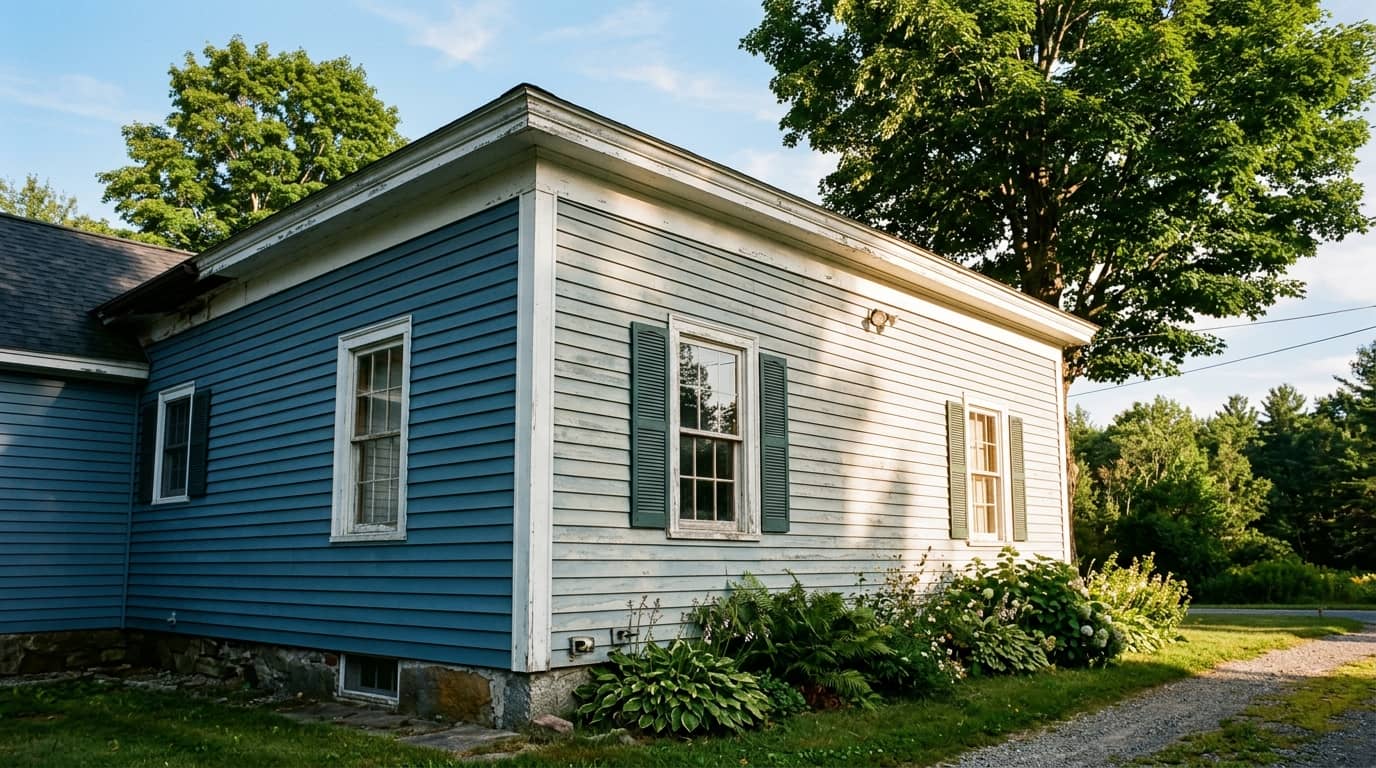
Stand at the corner where an older house’s south wall meets its north wall and you can see the answer: the sunny side is a shade lighter. Yes, vinyl siding fades. It fades slowly, because the color is mixed into the panel rather than painted on, and modern formulations resist ultraviolet light far better than the vinyl of the 1980s and 1990s. But nothing left in New England sun for twenty summers looks the way it did on day one.
The useful question isn’t whether siding fades but how it fades: evenly or in patches, on the surface or through the material, and whether it can be brought back. Those answers differ by material, which is why they belong in the material decision rather than an afterthought.
Why does siding fade in the first place?
Sunlight does the work. Ultraviolet light breaks down pigments and the binders that hold them, and heat speeds it up. Every exterior is a race between the sun and whatever the manufacturer put in to slow it down: UV stabilizers in vinyl, a factory-baked finish, or the paint film on a field-painted board.
Three things decide how fast a given wall loses:
- Exposure. South and west walls take the most direct sun and the afternoon heat. A north wall under a maple can look new for decades.
- Color. Dark colors absorb more heat and carry more pigment to lose, so any lightening shows sooner and more obviously.
- Age of the formulation. Older vinyl and older paints had less protection built in. Much of the badly faded siding around Massachusetts is thirty-year-old product, not evidence about what’s sold today.
How do vinyl, engineered wood, and fiber cement hold color?
The three materials we install fade in different ways, and the difference matters more than the speed.
Vinyl (CertainTeed) carries its color through the panel. There’s no film to peel or crack, and a good wash restores more color than people expect, because a lot of “fade” on vinyl is grime. What vinyl can’t do is take paint to come back: painting over a factory finish voids the warranty, and darker paint absorbs more heat than the panel was designed for. Fade on vinyl is permanent but slow, and CertainTeed formulates its darker colors to hold up to the heat they absorb. Which line you choose changes the look more than the fade resistance, as we cover in which CertainTeed vinyl line fits your home.
Engineered wood (LP SmartSide) fades through its finish. The board underneath doesn’t care about UV; the paint does. LP’s factory-applied ExpertFinish holds color noticeably longer than paint brushed on at the house, and when it softens, a repaint brings the board back to new. That’s the trade: more upkeep, but color you can renew.
Fiber cement (James Hardie) works the same way. Hardie’s ColorPlus finish is engineered to resist chipping, peeling, cracking, and fading longer than jobsite paint, and the board beneath it is stable enough that the finish is the only thing the sun ever touches. When it’s time, it repaints like any painted surface.
| Material | How it fades | Can you bring it back? | Right for you if… |
|---|---|---|---|
| Vinyl (CertainTeed) | Slow, through the panel; can chalk with age | Cleaning, yes; painting voids the warranty | You want no repainting, ever, and accept gradual softening |
| Engineered wood (LP SmartSide) | Through the factory finish | Yes — repaint restores it fully | You want a real wood look and don’t mind a repaint down the road |
| Fiber cement (James Hardie) | Through the ColorPlus finish | Yes — repaint restores it fully | You want the longest-horizon exterior and plan to keep it painted |
Weigh color retention against everything else
Fade is one row on the scorecard. Our printable checklist puts vinyl, engineered wood, and fiber cement side by side on look, upkeep, durability, and how each ages.
Get the checklist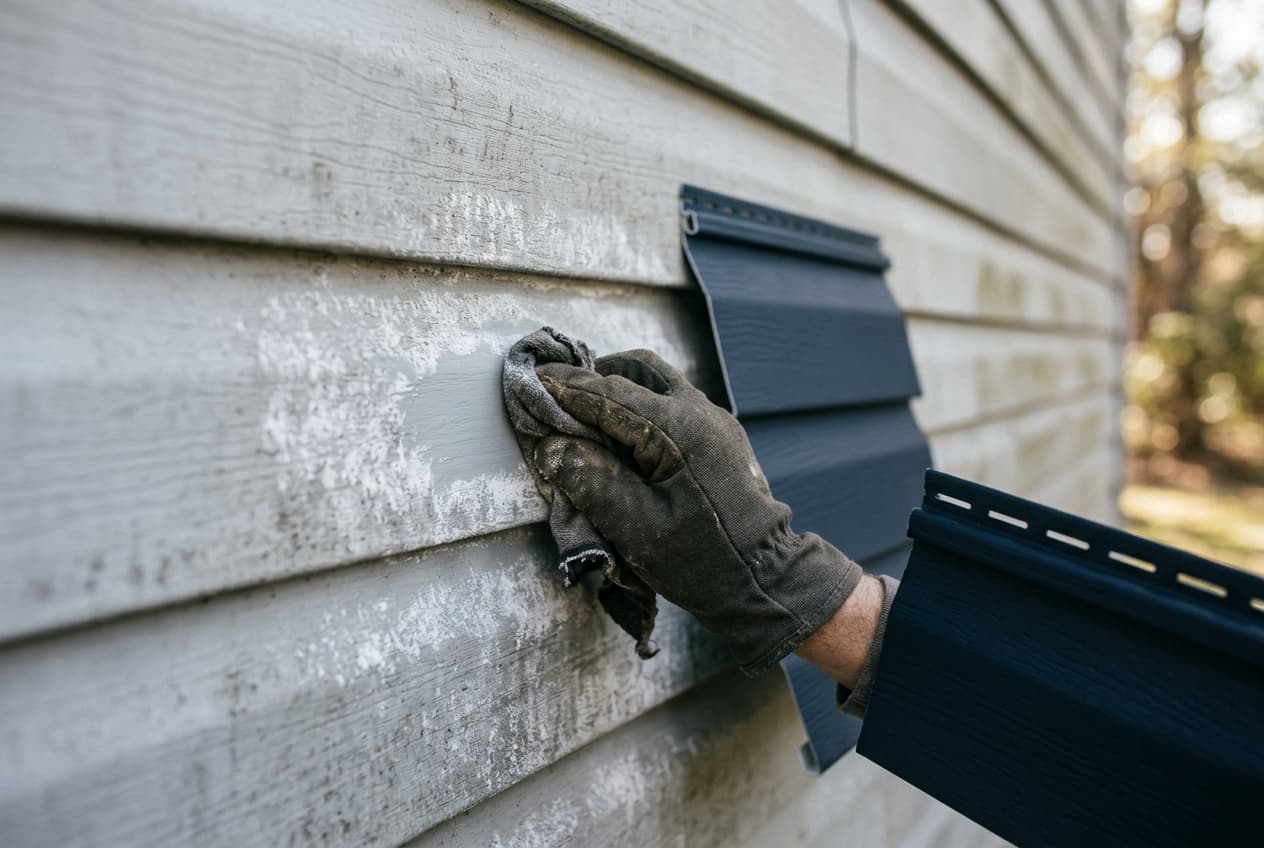
Do dark colors fade faster, and is chalking the same thing?
Dark colors show fade sooner: they absorb more heat, which speeds the chemistry, and they have more pigment to lose, so a small change shows from the street. That doesn’t make navy or charcoal a mistake. It means you buy dark from a palette the manufacturer built for it, factory-finished where possible, and expect the south wall to soften first.
One heat problem people blame on color isn’t about color at all. Energy-efficient windows on a neighboring house can reflect a concentrated beam of sunlight onto a wall and warp vinyl in one spot. The Polymeric Exterior Products Association’s research found that siding color, thickness, and price are not major factors; the fix is to block the light with landscaping or a sunshade. If one patch has rippled while the rest is fine, look for a window across the way before you blame the panel.
Chalking is different. Run a hand across an old wall and a white powder comes off: the surface is oxidizing and shedding. On a painted board it means the paint has aged out. On vinyl it means the panel surface is breaking down, and chalking alongside brittleness is one of the signs that siding is nearing the end, not a cosmetic issue a wash will fix.
“Half the ‘faded’ vinyl we get called about just needs a wash. The other half comes off on your glove — a different conversation. We do the glove test on the south wall first.”
Global Roofing field team — Massachusetts in-home siding assessments
What do siding warranties actually say about fade?
Less than the brochures suggest. Every warranty treats fade as a defect only past a measured threshold of color change; ordinary weathering doesn’t qualify. The details that matter:
- CertainTeed vinyl carries a lifetime limited warranty, but the fade coverage inside it kicks in only beyond a set amount of measurable fade, does not transfer to the next owner, and is capped at ten years on some lines. “Lifetime fade protection” is a marketing phrase, not a warranty term.
- LP SmartSide ExpertFinish has a fifteen-year finish limited warranty covering chalking, peeling, blistering, and excessive fade, defined as color change above a measured threshold. Labor is covered in the early years, the remedy prorates after that, and any coating applied over the finish is excluded.
- James Hardie ColorPlus has a separate fifteen-year finish limited warranty against peeling, cracking, and chipping. Only a large, early color change counts as excessive fade; normal weathering does not.
Warranties change, so read the current document. The full picture, including what the substrate warranties cover and what voids them, is in siding warranties compared.
How do you pick a siding color that ages well?
A few habits separate a house that looks even at year fifteen from one that looks patchy at year eight:
- Judge the sample on the sunny wall, at midday and again in the evening; colors read darker on a real house than on a chip.
- Favor mid-tones for the field color and save the boldest shade for trim, a front door, or a gable accent that gets less sun and is easy to refresh.
- Buy dark colors factory-finished if you want them on a whole wall, and expect to repaint engineered wood or fiber cement eventually.
Color and profile are their own decision, covered in how to choose a siding color. If the fade question is really a vinyl-versus-fiber-cement question, start with which of the two is right for your home.
Frequently asked questions
Does vinyl siding fade?
Yes, slowly. The color runs through the panel, so it can’t peel, but years of sun lighten it and the south and west walls go first. The cases to worry about are uneven fade and chalking, where the surface is breaking down.
Which siding color fades the least?
Light and mid-tones show fade least, with less pigment to lose and less heat absorbed. Dark colors show lightening sooner, which is why factory finishes hold dark colors better than field paint.
Can you paint faded vinyl siding?
You can, but painting over a factory vinyl finish voids the warranty, and a darker paint absorbs more heat than the panel was made for, which raises the risk of warping. Sound, faded vinyl usually cleans up better than expected. Chalking, brittle vinyl is a replacement conversation, not a paint job.
Is fading covered by siding warranties?
Only past a measured threshold of color change; normal weathering doesn’t qualify. CertainTeed’s vinyl fade coverage doesn’t transfer to the next owner and is capped at ten years on some lines. LP’s ExpertFinish and Hardie’s ColorPlus finish warranties run fifteen years and count fade only when it’s excessive.
How we wrote this guide
This article reflects what Global Roofing sees on sun-facing walls across Massachusetts and New England, checked against the current CertainTeed, LP SmartSide, and James Hardie warranty documents and the Polymeric Exterior Products Association’s research on reflected sunlight. It was reviewed for accuracy by a licensed Massachusetts contractor on our team. See our full editorial process for how we research and update every article.
Sources
- CertainTeed — Warranty Information (vinyl siding warranty documents). certainteed.com
- LP Building Solutions — LP SmartSide ExpertFinish Prorated 50-Year and 15-Year Limited Warranty. lpcorp.com
- James Hardie — Lifetime Value Siding Products (30-year substrate warranty; ColorPlus finish warranty). jameshardie.com
- Polymeric Exterior Products Association — Vinyl Siding Solar Reflection (distortion from reflected sunlight). polymericexteriors.org