

Key Takeaways
- Every siding material has a second price: the care it asks for over its life. Vinyl asks the least, fiber cement asks for caulk and an eventual repaint, and engineered wood asks the most routine attention, because it depends on its paint to stay dry.
- On any house, trim and caulk are the recurring item. Joints, window and door surrounds, and corner boards open up before the siding does, and they’re where water gets in.
- Neglect is what turns maintenance into repair: paint left too long on engineered wood, open joints, mildew and shrubs holding moisture against the base. None of it fails fast; all of it shortens the siding’s life.
- Maintenance and warranties are linked. Painting over a factory vinyl finish voids it, some polymer shake lines can’t be power-washed, and composite products that require paint lose coverage if they go unpainted.
- The honest comparison is up-front cost plus over-time cost. A lower first number can carry a higher second one, and the reverse is just as true.
What does siding actually cost to maintain over its life?
It depends on what the siding is made of, and it often runs the opposite way from the up-front price: the material that costs least to install can ask the least of you afterward, and the one that costs more can carry a repaint in its future. There’s no single number for this. What we can lay out is the shape of each material’s upkeep — the routine care, the big-ticket job, and what shortens its life if you skip it. It’s the second half of the cost question; our full guide covers how the material you choose moves the up-front price.
How much upkeep does each siding material need?
We install three materials, and each fits a different homeowner — as much for how you feel about a paintbrush as for the look.
Vinyl (CertainTeed) is the set-it-and-forget-it option: it never needs paint. Routine care is a wash when it gets dingy and keeping shrubs off the base so it can dry. The big-ticket item is small — a cracked panel swapped out. What shortens it is impact cracks left open and heavy mildew left to sit in the shade.
Engineered wood (LP SmartSide) is the balanced upgrade with a real wood look, and it asks the most of you: it depends on a paint film and sealed joints to keep water out. Routine care is a spring finish check, touch-ups, and sealed board ends and joints; the big-ticket item is a full repaint on a schedule. LP’s published 5/50 limited warranty stands behind it, but it reaches its full life only when the paint does its job. What shortens it is paint left too long, unsealed ends, and boards touching soil, mulch, or standing snow.
Fiber cement (James Hardie) is the long-haul premium choice. It doesn’t rot and holds a finish for a long stretch; the ColorPlus factory finish carries a separate 15-year limited warranty against peeling, cracking, and chipping, on top of the 30-year non-prorated substrate warranty on the boards. Routine care is a rinse and a yearly look at the caulk. The big-ticket item is an eventual repaint, far less often than on engineered wood. What shortens it is what shortens any siding: water behind it through open joints or bad flashing.
| Material | Routine care | Big-ticket maintenance | What shortens its life |
|---|---|---|---|
| Vinyl (CertainTeed) | Wash when dingy; keep shrubs and mulch off the base. No paint. | Swap a cracked or damaged panel. | Cold impact cracks left open, heavy mildew in shade, power-washing polymer shake. |
| Engineered wood (LP SmartSide) | Yearly finish check; touch-ups; keep joints and board ends sealed. | Full repaint on a schedule. | Paint left too long, unsealed ends, boards touching soil or standing snow. |
| Fiber cement (James Hardie) | Rinse; check caulk at joints and trim each year. | Repaint, eventually. | Open joints and failed flashing letting water behind. |
Weighing them? Start with vinyl, engineered wood, and fiber cement compared .
Vinyl lines differ in upkeep — see which CertainTeed line fits you — and the conditions upkeep keeps intact are in siding warranties compared.
The honest comparison is up-front cost plus upkeep. Vinyl costs the least to install and asks the least afterward. Engineered wood costs more and asks for a paint schedule, a fair trade for real wood’s look. Fiber cement costs the most and asks for very little for a long time. None is the better answer — they’re different fits — and the whole-house tier is what moves the up-front number, not the look you build with it, as we explain in whether a custom siding design costs more than a plain one. For resale, the pillar covers whether new siding is worth it.
Put the three materials side by side
A printable scorecard for vinyl, engineered wood, and fiber cement — look, maintenance, durability, and cost drivers — so you can weigh upkeep before you fall for a color.
Get the checklistWhy are trim and caulk the recurring cost on any house?
Whatever the siding is made of, the joints are where the work is. Window and door surrounds, corner boards, the seam where siding meets a deck or roofline, the bead of caulk at every transition — these open up before the panels do, and they’re where water gets behind the wall. Caulk dries, shrinks, and pulls away over a few New England winters, and wood trim needs paint on its own schedule regardless of the siding.
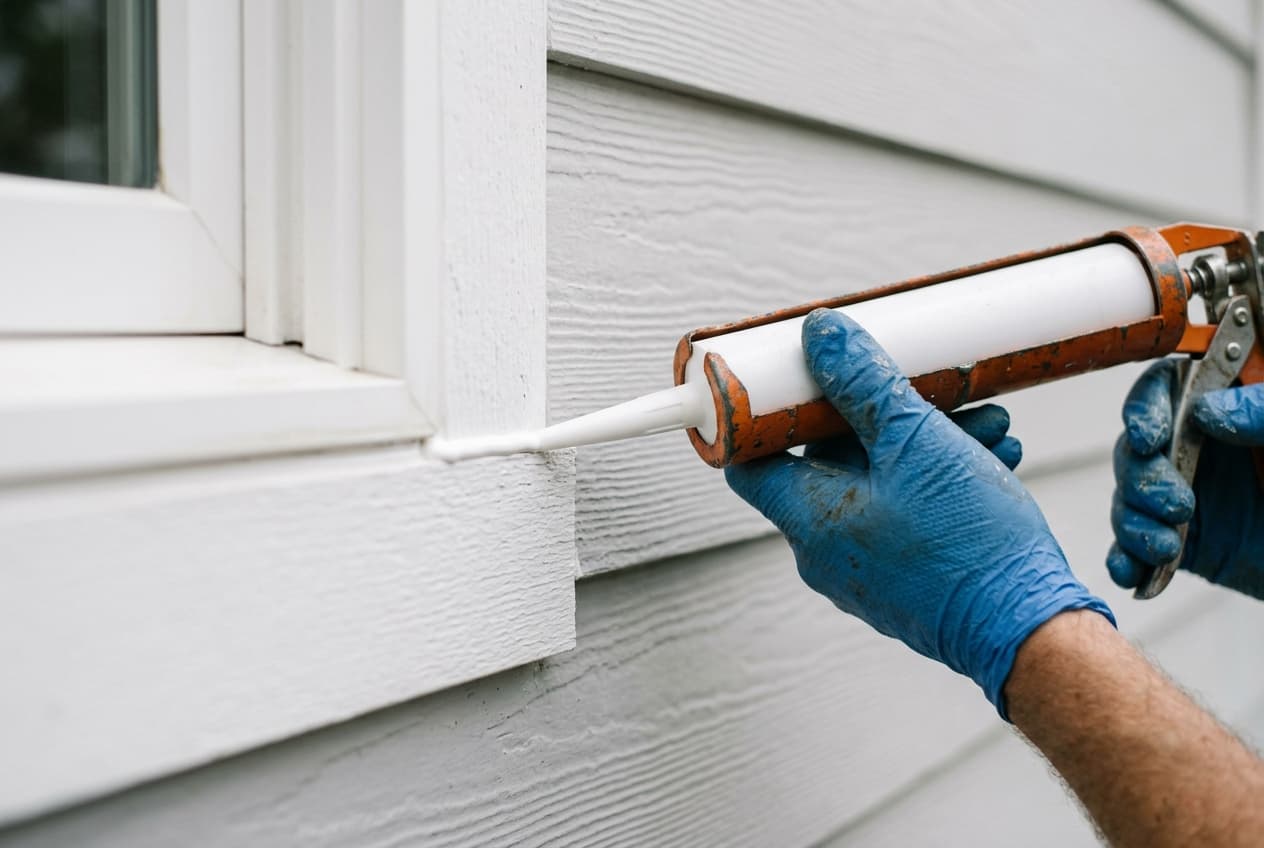
It’s the least expensive upkeep on the list and the easiest to do yourself: a tube of exterior caulk, a dry day, and a walk around the house each spring. When you compare quotes, check whether the trim is being replaced, and with what — trim that doesn’t rot cuts the recurring item to caulk alone, which is why it shows up in a good scope; we cover what rides along with the siding in the full siding cost guide.
What does skipping maintenance actually cost?
Not much in any single year — that’s the trap. Siding doesn’t fail because you missed one spring; it fails when small things are left alone long enough to become wall problems.
- Paint left too long on engineered wood. Once the film is chalking, peeling, or bare at the ends, water gets into the board, and a repaint becomes a repaint plus replaced boards — or a re-side.
- Open joints and dried caulk. This is the path to the sheathing on any material: the siding can look fine while the wall behind it isn’t, which is why a house with a lot of windows, corners, and gables has more to keep up, not just more siding.
- Moisture held against the base. Shrubs tight to the wall, mulch against the bottom course, snow banked on the north side — where we find the worst rot on otherwise sound houses.
- Mildew and algae ignored. Usually cosmetic and a cleaning job. The exception is growth that keeps returning in one spot, which points to water behind the siding; our article on mold and algae on siding explains the difference.
“The homes that need siding early almost never got there because of the siding. They got there because a joint opened, nobody caulked it, and the wall drank for five winters. An hour with a caulk gun every spring is the best money a homeowner never spends.”
Global Roofing field team — Massachusetts in-home siding assessments
How does maintenance affect the siding warranty?
More than most homeowners realize: a warranty covers defects, not a product cared for in a way the manufacturer said not to. A few rules straight from the documents:
- Don’t paint factory-finished vinyl. Painting or coating over the finish voids the CertainTeed vinyl warranty; vinyl is meant to be washed, not repainted.
- Hand-clean polymer shake. CertainTeed’s Cedar Impressions shake and shingle lines lose their warranty if power-washed.
- Keep painted products painted. Engineered wood depends on its finish, and composites that require paint, such as CertainTeed’s RISE line, lose coverage if left unpainted.
- Install to spec. Both CertainTeed and James Hardie condition coverage on installation to their written instructions — why certified installers matter for the warranty, not just the workmanship.
Warranty terms and service life are different things; what each manufacturer actually backs, and how long each material tends to last here, is in how long siding lasts in New England.
Frequently asked questions
Which siding has the lowest maintenance cost?
Vinyl asks the least: a wash when it gets dingy and a panel swapped if one cracks, with no paint ever. Fiber cement comes next, with a long stretch between repaints and caulk to keep up. Engineered wood asks the most, because it depends on a paint film and sealed joints to stay dry.
How often does engineered wood siding need to be repainted?
Often enough that the paint never fails: a repaint on a schedule and touch-ups in between, with ends and joints kept sealed. LP SmartSide reaches its full life only when the finish is maintained; waiting until it’s chalking turns a repaint into a repair.
Can you paint vinyl siding instead of replacing it?
You can, but painting over the factory finish voids the CertainTeed vinyl warranty, so it’s a last resort. If the color has faded badly or panels are cracking, the real question is whether the siding is near the end of its life.
Does fiber cement siding need to be repainted?
Eventually. James Hardie’s ColorPlus finish carries a separate 15-year limited warranty against peeling, cracking, and chipping, but the finish does wear and the caulk needs checking along the way. Plan on a repaint at some point.
How we wrote this guide
This article reflects what Global Roofing sees on real Massachusetts and New England homes as siding ages, checked against the Vinyl Siding Institute’s homeowner maintenance guidance and the published warranty terms from CertainTeed, LP, and James Hardie. It was reviewed for accuracy by a licensed Massachusetts contractor on our team. See our full editorial process for how we research and update every article.
Sources
- Vinyl Siding Institute — homeowner maintenance and cleaning guidance. vinylsiding.org
- CertainTeed — Monogram vinyl siding (lifetime limited warranty; care and finish conditions). certainteed.com
- LP Building Solutions — the LP SmartSide 5/50 Limited Warranty and its maintenance conditions. lpcorp.com
- James Hardie — Lifetime Value Siding Products (30-year substrate warranty; ColorPlus finish warranty). jameshardie.com