
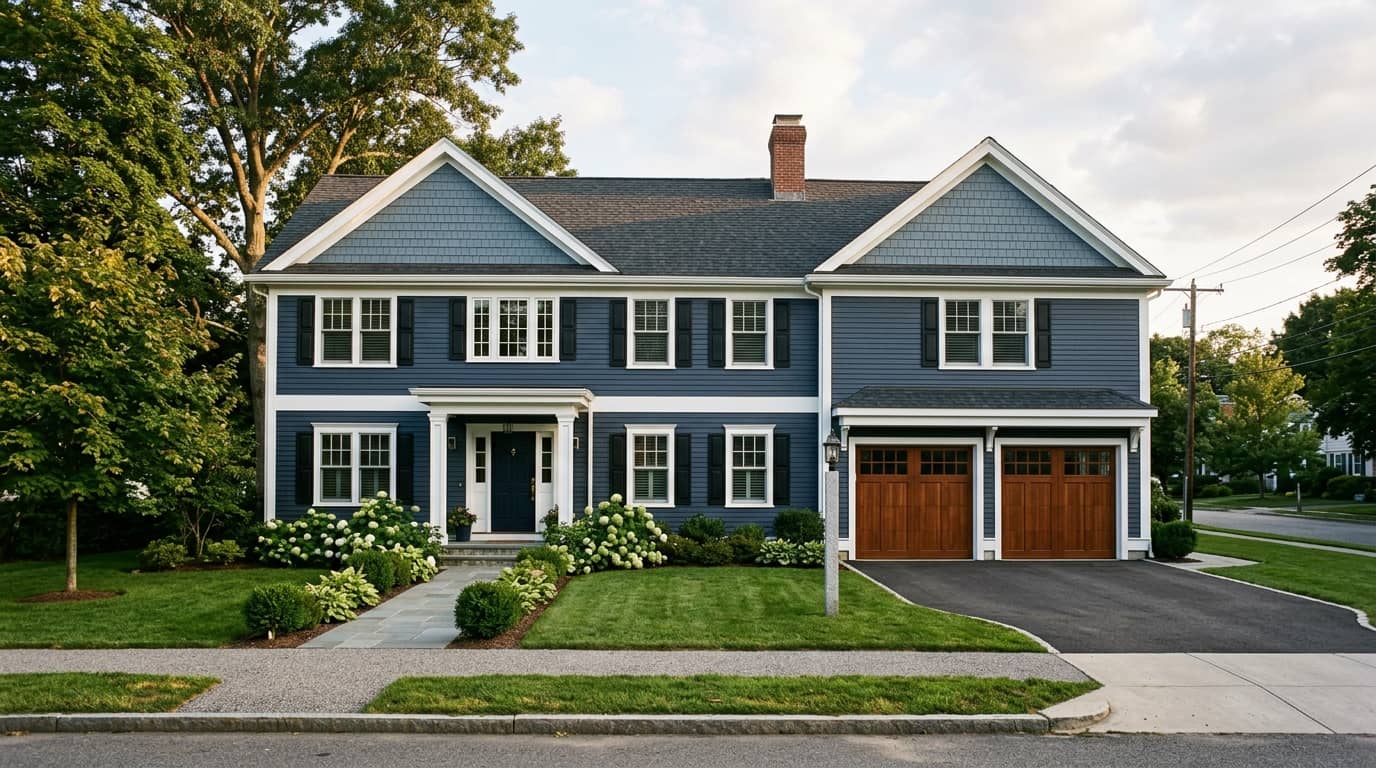

Key Takeaways
- A custom design — a different color on the front, shake in the gables, contrasting trim — adds a little to a siding project, not a lot. The walls get sided either way.
- Three things move the price: the size and shape of your home, the material you choose for the whole house, and what’s behind the old siding. Design choices sit well below all three.
- Color within a line is essentially free to change. Accent profiles and stone do cost more per area, but they cover a small share of the house, so the total moves modestly.
- The big jump is going from vinyl to fiber cement on every wall, not adding a shake gable to a vinyl house.
- You can see the difference for yourself: TruPro shows a simpler version and an upgraded one on a 3D model of your actual house, each with its own total.
Does a custom siding design cost more than a plain one?
A little, not a lot. Most homes on a street look the same because of a belief that a designed exterior costs thousands more. It doesn’t. A different color on the front, shake instead of lap in the gables, corners that contrast: those decisions change how the house looks far more than what it costs. Same materials, same warranties, same crew.
What does move the number is the stuff no design choice touches: how much wall your home has and how cut up it is, which material you put on the whole house, and what turns up behind the old siding once it comes off. Our full guide to what drives the cost of new siding walks through each of those. This article is about the line between the two.
Which siding choices change the price, and which don’t?
The left column is design decisions. The right column is project decisions.
| Barely moves the price | Moves the price a lot |
|---|---|
| Color. Navy, sage, cream, or charcoal in the same product line costs the same to buy and install. | The material tier for the whole house. Vinyl, engineered wood, and fiber cement sit at different price points, and the choice applies to every wall. |
| Profile within a line. A wider or narrower lap, smooth or wood-grain texture. | How big and how cut up the house is. Wall area, stories, corners, gables, dormers, and bays all add material and hand-fit labor. |
| A different color on the front. The front elevation gets sided either way; it’s the same panels in a second color. | What’s behind the old siding. Rot, failed house wrap, or soft sheathing found at tear-off has to be fixed before anything new goes on. |
| Contrasting corners and trim. The corner posts and window wraps go on regardless; a second color is a small step. | Tear-off versus going over the old siding. Removing and disposing of the old layer is real labor, and it’s the honest way to see the wall. |
| Accent gables in shake or board & batten. A pricier profile, but on a small share of the wall. A little, not a lot. | The scope around the siding. New trim, soffit, fascia, house wrap, and flashing at every opening are part of doing it right, and part of the price. |
| A stone skirt at the entry or porch. The most expensive accent per area, still confined to a few feet of wall. | Access and site conditions. Steep grades, decks, and landscaping that has to be worked around. |
Nothing in the right column comes from a color chart. It’s the house itself and the material you commit to everywhere, which is why the gap between siding quotes almost never comes down to design.
Find your style, then see it on your own house
TruFit is a two-minute survey that tells you which siding style fits your home and your taste. TruPro then puts it on a 3D model of your actual house — mix and match styles, colors, and trim and watch one total update as you go. Both are part of our free in-person siding assessment.
Schedule a free assessmentWhy is design cheap to change, and material expensive?
Three plain reasons.
The walls get sided either way. A crew wraps, flashes, cuts, and hangs the same square footage whether every panel is white or the front is navy. Labor is the biggest part of a siding project, and a color change doesn’t add an hour.
A color is a color. Within a product line, manufacturers price their standard palette the same. Picking Bold Darks over Whites & Creams changes the look of the whole house and almost nothing on the invoice. A few premium shades and the difference between a factory finish and field paint are footnotes next to the material decision. Our guide to choosing a siding color covers the design side.
Accents cover a small share of the wall. Shake, shingle, board & batten, and stone cost more per area than plain lap. But a gable is a triangle at the top of one wall, and a stone skirt is a band a few feet high across the porch. Put a pricier profile on a tenth of the house and the total moves a little. Put a pricier material on all of it and it moves a lot. That’s why mixing styles, materials, and colors on one house is a design conversation rather than a budget one.
What does “same budget, different house” look like?
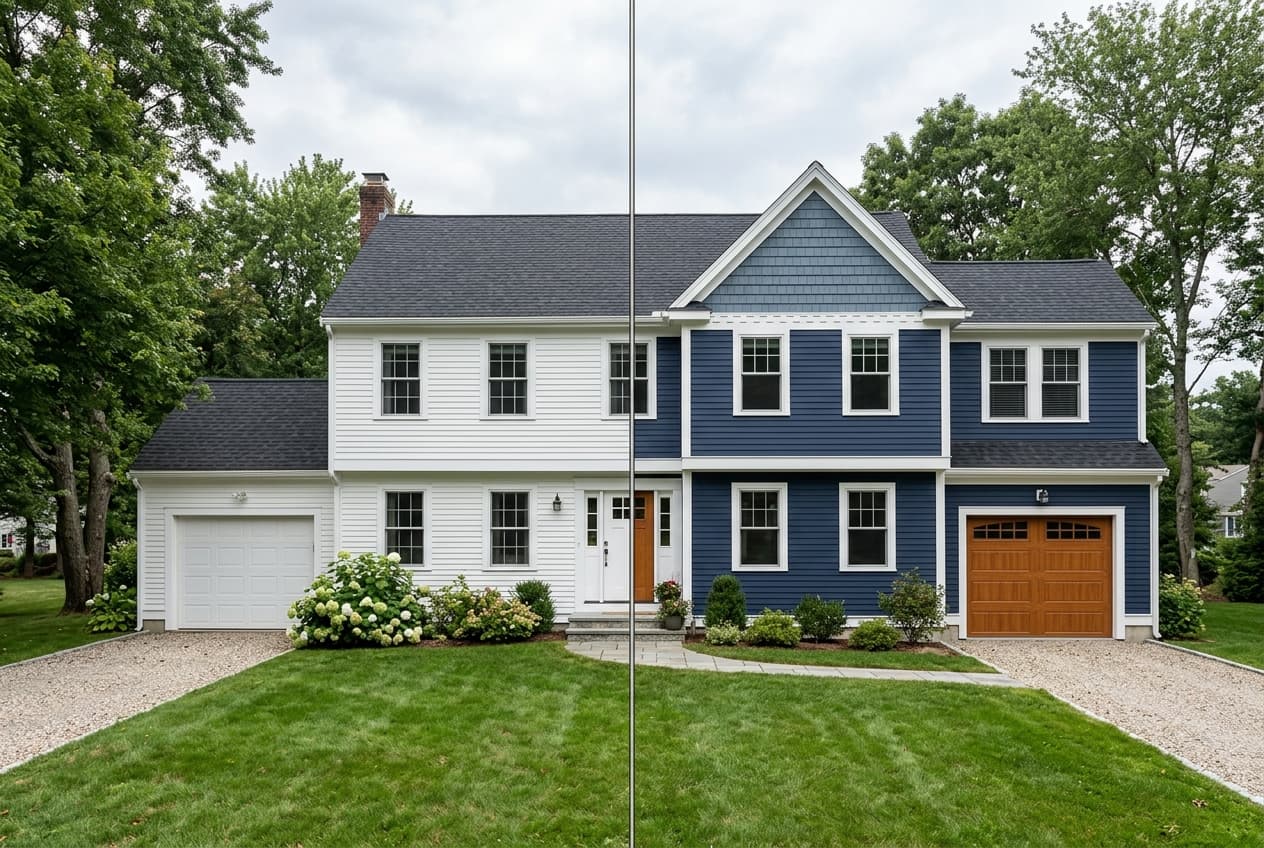
Take one two-story colonial with plain white lap siding on every wall. Here are three designed versions that land close to the same total, described in the same language TruFit uses:
- Classic Clapboard with Coastal Blues. Soft blue-gray lap on the body, deeper blue shingle courses in the front gables, crisp white corners and trim.
- Modern Farmhouse in Bold Darks. Board & batten in near-black on the front, lap in the same shade on the sides and back, wide white trim, a natural wood front door.
- Rustic Shake in Warm Naturals. Wood-grain lap in a warm tan on the body, deeper cedar-tone shake on the gables and the bay, matching corners so the texture does the talking.
All three are the same house wearing different decisions. None changes how much wall there is or the material tier, which is why the totals sit close together.
“The most common thing we hear at the table is ‘we assumed we couldn’t afford to do anything interesting.’ Then we put shake in the gables and a second color on the front, and the number barely moves. The thing that would have moved it is switching the whole house to a different material, and that’s a separate conversation.”
Global Roofing field team — Massachusetts in-home siding assessments
When does a design choice actually cost real money?
Two honest cases. First, when the accent stops being an accent. Shake on the gables is a little; shake on every wall is a whole-house profile decision and prices like one. A stone skirt at the entry is a detail; a full first-floor wrap is a scope.
Second, and much bigger, if a design leads you to a different material. Falling in love with the look of fiber cement and putting it on the whole house is the single largest jump you can make, because it changes the material and the labor on every wall. That can be the right call — our comparison of vinyl, engineered wood, and fiber cement is built for it — but keep it separate from the design question.
For the lines behind those looks, see which CertainTeed vinyl line is right for you and, for the farmhouse gable, which material to use for board and batten.
Either way, the price should come as one total with a full written description of the scope and the exact materials by brand and product line. The pillar guide explains how each material sits on the investment scale, and you can see the design side for yourself by building the plain version on a model of your own house, adding the second color and the shake gables, then trying the same design in a different material and comparing the totals side by side. The step-by-step is in how to get a custom siding design and quote for your home.
Worth it? See home value.
Frequently asked questions
Does a custom siding design cost more than a plain one?
A little, not a lot. A second color, shake gables, contrasting corners, or a stone skirt adds something, but the walls get sided either way and accents cover a small share of the house. Size, whole-house material, and what’s behind the old siding are what actually move the number.
Does siding color affect the price?
Within a product line, generally no. Standard colors cost the same to buy and install. A few premium shades and the difference between a factory finish and field paint are small footnotes; color is not what separates one quote from another.
How much more does shake siding in the gables cost?
Shake costs more per area than lap, but gables are a small part of the wall, so the total moves modestly. Accenting a gable is a very different decision from siding the whole house in a premium profile.
Can I see what a custom design would cost before I commit?
Yes. As part of our free in-person assessment, TruFit tells you which siding style fits you, and TruPro puts that design on a 3D model of your actual house with one total that updates as you change things, so you can compare a simpler and an upgraded version before deciding anything.
How we wrote this guide
This article reflects how Global Roofing scopes and prices designed siding projects on real Massachusetts and New England homes, checked against Consumer Reports’ siding buying guide, This Old House’s coverage of siding cost drivers, and the Vinyl Siding Institute’s product and installation guidance. It was reviewed for accuracy by a licensed Massachusetts contractor on our team. See our full editorial process for how we research and update every article.
Sources
- Consumer Reports — Siding Buying Guide (materials, cost drivers, and what to know before you buy). consumerreports.org
- This Old House — Siding Replacement Cost (what drives the price of a siding project). thisoldhouse.com
- Vinyl Siding Institute — vinyl siding products, profiles, and installation guidance. vinylsiding.org