

Key Takeaways
- Board and batten is a profile, not a material. Vinyl, engineered wood, and fiber cement all make it, and the look from the curb is nearly identical.
- Vinyl is the no-paint, lowest-investment route and comes in three CertainTeed versions — standard, reverse, and insulated. Engineered wood gives a deeper board with factory color. Fiber cement is the densest and most weather-stable.
- A vertical wall sheds water straight down, so the details that matter are the base, the window heads, and the roof-to-wall line — the barrier and flashing behind the siding, not the battens.
- Mixing battens in the gables or on the front with lap elsewhere stays within one brand and one warranty, and moves the total a little, not a lot.
Which material is right for board and batten siding?
The one that fits how you’ll live with it. If you want thefarmhouse look with nothing to repaint, vinyl board and batten is the call, and modern vinyl versions are thicker and stiffer than the vinyl most people picture. If you want a deeper, more wood-like board and don’t mind a repaint down the road, engineered wood is the middle path. If you’re staying a long time and want the most weather-stable wall you can buy, fiber cement is the premium answer. Our side-by-side comparison of the three siding materials covers the general case; this article is about what changes when the boards run vertical.
| Material | Right for | What to know | Investment |
|---|---|---|---|
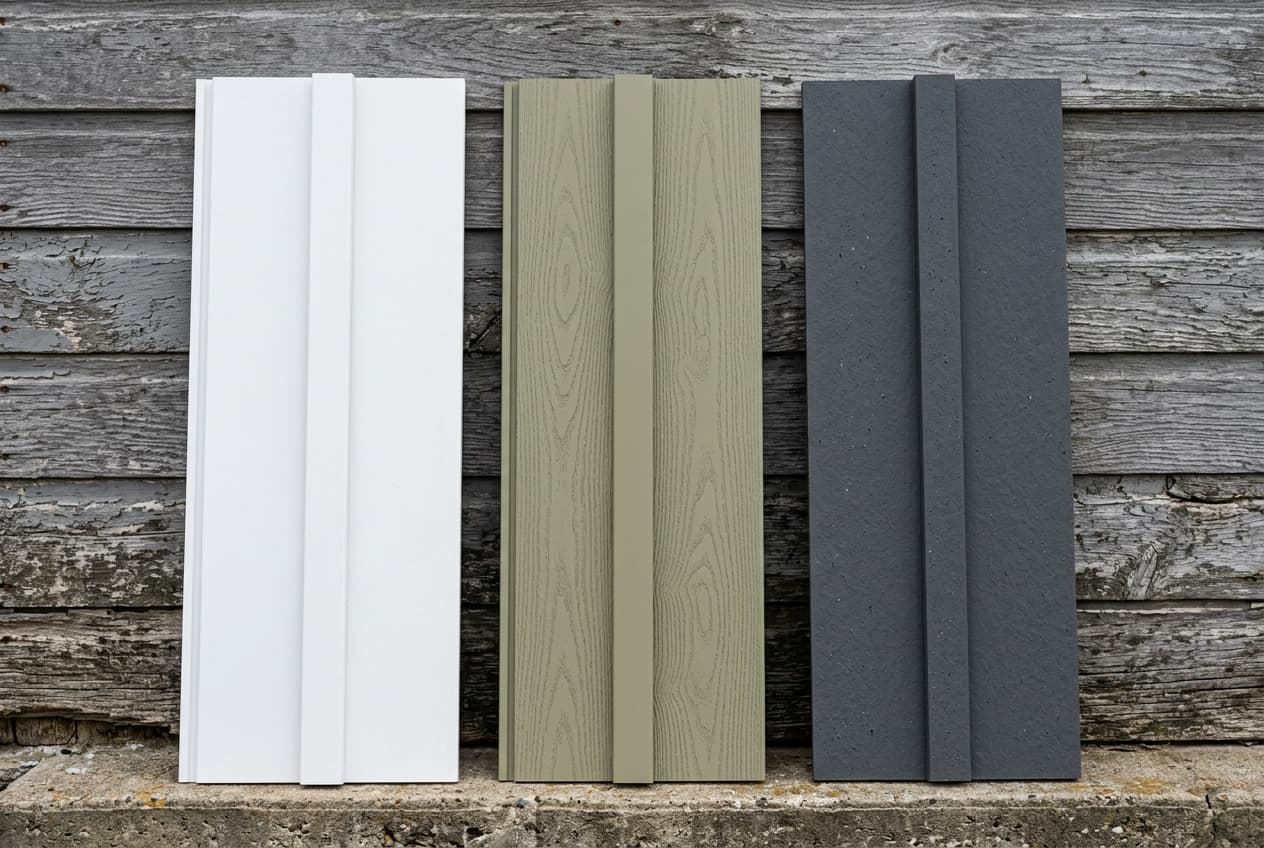
| CertainTeed vinyl | The look with no painting, ever | Needs room to move; three versions, one insulated | $ |
| LP SmartSide engineered wood | A deeper wood-grain board with factory color | Repaint over the years; keep cut edges sealed | $$ |
| James Hardie fiber cement | Maximum weather stability, long horizon | Heavier install; finish is factory or field paint | $$$ |
What is board and batten siding?
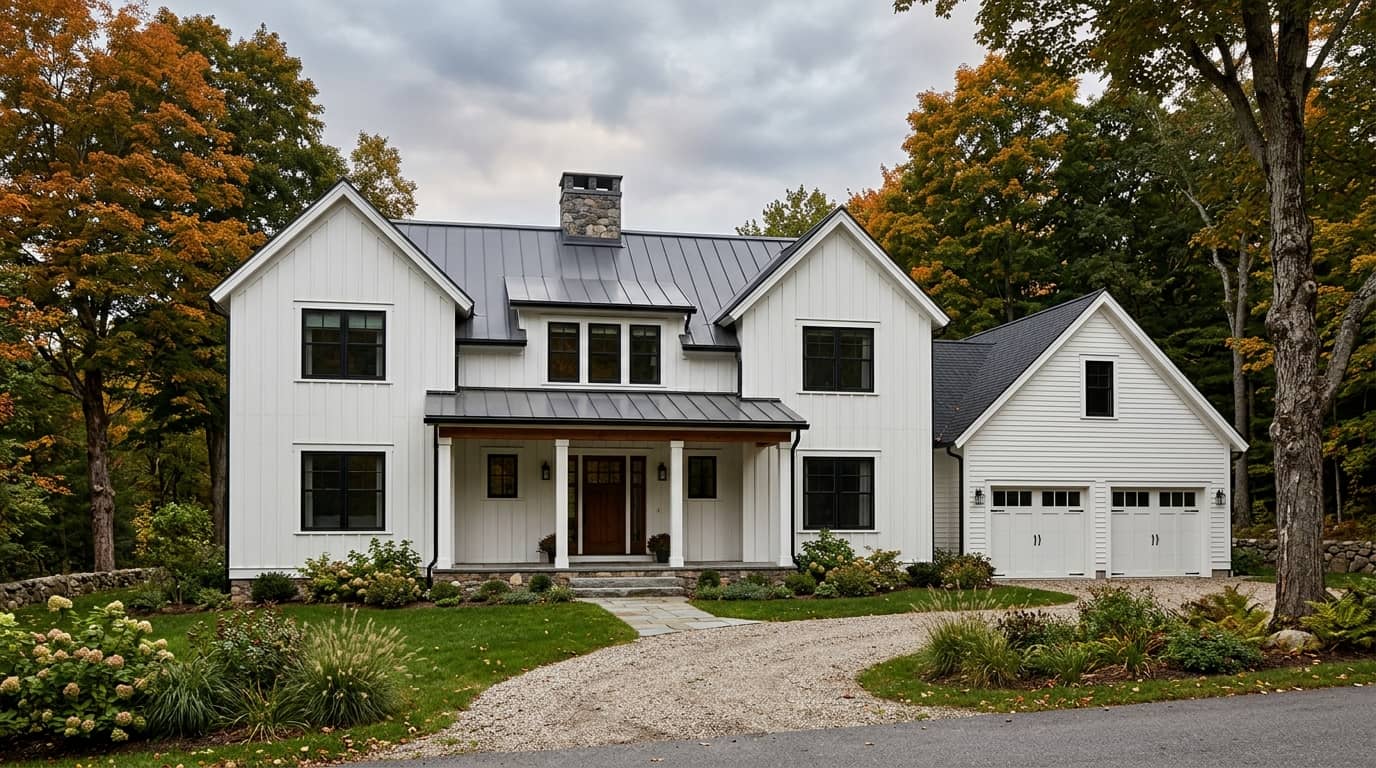
Board and batten is wide vertical boards with narrow strips — battens — covering the seams between them. It started as barn siding, which is why it reads as farmhouse, and it’s the profile behind the Modern Farmhouse style direction in our TruFit survey. Reverse board and batten flips the proportion: narrow flat boards with wide battens, a crisper and more contemporary rhythm. Which one suits your house is a question of look, and the siding profiles guide walks through it.
What are the vinyl board and batten options?
CertainTeed makes three vertical products, and they fit different situations rather than ranking against each other:
- Board & Batten. The classic. Available in 7-inch and 8-inch profiles, with what CertainTeed describes as extra-thick construction and a natural woodgrain texture. If you want the look at the lowest investment with no upkeep beyond a rinse, this is it.
- Reverse Board & Batten. A single 7-inch reverse profile with a foam backer behind the panel, which CertainTeed says gives it the rigidity of hardboard cladding. The flatter, stiffer face reads more like a painted wood wall up close.
- CedarBoards Insulated Board & Batten. A 10-inch board with a 2-inch batten — CertainTeed calls it the industry’s widest span — over a full insulation panel. The foam adds stiffness and can reduce heat loss through the wall; we keep that claim qualitative, and our walk through CertainTeed’s vinyl lines puts it beside the rest of the lineup.
CertainTeed also offers CERTAplank PRO, a composite board and batten, which we can talk through at the assessment. All the vinyl versions carry CertainTeed’s lifetime limited warranty and share vinyl’s honest tradeoff in New England: the panels need room to expand and contract, and they can crack on a hard impact in deep cold.
Find your style, then see it on your own house
TruFit is a two-minute survey that tells you which siding style fits your home and your taste. TruPro then puts it on a 3D model of your actual house — mix and match styles, colors, and trim and watch one total update as you go. Both are part of our free in-person siding assessment.
Schedule a free assessmentHow do engineered wood and fiber cement do board and batten?
Both build the look from a flat panel plus separate battens.
LP SmartSide uses its ExpertFinish panel and vertical siding — engineered wood treated with LP’s SmartGuard process, offered in factory-finished colors and textures — with LP battens nailed over the seams. LP’s own install guidance pairs the panels with 5/8-by-2-1/2-inch battens spaced evenly across each wall. The result is a deeper, more convincingly wooden board than vinyl, in a material that cuts and nails like wood. It wants its cut edges sealed and a repaint on schedule to reach its full life, and it’s backed by LP’s 5/50 limited warranty.
James Hardie does it with Hardie Panel siding and Hardie Trim batten boards — fiber cement that doesn’t swell, burn, or feed insects, in either ColorPlus factory finish or field paint. It’s the heaviest of the three to hang and the most exacting to cut, which is part of why the installer matters more with fiber cement than with anything else. The boards carry Hardie’s 30-year non-prorated substrate warranty and a separate 15-year finish warranty on ColorPlus. For the horizontal version of this same decision, see vinyl versus fiber cement siding.
How does a vertical wall handle water?
Vertical siding sheds rain straight down the board, which is simpler than lap in one way and less forgiving in another. The spots that decide whether a board-and-batten wall stays dry are the same on every material:
- The bottom edge. Water leaving the boards has to be kicked out over the foundation, not wicked back behind the panel. That’s a starter and base flashing detail.
- Window and door heads. A vertical board ends on top of the trim, so the head flashing has to carry water out and over, integrated with the house wrap.
- Roof-to-wall lines. Where a porch or garage roof meets a taller wall, step flashing and a kick-out at the bottom keep water out of the corner.
None of that is the batten’s job. It belongs to the water-resistive barrier and the flashing behind the siding, and a crew that skips it will produce a leak in any of the three materials. If you’re replacing siding because of damp walls, read how to tell if water is getting in behind your siding first, because a new profile won’t fix an old flashing problem.
“People worry that vertical siding will leak. It doesn’t, if the wall behind it is done right. The board-and-batten jobs we’ve opened up that failed all failed at the same three places — the base, the window heads, and the roof line — and the batten had nothing to do with it.”
Global Roofing field team — Massachusetts in-home siding assessments
Can you mix board and batten with lap siding?
This is how most New England homes actually use it. Board and batten in the gables, or across the front elevation, with lap on the sides and back — in the same color for a quiet texture change, or a darker vertical field against lighter lap for contrast. Because vinyl, engineered wood, and fiber cement each offer both profiles, the mix can stay within one brand, one material, and one warranty. The guide to mixing siding styles and colors shows the combinations that work.
It also barely moves the price. Accent walls and gables are a small share of the total wall area, so a designed look built from the same material costs a little more than the plain version, not a lot — the whole-house material tier is what moves the number, as we explain in whether a custom siding design costs more than a plain one. Seeing the mix on your own gables before you decide is what TruPro is for.
Frequently asked questions
What is the best material for board and batten siding?
There isn’t one best — there’s a best fit. Vinyl is the no-paint, lowest-investment route; engineered wood gives a deeper board with factory color and wants repainting over the years; fiber cement is the densest, most weather-stable option and the biggest up-front investment. Match it to how long you’ll stay, the upkeep you’ll do, and the look up close.
Is vinyl board and batten siding any good?
Yes. CertainTeed’s Board & Batten comes in 7- and 8-inch profiles with extra-thick construction and a woodgrain texture, Reverse Board & Batten adds a foam backer for rigidity, and CedarBoards Insulated Board & Batten puts a 10-inch board and 2-inch batten over a full insulation panel. The tradeoffs are vinyl’s usual ones: room to move, and possible cracking on hard impact in deep cold.
Does board and batten siding leak more than lap siding?
Not when it’s installed correctly. Vertical boards shed rain straight down, so the water has to be managed at the base, the window heads, and the roof-to-wall line — by the barrier and flashing behind the siding, on any profile. Skip those and it leaks; the same is true of lap.
Can you mix board and batten with regular lap siding?
Yes — gables or the front elevation in battens, lap elsewhere, matching or contrasting. All three materials offer both profiles, so the mix stays within one brand and one warranty, and because accents cover a small share of the wall it moves the total a little, not a lot.
How we wrote this guide
This article reflects how Global Roofing installs vertical siding on real Massachusetts and New England homes, checked against CertainTeed, LP SmartSide, and James Hardie product pages and installation guidance. It was reviewed for accuracy by a licensed Massachusetts contractor on our team. See our full editorial process for how we research and update every article.
Sources
- CertainTeed — Vertical Siding (Board & Batten profiles, CedarBoards Insulated Board & Batten span). certainteed.com
- CertainTeed — Reverse Board & Batten Single 7" Reinforced (foam backer, vinyl thickness). certainteed.com
- LP SmartSide — Panel & Vertical Siding, and board and batten installation guidance. lpcorp.com
- James Hardie — Hardie Panel Siding with Hardie Trim batten boards. jameshardie.com