

Key Takeaways
- Yes, you can mix siding colors. One main color carries most of the walls; a second color takes one clear zone such as the front, the lower story, a gable, or the entry.
- The second color needs an edge. A corner board, a trim band, or a change of profile is where it stops. Two colors meeting on an open wall is the mistake to avoid.
- Keep the two colors related: the same family two steps apart, or one neutral plus one color, and always in the same warm or cool family as your roof.
- Trim is the divider, and usually one trim color ties the whole house together.
- A second color adds a little, not a lot. The size of the house and the whole-house material are what move the price.
Can you use more than one siding color on a house?
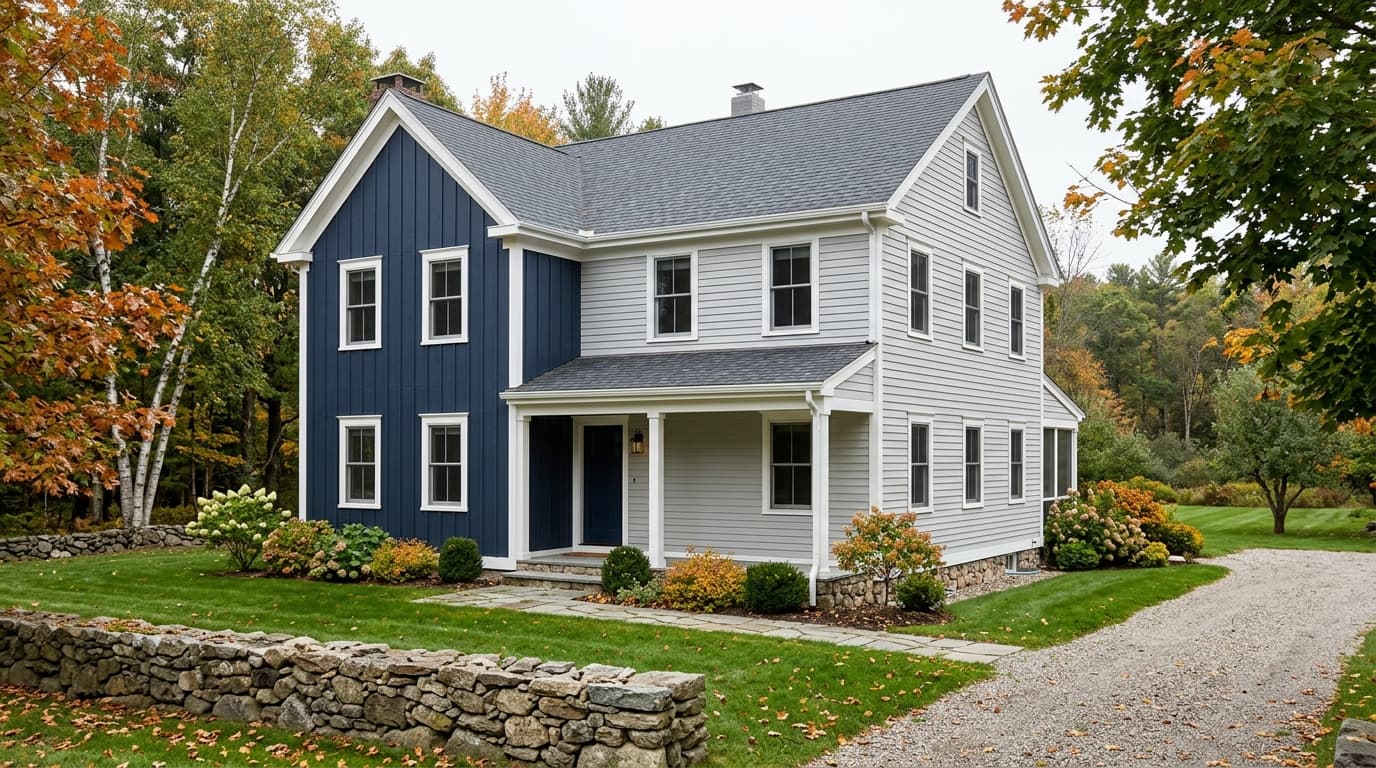
The photo you saved has a navy front and soft gray sides, and the question is whether that works on your house too. It does. Most exteriors that look designed use more than one siding color, and you can mix styles the same way, wall by wall, as long as one color is clearly in charge.
A few words first. Two-tone siding means two siding colors on one house, not counting the trim. The main color is the field: it covers most of the walls. The second is an accent, and it lives on one elevation (one side of the house as you see it straight on), one story, or one shape like a gable. The rule: the second color needs a place to live and a line to stop at. Our guide to mixing styles, materials, and colors covers the one-field-two-accents formula.
Where does a second siding color work, and where does it fight?
Four moves show up again and again on New England houses that get it right.
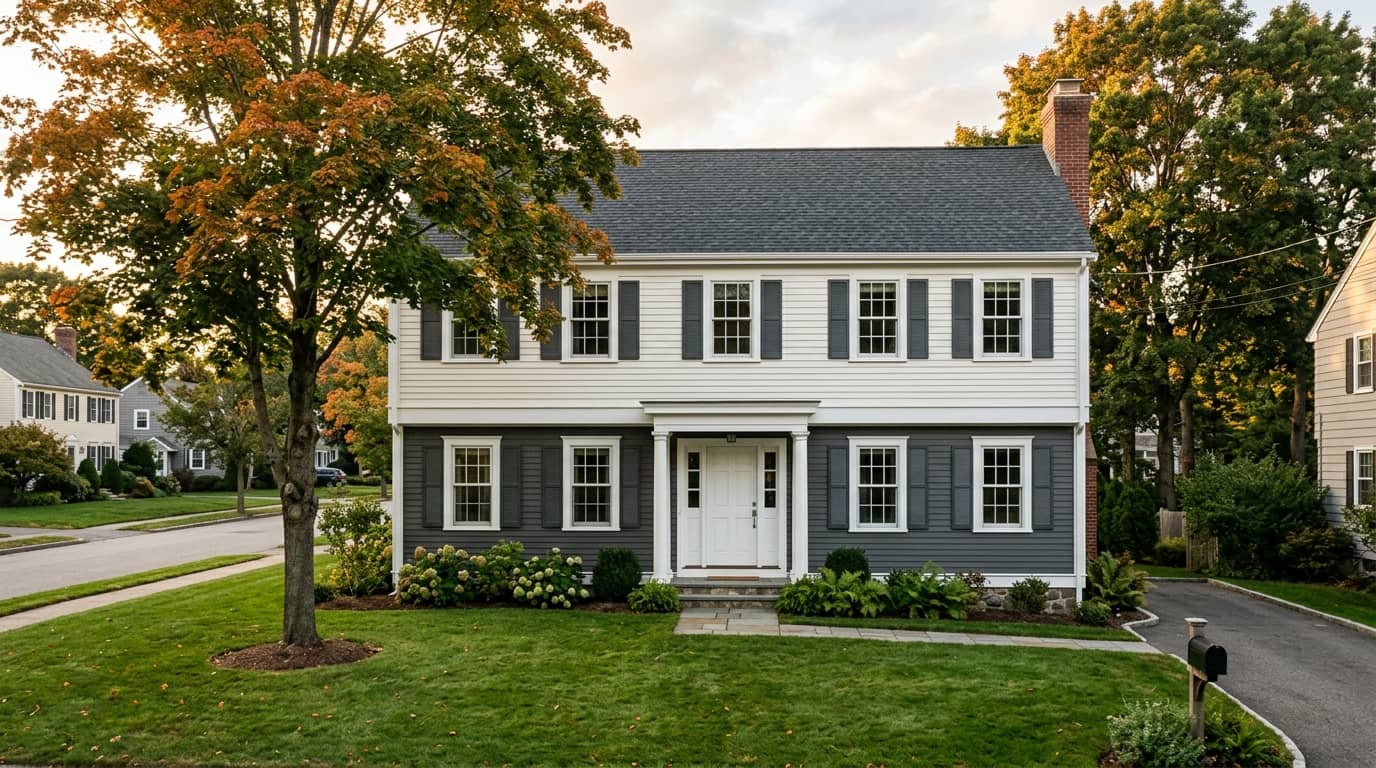
- A bolder color on the front elevation. The front in Coastal Blues or Bold Darks, the sides and back in Soft Grays or Whites & Creams, with the corner boards giving the color a place to stop.
- A darker lower story with a lighter upper. Charcoal below, warm white above, divided by a trim band. That band is often a water table, a horizontal board near the floor line that kicks water off the wall.
- An accent gable or dormer in a second tone. A small area with a big effect, and the move that most often comes with a change of profile.
- The entry as the one bold move. A recessed porch wall in the second color, everything else quiet.
Two moves fight. The first is two strong fields split down the middle, with neither in charge. The second is a color change with no trim break, which reads less like a design and more like a house that ran out of siding. Benjamin Moore puts a typical exterior at three to four colors in total, and two field colors plus trim already uses most of that budget.
| Two-tone move | Works when | Watch for |
|---|---|---|
| Bolder color on the front | The front is one clean elevation with corner boards | A front that wraps a bay or an ell, with no natural edge |
| Darker lower story, lighter upper | A two-story house with room for a trim band | Windows that straddle the line; most split-levels |
| Accent gable or dormer | A street-facing gable, or dormers that read as a set | Gables in four directions, each asking for the accent |
| The entry in the second color | A porch or recessed entry with its own trim outline | A flat front where only the door changes |
The way to settle which move suits your house is to see it there. TruPro assigns colors per wall, a bolder color on the front or a darker lower story, and shows it from the street and the backyard with one total.
Find your style, then see it on your own house
TruFit is a two-minute survey that tells you which siding style fits your home and your taste. TruPro then puts it on a 3D model of your actual house — mix and match styles, colors, and trim and watch one total update as you go. Both are part of our free in-person siding assessment.
Schedule a free assessmentHow should the two siding colors relate to each other?
Three relationships hold up. Pick one.
The same family, two steps apart. A Soft Grays field with a deeper charcoal below. A cream field with a warm tan gable. The two share an undertone, so the house reads as one idea with depth. James Hardie’s design guidance makes the same point: shades of one family add depth without noise.
One neutral plus one color. A Whites & Creams field with a Coastal Blues front, or Soft Grays sides with a navy gable. The neutral calms; the color talks. This is the most forgiving pairing for one bold move.
The temperature must match. Warm with warm, cool with cool, and both against the roof, brick, and stone you are keeping. A warm tan gable over a cool gray field fights. Matching siding color to your roof, brick, and stone goes fixture by fixture. Whatever pair you land on, hold big samples of both against the wall in morning and evening light before you commit.
Why does trim matter more on a two-tone house?
On a one-color house, trim is decoration. On a two-tone house, trim is the seam. Corner boards, the water table, and the frieze along the roofline are where one color hands off to the other, and if any of them is missing or too thin the two colors bleed together.
The usual answer is one trim color for the whole house, a third color that touches both fields and ties them together. White is the New England default and works with nearly every pairing in the TruFit palettes. A dark trim against two light fields is the modern move, and it asks for more care. Our article on siding and trim color combinations that work has the pairings by palette.
“When a two-tone house looks off, it’s almost never the colors. It’s that the second color stops somewhere the house didn’t give it a reason to stop. Put the change at a corner, a trim band, or a gable, and the same two colors suddenly look like they were always meant to be there.”
Global Roofing field team — Massachusetts in-home siding assessments
Does a second color need a second siding profile?
Not always, but it usually gets one: board and batten in the gable, shake on the upper story, a vertical panel at the entry. The profile change gives the color change a reason, and the texture tells the eye this is a deliberate zone. That is why the Mix & Match direction in TruFit pairs colors and profiles together.
Two colors on the same lap profile can work, but only with a trim break: corner boards for the front move, the water table for the lower-story one. Without one, a lap-to-lap color change looks like a patch. The second profile can be the same material in a different line or a different material altogether. Our article on mixing lap, board and batten, and shake on one house covers the combinations by house type.
What about a dark second color, resale, and cost?
Dark is the second color most homeowners are asking about. A Bold Darks lower story under a lighter field is a gentler way in than a dark whole house: less wall absorbing heat, less surface showing dust and pollen. On vinyl, stay within the manufacturer’s dark-color lines, and never paint vinyl darker than its factory color. Dark siding in New England covers the climate side, material by material.
On resale, a second color on an accent zone reads as considered, while a second strong field narrows the pool; siding colors that hold their value takes that further. On cost, a color is a color within a product line, so a second color adds a little, not a lot; does a custom siding design cost more than a plain one has the full answer. The pillar’s section on choosing a siding color covers the rules that apply to both colors at once.
Frequently asked questions
Can you use two different siding colors on one house?
Yes, and most exteriors that look designed do. One main color carries most of the walls and a second takes one clear zone: the front, the lower story, a gable or dormer, or the entry, with a trim line or corner for it to stop at.
Should the darker siding color go on the top or the bottom of the house?
Most two-tone houses put the darker color on the lower story and the lighter one above, so the house feels grounded without looking heavy. The reverse can work on a modern farmhouse, but it depends more on the roofline.
Do the two siding colors need to be the same material?
No. A second color often goes on a second profile, and that can be the same material in a different line or a different material altogether. What matters is trim sized to cover both edges and colors in the same warm or cool family.
Does two-tone siding cost more than one color?
A little, not a lot. Within a product line, one color costs the same as another. A second profile adds something, but it covers a small share of the wall. The size of the house and the whole-house material are what move the price.
How we wrote this guide
This article reflects how Global Roofing designs two-tone exteriors with homeowners on real Massachusetts and New England homes, checked against James Hardie’s exterior design guidance on mixing siding styles and colors, Benjamin Moore’s exterior color guidance, and This Old House’s advice on choosing exterior colors. It was reviewed for accuracy by a licensed Massachusetts contractor on our team. See our full editorial process for how we research and update every article.
Sources
- James Hardie — Mixing Siding Styles: Best Combinations for a Beautiful Exterior (shades of one family, trim defining transitions). jameshardie.com
- Benjamin Moore — Exterior House Colors & Inspiration (three to four colors per scheme; start from roofing, stone, and brick). benjaminmoore.com
- This Old House — How To Choose Exterior Colors for Your Home (body, trim, and accent colors). thisoldhouse.com