

Key Takeaways
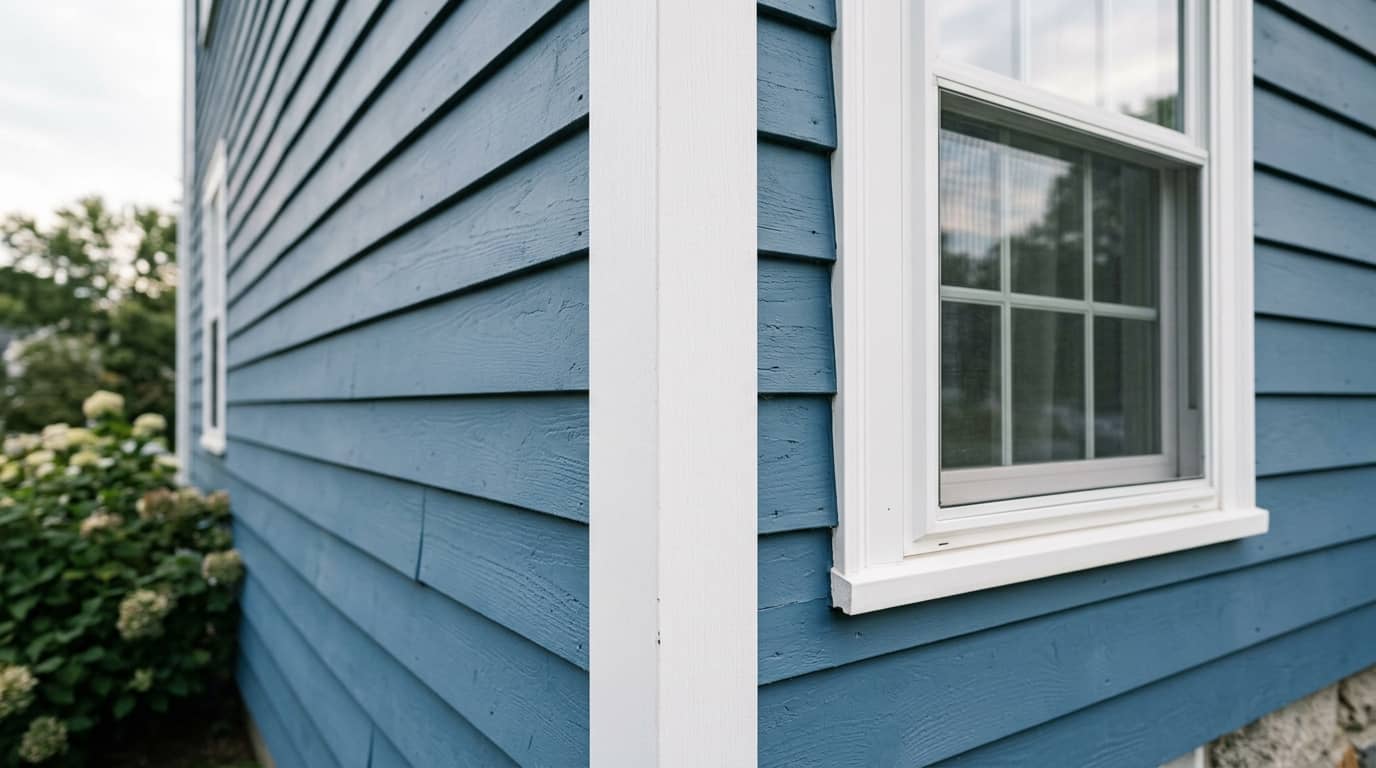
- Two pairings do most of the work: white trim on a colored field (the New England default) and dark trim on a light field (the modern one).
- Trim width matters as much as trim color. Substantial window casings, corner boards, and a frieze board read as designed; thin trim reads as builder-grade.
- Shutters and the front door are the third and fourth color. One of them can pop; both popping is what reads as busy.
- Each TruFit palette has a trim color that tends to work: black with Whites & Creams, white with Soft Grays and Coastal Blues, cream with Warm Naturals, white with Bold Darks.
- Trim goes on every opening either way, so a different trim color or width adds a little to the price, not a lot.
What are the two classic siding and trim combinations?
You picked a siding color you love, and now the sample board has a strip of white trim on one side and black on the other, and the house looks like two different houses. That’s the real decision. The field is the main siding color; the trim is everything that frames it: the boards around windows and doors, the corners, and the band under the roof.
Nearly every exterior that looks finished uses one of two moves. White trim on a colored field is the New England default, on colonials, Capes, and farmhouses for two centuries. Dark trim on a light field is the modern one: black or charcoal casings on a white, cream, or pale gray house. Our style guide explains why trim is the jewelry of an exterior; this article is about which jewelry goes with which dress.
When does white trim fit, and when does dark trim fit?
White trim fits when the house is traditional and the field carries the color. A navy, sage, or slate-gray colonial with crisp white casings and corner boards reads calm and settled, and it matches the white windows most New England homes already have. This Old House’s classic formula is a light neutral field, white trim, and one dark accent, and it still works because it gives every element a clear job.
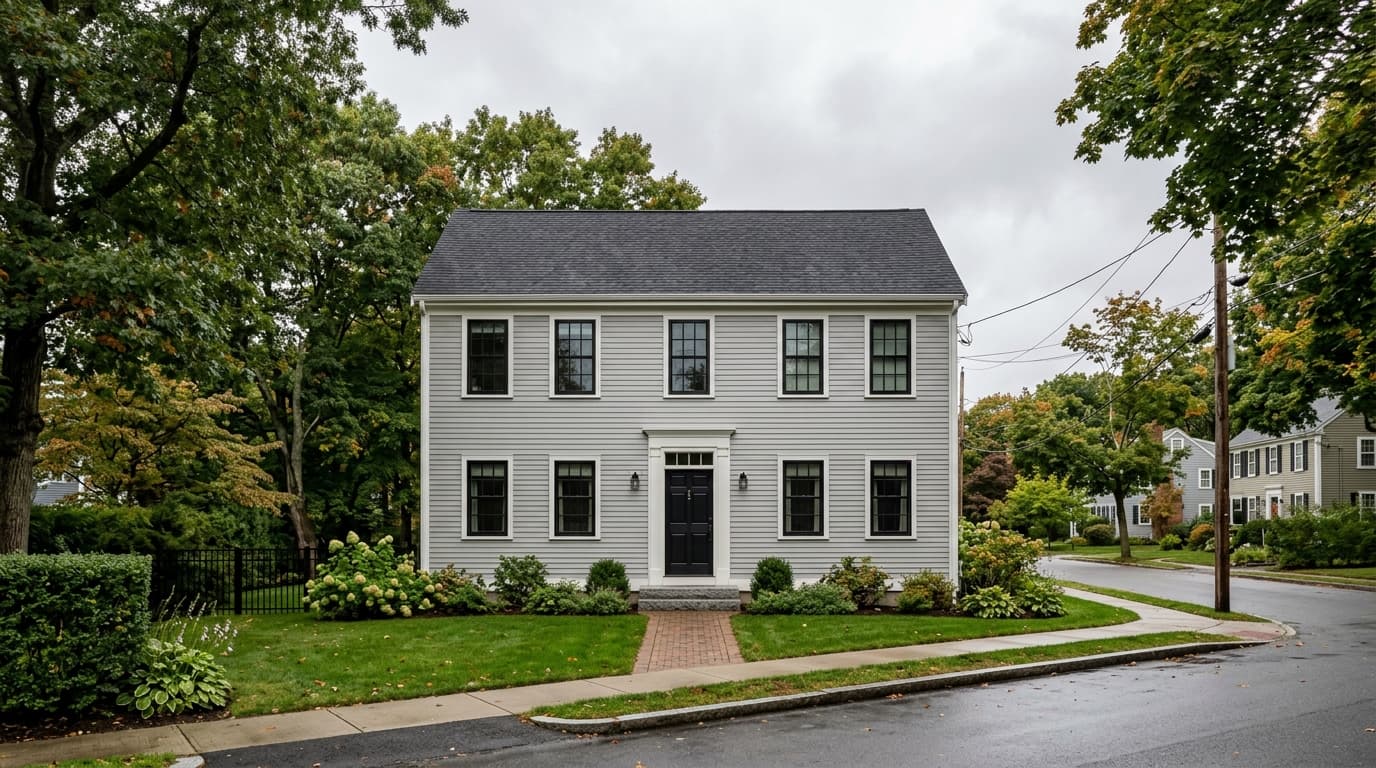
Dark trim fits when the field is light and the lines of the house are simple. Black casings on a white or pale gray farmhouse, contemporary, or gable-forward front give the windows weight and make the shape of the house the feature. It asks more of the house, though: dark trim outlines every opening, so uneven window sizes or a cluttered facade get outlined too. If the black house next door is what caught your eye, our piece on dark siding in New England covers the field-color version of that decision.
Either way, TruPro sets trim style and width for every opening and corners that match or contrast, so white-on-color and black-on-light get tested on your actual windows.
Find your style, then see it on your own house
TruFit is a two-minute survey that tells you which siding style fits your home and your taste. TruPro then puts it on a 3D model of your actual house — mix and match styles, colors, and trim and watch one total update as you go. Both are part of our free in-person siding assessment.
Schedule a free assessmentHow wide should trim and corner boards be?
Width is the part homeowners skip and later can’t name. Three pieces matter most. The casing is the flat board around each window and door. The corner board is the vertical board where two walls meet. The frieze is the horizontal band that runs under the roof edge, between the top of the siding and the soffit.
Substantial trim reads as designed. A wide casing gives a window a frame instead of an outline, a wide corner board gives the house a visible edge, and a frieze finishes the wall the way a baseboard finishes a room. Narrow trim, the thin strip that comes standard on a lot of vinyl jobs, reads as builder-grade, and no color choice rescues it. The trim itself is a product decision, too: cellular PVC trim such as CertainTeed’s Restoration Millwork looks like painted lumber, doesn’t rot, and can be painted with certified paints, while James Hardie’s fiber cement trim boards come in factory ColorPlus finishes that pair with their siding.
How do shutters and the front door fit in?
An exterior has four color slots: field, trim, shutters, door. The first two set the tone. The last two are where personality goes, with one rule: one of them can pop, and the other stays in the family.
Shutters tend to work in a deep tone from the same family as the field, such as navy on a lighter blue, charcoal on gray, or forest green on a warm tan. Kept close to the field, they add depth without adding a new color. Black shutters on a white house are the exception that always reads as classic.
The front door is the one place a true color earns its spot. A red, deep green, or bright blue door on a neutral house is the accent paint brands push for good reason: it’s small, it’s central, and it’s easy to change later. On a dark house, a light door does the same job in reverse. A new front-door color is one of the things TruPro lets you try on the model of your own house.
“When a house looks off and the owner can’t say why, it’s almost always the trim: too thin, or a white that doesn’t match the windows. We fix the casing width and corner boards before we talk about a second color, and half the time that’s the whole answer.”
Global Roofing field team — Massachusetts in-home siding assessments
Which trim color works with each siding palette?
These pairings use the same palette names as TruFit. They’re starting points, not rules; the roof and the windows you’re keeping get a vote.
| Field palette | Trim that works | Shutter / door move |
|---|---|---|
| Whites & Creams | Black or charcoal for the modern look; matching white for a quiet, all-white classic. | Black shutters and a black door, or skip shutters and let a red or green door be the one accent. |
| Soft Grays | Crisp white on a cool gray; a creamier white on a warm gray. | Charcoal shutters; a navy, black, or natural wood door. |
| Coastal Blues | Bright white. Blue and white is the coastal pairing for a reason. | Navy or white shutters; a white, red, or wood door. |
| Warm Naturals | Cream or off-white rather than a stark white, so the trim stays warm with the field. | Forest green or brown shutters; a deep green, black, or stained wood door. |
| Bold Darks | Wide white trim, which gives a dark field room to breathe; or trim matched to the field for the all-black farmhouse. | Usually no shutters; a natural wood or light-colored door as the single warm note. |
The thread through all five is temperature: warm trim with a warm field, cool trim with a cool field. A blue-white trim on a tan house looks slightly wrong even when nobody can say why.
Which combinations end up looking busy?
The mistakes are easy to name.
- Trim that fights the roof. A warm cream trim under a cool charcoal roof, or bright white trim on a house with a brown roof and tan brick, pulls the eye in two directions. Our guide to matching siding color to your roof, brick, and stone starts with what you can’t change.
- Three competing accents. Red door, blue shutters, and a stone skirt in a third tone. Each is fine alone; together, nothing is the feature.
- Two whites. A creamy trim beside bright white window frames reads as a near-miss. Match the trim white to the windows you’re keeping.
- A second siding color with no trim between them. Two colors that meet edge to edge look like a mistake; a trim band between them looks intentional. How to do it on purpose is in two-tone siding colors, and the same logic applies to mixing lap, board and batten, and shake on one house.
On price: trim goes on every window, door, and corner no matter what, so a contrasting color or a wider board adds a little to the total, not a lot. Choose it for the look.
Frequently asked questions
Should siding trim be lighter or darker than the siding?
Either, as long as the contrast is real. Lighter trim on a colored field is the traditional New England look; darker trim on a light field reads modern. Trim only a shade off the siding looks like a near-miss rather than a choice.
What color trim goes with gray siding?
White, usually: a crisp white for a cool gray, a creamier white for a warm gray. Black or charcoal trim on light gray is the modern alternative. Keep the trim white close to your window frames.
Do shutters have to match the front door?
No. The formula is one field, one trim, one accent, and shutters and the door can share that accent or split it. Shutters tend to work in a deep tone from the siding’s family; the door can be the color that pops.
Does wider trim cost more?
A little, not a lot. Trim goes on every opening and corner regardless, so width changes the look far more than the total. Size, whole-house material, and what’s behind the old siding are what move a siding price.
How we wrote this guide
This article reflects how Global Roofing designs trim, corners, and accents on real Massachusetts and New England homes, checked against CertainTeed’s and James Hardie’s published trim and color guidance, This Old House’s exterior color advice, and Benjamin Moore’s front-door color guidance. It was reviewed for accuracy by a licensed Massachusetts contractor on our team. See our full editorial process for how we research and update every article.
Sources
- CertainTeed — Restoration Millwork Trimboard (cellular PVC trim; paintable with certified paints and stains). certainteed.com
- James Hardie — House Siding and Trim Color Combinations. jameshardie.com
- This Old House — How To Choose Perfect Exterior Colors for Your Home (the field, trim, and accent formula). thisoldhouse.com
- Benjamin Moore — Front Door Colors to Elevate Your Home’s Curb Appeal. benjaminmoore.com