

Key Takeaways
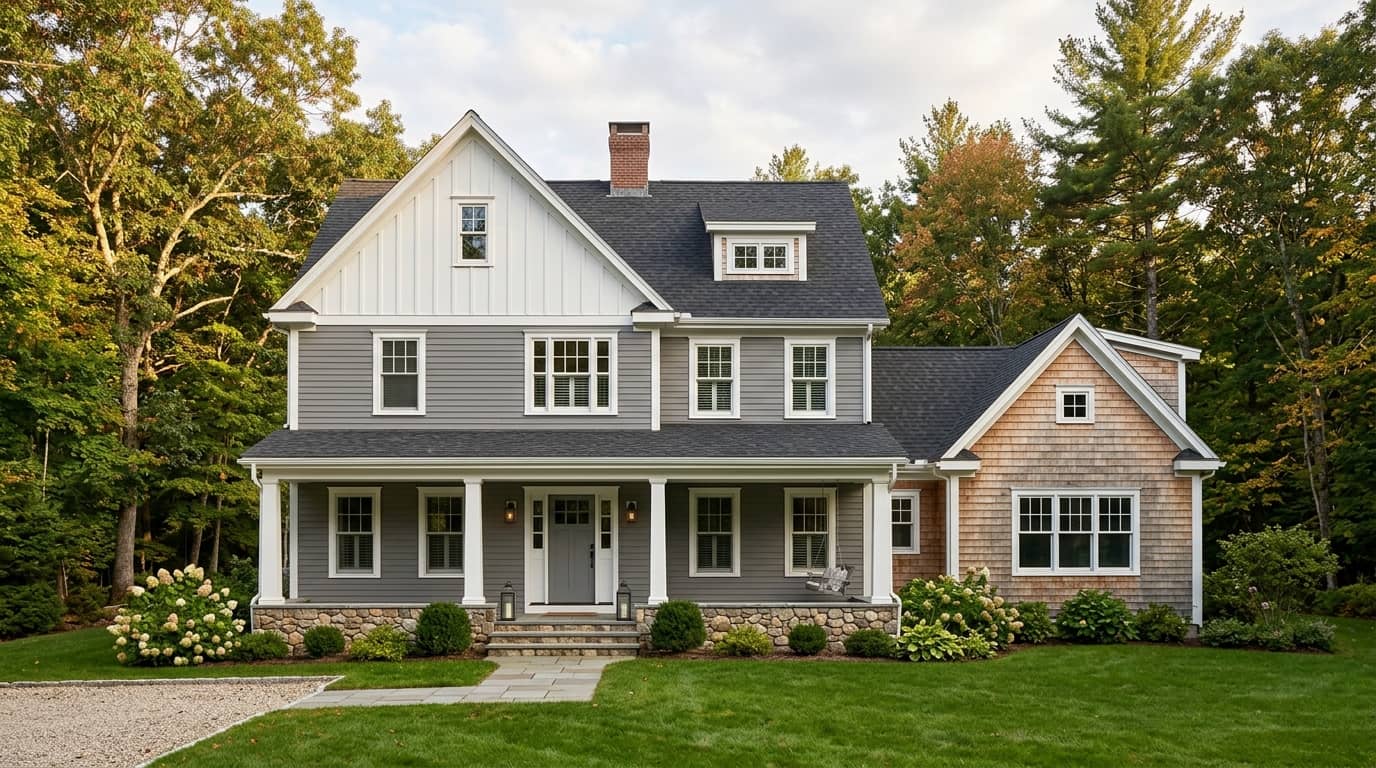
- Almost every mixed exterior that looks designed uses one field profile and one or two accents. The accents sit where the house already has a shape: gables, dormers, the entry, a bump-out, the lower story.
- The pairings follow the house: a colonial takes lap with a shake gable; a farmhouse takes lap below, board and batten above; a Cape takes lap with shingle dormers; a contemporary flips it, board and batten field with lap accents.
- A stone or brick skirt along the foundation or porch is the grounding move. It gives the eye a base, and it should stop at a corner or a column, not mid-wall.
- Profiles need a clean place to meet: a trim band where vertical meets horizontal, a water table above a skirt, gable trim at the roofline.
- Mixing adds a little to the price, not a lot. And you can see the whole mix on a model of your own house before you decide.
How do you mix siding styles without the house looking busy?
You saved the photo because the house looked designed, not busy. Look closer and it is almost always the same recipe. One field profile covers most of the walls. One or two accent profiles cover small, defined areas. A profile is the shape of the siding itself: horizontal lap, vertical board and batten, shake or shingle.
A house reads as designed when every accent has a reason to be where it is: the gable is a triangle, so it gets its own texture. It reads as busy when profiles change for no reason the eye can find. Our full guide lays out the one-field, two-accents rule. This article goes house type by house type, then covers where accents belong.
Which siding combinations fit which house?
The pairing that works is usually the one the house was already asking for. In New England, that is a short list.
Colonial. Lap on every wall, shake or shingle in the gables. The front stays flat and symmetrical, which is the point of a colonial, and the gable ends pick up texture and shadow. Board and batten is rare here; a colonial’s wide, even front does not call for vertical lines.
Farmhouse. Lap below, board and batten above, or board and batten in the front gables only. This is the Modern Farmhouse direction, and it leans on wide white trim to make the change of direction look deliberate. The vertical profile belongs up high or up front, where it makes the house feel taller. Both are compared in board and batten vs. lap siding.
Cape. Lap on the main walls, shingle on the dormers, whose faces are small and cut by a window, so shingle wraps them without long joints. On a coastal Cape, the whole upper story or the whole house in shingle is the traditional answer, covered in shake and shingle siding.
Contemporary or gable-forward. Flip the order: board and batten as the field, lap as the accent on a lower story, a garage wing, or a wraparound base. The vertical field carries the height; the horizontal band settles the house to the ground. On a ranch or split-level, one vertical moment at the entry does the reverse.
| House type | Field | Accent | Where |
|---|---|---|---|
| Colonial | Lap | Shake or shingle | Gable ends only |
| Farmhouse | Lap | Board and batten | Upper story, or the front gables |
| Cape | Lap | Shingle | Dormer faces, or the full upper story |
| Contemporary | Board and batten | Lap | Lower story, wing, or base |
| Ranch or split-level | Lap | Board and batten | Entry bump-out or front gable |
Where do accents belong, and where don’t they?
An accent needs an edge to stop at. The places that give it one are the same on every house: the gables, the dormers, the entry wall, a bump-out or bay, and the lower story under a trim band. James Hardie names gables, second stories, and bump-out walls as natural spots for a second texture; CertainTeed points to dormers, gables, and entryways. Each has a roofline, a corner, or a band that frames the change.
Where accents go wrong is just as consistent. A patch of shake in the middle of a flat wall looks like a repair. An accent that stops at an inside corner, where two walls meet, leaves a seam the eye cannot explain; one that wraps to an outside corner reads as a solid block. And three profiles visible from the driveway at once is the definition of busy.
A skirt is what grounds all of it: a band of stone or brick along the base of a wall or across the front of a porch. Siding that runs straight into the grass can look like it is floating, and a skirt a few feet high fixes that. Keep it to one material, stop it at an outside corner or a porch column rather than partway along a flat wall, and cap it so the siding above has a clean line to sit on. The color version of the same move is in two-tone siding colors.
Find your style, then see it on your own house
TruFit is a two-minute survey that tells you which siding style fits your home and your taste. TruPro then puts it on a 3D model of your actual house — mix and match styles, colors, and trim and watch one total update as you go. Both are part of our free in-person siding assessment.
Schedule a free assessmentMix & Match is one of TruFit’s style directions, and TruPro builds it wall by wall — clapboard below, board and batten above, shake in the gables, a stone skirt along the porch — with one total.
How do two siding profiles meet cleanly?
The seam is where a mixed exterior is won or lost. Vertical and horizontal siding cannot simply butt together. They need a trim band, also called a band board: a flat horizontal board that runs across the wall where one profile ends and the next begins. It is the line that makes an upper story look like it was always meant to be different.
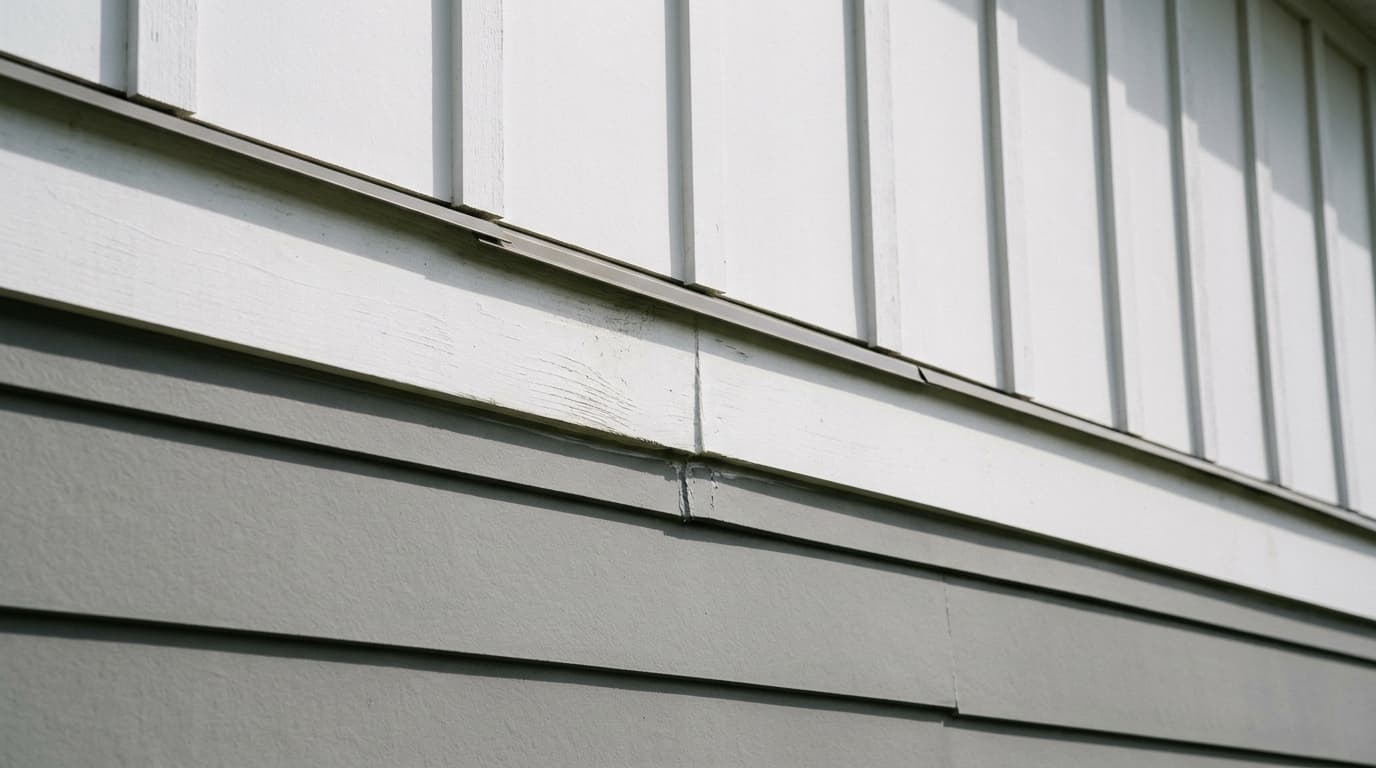
A water table is a heavier version of the same idea: a wider band with a sloped cap, set at the bottom of a wall or above a stone skirt, that sheds water away from whatever sits below. Behind either band there should be a drip cap or flashing, so the trim is part of the wall’s water management and not just decoration. James Hardie makes the same point: trim boards define the edges and transitions in a mixed design.
Gables are easier, because the roofline does the work: rake trim frames the triangle and the band at the eave closes it. Corner boards that match the field let the profiles be the story, while contrasting corners frame each wall as a panel. The pairings are in siding and trim color combinations.
“When a mixed exterior looks off, it’s almost never the profiles. It’s the seam. Someone ran shake into lap with no band, or stopped the stone mid-wall. Give every change a trim line to land on and the same combination looks like it came from an architect.”
Global Roofing field team — Massachusetts in-home siding assessments
How much is too much, and what does mixing cost?
One field, one or two accents, one palette. That is the whole rule, and the exteriors that break it rarely look better for it. If the profiles are fighting, a new color will not fix it. This Old House suggests treating the break between materials as the natural place to shift color: the profile change and the color change belong on the same line.
Cost is the short part. Accents cost more per area than lap but cover a small share of the wall, so a mixed design adds a little to the total, not a lot; the explanation is in does a custom siding design cost more than a plain one. The hard part was ever picturing it. Now the mix goes onto a true-size model of your own house, wall by wall, seen from the street and the backyard before anything is ordered. The step-by-step is in how to get a custom siding design and quote.
Frequently asked questions
Can you mix lap siding and board and batten on the same house?
Yes, and it is one of the most common designed combinations. Lap covers the main walls as the field; board and batten goes on the upper story, a front gable, or the entry wall. The two need a trim band where they meet, so the change looks planned rather than patched.
How many siding styles is too many on one house?
Most exteriors that read as designed use one field and one or two accents. A field, a second profile on the gables or upper story, and a stone skirt is about the ceiling. Three profiles on one wall, or accents with no architectural reason, is where a house looks busy.
Where should shake siding go on a house?
Where the wall already has a shape of its own: gables, dormer faces, a bump-out, or a full upper story on a Cape or coastal home. Shake is less convincing as a patch in the middle of a flat wall. On a colonial, shake in the gables over a lap field is the classic New England move.
Does mixing siding styles cost more?
A little, not a lot. Shake, board and batten, and stone cost more per area than plain lap, but they cover a small share of the wall, so the total moves modestly. The size of the house, the whole-house material, and what is found behind the old siding are what actually move the price.
How we wrote this guide
This article reflects how Global Roofing designs and installs mixed-profile siding on real Massachusetts and New England homes, checked against James Hardie’s design guidance on mixing siding styles, CertainTeed’s mix-and-match exterior guidance, and This Old House’s coverage of siding design and curb appeal. It was reviewed for accuracy by a licensed Massachusetts contractor on our team. See our full editorial process for how we research and update every article.
Sources
- James Hardie — Mixing Siding Styles: Best Combinations for a Beautiful Exterior (pairings, accent placement, and the role of trim at transitions). jameshardie.com
- CertainTeed — Mix and Match for a Distinctive Home Exterior (accent areas and texture combinations). certainteed.com
- This Old House — Siding Design Ideas for Better Curb Appeal (shakes on gables and upper stories; shifting color at a material break). thisoldhouse.com