

Key Takeaways
- Shingle is sawn, smooth, and even. Shake is modeled on hand-split cedar: thicker, rougher, staggered. Both give the cedar look that has defined coastal New England for centuries.
- TruFit names the two directions Coastal Shingle (weathered, even) and Rustic Shake (staggered, textured). Most homeowners are picturing one or the other without knowing the words.
- It goes in three places: the gables only, a full second story over lap, or the whole house. The first adds a little to the price; the last is a whole-house profile decision.
- Three products give the look without cedar upkeep: CertainTeed Northwoods (vinyl), CertainTeed Cedar Impressions (polymer, hand-clean only), and James Hardie’s Hardie Shingle (fiber cement).
- The colors that suit it are the ones already on the coast: Soft Grays, muted Coastal Blues, and weathered Warm Naturals, with white trim.
What is shake and shingle siding, and why does it belong here?
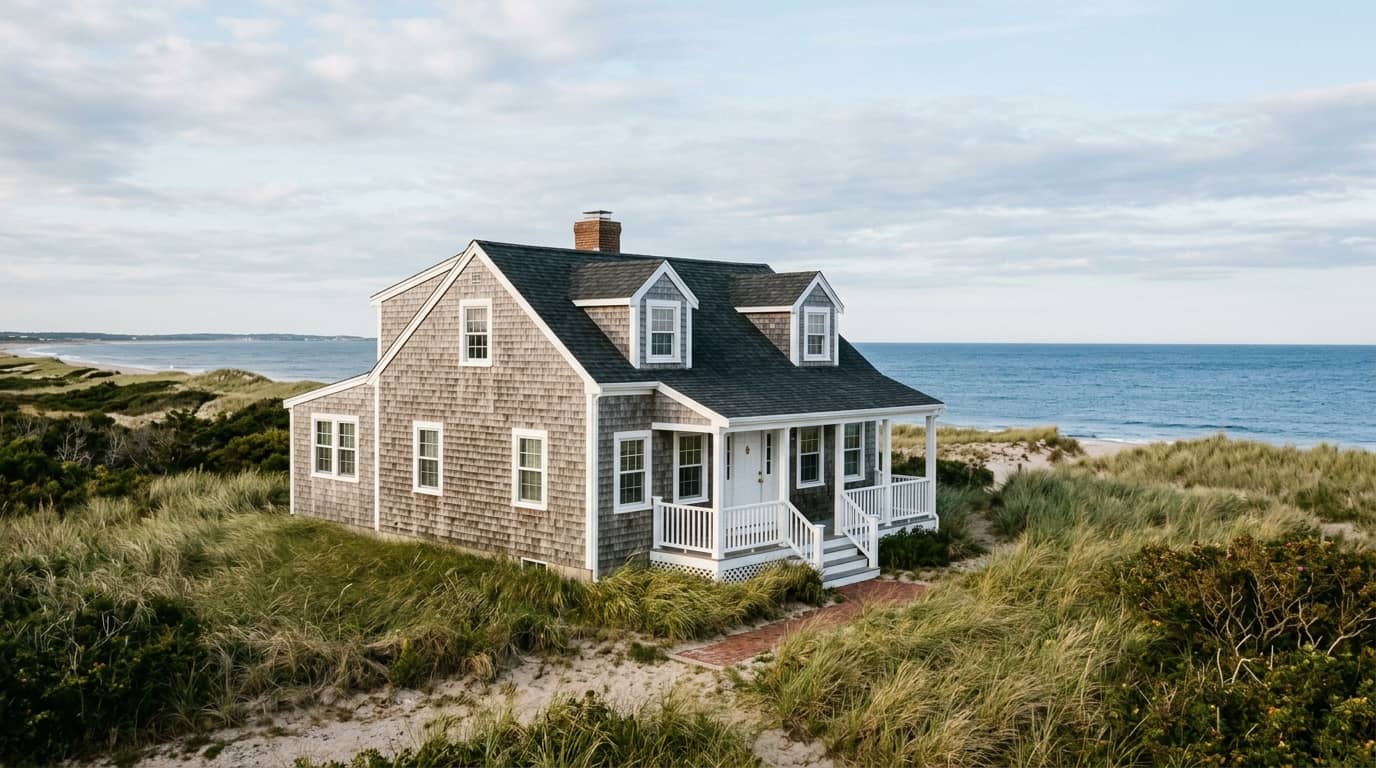
You’ve seen the house. Gray shingles gone silver in the salt air, white trim, somewhere between Plymouth and Provincetown. Shake and shingle siding puts that look on a house that didn’t grow there.
Both are small, overlapping pieces laid in horizontal rows called courses. The difference is texture. A shingle is sawn on both faces, so it’s thin, smooth, and even, and the rows line up cleanly. A shake copies cedar split by hand, so each piece is thicker, rougher, and a little different from its neighbor, and the bottom edges often stagger. Shingle reads tailored. Shake reads rustic.
The look comes from the white cedar shingles coastal New England has used for centuries, which start out tan and weather to a light silver-gray in rain, salt, and wind, per This Old House. That patina is why the style is tied to Cape Cod, the South Shore, and the Islands. Real cedar is a different project with different upkeep; this is about the lines that copy it without staining. The pillar’s profile table sets shake beside the other profiles.
Coastal Shingle or Rustic Shake: which look are you picturing?
TruFit, the two-minute survey in our free assessment, sorts the cedar look into two style directions. Know which one you mean before anyone shows you a sample.
- Coastal Shingle. Even courses, straight bottom edges, a weathered color. The Nantucket cottage, the shingled Cape by the beach. Calm, and at home with crisp white trim.
- Rustic Shake. Staggered bottom edges, deeper texture, more shadow. Every course casts a shadow line, the dark strip under each row’s edge, and shake casts a heavier one. It suits a craftsman, or a gable meant to be noticed.
Saved photos of silver houses near water mean Coastal Shingle. Warm, textured gables with heavy trim mean Rustic Shake. The pillar’s profile-to-house matching puts each beside the homes it fits.
Where does shake go: the gables, a full story, or the whole house?
This is the question homeowners can’t picture. The same shingle lands three ways, depending on how much of the house wears it.
| Placement | The look | Fits |
|---|---|---|
| Gables only | Texture in the peaks, lap everywhere else. The classic New England accent. | Colonials and front-gable homes where the gables face the road. Adds a little, not a lot. |
| A full second story | Shingle above, lap below, a trim band between. Reads designed and grounded. | Capes with dormers, two-story colonials, craftsman homes. |
| The whole house | The true coastal-cottage look. Softer and more uniform; color does the talking. | Capes, cottages, and shingle-style homes near the water. A whole-house decision, priced as one. |
An accent profile costs more per area than lap, but a gable is a small share of the wall, so shake in the gables moves the total a little. Shingle on every wall is a whole-house choice. We walk that line in whether a custom siding design costs more than a plain one. The look is the harder part to settle from a drawing, and that’s where TruPro earns its keep: shake in the gables of a model of your actual house, then a full second story, then the whole house, each with its own total. “Gables only, or a full second story” stops being a guess.
Find your style, then see it on your own house
TruFit is a two-minute survey that tells you which siding style fits your home and your taste. TruPro then puts it on a 3D model of your actual house — mix and match styles, colors, and trim and watch one total update as you go. Both are part of our free in-person siding assessment.
Schedule a free assessmentWhich materials give you the shake look?
Three lines we install carry the cedar look, and they fit different homeowners rather than ranking.
CertainTeed Northwoods is vinyl shake and shingle: rough-split shakes with the varied pattern of hand-split cedar, plus Sawmill and Perfection shingles for the smoother coastal look. No painting, no staining, and it sits at the vinyl tier, so it fits the homeowner who wants shake in the gables without moving the project up a tier.
CertainTeed Cedar Impressions is molded polymer rather than hollow vinyl, and its texture is cast from real cedar, so the grain and saw marks copy actual wood. It comes as Perfection shingles, Sawmill shingles, and Rough-Split shakes, and fits the owner who wants realism up close. One rule comes with it: hand-clean only, since power-washing voids the warranty.
Hardie Shingle is James Hardie’s fiber cement version, in straight-edge and staggered-edge panels with a factory-applied color finish. It fits the homeowner already choosing fiber cement for the whole house.
Which is right follows the whole-house material. Our guide to which CertainTeed vinyl line is right for you covers Northwoods and Cedar Impressions in depth, and our comparison of the three materials covers the whole-house decision.
“The gable question comes up at almost every coastal assessment. People love the shingled look but can’t tell whether their house wants it in the peaks or everywhere. We build both on the model and the house usually answers. A Cape with dormers wants the whole second story. A colonial usually wants the gables and nothing more.”
Global Roofing field team — Massachusetts in-home siding assessments
Which colors suit shake and shingle siding?
Texture is already doing the work, so the color can relax. The palettes that suit it are the ones the coast already wears, in TruFit’s words:
- Soft Grays. The natural answer. A mid gray or silver reads as weathered cedar from the street and needs nothing but white trim.
- Coastal Blues. Muted, grayed-down blues, from pale blue-gray to a deeper slate. They belong near water and pair naturally with a gray roof.
- Warm Naturals. Not a bright cedar tone but the weathered versions: driftwood, khaki, soft tan. Best when the roof and trim are warm too.
Saturated colors fight the texture, since every shadow line multiplies them; save the bolder note for the door. Whatever the palette, check its temperature, warm or cool, against the roof and any brick or stone first; our guide to matching siding color to your roof, brick, and stone goes fixture by fixture. And in a local historic district, common in coastal towns, the commission approves materials and colors before the permit, so check your town’s guidelines.
How do you pair shake with lap siding below?
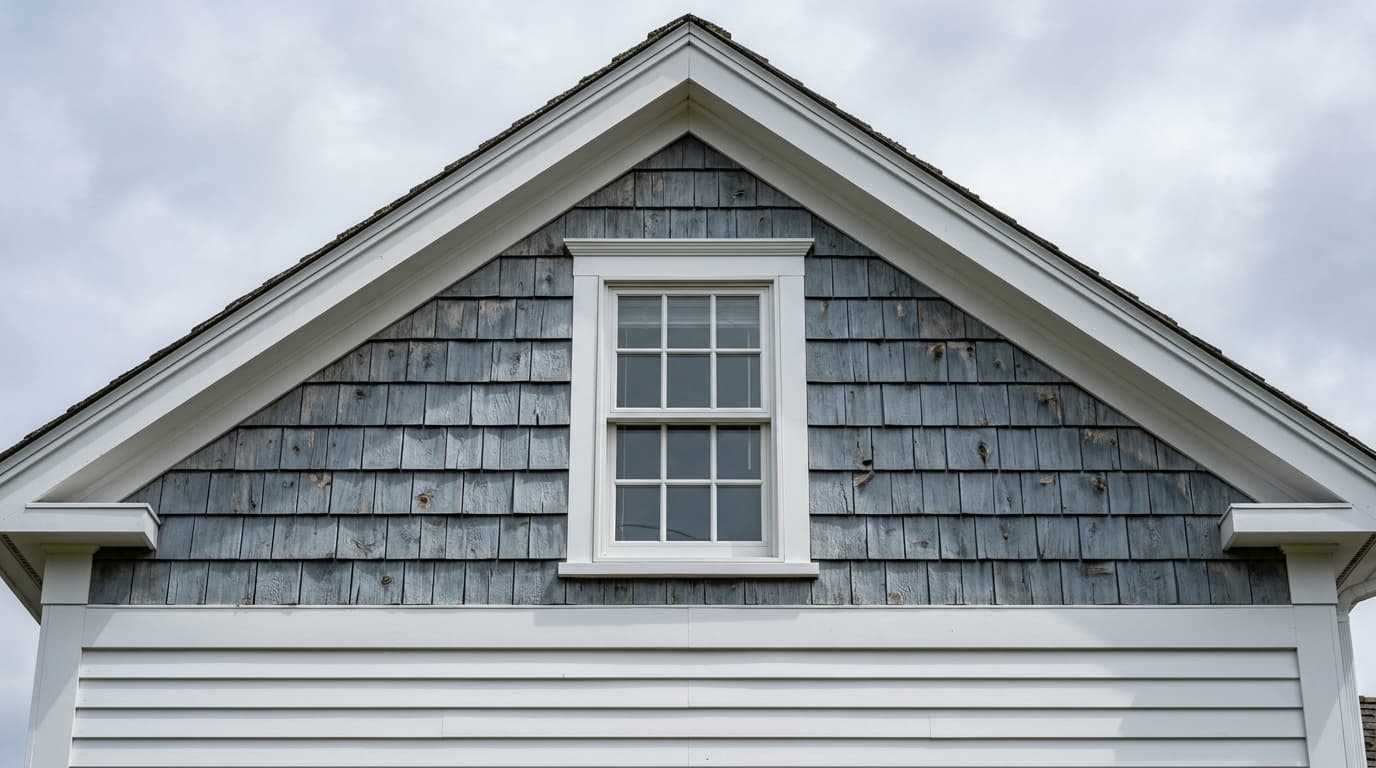
Most shake in Massachusetts sits above lap, and the pairing has three rules. First, give the profiles a place to meet: a horizontal trim board, sometimes called a water table, between them. Without it the change looks like a repair. Second, keep both in the same color family, or let the shake go one step deeper; a different color and a different profile is two changes where one will do. Third, match the exposure, the amount of each piece left showing, so both read at the same scale.
If you’re also weighing board and batten for the gables, board and batten versus lap siding covers how each reads, and mixing siding styles on one house lays out the combinations by house type.
Frequently asked questions
What is the difference between shake and shingle siding?
Both are modeled on cedar. Shingle is sawn, so each piece is smooth and even and the rows line up cleanly. Shake copies hand-split cedar: thicker, rougher, more varied, with rows that often stagger. Shingle reads quiet and coastal; shake reads rustic.
Should shake siding go on the gables only or the whole house?
It depends on the house. Shake in the gables is the most common New England move and adds a little, not a lot. A full second story over lap suits a Cape or a colonial with a trim band between floors. The whole house in shingle is the true coastal-cottage look, priced as a whole-house decision. TruPro shows all three on a model of your own house.
What is shake siding made of if it isn’t real cedar?
The lines we install give the cedar look in three materials: CertainTeed Northwoods in vinyl, CertainTeed Cedar Impressions in molded polymer, and James Hardie’s Hardie Shingle in fiber cement. Cedar Impressions must be hand cleaned; power-washing voids its warranty.
What colors look best with shake and shingle siding?
The colors already on the coast: Soft Grays that echo weathered cedar, muted Coastal Blues, and weathered Warm Naturals like driftwood and khaki, almost always with white trim. Saturated colors fight the texture. Match the color’s temperature to your roof first.
How we wrote this guide
This article reflects how Global Roofing designs and installs shake and shingle siding on real Massachusetts and New England homes, checked against CertainTeed’s Northwoods and Cedar Impressions product pages, James Hardie’s Hardie Shingle product page, and This Old House’s coverage of white cedar shingles in coastal New England. It was reviewed for accuracy by a licensed Massachusetts contractor on our team. See our full editorial process for how we research and update every article.
Sources
- CertainTeed — Northwoods vinyl shakes and shingles (rough-split shake, Sawmill and Perfection shingle patterns). certainteed.com
- CertainTeed — Cedar Impressions Perfection polymer shingles (materials, care, lifetime limited warranty). certainteed.com
- James Hardie — Hardie Shingle siding (straight-edge and staggered-edge fiber cement panels). jameshardie.com
- This Old House — All About White Cedar Shingles (the coastal New England tradition and how cedar weathers). thisoldhouse.com