

Key Takeaways
- The colors that hold their value are the ones the next owner won’t feel they have to change: Soft Grays, Whites & Creams, muted Coastal Blues, and Warm Naturals.
- Sold-home research points the same way. Zillow found a light gray-beige exterior associated with higher sale prices than brown or tan, yellow with lower, and dark front doors with higher. Direction, not a formula.
- Bold pays on the right house and in the right place: a dark door, a bolder front, a Bold Darks field on a farmhouse with wide white trim. A bold field on the wrong street is the risk.
- How long you plan to stay changes the answer. Twenty years softens any resale risk; two years makes color a marketing decision.
- The argument settles fastest on your own house: TruPro shows a safe palette and a bolder one on a 3D model of your home, each with its own total.
Which siding colors hold their value?
Two chips on the counter: the color you keep coming back to, and the one your agent says “sells.” The real question is whether the safe one is actually safer.
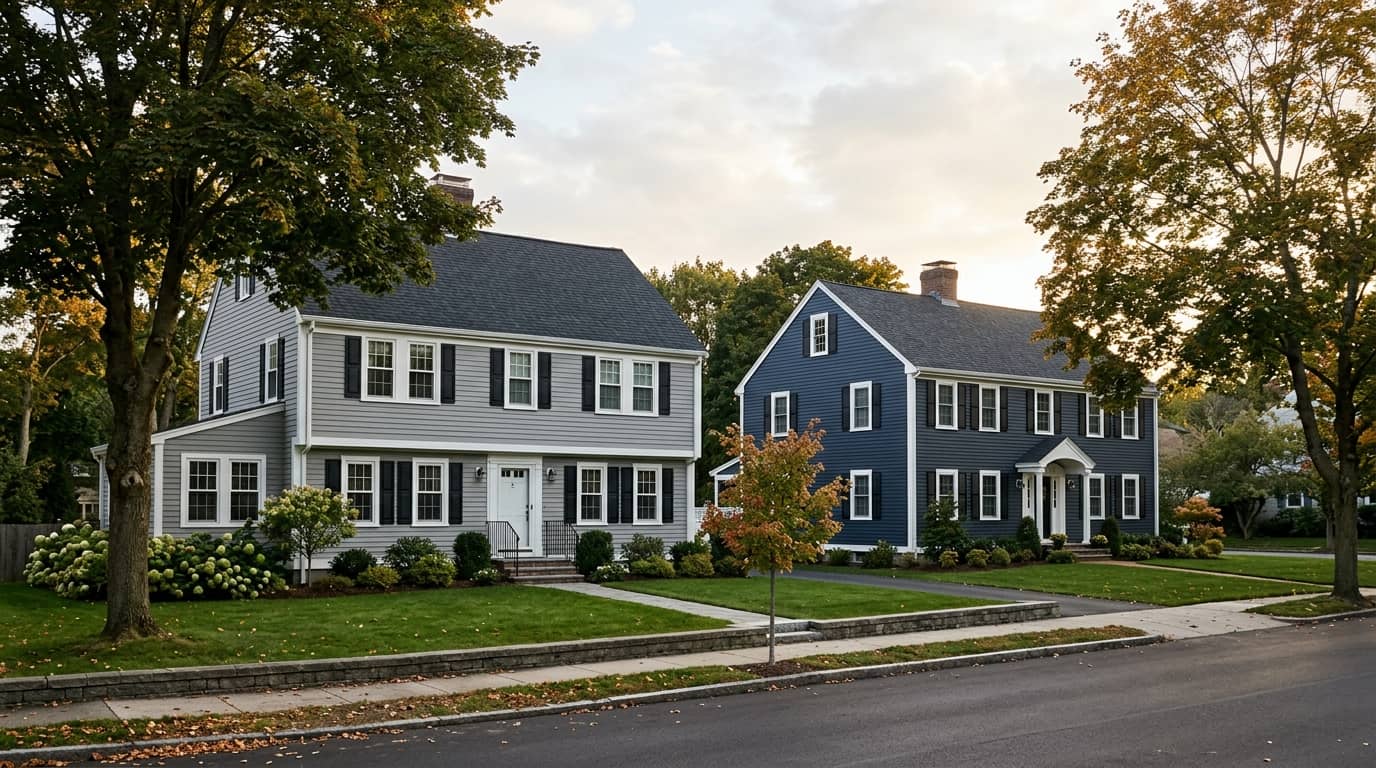
The colors that hold their value are the ones a future buyer sees and doesn’t mentally repaint. In New England that means soft grays, warm whites and creams, muted blues, and warm natural tones. They fit the street, they don’t date quickly, and they let the trim do the contrast. A bold color can still pay; where it goes matters more than whether you use it. Our pillar guide covers colors and resale in one paragraph; this article takes it apart.
Why is siding color a value question at all?
Paint is a weekend decision. Siding color is not. A factory finish on vinyl, fiber cement, or engineered wood is chosen once, and painting vinyl darker than it came voids the warranty. The next owner inherits your color the way they inherit your roof.
Buyers know it. They judge a house from the first listing photo, and the exterior is most of that photo. A broadly appealing color reads as move-in ready. An unusual one narrows the pool of buyers who love it and hands everyone else a project they price into their offer. The seller’s side of that is in whether to replace siding before selling.
What do the data say about exterior color and sale price?
Two kinds of evidence, pointing the same way. Zillow has analyzed photos of tens of thousands of sold homes and compared prices for similar houses in different colors. On the exterior, a light gray-beige (often called greige) was associated with higher sale prices than medium brown or tan, and yellow exteriors with lower ones. On the front door, dark navy to slate gray, and charcoal to black, were associated with higher prices. Those are associations across a national sample, not a promise for your street.
The second is what agents report. In the National Association of Realtors’ Remodeling Impact research, nearly every agent surveyed says curb appeal matters to buyers, and most have told a seller to improve it before listing. Siding color is the biggest single piece of it. Whether the project earns its keep is covered in does new siding increase home value and, by material, in the ROI on each siding material.
Which palettes travel well, and why?
We name looks in the same words TruFit uses. Four of its five palettes travel well. The field is the main wall color; the accents are trim and doors.
| Palette | How it tends to read to buyers | Where it fits |
|---|---|---|
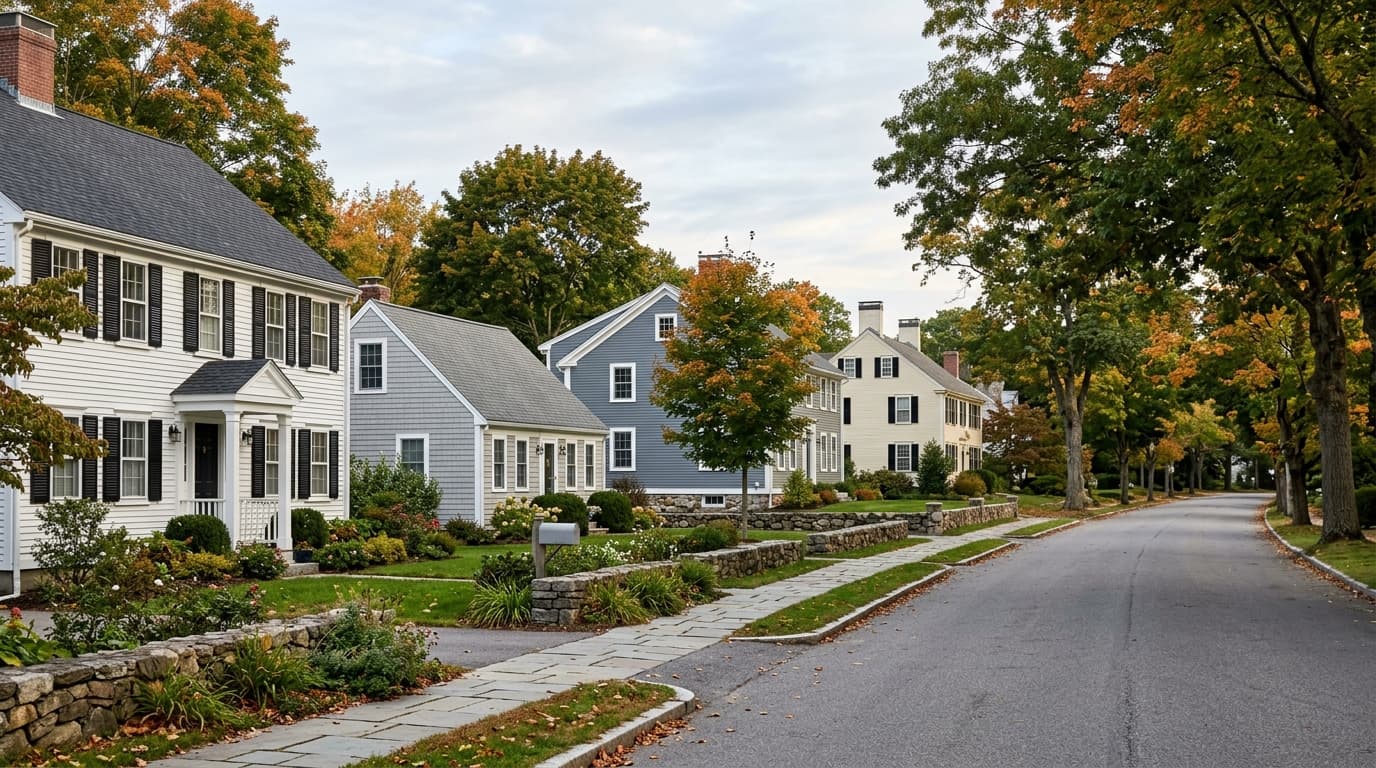
| Whites & Creams | Classic and timeless; reads as cared-for when the trim is crisp. | Colonials, Capes, farmhouses. Dark shutters and a bold door carry the contrast. |
| Soft Grays | Current without being trendy. The gray-beige middle is the tone Zillow tied to higher prices. | Most house styles; white trim, a charcoal roof, stone. |
| Coastal Blues (muted) | Calm and regional; reads as designed when it stays gray-blue instead of bright. | Shingle-style homes, Capes, anything near the water. |
| Warm Naturals | Settled and earthy. The greige end reads current; the brown-tan end reads older. | Wooded lots, shake-accent homes, brown or weathered-wood roofs. |
| Bold Darks | Striking on the right house, polarizing on the wrong one. | Modern farmhouse, contemporary, or as an accent. |
Why these four hold up: they match the roofs and masonry already on most New England homes, and they put the contrast in the trim instead of the field. Temperature matters too, meaning whether a color leans warm (toward yellow and brown) or cool (toward blue and gray); a field that fights the roof is the usual reason a safe color still looks off. Our guide to matching siding color to your roof, brick, and stone starts there.
Find your style, then see it on your own house
TruFit is a two-minute survey that tells you which siding style fits your home and your taste. TruPro then puts it on a 3D model of your actual house — mix and match styles, colors, and trim and watch one total update as you go. Both are part of our free in-person siding assessment.
Schedule a free assessmentThe “resale color versus the one I love” argument is hard to settle on a chip. TruPro shows a safe palette and a bolder one on your own house, each with its own total.
When does a bold color pay anyway?
Bold is not the enemy of value; bold in the wrong place is. The data give the clue: the exterior color that lost ground was a bright yellow field, and the one that gained was a near-black door. Put the drama where it’s small, and it reads as taste rather than risk.
- A bold door. Navy, charcoal, black, deep green. A buyer can repaint it in an afternoon, so nobody prices it in.
- A bolder color on the front elevation only. Soft gray sides and back, a deeper blue-gray front. How that works is in using more than one siding color on your house.
- A Bold Darks field on the right house. A charcoal farmhouse with wide white trim carries dark siding well. What dark does in our climate and on each material is the subject of dark siding in New England.
On a center-entrance colonial in a street of white and gray colonials, a black field is a bet on finding the one buyer who wanted exactly that. On a gable-forward farmhouse in the trees, the same color is the obvious answer. The house decides.
“Couples arguing about color at the kitchen table are almost always arguing about the field. Once we put the gray version and the navy version side by side on their own house, it usually ends with a navy front door and gray everywhere else.”
Global Roofing field team — Massachusetts in-home siding assessments
How does how long you plan to stay change the risk?
This is the question that decides it, which is why TruFit asks it directly. Resale risk is a function of time. If you plan to be in the house for twenty years, a color chosen for a buyer you’ll never meet is a strange way to live, and trends will have moved on by then. If you plan to sell within a couple of years, the color is part of the listing, and the broadly appealing palettes are the honest bet. The middle horizon is where the two-tone and bold-accent moves earn their keep. The same logic applies to the material, covered in choosing siding by how long you plan to stay.
A word on trends. Any “color of the year” is a snapshot; a siding color has to outlast several of them. The palettes that age well are muted rather than saturated and sit close to what the roof and masonry already are. What reads as dated is a saturated field that was briefly everywhere.
One more check: if you’re in a local historic district, the commission approves materials and colors before the permit, and a homeowners’ association can do the same, so read your town’s guidelines first.
Frequently asked questions
Which siding colors hold their value best?
Soft grays, warm whites and creams, muted blues, and warm natural tones. They fit most New England streets and the next owner won’t feel they have to change them. Zillow’s sold-home analyses point the same way: greige exteriors were associated with higher prices than brown or tan, and yellow with lower.
Does the color of your siding affect resale value?
Yes, more than most single choices. Siding color is a decades-long decision and the first thing a buyer sees in a listing photo. A broadly appealing color reads as move-in ready; an unusual one hands the buyer a project they price into their offer.
Is dark siding bad for resale?
Not on the right house. A charcoal field with wide white trim reads as designed on a farmhouse, and dark front doors have been associated with higher sale prices. The risk is a dark field that fights the architecture or the street. If you plan to sell soon, a dark accent is the safer way to get the look.
Should I pick a siding color for me or for the next buyer?
It depends on how long you plan to stay. Many years makes it your call; a year or two before a sale makes color a marketing decision. TruFit asks exactly this, and TruPro compares a safe palette and a bolder one on a 3D model of your own house.
How we wrote this guide
This article reflects how Global Roofing talks through color with homeowners at in-home siding assessments on real Massachusetts and New England homes, checked against Zillow’s published analyses of exterior and front-door color on sold homes and the National Association of Realtors’ Remodeling Impact research on curb appeal. We cite what those sources found as direction only and leave out their dollar figures. It was reviewed for accuracy by a licensed Massachusetts contractor on our team. See our full editorial process for how we research and update every article.
Sources
- Zillow — 2017 Paint Color Analysis (greige exteriors and dark navy to slate gray front doors associated with higher sale prices; photos of sold homes, 2010–2017). zillow.mediaroom.com
- Zillow — 2018 Paint Color Analysis (yellow exteriors associated with lower sale prices, charcoal to black front doors with higher; photos of sold homes, 2010–2018). zillow.mediaroom.com
- National Association of Realtors — Remodeling Impact Report (buyer appeal and cost recovery of exterior projects). nar.realtor
- National Association of Realtors — Remodeling Impact Report: Outdoor Features (the importance of curb appeal to buyers and agents). nar.realtor