

Key Takeaways
- Your time horizon decides how much weight to give three things: the up-front tier, the years of upkeep, and what a buyer sees.
- Around five years, curb appeal and a clean inspection matter most, and vinyl in a good line usually fits.
- Ten to fifteen years is the balanced middle — engineered wood’s sweet spot, or a vinyl line with more presence.
- At twenty-five years and beyond, the case for fiber cement is written in years; premium vinyl is the fit if you never want to paint.
- A designed look — a different color on the front, shake in the gables — fits any horizon, because it moves the total a little, not a lot.
Why does how long you’ll stay change the siding you should pick?
Every siding decision balances the same three things. There is the up-front tier — vinyl at the lowest barrier to entry, engineered wood in the middle, fiber cement at the top. There are the years of upkeep the material asks of you, from an occasional rinse to a repaint on a schedule. And there is what a buyer sees from the curb and on an inspection report when the house eventually changes hands.
How long you plan to stay decides how much each of those should weigh. A homeowner who lists in five years pays the first number and gets little of the durability back; one who stays twenty-five years lives through every repaint and winter, and the first number matters less each year. That is why our guide to which siding material is right for you ends on this question, and why it is one of the first things we ask.
What siding fits if you plan to stay about five years?
Weight curb appeal and a clean inspection. A short-stay owner wants the biggest visible change for the lowest tier, no paint to keep up before listing, and nothing that draws a buyer’s inspector to the wall. A good vinyl line usually fits that brief: it reads as new from the street, it doesn’t need a finish, and the material tier leaves more room for the trim, corners, and color choices that photograph well. Engineered wood fits when the home’s price point rewards a warmer wood look that vinyl can’t quite match.
What matters far more than the material on a short horizon is the condition of what’s there now. Tired but sound siding may only need a repair or a clean, while failing siding drags on both price and speed of sale — we walk through whether to replace siding before you sell and how the recouped value compares to a price cut. If a re-side is the call, keep the material decision simple and spend the attention on how the house reads from the driveway.
What fits if you plan to stay ten to fifteen years?
This is the balanced middle, and it is where most of the homes we side actually land. You will live with the material long enough that upkeep and durability count, but not so long that the top tier pays back on years alone. Engineered wood such as LP SmartSide is built for exactly this: a noticeable curb-appeal upgrade with real wood texture, durable through New England weather, at a mid-range investment — with the honest tradeoff that it wants repainting over the years to reach its full life.
If you would rather not plan a repaint at all, a vinyl line with more presence than the basic clapboard fills the same role: a deeper profile, a shake or shingle accent, or an insulated panel that lies flatter and quieter on the wall. Either way, a buyer in year twelve sees siding that still looks right. For a closer look at that pairing, see LP SmartSide versus James Hardie.
Find your style, then see it on your own house
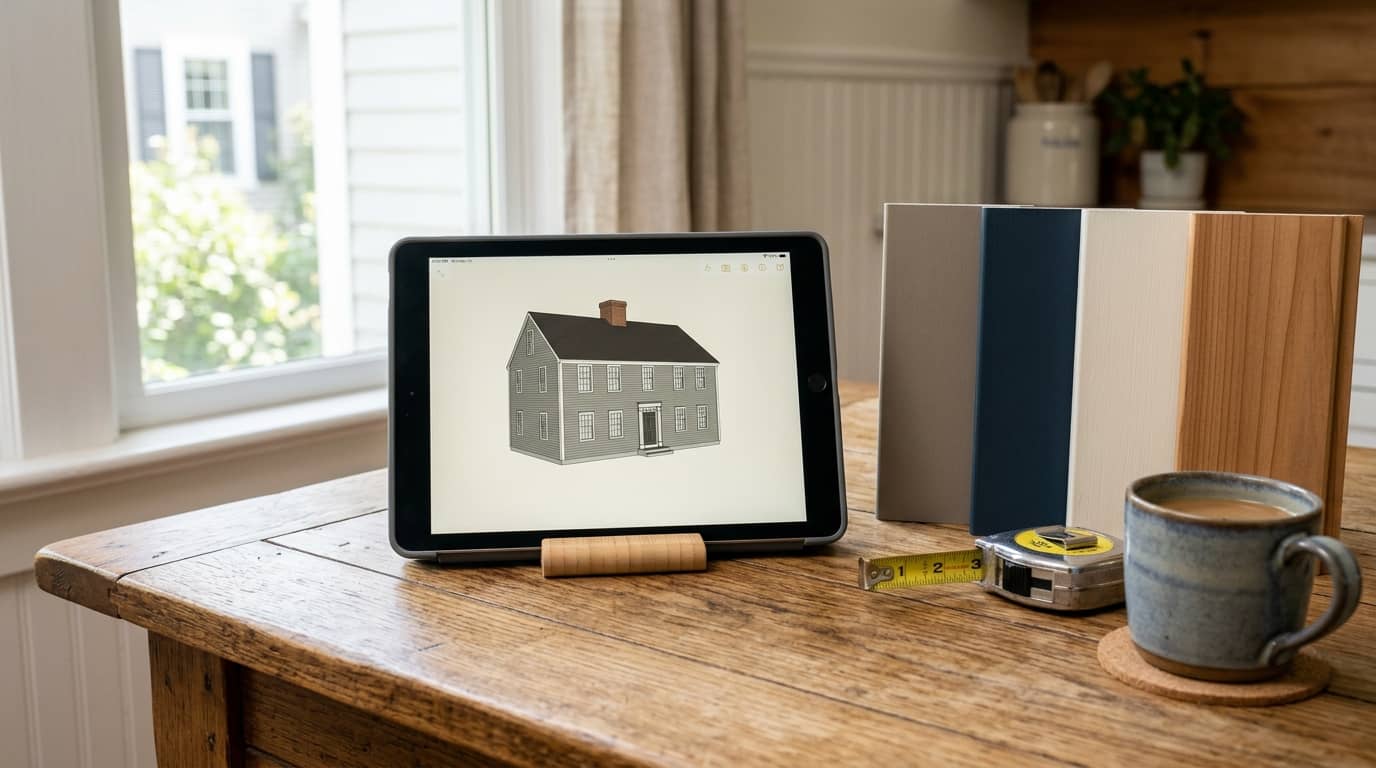
TruFit is a two-minute survey that tells you which siding style fits your home and your taste. TruPro then puts it on a 3D model of your actual house — mix and match styles, colors, and trim and watch one total update as you go. Both are part of our free in-person siding assessment.
Schedule a free assessmentWhat fits if you plan to stay twenty-five years or more?
The case for fiber cement is written in years. James Hardie siding shrugs off moisture and impact, holds up through winter after winter, and its eventual repaint is a maintenance event rather than a replacement. The higher up-front tier is real, but every year of ownership counts against the first number. If you want a premium, long-term exterior and will maintain a finish, this is the fit.
If you never want to paint, the other long-horizon fit is a premium vinyl line. Vinyl doesn’t rot and never needs a finish, and a well-installed job rides out New England weather for a very long time; the honest tradeoff is a less premium feel up close and a material that can crack on cold impact. Both paths work for twenty-five years. Which one is right comes down to the look you want and how you feel about upkeep, which is the heart of the vinyl versus fiber cement decision.
How does your tolerance for upkeep shift the answer?
Horizon sets the frame; upkeep tolerance fills it in. Vinyl asks the least — a rinse, a cracked panel now and then. Engineered wood asks for paint on a schedule and sealed board ends. Fiber cement asks for a caulk check and, eventually, a repaint. None of that is a problem if you will do it, and all of it becomes one if you won’t: a painted material left too long is how a fifteen-year siding job turns into a ten-year one.
So be honest with yourself before the horizon math. If you know paint will slide, lean toward vinyl on any timeline. If you will keep up a finish, engineered wood and fiber cement open up, and the longer you stay the more that care pays back. We lay out what each material asks of you year by year in what siding costs to maintain over its life.
“The two questions we ask first are how long you plan to stay and whether you’ll paint. Answer those honestly and the material usually picks itself — the rest of the visit is about the look.”
Global Roofing field team — Massachusetts in-home siding assessments
| Horizon | What to weight | Usually fits |
|---|---|---|
| About 5 years | Curb appeal, a clean inspection, no paint before listing | A good vinyl line; engineered wood where the price point rewards a wood look |
| 10–15 years | Balance of look, durability, and upkeep you’ll do | Engineered wood; or a vinyl line with more presence if you won’t paint |
| 25+ years | Years of ownership, weather resistance, the finish you’ll maintain | Fiber cement; or premium vinyl if you never want to paint |
| Not sure | Plan for the middle, then let upkeep tolerance decide | The 10–15-year answers |
Does a custom look fit every horizon?
Yes, and this is the part that surprises people. What moves a siding price is the size of the house, the material tier for the whole house, and what is found behind the old siding — not whether the front is a different color than the sides or the gables get shake instead of lap. A designed look adds a little, not a lot, so it is available on a five-year horizon just as much as a twenty-five-year one. For a short stay it is often the cheapest way to make a house read as finished from the street; for a long one it is the look you get to live with. We unpack why in whether a custom siding design costs more than a plain one.
The practical way to settle it is to see it: TruFit asks how long you plan to stay, and TruPro shows the answer on your own house with one total.
Frequently asked questions
Which siding is best if I’m selling in a few years?
Weight curb appeal and a clean inspection over long-horizon durability. Vinyl in a good line usually fits — the biggest visible change for the lowest tier, no paint before listing, and it reads as new to a buyer. Engineered wood fits where the price point rewards a warmer wood look. Condition matters far more to a sale than material.
Is fiber cement worth it if I’m staying a long time?
It often is, because its case is written in years: a higher up-front tier buys a material that shrugs off moisture and impact through many winters, and the eventual repaint is maintenance, not replacement. If you’d rather never paint, premium vinyl is the other long-horizon fit.
What if I don’t know how long I’ll stay?
Plan for the middle. A ten-to-fifteen-year horizon favors the balanced choices — engineered wood, or a vinyl line with more presence — because they look right to a buyer and hold up if you stay. Then let upkeep tolerance settle it.
Does a custom siding design make sense if I’m not staying long?
Yes. A different color on the front, shake in the gables, or contrasting trim moves the total a little, not a lot — the whole-house material tier is what moves it. For a shorter stay a designed look is often the cheapest way to make a home read as finished from the street.
How we wrote this guide
This article reflects how Global Roofing helps Massachusetts and New England homeowners weigh siding materials against how long they plan to own the home, checked against Consumer Reports’ siding buying guide, Remodeling Magazine’s Cost vs. Value Report, the National Association of Realtors’ Remodeling Impact Report, and manufacturer product information. It was reviewed for accuracy by a licensed Massachusetts contractor on our team. See our full editorial process for how we research and update every article.
Sources
- Consumer Reports — Siding Buying Guide (materials, upkeep, and performance). consumerreports.org
- Remodeling Magazine — Cost vs. Value Report (share of siding cost recouped at resale). remodeling.hw.net
- National Association of Realtors — Remodeling Impact Report (buyer appeal of exterior projects). nar.realtor
- James Hardie — Lifetime Value Siding Products (durability and warranty overview). jameshardie.com