

Key Takeaways
- Replace siding before a sale only when it’s genuinely failing: rot, moisture damage, warped or missing pieces, paint that won’t hold. Dated but sound siding usually needs a clean, a repair, or a repaint, not a tear-off.
- Buyers and home inspectors flag condition, not age. Visible siding problems tend to come back as a repair request, a credit, or a lower offer, and buyers usually discount more than the fix would cost.
- Siding replacement consistently ranks among the highest-returning exterior projects in Remodeling’s Cost vs. Value Report, but the stronger seller’s case is avoiding a price cut and selling faster, not a dollar-for-dollar bump.
- Work backward from your listing date. New siding needs a couple of months of lead time, and it has to be finished before the photos.
Should you replace siding before selling your house?
Replace it if it’s failing. Leave it if it’s sound. That’s the whole rule, and it turns on the condition of the siding, not the year it went on. A 25-year-old exterior that still sheds water and holds its finish is not a problem in a buyer’s eyes. A ten-year-old one with rot at the base and panels pulling away from the wall is, and it will show up in the offer.
Sellers get this wrong in both directions because they judge from the driveway: faded siding looks worse than it is, and moisture behind the siding looks better than it is. Before you spend anything, take a hard look at the signs that siding actually needs replacing, or a free assessment from someone who does this every day. Our guide on how to tell whether you need new siding walks through the same checks a buyer’s inspector will make.
What do buyers and home inspectors flag on siding?
Two different people judge your exterior, and they look for different things.
The buyer judges from the listing photos and the curb. Fresh siding says “maintained.” Chalky, streaked, or patched siding says “what else did they let go?” That impression never shows up as a line in the offer, but it shapes how hard they negotiate.
The home inspector judges condition against a written standard. Exterior cladding is a required item, and the report notes what’s deficient, not what’s old. Expect them to call out:
- Rot or soft spots, usually low on the wall and around windows and doors.
- Cracked, loose, or missing pieces that leave the wall behind them exposed.
- Failed caulk and flashing at windows, doors, and where the roof meets a wall.
- Signs of moisture getting behind the siding: staining below windows, swollen trim, bulging panels.
- Deteriorated paint on wood or engineered wood that’s no longer protecting the material.
Anything on that list tends to become a repair request or a credit in the buyer’s offer. Old siding that passes those checks generally gets a line in the report and nothing more.
Selling on a deadline?
Our Siding Project Planning Timeline lays out what happens when, from the first assessment to the final walk-through, so you can see whether the work fits before your listing date.
Get the planning timeline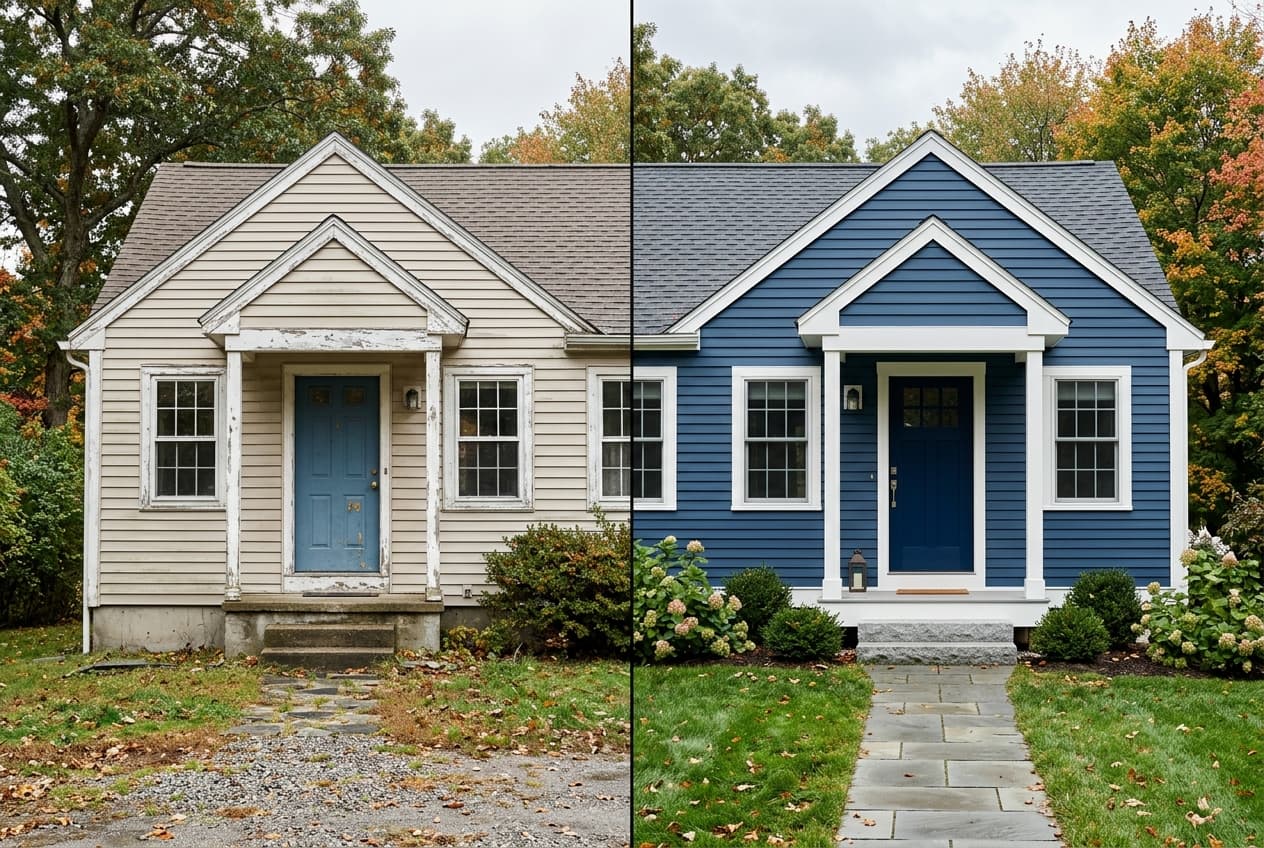
Does new siding pay for itself at resale, or should you just lower the price?
Here’s the honest shape of the numbers. Remodeling magazine’s Cost vs. Value Report, which tracks what common projects recover at resale, has ranked siding replacement among the highest-returning exterior projects year after year, recovering the large majority of its cost. The National Association of Realtors’ Remodeling Impact Report reaches a similar conclusion from the other direction: agents put new siding among the exterior projects most likely to appeal to buyers and help close a sale.
Those reports don’t say new siding adds its full cost to the sale price, because it usually doesn’t. The seller’s question is “what does it cost me not to fix it?” Three things tend to happen when failing siding stays on the house through a sale:
- Buyers over-discount it. A buyer who spots rot doesn’t price in a repair. They price in the worst case, because they don’t know what’s behind the wall. The reduction they ask for is often larger than the fix.
- It becomes a credit at the worst moment. An inspection finding lands after you’ve accepted an offer, when your leverage is lowest and the buyer can walk.
- It narrows the pool. Some buyers, and some lenders on certain loan types, won’t take on visible exterior damage. Fewer buyers means fewer offers.
That’s the real return: control over the negotiation, a wider pool, and a faster sale. Whether it beats listing as-is in your town, this season, is a question for your agent. In a hot market with multiple offers, some sellers reasonably let the buyer deal with it. For the fuller investment picture, see whether new siding is worth it in our cost guide.
One more point for sellers weighing a re-side: a designed look — a different color on the front, shake in the gables — moves the total a little, not a lot. We explain why in whether a custom siding design costs more than a plain one.
And if the sale is a few years out rather than a few months, the horizon changes the material choice — see how to choose siding by how long you plan to stay.
“The sellers who call us in a panic are the ones whose inspection just came back. By then the buyer has a number in their head, and it’s bigger than ours would have been. The sellers who call us three months before listing get to pick the material, the color, and the timing. Same house, completely different position.”
Global Roofing field team — Massachusetts in-home siding assessments
When is a repair, a cleaning, or a repaint enough before a sale?
Most of the time, honestly. If the siding is sound and the problem is cosmetic, a full replacement is the expensive answer to a cheap question. A refresh usually does the job when:
- The siding is dirty, not damaged. Green algae on the north side and grime along the bottom courses wash off. A cleaned exterior photographs like a maintained one.
- The damage is isolated. A few cracked panels from a storm or a soft board under one window is a repair. What matters is whether it’s a pattern across the house, which is the heart of deciding between a siding repair and a replacement.
- Painted siding is faded but intact. Wood and engineered wood that’s holding together but looks tired often wants paint, not replacement, and a fresh coat in a current color does a lot for a listing photo. Our styles guide covers which siding colors tend to help resale.
The line moves when water is involved. Rot that keeps spreading, paint that fails because moisture is pushing it off from behind, or a bulge that means something has moved in the wall are not cosmetic, and a buyer’s inspector will say so. Our pillar guide has more on when the answer is “it’s fine for now” and when it isn’t.
How far ahead of listing should you plan the work?
Work backward from the photo shoot, because that’s the real deadline. A full re-side runs in four steps:
- Assessment and decision. A free in-person look at the condition, then the repair-or-replace call. For a house you’re leaving, keep the material and color neutral, current, and matched to the neighborhood.
- Lead time. Orders take time to arrive, and crews book out in spring and early fall.
- Installation. Tear-off, any sheathing repairs it reveals, the water-resistive barrier, flashing, and the new siding. Weather can stretch it.
- Cleanup and photos. Landscaping recovers, debris is gone, then the photographer comes.
Add it up and you want to be talking to a contractor a couple of months before you list, more for a spring market. If the timeline doesn’t fit, a targeted repair, a cleaning, and an honest disclosure is a legitimate plan your agent can price around.
Frequently asked questions
Should I replace my siding before selling my house?
Only if it’s genuinely in poor condition. Rot, moisture damage, warped or missing pieces, and failed paint get flagged by buyers and inspectors and cost you in price and leverage. Dated but sound siding usually needs a cleaning, a repair, or a repaint, not a replacement.
Does new siding increase the sale price of a house?
It recovers a large share of its cost. Remodeling’s Cost vs. Value Report ranks siding replacement among the highest-returning exterior projects, and NAR’s Remodeling Impact Report finds it among the projects most likely to appeal to buyers. But the price rarely rises by the full project cost, so the stronger case is avoiding a price cut and selling faster.
What will a home inspector say about old siding?
Inspectors report condition, not age. They’ll note rot, cracked or missing pieces, failed caulk and flashing, signs of moisture behind the siding, and deteriorated paint. Old siding in good shape usually isn’t called a defect. Damaged siding is, and it often becomes a repair request or a credit.
Is it better to replace siding or lower the price when selling?
That depends on your market and timeline, which is your agent’s call to help with. Buyers tend to discount visible problems by more than the repair costs, so fixing failing siding before photos usually gives you more control. In a fast market with multiple offers, listing as-is can be reasonable.
How we wrote this guide
This article reflects what Global Roofing sees on Massachusetts and New England homes being prepared for sale, checked against Remodeling’s Cost vs. Value Report, the National Association of Realtors’ Remodeling Impact Report, and the home inspection standards of practice inspectors follow. It was reviewed for accuracy by a licensed Massachusetts contractor on our team. See our full editorial process for how we research and update every article.
Sources
- Remodeling magazine — Cost vs. Value Report (share of project cost recouped at resale, by project). remodeling.hw.net
- National Association of Realtors — Remodeling Impact Report (buyer appeal and cost recovery of exterior projects). nar.realtor
- International Association of Certified Home Inspectors — Standards of Practice (what an inspector reports on exterior cladding). nachi.org