
Key Takeaways
- LP SmartSide is engineered wood: a deep cedar grain, long planks with fewer seams, and an easier install. It is the mid-tier upgrade that wants its paint kept up.
- James Hardie is fiber cement: dense, noncombustible, unbothered by moisture or pests, and the longer-horizon material at the premium tier.
- In New England the real difference is how each handles water at the edges and the ground line — and that comes down to the install more than the brand.
- The warranties differ in what they cover: LP’s 5/50 includes five years of labor; Hardie’s 30-year substrate warranty is material-only, with a separate 15-year finish warranty.
Which is right for you: LP SmartSide or James Hardie?
If you want a noticeable step up from vinyl with a real wood look, you plan to stay a good while, and you’re fine with a repaint down the road, LP SmartSide is usually the fit. If you’re thinking in decades, you want the most weather- and fire-resistant board you can put on a house, and the premium tier is in reach, James Hardie is usually the fit. Neither is the “wrong” choice; they answer different questions.
Both sit above vinyl on the investment ladder in our side-by-side materials comparison, and both are products we install. The rest of this article is the detail behind that split, so you can see which side of it your home lands on.
What is engineered wood siding vs. fiber cement siding?
Engineered wood is made from treated wood strands bonded with a resin binder into a dense, uniform board. LP treats the strands to the core during manufacturing, which is what lets a wood product stand up to moisture and insects the way plain lumber can’t. It comes as lap siding in a cedar texture or a brushed-smooth face, plus panel and vertical products for board and batten looks. Our guide covers the line in more depth under engineered wood siding.
Fiber cement is a cement-based board reinforced with cellulose fibers, cured into a plank that behaves more like masonry than wood. James Hardie’s lap siding comes in Select Cedarmill and Smooth textures, with beaded versions of each. It is noncombustible, and the company states plainly that it resists moisture and holds no appeal for woodpeckers or termites. The pillar’s fiber cement section has the overview.
How do they look and feel up close?
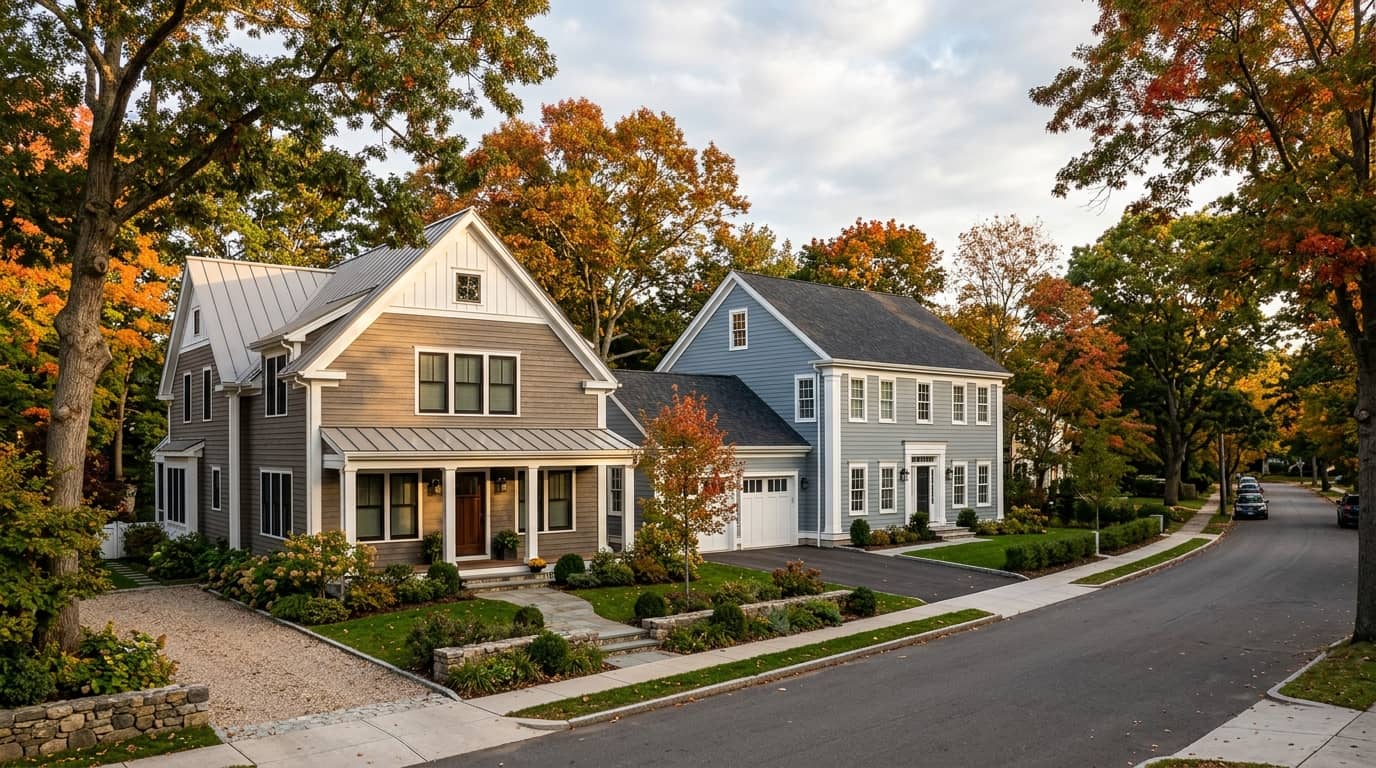
From the curb, both read as painted wood clapboard. Up close, the differences show. LP’s cedar texture is deeper and more varied, closer to a rough-sawn board, and it can be manufactured in 16-foot lengths, so a long wall carries fewer butt joints. Hardie’s Cedarmill texture is finer and more even, its boards are denser with a crisp shadow line at each course, and its standard planks are shorter, so a long run shows more joints. Good installers stagger the joints so they disappear.
Color is a wash. Both come primed for field paint or factory finished, and either takes the deep, dark colors that are popular on New England farmhouses right now.
Find your style, then see it on your own house
TruFit is a two-minute survey that tells you which siding style fits your home and your taste. TruPro then puts it on a 3D model of your actual house — mix and match styles, colors, and trim and watch one total update as you go. Both are part of our free in-person siding assessment.
Schedule a free assessment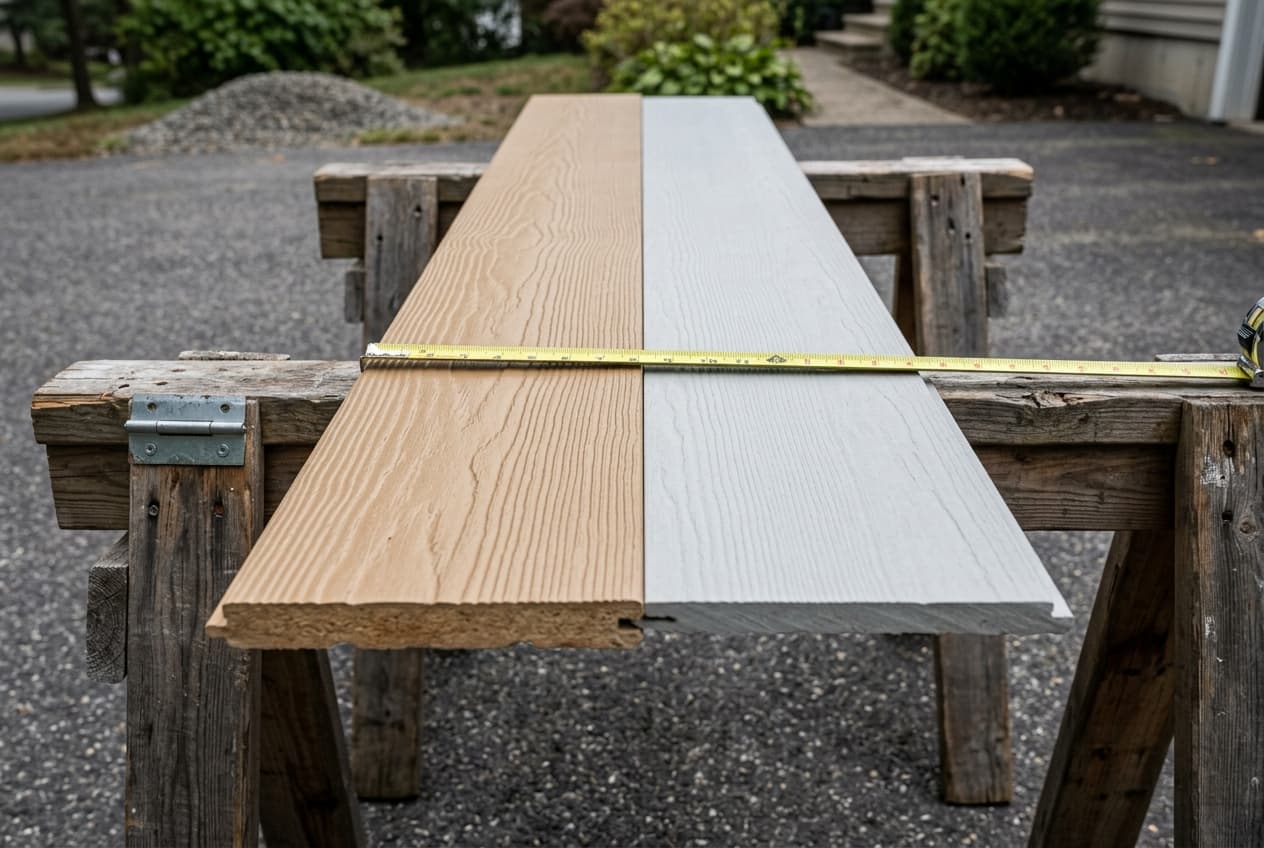
What changes on install day?
This is where the two diverge most, and it’s a bigger part of the price gap than the material itself. Engineered wood is the lighter board, cuts like real wood, and accepts nails the way lumber does, so a crew moves quickly and the long planks go up with fewer seams to flash. Fiber cement is heavy, needs two sets of hands on a long board, and is cut with shears or a dust-controlled saw because it can crack if handled roughly.
What doesn’t change is the condition attached to both warranties: the siding has to go on to the manufacturer’s written specification, over intact house wrap, with the flashing and clearances the instructions call for. Miss that and the coverage is gone regardless of brand, which is the plainest reason the installer matters as much as the material.
How does each handle New England moisture and impact?
Fiber cement is the more forgiving board around water. It doesn’t swell, and a wet spring or a snowbank against the foundation doesn’t bother the material itself. Engineered wood handles the same weather well when its details are right: the factory treatment resists rot, but cut ends need to be sealed, the bottom course needs clearance from soil and standing snow, and the paint film is part of the moisture defense. Skip those and a wood-based product will show it first.
On impact the picture flips a little. Engineered wood has some give and shrugs off a stray baseball or a ladder bump; fiber cement is harder and can chip at a sharp blow, though it is far tougher than vinyl in the cold. LP backs its board against hail up to 1.75 inches when it’s installed and maintained to spec, and Hardie warrants its board to resist hail and termite damage. Either way, the wall behind the siding decides most of what happens in a storm; our pillar’s New England section explains why, and how long siding lasts here puts it in years.
“When a homeowner asks us to pick between these two, we ask two questions back: how long are you staying, and do you mind a repaint someday? The answers usually make the choice for them. What we won’t do is call one of them the winner, because on the right house each one is.”
Global Roofing field team — Massachusetts in-home siding assessments
What about paint, finishes, and the warranties?
Both products can arrive primed for paint on site or finished at the factory. LP’s ExpertFinish line offers a set of prefinished colors; Hardie’s ColorPlus Technology is a factory-applied, baked-on color cured between coats. A factory finish means no painting crew in your yard and a more consistent film, and on either product it’s the finish, not the board, that you’ll eventually renew. How that plays out over the years is covered in which siding holds its color best.
| Factor | LP SmartSide (engineered wood) | James Hardie (fiber cement) |
|---|---|---|
| Right for | A real-wood look and a clear step up, mid-tier ($$) | A decades-long horizon and maximum durability, premium tier ($$$) |
| Up close | Deeper cedar grain; 16-foot planks, fewer seams | Finer texture; dense board, crisp shadow line |
| Install | Light, cuts like wood, fast | Heavy, shears or dust-controlled saw, slower |
| Water and pests | Treated strands; seal cut ends, keep clear of grade | Moisture-stable; no appeal to woodpeckers or termites |
| Fire | Wood-based product | Noncombustible |
| Warranty | 5/50: five years labor and material, then 50-year prorated material; hail to 1.75 in. | 30-year non-prorated substrate, material only, transferable; separate 15-year ColorPlus finish warranty |
The warranty row is the part most comparison pages get wrong. LP’s five-year window covers labor as well as material, then steps to a prorated material feature. Hardie’s 30-year substrate warranty never prorates and transfers to the next owner, but its remedy is the material, not the labor to replace it, and the finish is a separate, shorter, prorated warranty. Neither is better on paper; they cover different things. We line all three brands up in siding warranties compared, and if vinyl is still in the running, start with vinyl versus fiber cement.
Up-front tier vs. what it gives back: siding return by material.
Frequently asked questions
Is engineered wood siding as good as fiber cement siding?
They’re good at different things. Engineered wood gives you the deeper grain, longer planks, and easier install, and wants its paint kept up. Fiber cement is denser, noncombustible, and the longer-horizon board at a higher tier and a heavier install. Neither is a compromise when it matches how long you’ll stay and how much upkeep you’ll do.
Does James Hardie cost more than LP SmartSide?
Generally, yes. Fiber cement sits at the premium tier and engineered wood at the mid tier, mostly because Hardie boards are heavier, cut differently, and take more hands. Your home’s size and shape and what’s behind the old siding move the total far more than the brand does, so compare the two on your own house with a written total.
Does LP SmartSide rot?
It’s engineered not to. The strands are treated during manufacturing and bonded with resin, and the boards hold up to freeze-thaw and impact when cut edges are sealed and the siding stays clear of soil and snow. Like any painted product, it reaches its full life when the finish is maintained.
What do the two warranties actually cover?
LP SmartSide: a 5/50 limited warranty, five years of labor and material, then 50 years prorated on material, with hail to 1.75 inches when installed to spec. James Hardie: a 30-year non-prorated, transferable substrate warranty covering the material only, plus a separate 15-year ColorPlus finish warranty. Both are void if the siding isn’t installed to the manufacturer’s specification.
How we wrote this guide
This article reflects what Global Roofing sees installing both products on Massachusetts and New England homes, checked against LP and James Hardie’s own product and warranty pages and Consumer Reports’ siding testing. It was reviewed for accuracy by a licensed Massachusetts contractor on our team. See our full editorial process for how we research and update every article.
Sources
- LP Building Solutions — LP SmartSide siding and trim (products, textures, ExpertFinish colors). lpcorp.com
- LP Building Solutions — Fiber Cement vs. Engineered Wood Siding (composition, plank lengths, handling). lpcorp.com
- LP Building Solutions — The what’s and why’s of the LP SmartSide 5/50 Limited Warranty. lpcorp.com
- James Hardie — Hardie Plank lap siding (textures, ColorPlus Technology, fire and moisture resistance) and Lifetime Value (warranty terms). jameshardie.com
- Consumer Reports — Siding Buying Guide. consumerreports.org