


Key Takeaways
- “What does my house want?” beats “what do I like?” as the first question. The architecture, the roof, the street, and how long you’ll stay narrow forty saved photos to a handful of real options.
- Every look falls into one of five directions — Classic Clapboard, Modern Farmhouse, Coastal Shingle, Rustic Shake, Mix & Match — and each tends to suit a certain kind of house.
- Five palettes set the mood: Whites & Creams, Coastal Blues, Soft Grays, Warm Naturals, Bold Darks. The roof and the masonry decide which family fits.
- TruFit is a two-minute survey about your home, your taste, and your plans that tells you which style and type of siding fits you. No prices, no spec sheets, and “bring me options” is a fine answer.
- TruPro then puts that look on a 3D model of your actual house, wall by wall, with one total that updates as you design. Both are part of our free in-person siding assessment.
How do you find the siding style that fits your house?
You have forty photos saved. A black farmhouse from a magazine, a gray shingled Cape from a drive to the coast, a white colonial two streets over. You like all of them and cannot say what they have in common, because nothing does. Taste is a scrapbook; a siding decision is one house.
So work from the house outward, not from the photos inward. Start with what your house already is — its shape, its roof, its street, how long you plan to live there — and the looks that fit drop from forty to a handful. The pillar’s advice to start with the look, not the material still holds; this is how to name that look when you can’t yet.
Why is “what does my house want” the better first question?
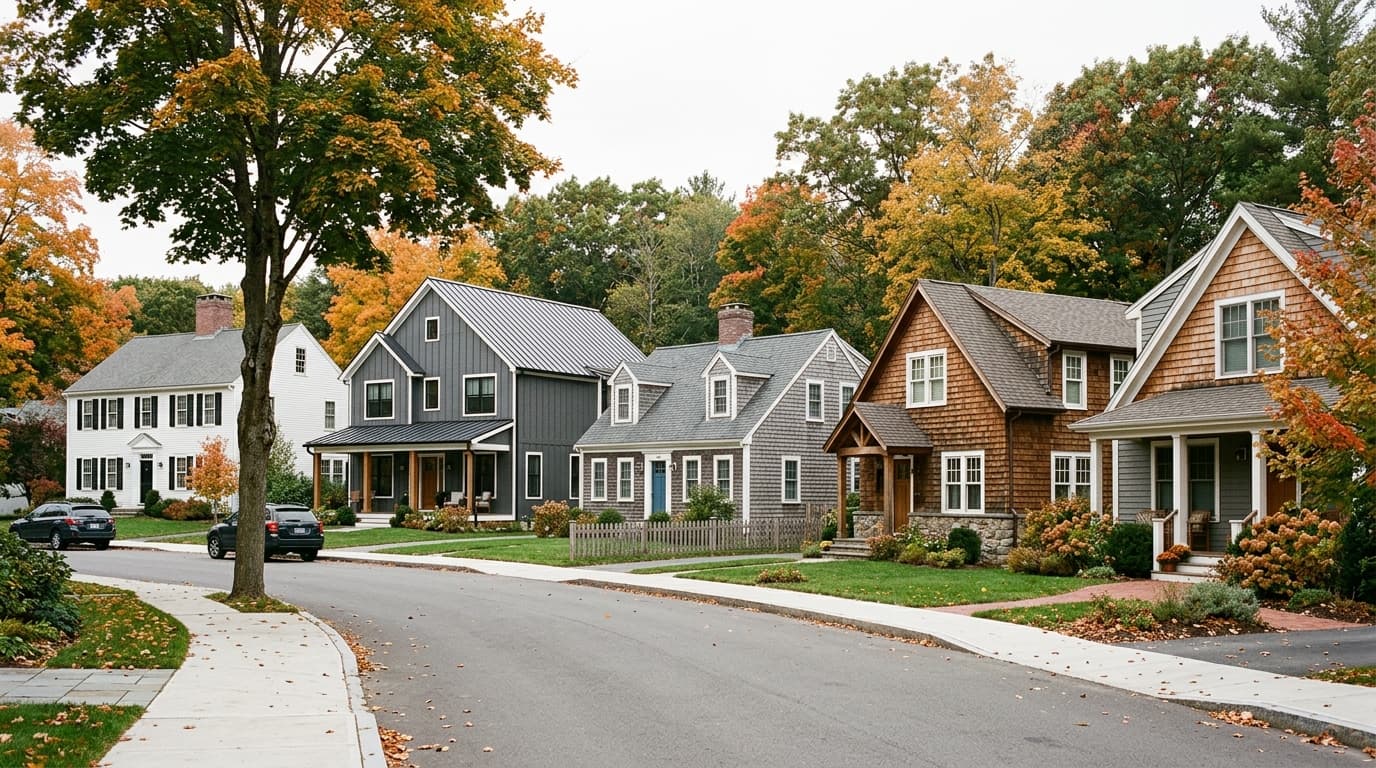
“What do I like” is where most people stall, because a saved photo carries its own house with it. The black board and batten you love is doing its work on a tall farmhouse with big windows; on a low ranch it reads heavy. “What does my house want” narrows faster, and four things answer it:
- The architecture. A colonial is symmetrical and flat-faced; a Cape is low under a steep roof; a farmhouse is tall with plain gables. Historic New England notes the region’s earliest houses were wood-framed and covered in clapboard or shingle — which is why those two profiles (a profile is the shape and pattern of siding on a wall) still look at home here. The pillar covers matching a profile to colonial, Cape, farmhouse, craftsman, and coastal homes.
- The roof. It stays, and it is the largest color on the house. A charcoal roof and a brown roof want different palettes.
- The street. Not to match the neighbors, but to notice what looks settled there. A style borrowed from another region ages worse.
- How long you’ll stay. A five-year horizon leans toward the look the next buyer won’t feel they have to change; a twenty-five-year horizon is yours to spend on what you love. It changes the material, too.
What are the five siding style directions?
Every look falls into one of five directions. They are broad on purpose; the details come later.
| Direction | The look | Suits |
|---|---|---|
| Classic Clapboard | Horizontal lap boards, crisp trim, shutters if the windows want them. | Colonials, Capes, most older New England homes |
| Modern Farmhouse | Vertical board and batten (wide boards with narrow strips covering the seams), wide plain trim, dark windows. | Tall, simple gabled houses; newer construction |
| Coastal Shingle | Straight-edge shingles in a weathered tone, white trim. | Capes, cottages, homes near salt water |
| Rustic Shake | Thicker shakes with a staggered edge, natural browns and grays, heavier trim. | Craftsman bungalows, cottages, wooded lots |
| Mix & Match | One field profile plus one or two accents: lap below, board and batten or shake in the gables. (The field is the main body of the wall; an accent is the smaller area set against it.) | Houses with gables, dormers, bays, or a deep porch |
Board and batten versus lap separates the first two directions, and shake and shingle siding separates the third and fourth. Mixing siding styles on one house explains the one-field-two-accents rule that keeps a mix from looking busy.
What do the five palettes say?
A direction is the shape; a palette is the mood. Each of the five says something different from the curb.
- Whites & Creams. The classic New England answer. Bright, and the color a buyer least expects to change.
- Coastal Blues. Soft blue-grays through deeper navy. Calm, at home near water, made for white trim.
- Soft Grays. The modern neutral. Steps back so the trim, the door, and the landscaping do the talking.
- Warm Naturals. Tans, taupes, cedar tones. Grounded; suits shake, wooded lots, and a warm roof.
- Bold Darks. Charcoal, near-black, deep green. Current, but it shows dust, holds heat, and asks the most of a house’s proportions.
One rule runs under all five: temperature. Warm colors sit with warm roofs and masonry, cool with cool, and a palette that crosses that line looks off without anyone saying why. If resale is inside your horizon, which siding colors hold their value covers which of these the next owner tends to keep.
Find your style, then see it on your own house
TruFit is a two-minute survey that tells you which siding style fits your home and your taste. TruPro then puts it on a 3D model of your actual house — mix and match styles, colors, and trim and watch one total update as you go. Both are part of our free in-person siding assessment.
Schedule a free assessmentHow does TruFit find your style?
TruFit does that sorting in about two minutes. It is a short survey about three things: your home, your taste, and your plans. It asks how long you plan to stay, because that changes the answer. You tap through real houses, pick a palette, and say whether your corners should blend in or stand out. No prices, no spec sheets. It tells you which siding style and type fits you.
Two things people find freeing. “Bring me options” is a perfectly good answer; the survey narrows, it doesn’t test you. And it puts the forty photos into words — that scrapbook usually had a pattern already.
“We hear ‘I don’t know what I like’ at almost every table. Then we go through a few real houses and it turns out they do — they’ve been picking Soft Grays and clapboard for a year without noticing. Naming it is the whole trick.”
Global Roofing field team — Massachusetts in-home siding assessments
Why does seeing it at full scale beat imagining it?
Because a chip lies. A gray that looks soft on a two-inch sample turns cold across a forty-foot wall. Seeing it before you commit is the step most people skip, because until recently it meant imagination.
TruPro is the handoff. Your TruFit picks go onto a 3D model of your actual house, every wall, window, door, and roofline at true size, not a stock house that looks roughly like yours. You design wall by wall: a bolder color on the front, clapboard below and board and batten above, shake in the gables, trim style and width for every opening, corners that match or contrast. You see it from the street and the backyard, against your actual roof. One total updates as you go, priced from what the house measures, and you can set a simpler version beside an upgraded one.
The step by step lives in how to get a custom siding design and quote. Both TruFit and TruPro are part of our free in-person siding assessment. Three things are worth having on hand, none required:
- One photo you love. Not forty. The one you keep returning to says more than the rest combined.
- What you can’t change. The roof color, the brick or stone, the windows. In a local historic district, the commission approves materials and colors before the permit, so check your town’s guidelines first.
- Your horizon. How long you plan to stay decides how much of the design is for you and how much is for the next owner.
Frequently asked questions
How do I know which siding style fits my house?
Start with the house, not the photos. Its architecture, its roof color, your street, and how long you plan to stay narrow the options to a handful. A colonial or Cape usually wants Classic Clapboard or Coastal Shingle; a tall gabled house carries Modern Farmhouse; a craftsman suits Rustic Shake.
What is the TruFit siding survey?
A two-minute survey about your home, your taste, and your plans, including how long you plan to stay. It tells you which siding style and type fits you. No prices, no spec sheets, and “bring me options” is a fine answer. It is part of our free siding assessment.
Can I see what siding will look like on my house before I buy?
Yes. TruPro puts your picks on a 3D model of your actual house at true size, wall by wall, so you see a bolder front or shake in the gables from the street and the backyard, against your real roof. One total updates as you design.
What if I don’t know what siding style I like?
That is the normal starting point. Most homeowners who say they have no idea have been saving the same kind of photo for a year without noticing. Let the house narrow the options first, work through a few real examples, and the pattern gets a name.
How we wrote this guide
This article reflects how Global Roofing helps homeowners name and preview a siding look on real Massachusetts and New England homes, checked against Historic New England’s architectural style guide, This Old House’s siding design coverage, and James Hardie’s architecture and siding guidance for colonial and modern farmhouse homes. It was reviewed for accuracy by a licensed Massachusetts contractor on our team. See our full editorial process for how we research and update every article.
Sources
- Historic New England — Architectural Style Guide (New England house styles from the seventeenth century through Colonial Revival, including the region’s clapboard and shingle traditions). historicnewengland.org
- This Old House — Siding Design Ideas for Better Curb Appeal (mixing profiles, accents, and choosing color in context). thisoldhouse.com
- James Hardie — Colonial Architecture and Siding Ideas (lap siding and palettes for symmetrical colonial homes). jameshardie.com
- James Hardie — Modern Farmhouse Architecture and Siding Ideas (board and batten, lap, and palettes for farmhouse homes). jameshardie.com