

Key Takeaways
- Standard homeowners policies cover siding damaged by sudden, covered events: wind, hail, falling limbs, fire, a vehicle. They don’t cover fading, age, wear, neglect, or rot from a leak that’s been going on for years.
- Two things shape the check: your deductible (the part of a covered loss you pay) and whether the policy pays actual cash value (depreciated for age) or replacement cost.
- The siding-specific catch is matching. Faded or discontinued siding means new panels won’t match, and whether undamaged walls get replaced depends on your policy’s wording and any optional matching coverage.
- Photos with dates, the storm date, and a written scope from a contractor help. The adjuster and the policy decide; a contractor documents.
Does homeowners insurance cover siding damage?
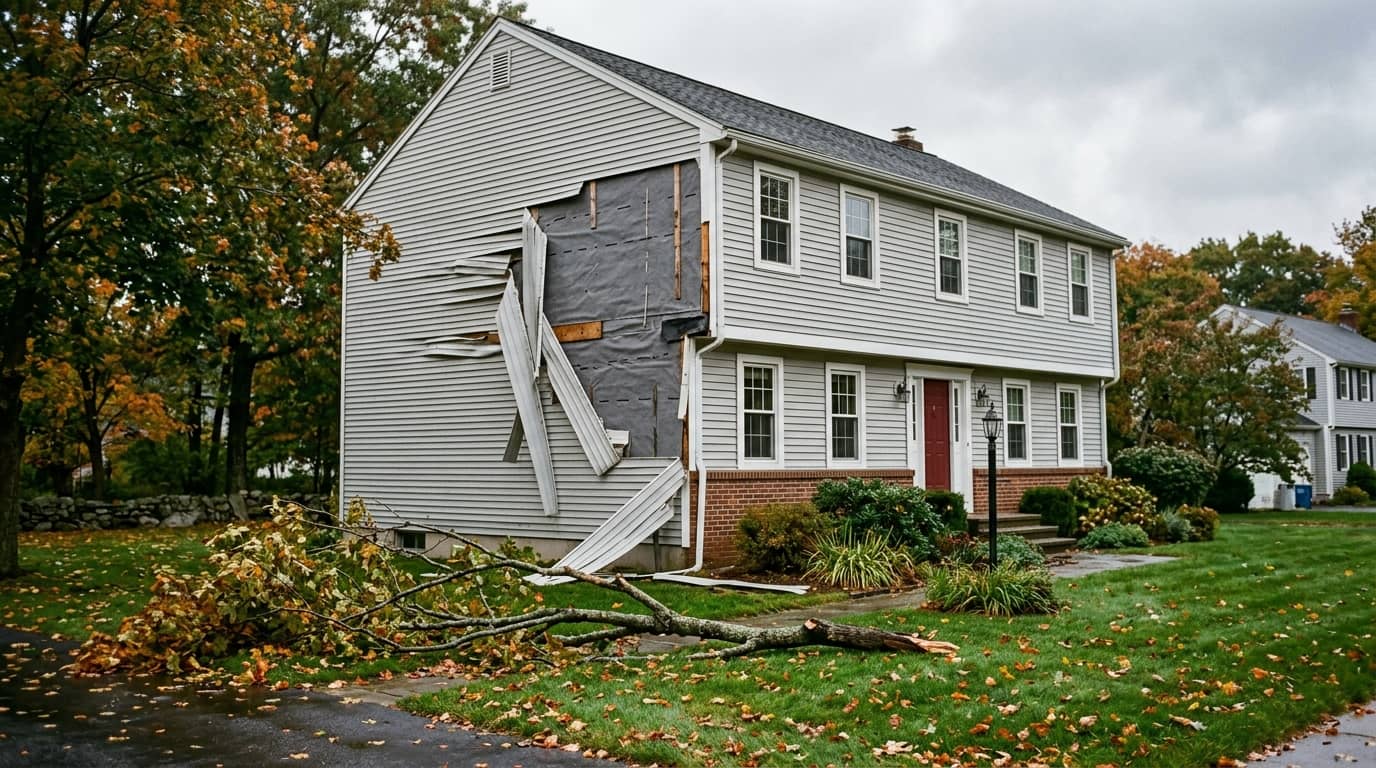
A nor’easter comes through, and in the morning there are three panels on the lawn and house wrap showing at the corner. Whether your policy pays comes down to the first question an insurer asks: what caused it?
Sudden damage from a covered event is what a policy is written for. Worn-out siding is not. The deductible, how the payout is valued, and whether the rest of the house gets re-sided to match all sit on top of that answer. This piece takes the insurance section of our guide to how to pay for new siding deeper. Your policy and your agent are the authority on your coverage.
What kind of siding damage is usually covered?
Standard homeowners policies list the events they cover. Per the Insurance Information Institute, windstorm and hail, fire, falling objects, and vehicle damage are on that list for nearly every policy type. Siding torn off by wind, punctured by hail, crushed by a limb, scorched by a grill fire, or hit by a car backing out of the driveway is generally the kind of loss a policy responds to.
What policies exclude is just as clear: wear and tear, and damage from neglect, which the Insurance Information Institute describes as the homeowner’s job to prevent. In siding terms that means fading and chalking, panels gone brittle with age, paint peeling off old boards, and rot behind a wall where water has been getting in for years. A loose panel you noticed two summers ago and left alone lands on that side of the line too.
| Cause | Usually covered? | What to check |
|---|---|---|
| Wind tears panels loose | Usually | Any separate wind deductible |
| Hail dents or punctures | Usually | Same as wind; note the date |
| Falling tree or limb | Usually | Whether the tree was healthy or dead |
| Fire or smoke | Usually | Covered on all standard policy types |
| Vehicle impact | Usually | The driver’s auto policy may be involved |
| Fading, chalking, brittleness | No | Wear and tear is excluded |
| Rot from a long-term leak | Rarely | Gradual water damage reads as maintenance |
| Old damage left unrepaired | Rarely | Neglect exclusions; timeline matters |
The gray area is a storm that finishes off tired siding: wind is a covered cause, but an adjuster may attribute part of the damage to age. Our article on the signs you need new siding explains how wind damage reads on sound versus brittle siding.
Not sure what the storm actually did?
Our free in-person siding assessment documents what we see on the damaged wall and the rest of the house, and puts the scope in writing for you to share with your agent.
Get a free siding assessmentHow do the deductible and “actual cash value” change the check?
Two terms on your policy shape what a covered claim pays. The first is the deductible: the part of a covered loss you pay yourself before the insurer pays the rest. The Massachusetts Division of Insurance notes it applies any time you report a claim, even when the loss wasn’t your fault. Some policies carry a separate, larger deductible for wind, which is worth finding on your declarations page before a storm.
The second is how the policy values the siding. Per the NAIC, the association of state insurance regulators, an actual cash value policy pays to repair or replace based on what the siding was worth, with its age and wear subtracted. A replacement cost policy pays to replace it with materials of like kind and quality, without that deduction. On twenty-year-old siding, the gap between those two numbers can be most of the project. Age doesn’t take coverage away; it changes the math.
What happens when the new siding won’t match the old?
This is where siding claims differ from roof claims. Vinyl fades unevenly in the sun, and manufacturers retire colors and profiles. A storm takes out the north wall, the exact panel is no longer made, and the closest match is visibly brighter. The damaged wall gets repaired. The question is whether the other three do.
That’s the matching problem, and the answer lives in your policy. Some include, or offer as an option, matching coverage: it pays to replace undamaged siding so the finished house looks uniform. Others limit the insurer to repairing the damaged area with comparable material, whether or not it matches. As of this writing, Massachusetts has no matching statute or regulation we could point you to; the few court decisions here have turned on the policy’s own wording. So whether undamaged sides get replaced depends on your policy’s matching language and any optional matching coverage. Check your policy and ask your agent.
What documentation helps a siding claim?
An adjuster reconstructs what happened from evidence, and the homeowner holds most of it. What helps is simple:
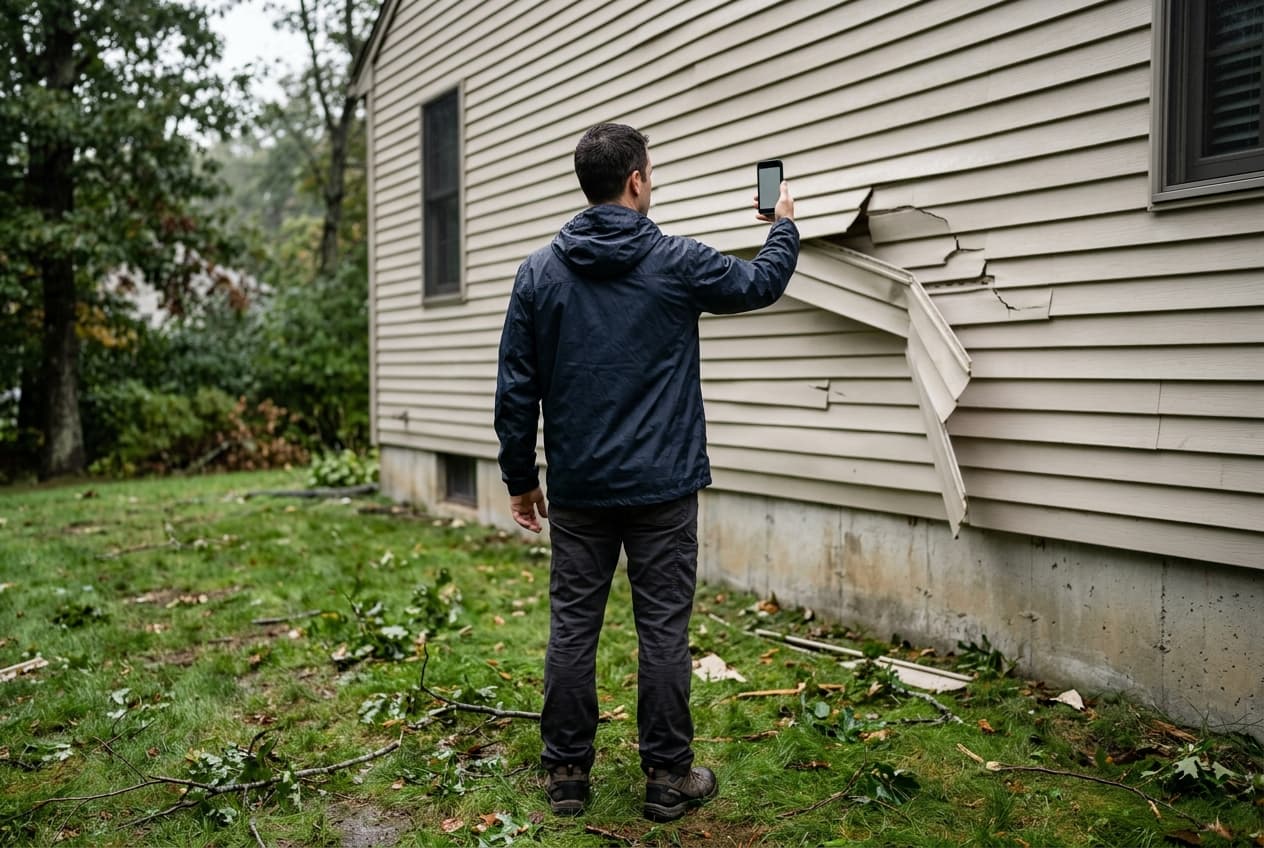
- Photos, soon and from the ground. Wide shots of each wall, then close-ups of each damaged panel. Phone photos carry a date. Don’t climb.
- The date and the storm. Note when you noticed the damage and the weather that caused it. A weather-service record for that day ties cause to date.
- Anything before. Older photos show the siding was intact and what color it was. Repair receipts show it was maintained.
- Temporary protection. Covering exposed house wrap keeps water out and shows you limited the damage. Keep the receipt.
How does a contractor fit into a siding claim?
A contractor doesn’t decide a claim, and a good one won’t pretend to. We document what we see during a free assessment and put the scope in writing: which walls are damaged, what’s behind them, and what a proper repair or replacement involves, with materials named by brand and line. Our guide to how to read a siding estimate covers what that should include. The adjuster reviews the damage against the policy, and the policy decides.
A contractor earns its place by telling storm damage from wear, honestly, in both directions. Torn panels on sound siding are a repair. Torn panels on brittle, chalky siding may be a repair on the claim and a replacement conversation on the rest of the house, the line our article on repairing versus replacing damaged siding draws.
“After a storm, the homeowner wants to know two things: what did the wind do, and what was already going on. We answer both, in writing, and say which is which. That’s what an adjuster can use, and it keeps the homeowner from paying for a repair that was never going to hold.”
Global Roofing field team — Massachusetts in-home siding assessments
Projects are often paid two ways at once: a covered section through the claim, minus the deductible, and the rest of the house re-sided while the crew is there. That remainder is an ordinary siding project with the usual options, as our guide to paying for new siding lays out. If the roof was hit too, see financing roof and siding together . If the storm revealed siding that was already tired, the question becomes whether to finance siding now or wait.
Frequently asked questions
Does homeowners insurance cover wind damage to siding?
Usually, yes. Windstorm is a covered event on standard policies, so panels torn loose by a nor’easter are the kind of sudden damage a policy is written for. What it pays depends on your deductible, actual cash value or replacement cost coverage, and what the adjuster finds. Your policy and agent are the authority.
Does insurance cover siding that is faded or worn out?
No. Fading, chalking, brittleness, and age are wear, and standard policies exclude wear and tear and neglect. So is rot from a leak that’s gone on for years. Insurance is built for sudden events, not for siding reaching the end of its life.
Will insurance replace all my siding if the new panels don’t match?
It depends on your policy. Some include or offer optional matching coverage that replaces undamaged siding so the house matches; others limit the insurer to repairing the damaged area with comparable material. Massachusetts has no matching statute we could point you to, so it comes down to the policy’s wording. Ask your agent.
Does the age of my siding affect a claim?
Age doesn’t cancel coverage for a covered event, but it can change the check. An actual cash value policy subtracts depreciation, so older siding gets a smaller payout for the same damage. A replacement cost policy pays for like kind and quality without that deduction. Your declarations page shows which you have.
How we wrote this guide
This article reflects what Global Roofing sees on storm-damaged Massachusetts and New England homes, checked against Insurance Information Institute and National Association of Insurance Commissioners consumer guidance and the Massachusetts Division of Insurance’s homeowner claim FAQs. It is explanatory, not insurance or financial advice: Global Roofing is a siding contractor, not an insurer or adjuster, and your policy and agent decide what’s covered. It was reviewed for accuracy by a licensed Massachusetts contractor on our team. See our full editorial process for how we research and update every article.
Sources
- Insurance Information Institute — Which disasters are covered by homeowners insurance? (covered perils by policy type; maintenance and neglect exclusions). iii.org
- Insurance Information Institute — Understanding your insurance deductibles. iii.org
- National Association of Insurance Commissioners — What’s the Difference Between Actual Cash Value Coverage and Replacement Cost Coverage? content.naic.org
- Massachusetts Division of Insurance — Frequently Asked Questions Regarding Homeowner’s Insurance Claims (deductibles and the adjuster’s role). mass.gov