

Key Takeaways
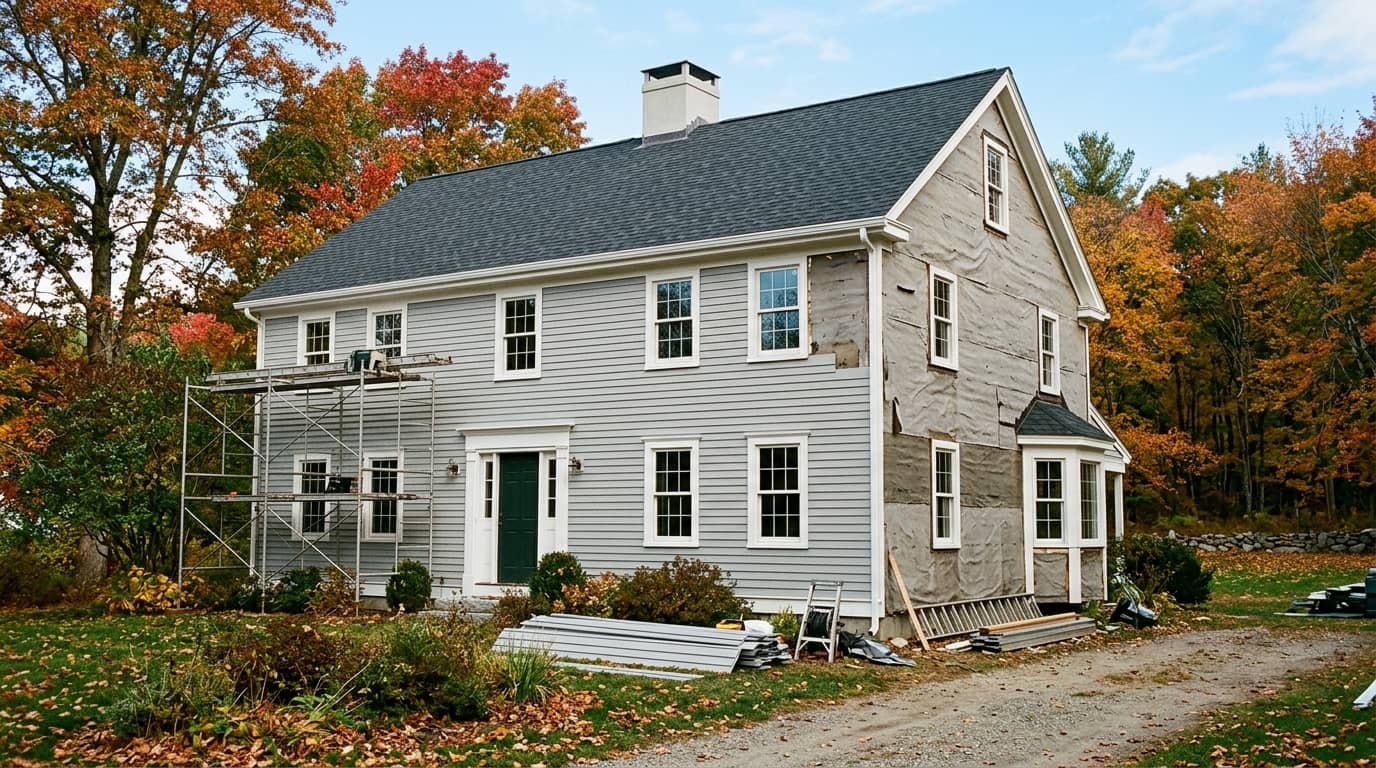
- Bundling makes the most sense when both the roof and the siding are near the end of their life. It doesn’t make either project cheaper on its own; it saves the second setup and gets the roof-to-wall details built once, correctly.
- The line where the roof meets the wall is where most leaks start. Step flashing, kick-out flashing, and drip edge have to work with both systems, which is easier when one crew owns both.
- If your roof has real years left, waiting on it is a perfectly good decision. New siding doesn’t need a new roof.
- If you phase, the roof usually goes first, so the flashing is in place for the siding to lap over.
- Choose roof and siding colors on the same house, not on two sample boards. The roof is the biggest surface you have.
Should you replace the roof and siding at the same time?
If both are worn out, yes — one project is usually the better way to spend the money. If only one is, no, and don’t let anyone talk you into the other because “the crew is already here.”
Bundling doesn’t discount the materials. Your house has the same roof and wall area either way, and the materials drive the price the way our guide to what a siding project actually costs lays out. The savings come from doing the overlapping parts once — staging, cleanup, the dumpster, and the flashing where roof and walls meet — and that last one decides whether the house leaks.
Why does the roof-to-wall line matter so much?
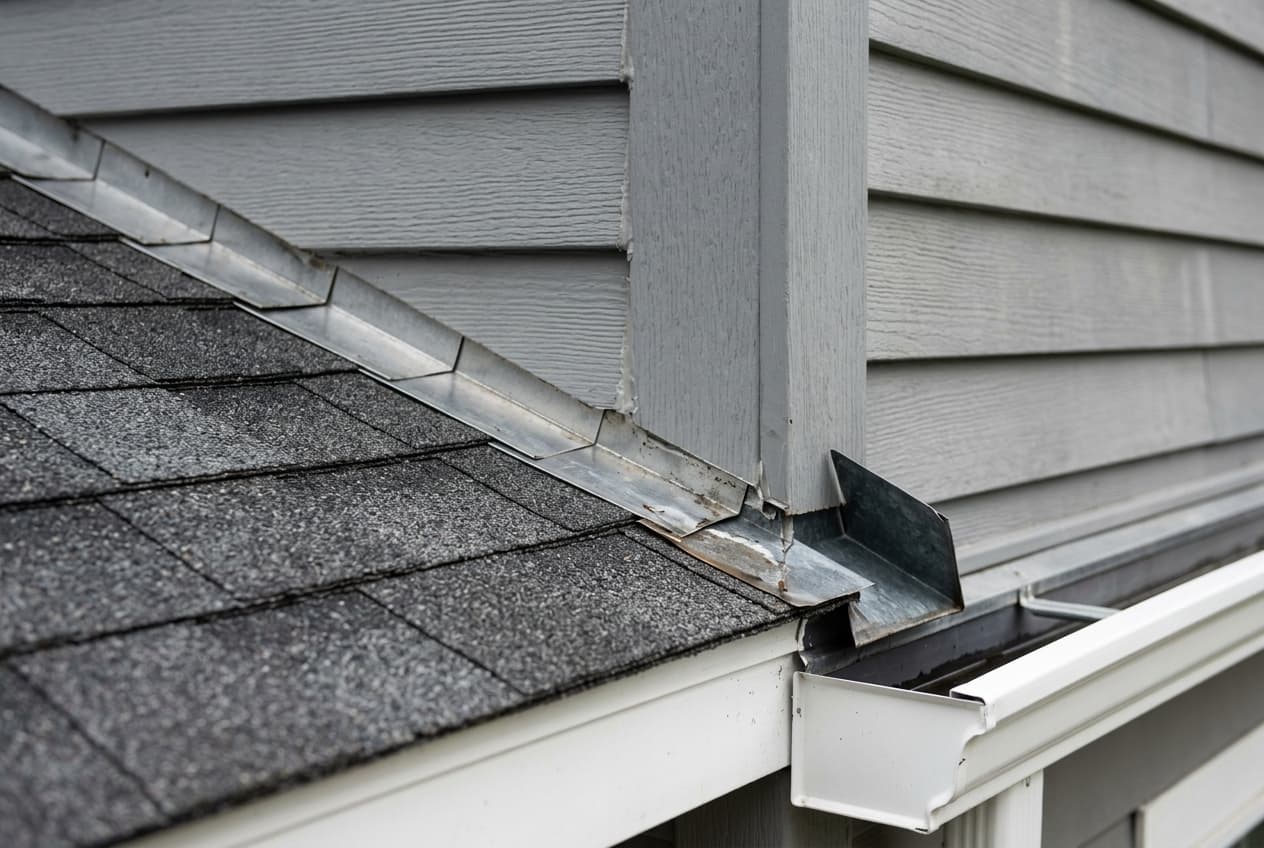
A roof and a wall are two separate water-shedding systems that have to hand water off to each other cleanly. Everywhere a roof runs into a wall — a dormer, a porch roof, a lower garage — there’s a seam neither the shingles nor the siding can cover alone. Three pieces of metal and membrane do the work:
- Step flashing. Short L-shaped metal pieces woven in with each shingle course and tucked behind the siding, so water running down the wall is carried onto the roof, not behind it.
- Kick-out flashing. The small angled piece at the bottom of that run that throws water into the gutter. When it’s missing, water pours down the wall and rots the sheathing behind the siding — InterNACHI lists a missing kick-out among the most common sources of hidden wall damage.
- Drip edge and ice-and-water membrane. At the eaves, these keep melt-water and wind-driven rain from working under the roof edge and down the wall.
The catch: step flashing goes on with the roof, but it only works if the siding laps over it correctly. When two companies do the jobs a year apart, each works around the other’s finished work, and the seam between them is where corners get cut. One crew building both does that detail once, to spec. Building Science Corporation’s rain-control guidance makes the same point: failures are rarely in the field of a wall or roof, but at the transitions.
When does bundling make sense?
The honest test is condition, not convenience. Bundling tends to be right when several of these are true:
- Both are near the end of their life. The roof is curling, losing granules, or leaking, and the siding shows the signs it’s done. Replacing one and patching the other just schedules the second project for next year.
- The roof-to-wall lines are already leaking. Stains below a dormer or above a porch roof usually mean failed flashing, and fixing it properly opens both the roof edge and the siding anyway.
- There’s a lot of staging involved. A tall or cut-up house pays for scaffolding once instead of twice. Our article on how size and shape move the siding price explains why access is a big share of the work.
- You want the colors to work as one design. Roof color is the largest surface on most homes and sets the tone for everything below it. Choosing both on the same house avoids a color that looked right on a chip and fights the roof in daylight.
- You’d rather make one decision. One scope, one total, one financing decision, one stretch of disruption.
Find your style, then see it on your own house
TruFit is a two-minute survey that tells you which siding style fits your home and your taste. TruPro then puts it on a 3D model of your actual house, against your actual roof, so you can mix and match styles, colors, and trim and watch one total update as you go. Both are part of our free in-person siding assessment.
Schedule a free assessmentWhen is it better to keep them separate?
Plenty of the time. A contractor who tells every siding customer they also need a roof is selling, not assessing. Keep them apart when:
- The roof has real life left. A ten-year-old, well-ventilated asphalt roof isn’t close to done, and new siding doesn’t need a new roof under it. Our guide to whether you need a new roof and the walkthrough on estimating your roof’s remaining life get you close; the siding assessment settles it.
- The budget only covers one done right. A well-built roof now and well-built siding in two years beats both done thin at once — skimping on the barrier or flashing to fit two projects into one budget is the worst trade going, as our article on the hidden costs that surface in a siding project shows.
- Storm damage is driving one of them. If a claim covers the roof on its own timeline, fold the siding in only if it was failing anyway.
- You want to live with the new roof first. Seeing it on the house for a season before choosing a siding palette is a fair reason to phase.
| Bundling usually makes sense when… | Phasing usually makes sense when… |
|---|---|
| Both the roof and the siding are near the end of their life. | The roof (or the siding) has real years left. |
| Roof-to-wall lines are already leaking or rotted. | Only one system has a problem, and the seam is sound. |
| The house needs significant staging to reach the walls. | The budget covers one project done right, not two. |
| You want roof and siding colors designed as one look. | An insurance claim is driving the roof on its own timeline. |
| You’d rather have one scope, one total, one disruption. | You want to see the new roof before choosing a siding palette. |
If you phase, which goes first?
The roof, in almost every case. Three reasons:
- Water runs downhill. The roof sheds onto the walls, so drip edge, ice-and-water membrane, and step flashing go on with the new roof and the siding laps over them.
- Tear-off is rough on whatever’s below. Stripping a roof drops shingles, nails, and debris down the walls, and old siding about to be replaced is easier to protect than siding you just paid for.
- Fascia and soffit sit between the two. They’re usually replaced with the roof edge, and new siding finishes against them cleanly; the other order means cutting into finished siding.
If the siding has to go first, the roofing crew can still work with the step flashing already behind the siding rather than over it — a conversation to have before either crew shows up; our siding project planning timeline covers it. Either way, a combined project is priced like siding alone: one total with a written scope naming the materials by brand — never a line-item split. Global Roofing installs both with our own crews — one scope, one team; our guide to what drives a roof replacement price covers the roof side.
For the siding schedule alone, see how long siding installation takes.
“The leaks we get called about most aren’t in the middle of a roof or the middle of a wall. They’re at the corner where a porch roof hits the house, because one company did the roof and another did the siding and nobody owned the seam. When both are ours, there’s no seam to argue about.”
Global Roofing field team — Massachusetts in-home siding assessments
Frequently asked questions
Is it cheaper to replace the roof and siding at the same time?
It can lower the total compared with doing them a year or two apart, because staging, cleanup, and the roof-to-wall flashing happen once instead of twice. It doesn’t make either project cheaper; the biggest driver is still what’s found under the old layers.
Should the roof or the siding be replaced first?
The roof, usually. It sheds onto the walls, drip edge and step flashing go on with the roofing, and new siding laps over them. Old siding is also easier to protect during a tear-off than new.
Can you do new siding on a house with an old roof?
Yes, often the right call when the roof has real life left. The siding crew just needs to integrate the new siding with the existing step flashing, or replace it where it’s failing, so water still sheds outward.
How do you choose roof and siding colors that go together?
On the same house, not from two sample boards. The roof is the largest surface most homes have and sets the tone for everything below it. Seeing siding candidates against your actual roof avoids a combination that reads fine on a chip and wrong on the house.
How we wrote this guide
This article reflects how Global Roofing plans combined roofing and siding projects on Massachusetts and New England homes, checked against InterNACHI inspection guidance on kick-out and step flashing, Building Science Corporation guidance on rain control at wall and roof transitions, and National Roofing Contractors Association flashing practice. It was reviewed for accuracy by a licensed Massachusetts contractor on our team. See our full editorial process for how we research and update every article.
Sources
- InterNACHI — Kick-Out Flashing (why the missing kick-out is a leading cause of hidden wall damage). nachi.org
- Building Science Corporation — BSD-013: Rain Control in Buildings (transitions and drainage at roof-to-wall intersections). buildingscience.com
- National Roofing Contractors Association — roofing flashing and roof-edge practice. nrca.net