

Key Takeaways
- A new roof is a complete system — decking, underlayment, ice-and-water shield, shingles, flashing, and ventilation — and every layer factors into the cost.
- The biggest drivers are your roof’s size and shape, the roofing material you choose, and the condition of the wood deck hidden under your old shingles.
- Massachusetts roofs need extra waterproofing to handle ice dams and freeze-thaw — and the state building code requires it.
- Premium materials like metal and slate cost more upfront but last far longer than standard asphalt shingles.
- The lowest quote often leaves out part of the system. Those missing pieces aren’t visible until they fail.
What goes into the cost of a new roof?
A new roof is one of the most important investments you’ll make in your home, and its cost reflects far more than a stack of shingles. A roof replacement is a complete system, built from the deck up to stand against New England weather — and several factors decide what that system costs for your home.
From the bottom up, a roof includes the wood deck, a waterproof underlayment, ice-and-water shield in the most vulnerable areas, the shingles or panels you see, metal flashing at every chimney and wall, and a ventilation system that lets the roof breathe. Each of those layers is a real part of the price. The sections below break down the factors that move it most — so you can see exactly what you’re paying for.
See an estimated range for your roof
Our cost calculator asks a few quick questions about your home and roof, then gives you a personalized range in about a minute — a solid starting point as you plan.
Try the Cost CalculatorHow roof size and shape affect cost
The most direct driver is how much roof you have. A larger home has more surface area to cover, which means more material and more labor. But the shape of your roof matters just as much as the size.
A simple roof with two clean slopes goes quickly. Add dormers, valleys, hips, skylights, and chimneys, and every one of those features becomes a spot that has to be cut in and sealed by hand. A steep roof pitch slows the work further and calls for more safety setup. That’s why two homes with the same square footage can involve very different amounts of work once you account for the roofline — a point we unpack in how roof size and shape affect the price.
The roofing material you choose
Material is the factor you control most, and it shapes both the look and the lifespan of your roof. Here are the main options for a Massachusetts home:
- Asphalt shingles are the most popular choice. Basic three-tab shingles are the entry point; architectural (dimensional) shingles cost more and deliver a richer look, stronger wind resistance, and longer manufacturer warranties. For most homes, architectural asphalt is the value standard.
- Metal roofing — typically standing-seam panels — sits at the premium end. It costs more upfront but lasts for generations, sheds snow well, and needs very little maintenance.
- Cedar shake and natural slate are premium materials chosen for historic and high-end homes, prized for their distinctive look and very long life.
- Rubber membrane (EPDM) covers the flat and low-slope sections that shingles can’t — porches, additions, and some multi-level homes.
As a rule, the longer-lasting and more durable the material, the higher the upfront cost. The right choice comes down to your home’s style and how long you plan to stay — the heart of the asphalt-versus-metal decision, and a factor in whether a new roof adds to your home’s value.
Underlayment, ice-and-water shield, and flashing
This is where a quality roof is won or lost — and where cut-rate quotes quietly cut. Beneath the shingles, a synthetic underlayment covers the entire deck as a second line of defense against water.
In the most vulnerable spots — the eaves, the valleys, and around every penetration — an ice-and-water shield membrane seals against the water that backs up under shingles when an ice dam forms. Metal flashing wraps every transition where the roof meets a chimney, wall, or vent pipe, because those joints are the most common source of leaks. None of this is visible once the roof is finished, which is exactly why a cheap installer skips it. In Massachusetts, this waterproofing isn’t optional — the building code requires it, because it’s what keeps melting snow out of your ceilings.
What’s under your shingles: the roof deck
The wooden boards under your shingles — the roof deck, or sheathing — are the foundation of the entire system, and their condition is the biggest unknown in any quote. Until the old roof comes off, no one can be certain whether the deck is solid or whether years of small leaks have left soft, rotted wood that needs to be replaced.
The number of existing layers matters too. A roof carrying multiple old layers of shingles takes more labor to tear off and haul away. A thorough contractor accounts for both the decking and the tear-off before the work starts, so the price you’re quoted is the price you pay. For the full picture, see what replacing rotted decking adds to the cost.
Roof ventilation
A roof needs to breathe. A balanced ventilation system — intake vents at the eaves and exhaust at the ridge — lets heat and moisture escape the attic instead of building up against the underside of the roof. Without it, summer heat and winter moisture shorten the life of the shingles from below, and many manufacturers will void their warranty on a roof that isn’t properly vented. If your attic isn’t venting the way it should, correcting it during the replacement is part of building a roof that lasts — and it factors into the overall scope.
Why a roof costs more in Massachusetts
New England is hard on roofs, and a roof replacement in Massachusetts is built to take it. Freeze-thaw cycles, heavy snow, ice dams, and wind-driven rain all demand the extra waterproofing described above — and the state building code requires it.
That added protection is part of why roofing here runs higher than in milder parts of the country. It isn’t an upsell; it’s the difference between a roof that shrugs off a New England winter and one that lets an ice dam find its way into your living room. We dig into the climate and code behind it in why a roof costs more in Massachusetts.
Labor and installation
Labor is one of the largest parts of any roof’s cost, and it’s where experience shows. The best materials only perform when they’re installed correctly — properly fastened, cleanly flashed, and finished with care. A skilled, in-house crew is what turns a pile of materials into a roof that lasts.
Complex rooflines, steep pitches, multiple stories, and tight access all add to the labor involved. The crew is also what stands behind the workmanship warranty long after the job is done — a meaningful part of what you’re paying for.
Is it cheaper to repair than replace?
Sometimes a repair is the right, less expensive choice — when the damage is isolated and the roof still has real life left in it. Fixing a few damaged shingles or a small leak on a sound roof is the smart move.
The trap is spending again and again on a roof that’s near the end of its service life, where those repairs add up to more than a replacement would have. The deciding factors are the roof’s age and how widespread the problem is. We weigh it out in whether it’s cheaper to repair or replace a roof, and our guide on whether you need a new roof walks through the signs to look for.
Why the cheapest quote usually isn’t the best value
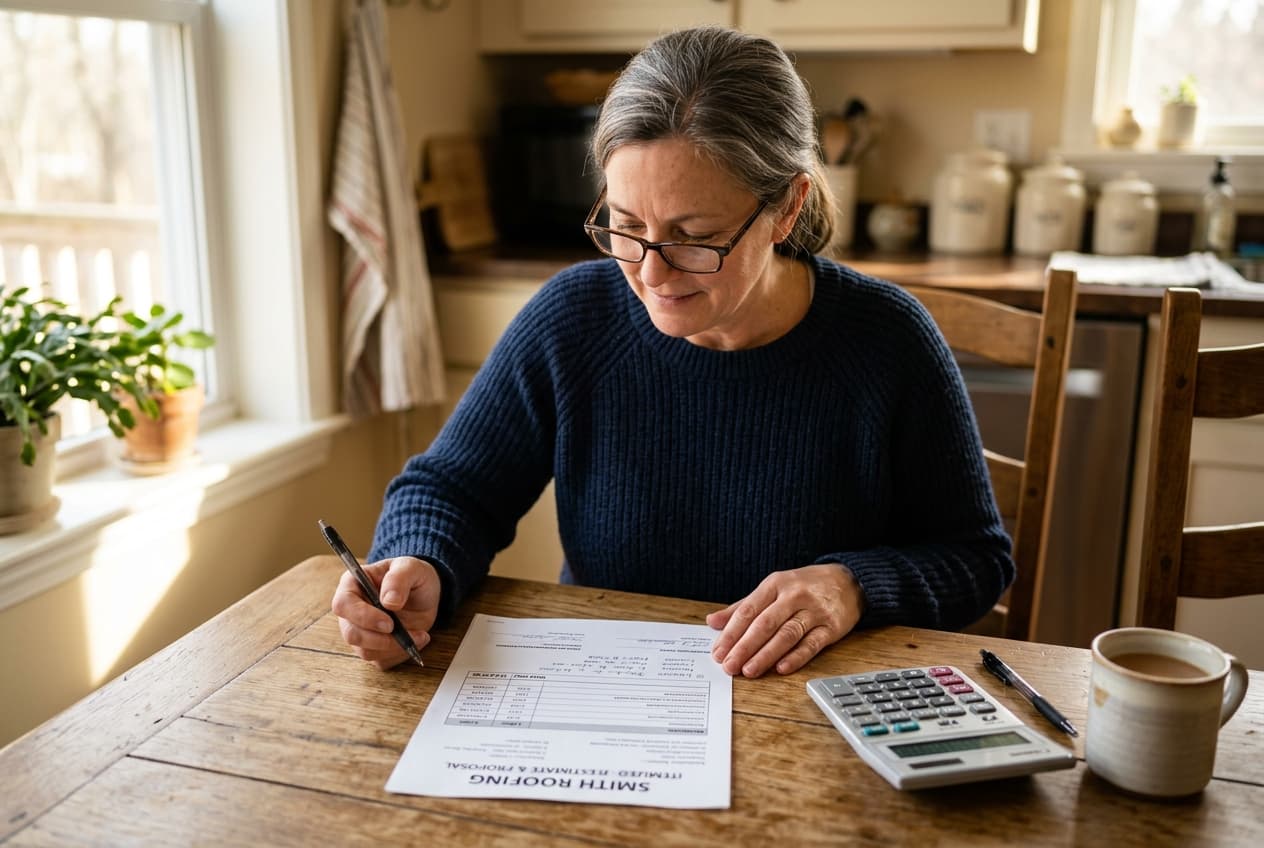
Roofing uses the same core materials and labor for every honest contractor, so a quote that comes in far below the others is a signal, not a bargain. What’s usually missing is the part you can’t see: a thinner underlayment, skipped ice-and-water shield, old flashing reused instead of replaced, no permit pulled, or no workmanship warranty behind the installation. Many of those reappear later as the hidden costs of a roof replacement.
A complete roof, installed correctly, includes the full system — and it’s far less expensive than redoing a roof that fails early. When you compare estimates, look past the bottom line to what each one actually includes. Our guide to comparing roofing quotes and the printable estimate checklist make it easy to line bids up side by side.
“When we’re higher than another quote, we walk the homeowner through exactly what’s in ours that isn’t in theirs — the underlayment, the ice-and-water shield, the real flashing. Nine times out of ten the cheap quote wasn’t actually cheaper. It was just smaller.”
Global Roofing field team — Massachusetts in-home estimates
Frequently asked questions
What determines the cost of a new roof in Massachusetts?
A roof replacement is a complete system, and several factors set the cost: the size and shape of your roof, the roofing material you choose, the condition of the wood deck under your shingles, the underlayment and ice-and-water shield your home needs, attic ventilation, and the labor to install it correctly.
What roofing factors affect the price the most?
Three stand out: roof size and shape (a larger or more complex roofline takes more material and labor), the roofing material (asphalt, metal, cedar, and slate sit at very different points), and the condition of the roof deck underneath, which is confirmed once the old roof is removed.
What’s included in a roof replacement?
Tear-off of the old roof, inspection and repair of the wood deck, synthetic underlayment and ice-and-water shield, new flashing, your shingles or panels, ridge and soffit ventilation, hip and ridge caps, and a full cleanup — backed by both a manufacturer warranty and a workmanship warranty.
Does the roofing material really change the cost?
Yes — material is one of the biggest drivers and the one you control most. Asphalt shingles are the practical choice for most homes, while metal, cedar, and slate are premium materials that last longer and cost more upfront.
Why does a roof cost more in Massachusetts?
Our winters require extra waterproofing — underlayment and ice-and-water shield to defend against ice dams and freeze-thaw — and the state building code requires it. That protection adds to the cost, and it’s what keeps water out of your home.
Why are some quotes so much cheaper than others?
Roofing costs about the same for every honest contractor, so a much lower price usually means part of the system was left out — thinner materials, skipped waterproofing, reused flashing, no permit, or no real warranty. It tends to show up later as leaks.
How we wrote this guide
This guide reflects how Global Roofing builds and prices real Massachusetts roofs, cross-checked against regional cost and home-value data from This Old House and Remodeling Magazine’s Cost vs. Value Report, and the cold-climate requirements in the Massachusetts building code. It was reviewed for accuracy by a licensed Massachusetts roofing contractor on our team. See our full editorial process for how we research and update every guide.
Sources
- This Old House — The Cost of a Roof Replacement in Massachusetts. thisoldhouse.com
- Remodeling Magazine — Cost vs. Value Report (home-value recovery benchmarks). remodeling.hw.net
- Massachusetts State Building Code (780 CMR) — cold-climate roofing requirements. mass.gov