

Key Takeaways
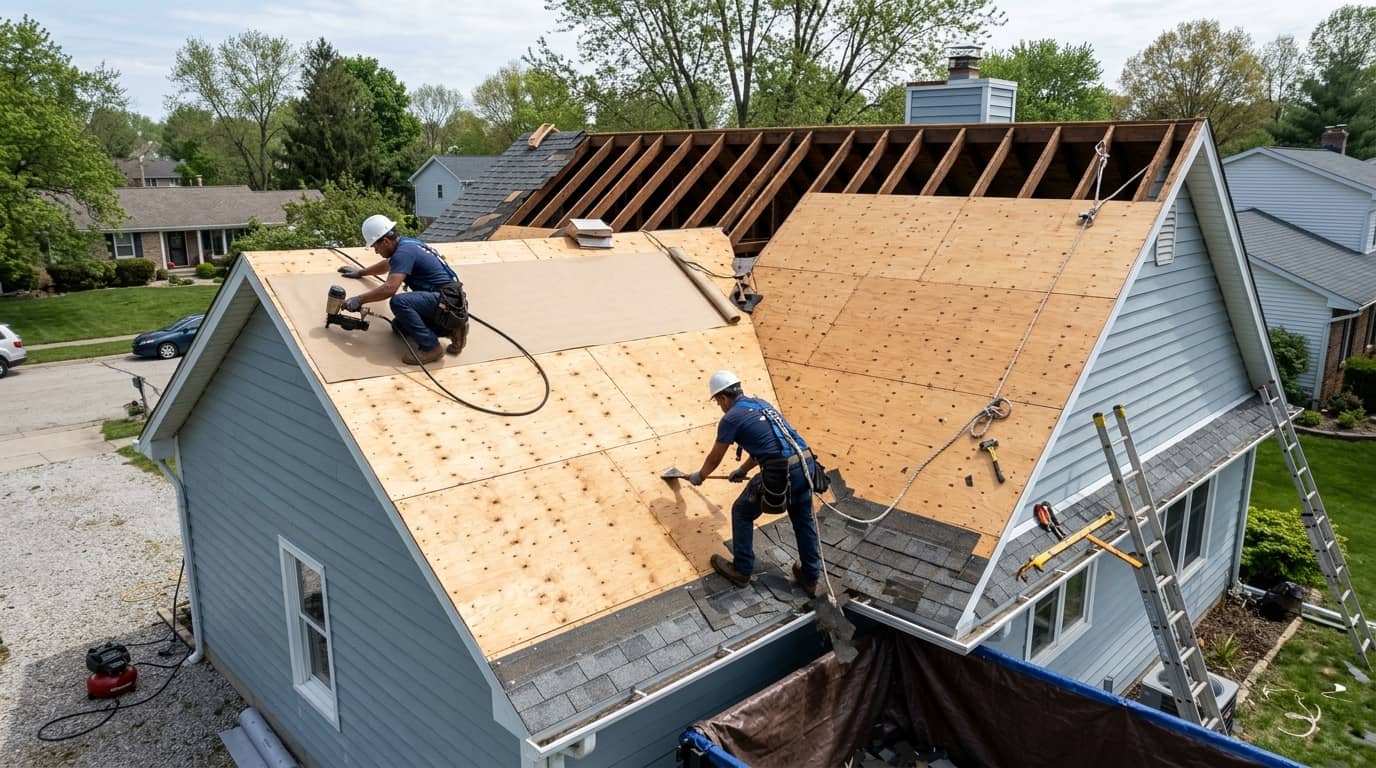
- Roof decking is the wood base the whole roof system attaches to — if it’s rotted, nothing installed on top of it will hold.
- Decking condition is the single biggest unknown in any quote because it can’t be confirmed until the old roof comes off.
- Rot comes from slow, hidden moisture — leaks at flashing and valleys, or trapped attic humidity from poor ventilation.
- An honest contractor inspects for the warning signs first and puts the decking-repair process in writing, so it’s a known step, not a surprise bill.
Why decking is the biggest unknown
Replacing rotted decking does add to a roof’s cost — it’s extra material and extra labor — and it’s the most common reason a final bill ends up different from the original number. The reason it’s hard to quote is simple: no one can be certain what shape the wood is in until the old roof is stripped off and the deck is exposed.
That uncertainty is normal and unavoidable. What separates a trustworthy contractor from a risky one is how they deal with it — not whether they can magically price the invisible, but whether they tell you the process up front. Decking is one of several things that shape the total; our guide to what a new roof costs sets it in context with the rest.
What is roof decking?
Roof decking — also called sheathing — is the layer of wood fastened across your roof rafters. On older homes it’s often individual boards; on newer ones, plywood or OSB panels. Either way, it’s the structural foundation of the entire roof: the underlayment, ice-and-water shield, flashing, and shingles all attach to it.
Because everything sits on the deck, its condition decides whether the rest of the system can do its job. New shingles fastened to soft, rotted wood won’t hold their nails, and the best materials in the world can’t make up for a base that’s failing underneath them.
Why does roof decking rot?
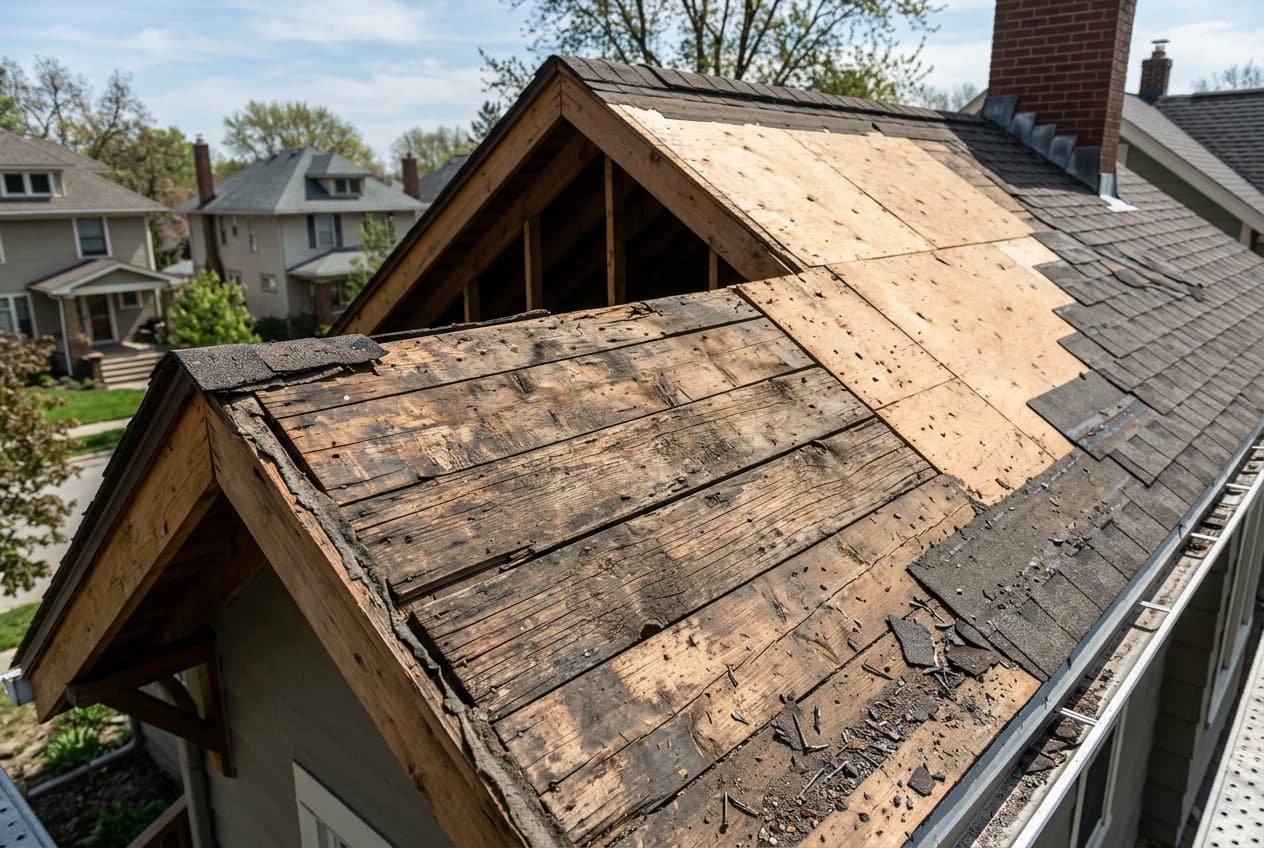
Decking rots from moisture, and the moisture is almost always slow and quiet:
- Hidden leaks around flashing, valleys, chimneys, or vent pipes that seep for years before anything shows on a ceiling.
- Failed or reused flashing at the roof’s most vulnerable joints — the most common entry point for water.
- Trapped attic moisture from poor ventilation, which condenses against the underside of the deck through the winter.
By the time rot is visible from inside the house, the wood overhead is often already soft. That’s why decking can’t be judged from the driveway — and why ventilation matters so much, a thread that runs through nearly every hidden cost of a roof replacement.
Start with a realistic range
Our Roof Cost Calculator gives you a ballpark for your home so you know the baseline — then you can ask each contractor how they handle decking found during tear-off.
Try the cost calculatorHow should a contractor handle decking?
You can’t price what nobody can see yet — but you can make it a clear, agreed-upon process instead of a blank check. A good contractor handles decking three ways:
- Inspect for warning signs first. Soft spots, interior staining, sagging, and ventilation problems all hint at what’s likely underneath before a single shingle comes off — the same clues a thorough roof inspection is built to catch.
- Put the process in the written estimate. The quote should state how decking repairs are assessed, how you’ll be shown and told about anything found, and how it will be priced — agreed before the work starts.
- Document what they find. If rot turns up, you should see it — photos of the bad wood — not just a line added to the invoice.
Handled that way, replacing decking isn’t a bait-and-switch; it’s the system working as intended. The opposite — a suspiciously low quote with no mention of decking at all — is often a setup for an “unforeseen” upcharge once the roof is open, which is one reason it can pay to know whether repairing or replacing is the better-value call before the work begins.
“We’d rather over-explain decking than surprise someone with it. Before we quote, we tell every homeowner the deck is the one thing we can’t fully see yet, and we write down exactly how we handle it if we find rot. When we do, we show them the wood. Nobody likes a surprise — but nobody minds a plan they agreed to.”
Global Roofing field team — Massachusetts in-home estimates
Frequently asked questions
Does replacing roof decking add to the cost of a new roof?
Yes — replacing rotted decking is extra material and labor, and it’s the most common reason a final bill differs from the original quote. A good contractor inspects for it ahead of time and states in writing how repairs are handled, so it’s a known process rather than a surprise.
What is roof decking?
Decking, or sheathing, is the layer of wood boards or plywood/OSB panels fastened to the rafters. It’s the structural base the whole roof attaches to — underlayment, ice-and-water shield, and shingles all rely on it. Soft or rotted decking won’t hold what goes on top of it.
Why does roof decking rot?
From slow, hidden moisture — leaks around flashing, valleys, and penetrations, or trapped attic humidity from poor ventilation. By the time it shows inside, the wood is often already soft, which is why decking is the biggest unknown until tear-off.
Can a contractor tell me decking costs before tearing off the roof?
Not exactly — the full condition isn’t visible until the shingles come off. What a reputable contractor does is inspect for warning signs and put the decking-repair process in the written estimate, so you approve the approach before any work starts.
How we wrote this guide
This article reflects how Global Roofing inspects and handles roof decking on real Massachusetts projects, checked against National Roofing Contractors Association guidance on roof sheathing and Massachusetts State Building Code (780 CMR) requirements for roofing systems. It was reviewed for accuracy by a licensed Massachusetts roofing contractor on our team. See our full editorial process for how we research and update every article.