

Key Takeaways
- A real inspection covers three layers — the roof surface, the structure and deck, and the attic underneath — not just the shingles.
- On the surface, a roofer checks the shingles, the flashing at chimneys, valleys, sidewalls, and vents, the vent boots, the ridge caps, and how water drains off.
- The attic reveals what the surface hides: ventilation balance, hidden moisture, stained or rotted decking, and daylight through the boards.
- The result sorts every finding into repair, replace, or monitor and supports an estimate of how much life the roof has left.
What do roofers look for during an inspection?
A proper roof inspection works through three layers, and only one of them is the part you can see from the street. There’s the roof surface — the shingles, flashing, and drainage that take the weather. There’s the structure and deck — the wood the roof is nailed to. And there’s the attic underneath, where the things you can’t see from outside show up first. A roofer who stops at “the shingles look fine” has checked one layer out of three. (This is a condition inspection — a different job from an insurance adjuster’s visit, which is about establishing the cause of storm damage; if a claim is involved, here’s what an adjuster looks for.)
The tools split along the same line. A drone or a ladder covers the exterior in detail — close-up images of the surface, the flashing, and the edges, including spots that are hard to reach by foot. (If you’re wondering how much a camera in the air can really catch, it’s worth reading how a drone captures the exterior.) A complete inspection then adds the attic from inside. Our full guide on the 360° drone roof inspection walks through how the exterior and interior fit together.
What do they check on the roof surface?
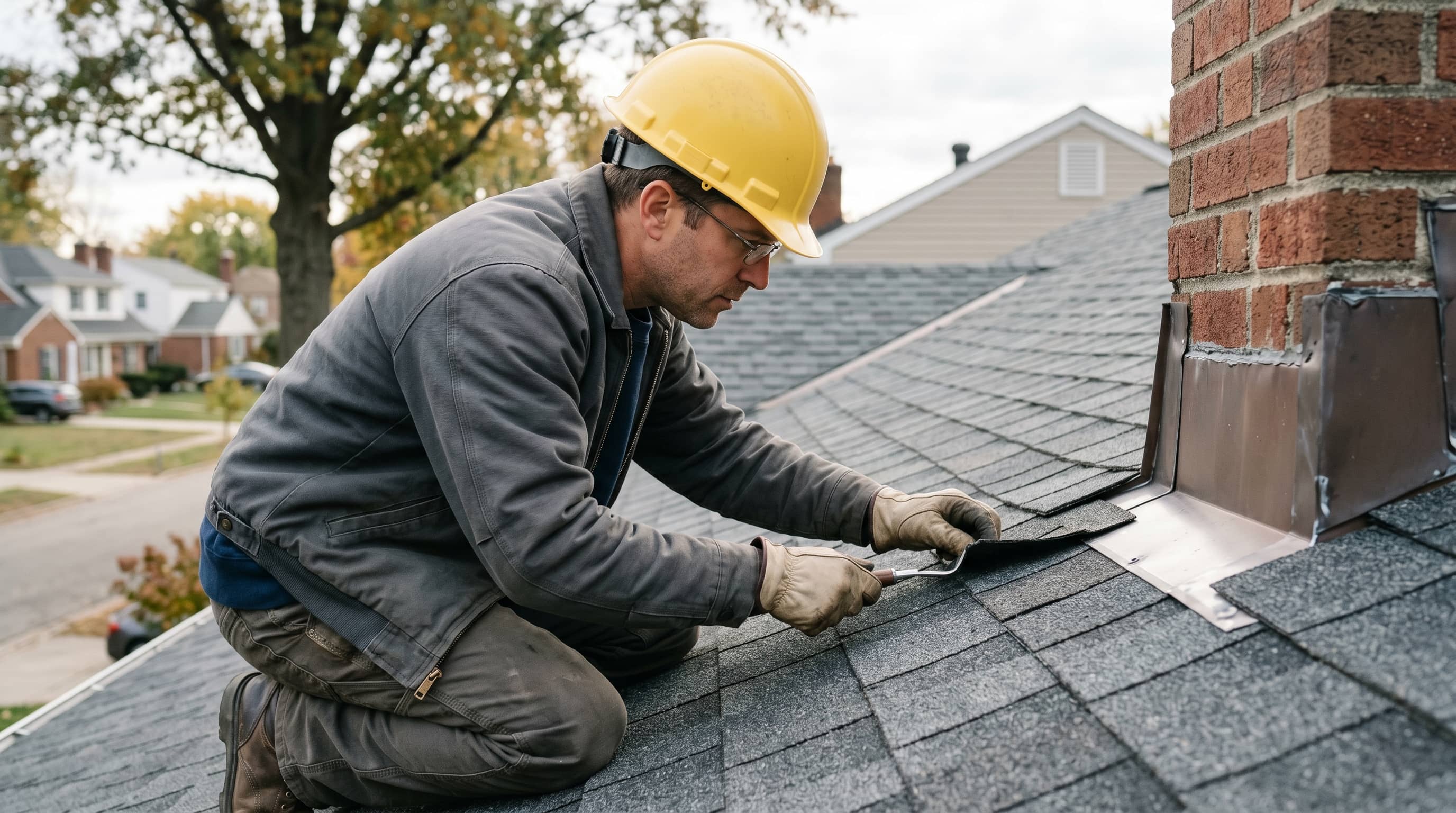
The surface is the layer most people picture, and it’s where an inspector spends the most time. The shingles come first. A roofer looks for shingles that are curling or cupping at the edges, cracking or gone brittle, and any that are missing or loose. They check for granule loss — the bare, shiny spots where the protective mineral coating has washed off, which often ends up collecting in the gutters.
Then comes everything around and between the shingles, which is where most roofs actually start to leak:
- Flashing. The metal that seals the joints — at chimneys, in the valleys where two slopes meet, along sidewalls, and around skylights. Lifted, rusted, or poorly sealed flashing is a top source of leaks.
- Vent boots and penetrations. The rubber and metal collars around plumbing vents, exhaust fans, and other pipes. The rubber dries out and cracks long before the shingles wear out.
- Ridge and hip caps. The shingles that cap the peaks and angles, which take extra wind and weather.
- Gutters and drainage. Whether water is actually getting off the roof and away from the house, and whether the gutters are full of washed-off granules — a quiet sign of age.
- Signs of prior repairs. Patches, mismatched shingles, or extra sealant that hint at past problems and where to look closer.
Not sure where your roof stands?
Our 2-minute Roof Condition Assessment takes your roof’s age and what you’re seeing and gives you a straight read — monitor, plan ahead, or get it looked at.
Take the assessment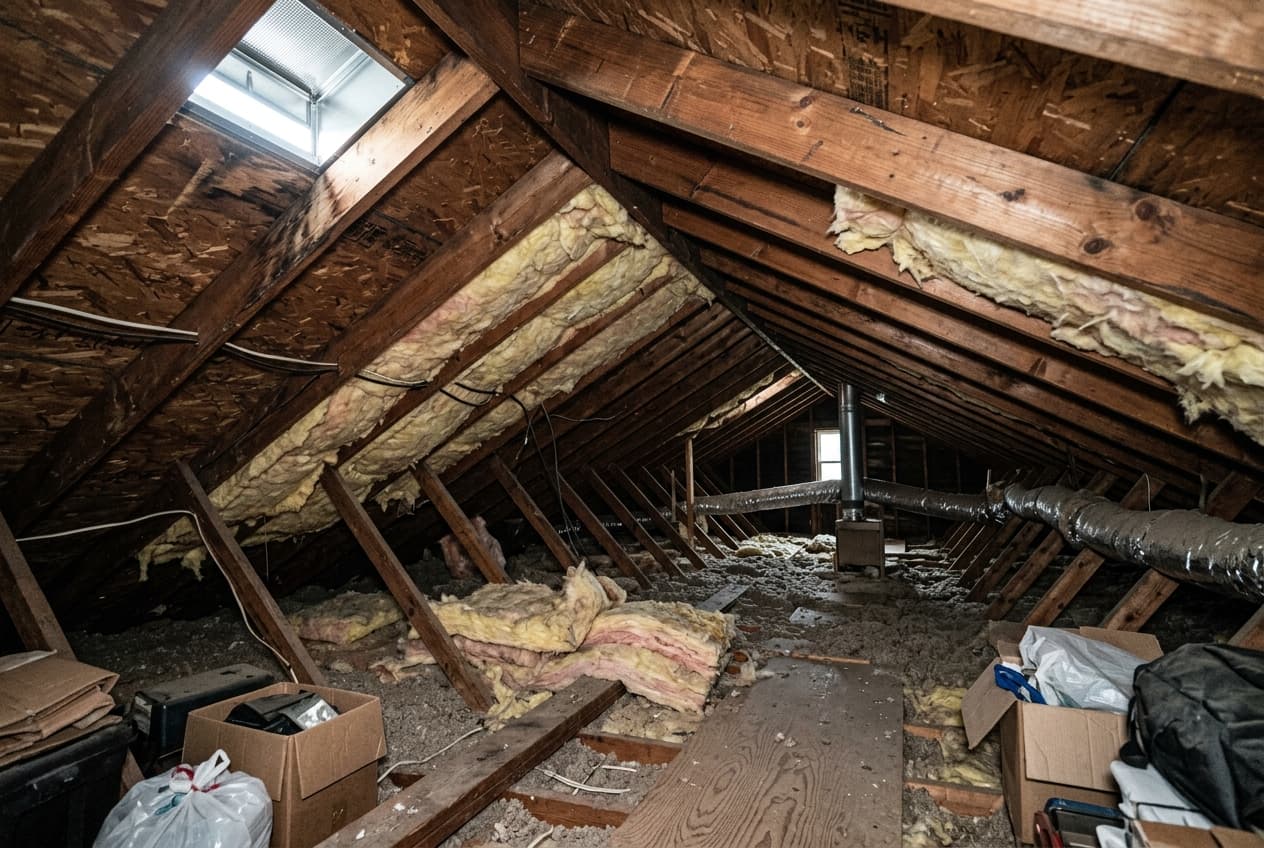
Why do they check the attic, not just the roof?
The surface tells you how the roof looks. The attic tells you how it’s actually doing. From below, with the underside of the deck exposed, an inspector can see things that never show on top until it’s too late:
- Ventilation balance. Whether intake at the soffits and exhaust at the ridge are working together. Balanced airflow keeps the attic close to the outside temperature; a sealed-up attic traps heat and moisture against the deck.
- Moisture and staining. Dark water stains on the underside of the boards point to an active or past leak, often one you’d never spot from the surface.
- Daylight through the boards. Pinholes of light mean gaps that water can follow.
- Soft or rotted decking. Wood that’s gone spongy from long-term moisture and may need replacing.
- Mold and insulation. Growth from trapped humidity, and whether the insulation is doing its job or blocking the airflow the roof needs.
This is why the attic matters so much in New England: ventilation is one of the biggest factors in how long a roof lasts here, and you simply can’t judge it from the curb. A drone can show a perfect-looking surface over an attic that’s quietly cooking the shingles from below.
“The roof can look great from the air and tell a different story in the attic. A stain on the underside of the deck, a vent that’s blocked — that’s the stuff that decides how many years are really left. We don’t call an inspection done until we’ve been inside.”
Global Roofing field team — Massachusetts in-home estimates
What does the inspection tell you in the end?
All of that checking adds up to one thing: a clear read on where your roof stands. A good inspector sorts every finding into three buckets — what needs repair now, what calls for replacement, and what’s fine to monitor for a few more seasons. A single cracked vent boot is a repair; widespread curling, granule loss, and an attic full of moisture is a different conversation.
Put together, those findings also support an estimate of how much service life the roof has left — which is the question most homeowners are really asking. A roof inspection can estimate how many years your roof has left by weighing its age against its real condition. And if you want to get a sense of things before anyone comes out, our rundown of the signs you can spot yourself covers what to look for from the ground.
Frequently asked questions
What does a roof inspector actually check?
Three layers, not just the shingles. On the surface: the shingles (curling, cracking, granule loss, missing pieces), the flashing at chimneys, valleys, sidewalls, and vents, the vent boots, the ridge caps, and the gutters and drainage. From inside: the attic, for ventilation balance, moisture, staining, and rot on the underside of the deck.
Why does a roof inspection include the attic?
Because the attic shows what the surface hides. From below, a roofer can spot water stains on the deck, daylight through gaps, soft or rotted decking, mold, and whether the ventilation is balanced — problems that don’t show on top until a leak reaches your ceiling.
Do I have to be home for a roof inspection?
For the exterior, no — a drone or ladder inspection of the surface, flashing, and gutters happens from outside. For a complete inspection that includes the attic, someone needs to let the inspector inside. Global Roofing’s free inspection covers both, so it helps to be available for attic access.
What does the inspector do with everything they find?
They sort it into repair, replace, or monitor, and use the overall picture to estimate how much life the roof has left. You get a clear read and a recommendation — not a guess from the curb — so you can decide whether to fix a problem area, plan a replacement, or keep an eye on it.
How we wrote this guide
This article reflects what Global Roofing checks on real Massachusetts and New England roofs, checked against National Roofing Contractors Association guidance on roof-system inspection and attic ventilation and InterNACHI’s home-inspection standards for what a roof and attic review covers, along with manufacturer specifications. It was reviewed for accuracy by a licensed Massachusetts roofing contractor on our team. See our full editorial process for how we research and update every article.
Sources
- National Roofing Contractors Association — roof-system inspection and attic ventilation guidance. nrca.net
- InterNACHI — standards of practice for roof and attic inspection. nachi.org
- CertainTeed — shingle and roof-system installation specifications. certainteed.com