

Key Takeaways
- Yes — drone roof inspections are accurate and reliable. A high-resolution camera flies close to every slope, valley, and ridge, so nothing gets missed and nothing gets guessed at from the ground.
- A drone covers the whole roof in minutes with no foot traffic to damage shingles, including steep or fragile areas a person can’t safely walk.
- It reliably catches visible, surface-level damage across the whole roof — missing or lifted shingles, granule loss, worn flashing — with AI-assisted review helping flag problem spots.
- It has honest limits: a drone can’t lift shingles, probe soft decking, or look inside the attic — so the best inspection pairs drone imagery with a hands-on check.
Are drone roof inspections accurate?
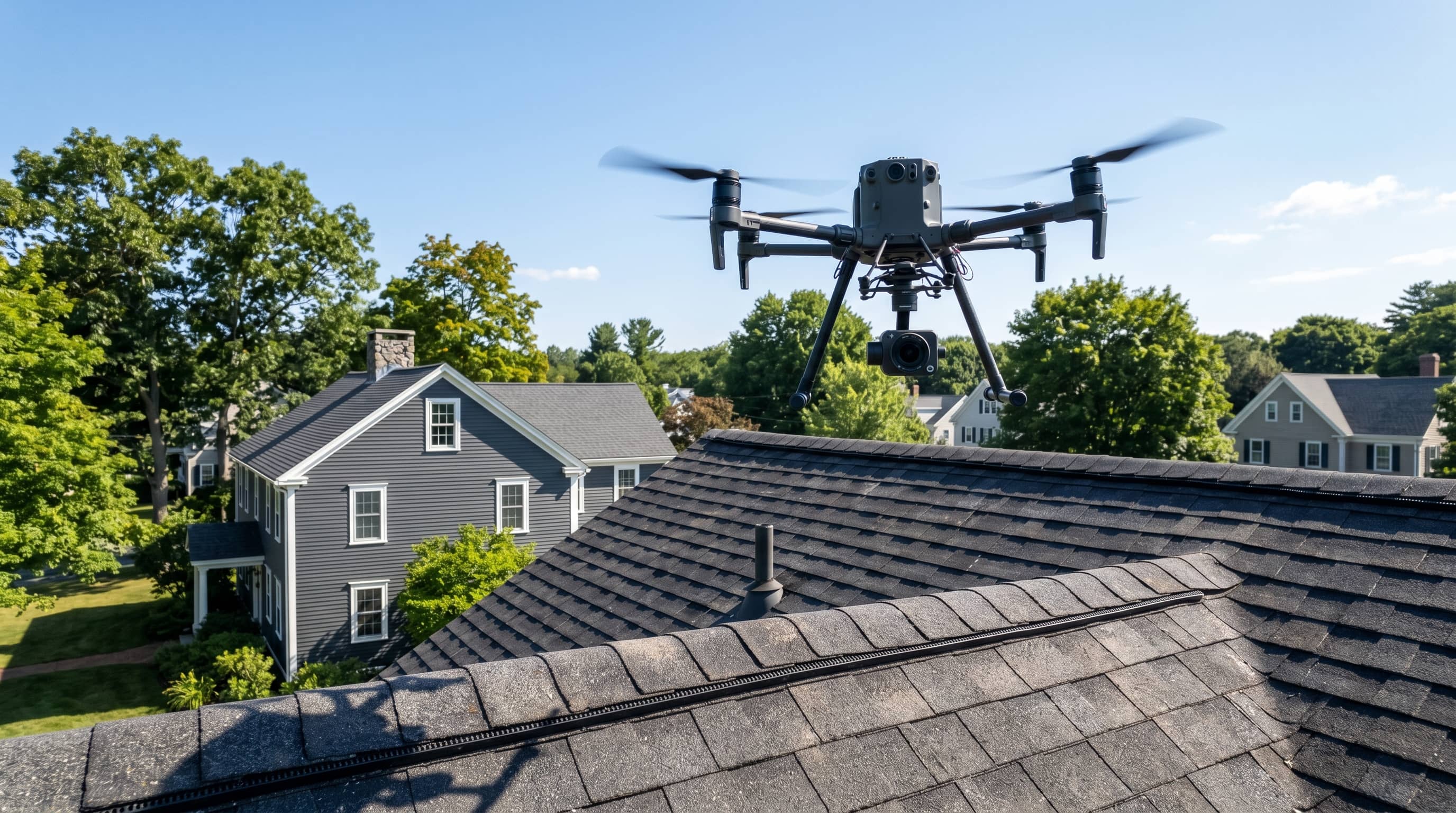
Yes — and reliably so. A drone carries a high-resolution camera within a few feet of the roof and photographs every slope, valley, ridge, and penetration up close. Nothing is missed because it was out of reach, and nothing is unsafe to get to. The result is a sharp, complete record of the whole roof, taken the same way every time.
The accuracy comes from how the images are used, not just how they look. AI-assisted analysis helps review the imagery and flag likely problem spots — missing or lifted shingles, granule loss, flashing issues — so a senior inspector reviews real candidates instead of eyeballing a blurry zoom from the driveway. Every image is documented, so you can see exactly what the inspector saw and get a clear written read on what’s urgent versus what can wait. Our full guide on the drone-vs-ladder-vs-satellite comparison breaks down how each method stacks up.
How does a drone see more than someone on a ladder?
A person on a ladder sees the edges and whatever they can safely walk. Steep pitches, fragile or aging slopes, second- and third-story sections, and anything iced or snow-covered in a New England winter often go unchecked — not because they don’t matter, but because reaching them isn’t safe. A drone covers all of it in a few minutes.
It also leaves no mark. Walking a roof can scuff granules off shingles or crack brittle ones, especially on an older roof in cold weather. A drone never touches the surface, so the inspection can’t shorten the roof’s life. And because the flight path is consistent, the coverage is the same on every roof and every visit — no slope skipped because the day got long. For the full side-by-side, see the drone-vs-ladder comparison in our pillar guide.
Not sure where your roof stands?
Our 2-minute Roof Condition Assessment takes your roof’s age and what you’re seeing and gives you a straight read — monitor, plan ahead, or book a closer look.
Take the assessment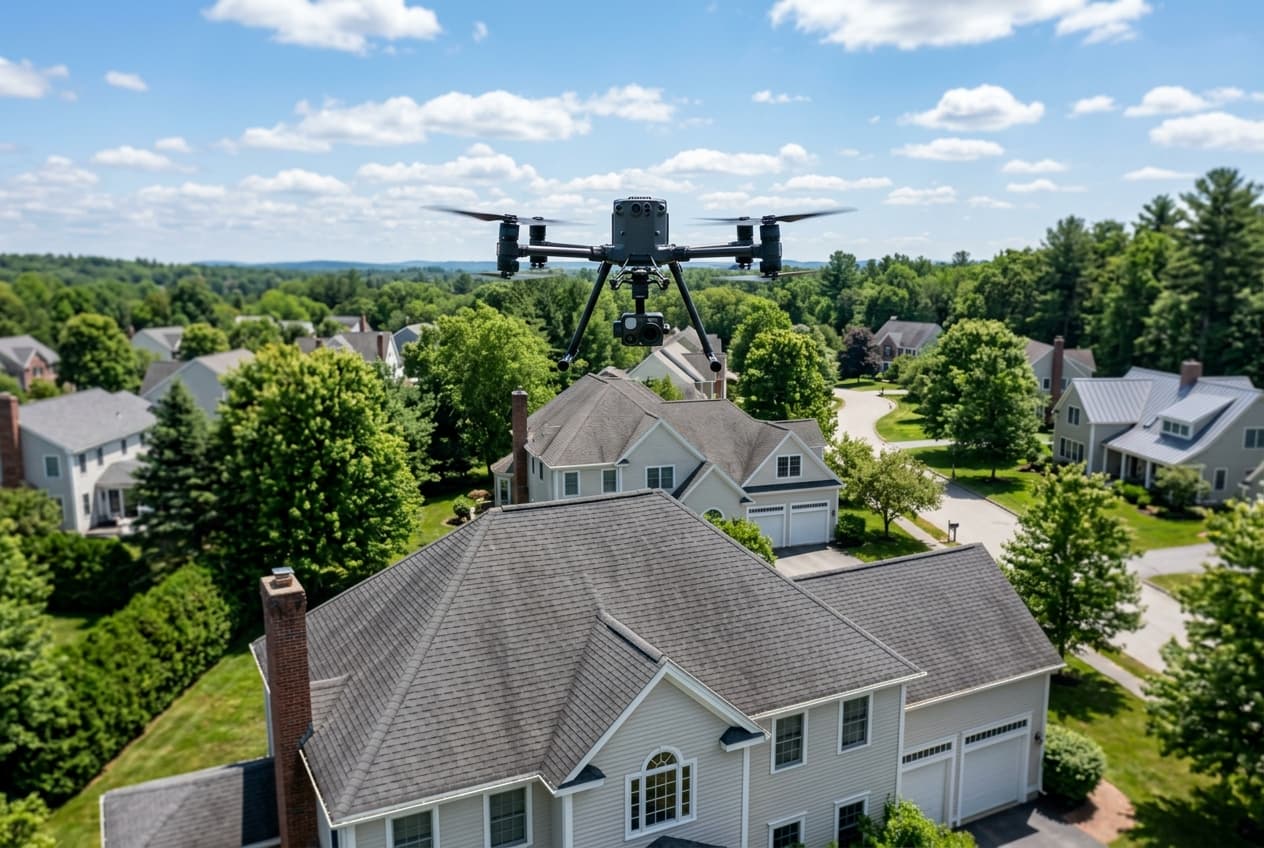
What does a drone inspection reliably catch?
The drone’s strength is visible, surface-level damage seen across the entire roof, up close. Because the camera gets within a few feet of every slope, valley, ridge, and penetration, it picks up the things that actually tell you how a roof is holding up: missing, lifted, or curling shingles, granule loss and bald spots, cracked or buckled shingles, and worn or damaged flashing around chimneys, vents, and valleys. It catches them on the steep back slopes and upper stories too — the areas most likely to get a quick glance from the ground or skipped entirely.
AI-assisted analysis helps with the review. As the imagery comes in, it helps flag the spots worth a closer look, so a senior inspector reviews real candidates instead of scrolling past dozens of clean photos. You end up with photo documentation of the whole roof plus a clear, written read on what’s urgent and what can wait — exactly what you need when you’re price-shopping roofers or putting together an insurance claim.
“The drone finds the spot you’d never see from the ground — a lifted flashing on a back dormer, a worn valley over the kitchen. Then we go up in the attic and confirm it. The camera narrows it down; the hands-on check closes the case.”
Global Roofing field team — Massachusetts in-home estimates
What can’t a drone inspection do?
A drone is the best way to see the outside of a roof, but it can’t do everything, and a good roofer won’t pretend otherwise. Three things sit outside what any camera can do:
- It can’t lift shingles. Some findings live under the surface — sealant condition, fastener problems, what a shingle is doing along its hidden edge. A camera reads the top, not underneath.
- It can’t probe for soft decking. Spongy or rotted plywood under the shingles is something you feel by hand or spot from the attic, not from the air.
- It can’t inspect the attic or interior. Ventilation, insulation, daylight through the deck, and active leak stains are all attic-side findings.
That’s why the most reliable inspection pairs the drone scan with a quick attic walkthrough and a hands-on look at flashing, vents, and anything the drone flagged. The aerial imagery shows the whole roof and points to the trouble spots; the in-person check confirms them. It’s the same reason a thorough roofer covers everything a complete inspection should check, inside and out — and it’s what lets an inspector estimate how many years your roof has left instead of guessing from its age.
One more practical note: commercial drone pilots fly under FAA Part 107 rules, which govern who can operate a drone for hire and where they can fly. A certified operator works within those rules, which is part of what makes a professional drone inspection both legal and dependable.
Frequently asked questions
Are drone roof inspections accurate?
Yes. A drone flies a high-resolution camera close to every slope, valley, and ridge and captures sharp, clear photos of areas a person can’t safely reach. AI-assisted analysis helps review the imagery and flag problem spots for a senior inspector to confirm — so it’s at least as accurate as walking the roof, and usually more thorough.
How does a drone see more than someone on a ladder?
It covers the entire roof in minutes — including steep or fragile sections nobody can safely walk — the same way every time, and leaves no foot traffic to scuff or crack shingles. Every image is documented, so you can see exactly what the inspector saw rather than taking a from-the-ground summary on faith.
What does a drone roof inspection reliably catch?
Visible, surface-level problems across the entire roof — missing or lifted shingles, granule loss, cracked or curling shingles, and worn or damaged flashing — including on steep slopes and back sections a person can’t safely reach. The drone photographs every angle, AI-assisted analysis helps flag likely problem spots, and a senior inspector reviews the imagery, so you get a clear written read on what’s urgent versus what can wait.
What can’t a drone roof inspection do?
A drone can’t lift shingles, physically probe for soft decking, or inspect the attic or interior — those are hands-on findings. That’s why the best inspection pairs the drone scan with a quick attic walkthrough and a close look at flashing and any area the drone flagged. Commercial pilots also fly under FAA Part 107 rules.
How we wrote this guide
This article reflects how Global Roofing inspects real Massachusetts and New England roofs, checked against FAA Part 107 commercial drone operating rules, National Roofing Contractors Association guidance, and InterNACHI inspection standards. It was reviewed for accuracy by a licensed Massachusetts roofing contractor on our team. See our full editorial process for how we research and update every article.
Sources
- Federal Aviation Administration — Part 107 Small Unmanned Aircraft (commercial drone operating requirements). faa.gov
- National Roofing Contractors Association — roof inspection and system evaluation guidance. nrca.net
- International Association of Certified Home Inspectors (InterNACHI) — roof inspection standards of practice. nachi.org