

Key Takeaways
- Yes — approximately. A thorough inspection estimates how many years a roof has left as a realistic range, not an exact expiration date.
- It works by combining the material’s expected lifespan and the roof’s age with what the inspector actually sees: shingle condition, flashing, deck soundness, attic ventilation, and prior repairs.
- It’s a window (say, “about three to five years”) because ventilation, install quality, sun, and weather all push the number around.
- Use the estimate to budget and plan — replace on your terms, time it around solar or a home sale, and answer an insurer’s questions.
Can a roof inspection tell you how many years your roof has left?
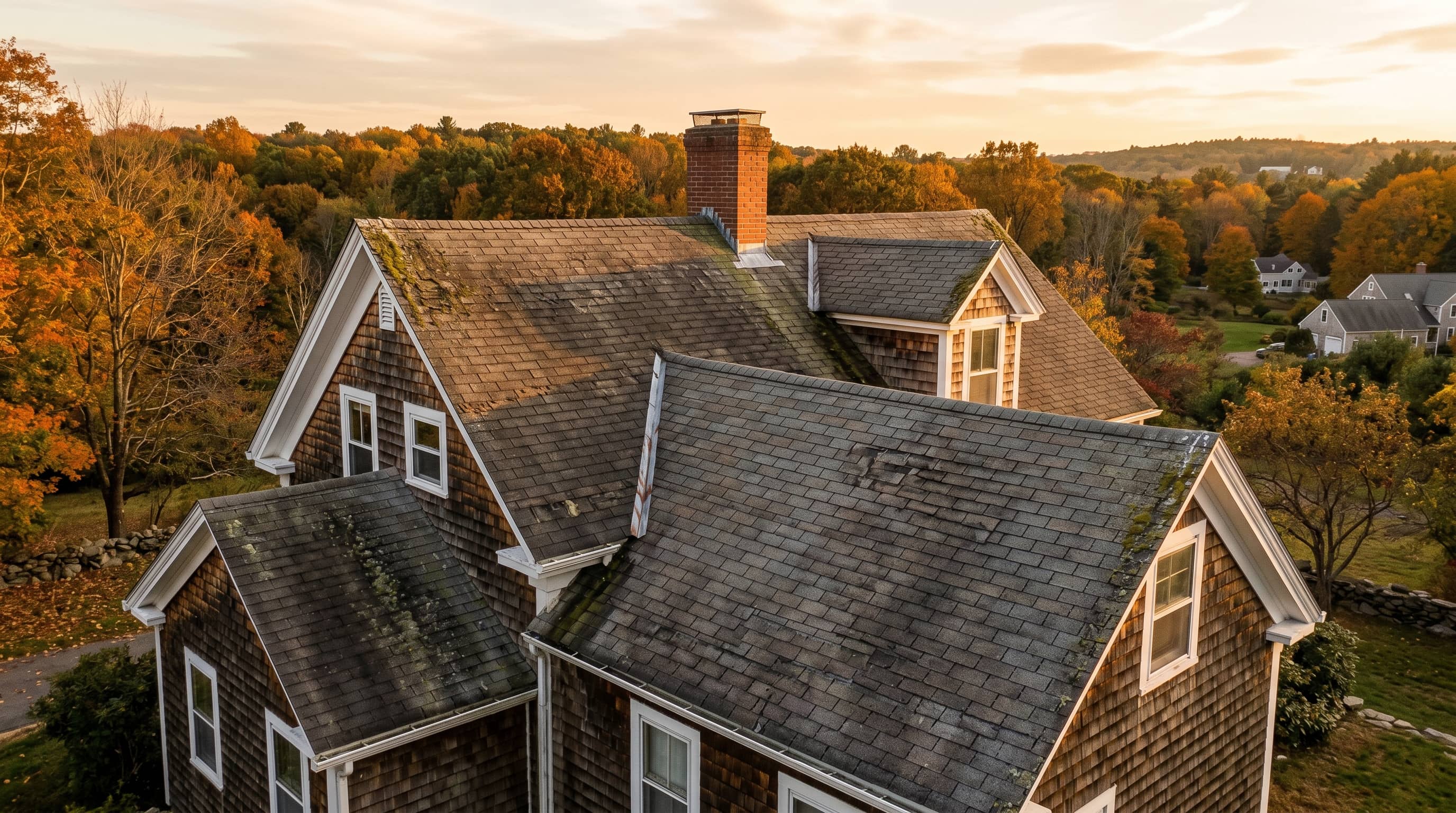
Yes — well enough to plan around, as long as you take it as a range and not a guaranteed expiration date. A thorough inspection produces a realistic remaining-life window — something like “about three to five years” — by weighing the material’s expected lifespan and the roof’s age against what the inspector finds on the roof and in the attic. No honest pro will tell you the roof fails on a specific Tuesday. What they can tell you is whether you’re in relax, watch, or plan-ahead territory.
You can rough this out yourself — our companion article on estimating your roof’s remaining life walks through the age-and-condition math at the kitchen table. An inspection is the next step up in accuracy. Instead of guessing at the parts you can’t see, an inspector actually looks at the shingles up close and gets into the attic — which is where most of the real story is written. A 360° drone roof inspection sharpens that rough estimate into a read you can act on.
How does an inspector estimate remaining life?
The method mirrors the do-it-yourself version, just with a trained eye and a closer look. An inspector starts with two numbers — the material’s expected service life and how old the roof is — then adjusts that baseline up or down based on what they actually observe. Here’s what feeds the estimate:
- Shingle condition. Granule loss, curling or cupping edges, cracked or brittle shingles, and bald spots all say the roof is closer to the end of its range.
- Flashing. The metal at valleys, chimneys, and vents often fails before the field of the roof does, so its state is a strong clue.
- Deck soundness. A roof deck that feels soft or shows sagging points to moisture damage underneath.
- Attic ventilation and moisture. A hot, sealed attic bakes shingles from below and shortens their life; damp or staining hints at problems the surface doesn’t show.
- Prior repairs and extra layers. Patchwork and a second layer laid over an old one both pull the estimate down.
A drone pass plus an attic check covers far more than a look from the curb — that’s the difference between a guess and an estimate. For the full list of what gets checked and why, see our breakdown of what an inspection actually checks.
Want a quick first read?
Our 2-minute Roof Condition Assessment takes your roof’s age and what you’re seeing and gives you a straight read — monitor, plan ahead, or get it looked at — before you book a full inspection.
Take the assessment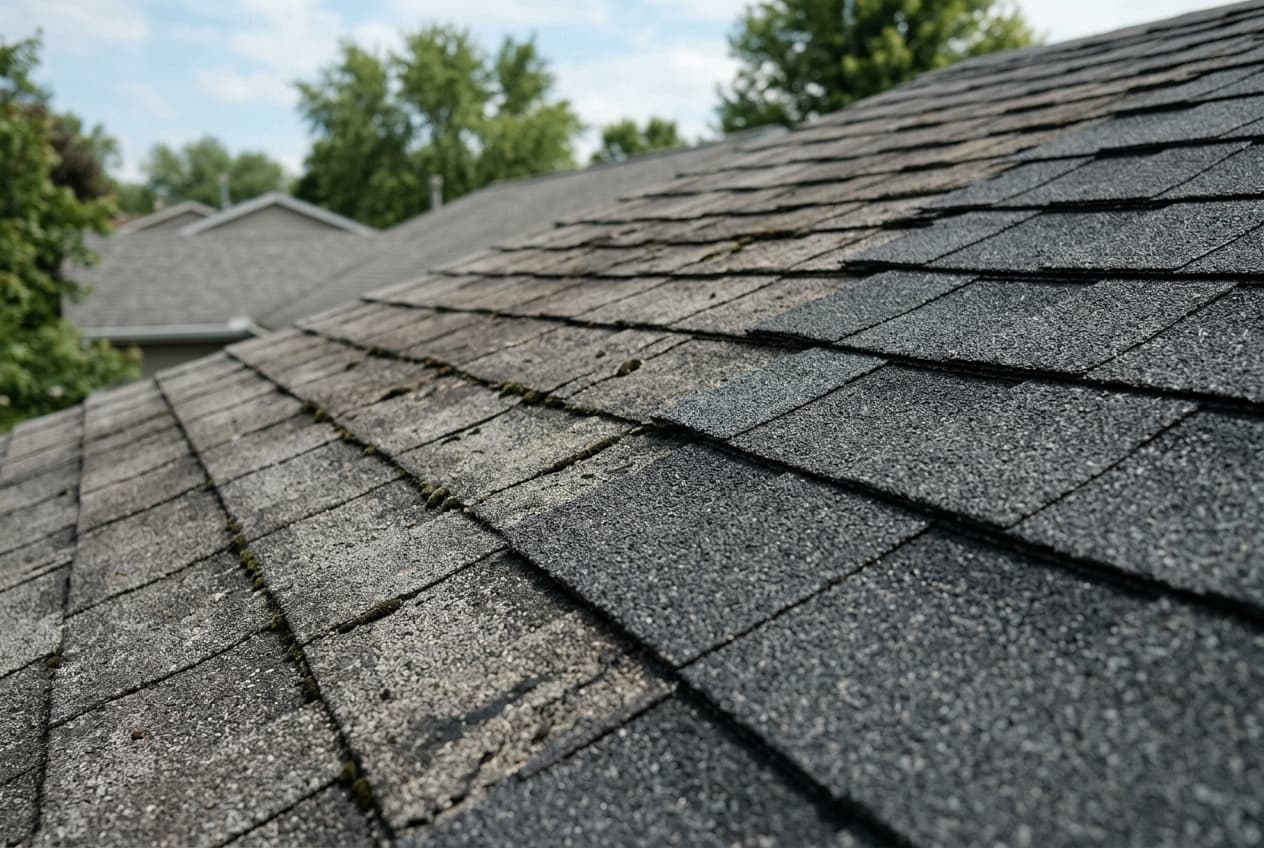
Why is it a range, not an exact number?
Because roofs don’t age on a schedule. How fast a roof wears out depends on things that vary from one house to the next — and one winter to the next:
- Attic ventilation. Balanced airflow keeps the deck cool and dry and lets shingles age at their natural pace; a sealed, hot attic shaves years off.
- Install quality. A roof done right the first time earns its full range; a rushed job or a layover commonly gives out early.
- Sun exposure. South- and west-facing slopes take the most heat and UV and tend to wear first.
- Weather. In New England, freeze-thaw cycles, ice dams, and heavy snow can move a roof along faster some years than others.
Two identical roofs the same age can land years apart. That’s why a careful inspector gives you a window — “about three to five years” — and suggests re-checking down the road, rather than naming a date the roof can’t actually promise to hit. A false-precision number sounds confident, but it isn’t honest. A realistic range is more useful precisely because it’s true, and a steady inspection routine over the years tightens that window as the roof ages.
“Nobody can hand you an exact expiration date, and you should be wary of anyone who tries. What we can give you is a straight range — ‘you’ve got a few good years, let’s check again in two.’ That’s the honest answer, and it’s the one you can plan around.”
Global Roofing field team — Massachusetts in-home estimates
How do you use a remaining-life estimate?
The whole point of a remaining-life range is to let you plan instead of react. Once you know roughly how many good years are left, you can make calm decisions instead of scrambling after a leak. Here’s where the number actually earns its keep:
- Budget and plan ahead. Knowing replacement is, say, a few years out lets you set money aside and do the work on your own timeline — not in an emergency after water comes through a ceiling.
- Time it around other projects. If you’re considering adding solar to an older roof, panels want a roof with plenty of life left — a tight remaining-life window may mean replacing first. The same logic applies if you’re planning a sale and want the roof squared away.
- Answer an insurer or a buyer. Carriers and home buyers both ask about a roof’s age and condition. A documented remaining-life estimate gives you a straight, credible answer instead of a shrug.
None of this means rushing. A roof near the lower end of its range isn’t a crisis — it’s a heads-up that lets you choose the timing. The goal is simple: replace your roof on your terms, when it makes sense for you, rather than on the weather’s schedule.
Frequently asked questions
Can a roof inspection tell you how many years your roof has left?
Yes — as a realistic range, not an exact date. A thorough inspection combines the material’s expected lifespan and the roof’s age with what the inspector sees on the roof and in the attic, which turns a rough guess into a usable window like “about three to five years.” What it can’t give you is a guaranteed expiration day.
How does an inspector estimate a roof’s remaining life?
They start with the material’s expected service life and the roof’s age, then adjust for what they observe — granule loss, curling or cracked shingles, flashing, how solid the deck feels, and attic ventilation and moisture. A drone pass plus an attic check covers far more than a curbside look, so the estimate is much more reliable than a guess from the ground.
Why is a roof’s remaining life a range instead of an exact number?
Because aging depends on things that vary house to house and year to year — attic ventilation, install quality, sun exposure, and weather. Two identical roofs the same age can be years apart in condition, so an honest inspector gives you a window and suggests re-checking, rather than a false-precision date.
How do you use a roof’s remaining-life estimate?
Use it to plan instead of react. A realistic window lets you budget and replace on your own timeline, time the work around solar or a home sale, and answer an insurer or buyer who asks about the roof’s age and condition.
How we wrote this guide
This article reflects what Global Roofing sees on real Massachusetts and New England roofs, checked against National Roofing Contractors Association guidance on roofing service life and attic ventilation, InterNACHI inspection standards on roof age and condition, and manufacturer specifications. It was reviewed for accuracy by a licensed Massachusetts roofing contractor on our team. See our full editorial process for how we research and update every article.
Sources
- National Roofing Contractors Association — roofing system service life, inspection, and attic ventilation guidance. nrca.net
- InterNACHI — standards for estimating roof age and assessing roof condition during inspections. nachi.org
- CertainTeed — asphalt shingle service-life and ventilation specifications. certainteed.com