

Key Takeaways
- The clearest replacement signs are structural: a sagging or wavy roofline, daylight through the attic boards, and repeated leaks. A sagging deck is the most urgent of all.
- Surface wear — widespread curling, cracked shingles, bare patches where granules washed off — usually shows up together on a roof near the end of its life.
- Some signs are mostly cosmetic: dark algae streaks, a little moss in the shade, and a new roof shedding loose granules in its first year. Those don’t mean you need a new roof.
- One isolated problem is usually a repair. It takes a combination of signs, spread across an aging roof, to point to a full replacement.
What does a roof at the end of its life look like?
A worn-out roof rarely fails in one dramatic moment. It announces itself slowly, with a handful of signs that build up and start showing together. The most reliable read isn’t any single symptom — it’s how many you can spot at once and how far they’ve spread. Here’s the catalog of what to look for:
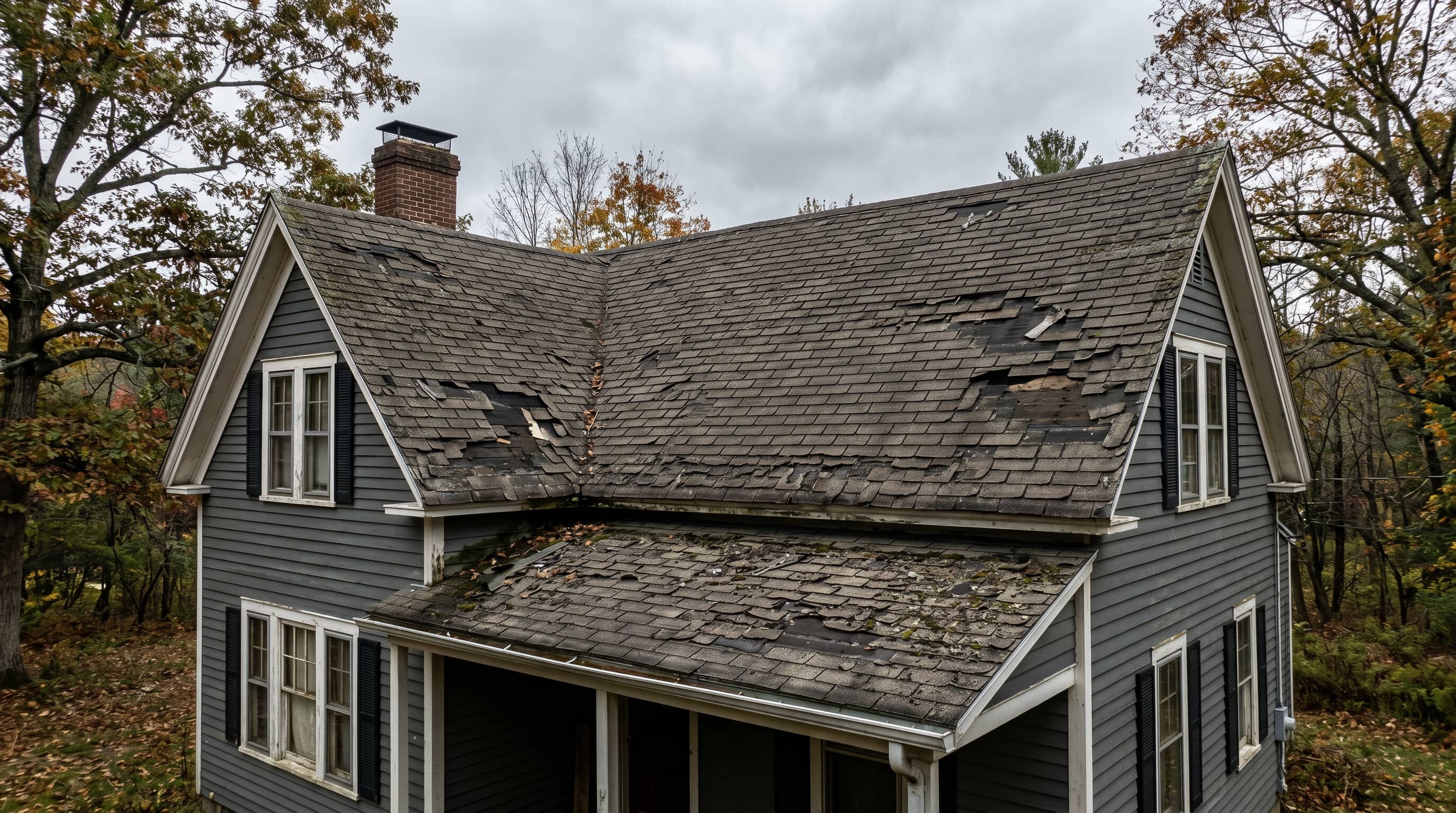
- Curling, cupping, or clawing shingles. Edges that lift up or corners that curl down mean the shingles have dried out and lost their flexibility. Scattered curling is one thing; a whole slope doing it is a roof telling you it’s done.
- Cracked or brittle shingles. Shingles that snap, split, or crumble instead of bending have lost the oils that keep them weather-tight.
- Missing or blown-off shingles. A few bare spots after a windstorm can be a repair. Gaps appearing on their own, in calm weather, point to age.
- Widespread granule loss. The mineral granules are the shingle’s sunscreen. When they wash off, you see bare, darker patches on the roof and a buildup of grit in the gutters and at the bottom of downspouts.
- Algae streaks, moss, or lichen. Black streaks and green growth show up most on damp, shaded slopes. Mostly a cosmetic and cleanliness issue, though moss that lifts shingle edges can hold water against the roof.
- Damaged, rusted, or lifting flashing. The metal sealing the chimney, valleys, and vent pipes is where roofs leak first. Lifting, rusted, or cracked flashing is a common — and often fixable — source of trouble.
- A sagging or wavy roofline. Look at the ridge and slopes against the sky. Dips, waves, or a swayback line suggest a problem with the deck or structure underneath. This is the most serious sign on the list.
- Daylight or water stains from the attic. Pinpoints of daylight through the boards, brown stains on the underside of the deck, or damp insulation all mean water is already getting in.
Not sure how the signs add up?
Our 2-minute Roof Condition Assessment takes your roof’s age and what you’re seeing and gives you a straight read — monitor, plan ahead, or get it looked at.
Take the assessment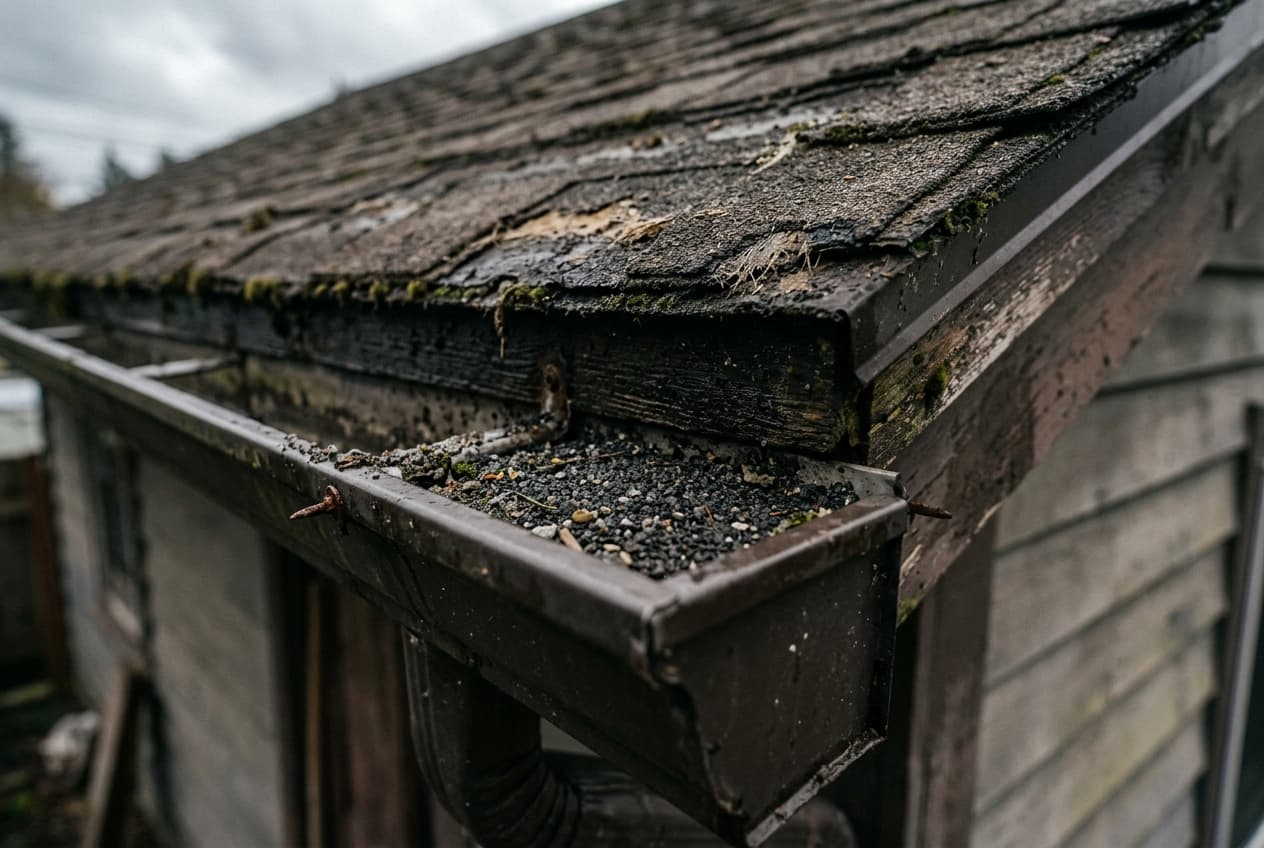
Which signs are serious, and which are just cosmetic?
Not every mark on a roof is a warning. Sorting the cosmetic from the structural is the difference between losing sleep over nothing and missing something that matters.
Cosmetic or manageable. Dark algae streaks are mostly an appearance issue — they look bad but rarely shorten a roof’s life on their own. A little moss on a shaded, north-facing slope is worth keeping an eye on, not panicking over. And a brand-new roof will shed some loose granules in its first year as the extras left over from manufacturing wash off; that’s normal and slows down quickly. None of these mean you need a replacement.
Serious or structural. Widespread curling and bare granule-loss patches across whole slopes say the shingles are spent. Repeated leaks, rotted fascia, and brown stains spreading on the deck mean water has already found a way in. And a sagging or spongy roof deck — a dip you can see from the yard, or a floor-like give if a pro steps on it — is the most urgent of all, because it’s a structural issue underneath the shingles, not a surface one. Cosmetic problems can wait; a sagging deck can’t.
The honest takeaway: cosmetic does not equal replace. A roof can look tired and stained and still have years left, while a clean-looking roof with a quiet sag underneath can be the bigger problem. Our full guide on how to tell whether it’s time for a new roof walks through both the red flags and the green lights.
How can you check without climbing on the roof?
You can learn a lot about your roof without ever leaving the ground or the attic — and you should. Walking a steep or wet roof is genuinely dangerous, and foot traffic can crack and dislodge the very shingles you’re trying to inspect. Leave the close-up, on-roof look to a professional with the right gear.
Here’s a safe homeowner check:
- From the yard with binoculars. Walk the perimeter and scan each slope for curling, cracked, or missing shingles, and for flashing that’s lifting or rusted around the chimney and vents. Step back far enough to read the ridge line against the sky for any sag or wave.
- At the gutters and downspouts. A heavy buildup of sand-like granules is one of the clearest signs of an aging asphalt roof.
- Inside, at the ceilings. Look in upstairs rooms for brown rings or fresh water stains, especially after a storm.
- In the attic with a flashlight. On a bright day, look for pinpoints of daylight through the boards, dark stains on the underside of the deck, and damp or matted insulation. This is often where trouble shows up first.
“Most homeowners can spot the surface stuff from the driveway. What they can’t see is the deck and the flashing detail — and that’s usually what decides repair versus replace. That’s the part worth getting eyes on before you make a call.”
Global Roofing field team — Massachusetts in-home estimates
Does one bad sign mean I need a whole new roof?
Usually not. A single problem — a few wind-lifted shingles, one spot of tired flashing, a small leak around a vent — is far more often a repair than a reason to tear off the whole roof. Age alone doesn’t condemn a roof, and neither does one isolated symptom.
What actually points to replacement is the combination: several of the signs above showing up together, spread across the roof, on shingles that are already near the end of their service life. One curling shingle on a 9-year-old roof is a different story than half a slope curling on a 24-year-old one. The math that matters is age plus how widespread the damage is — not any one sign by itself.
That’s also why a single symptom needs context before you act. A leak, for example, doesn’t automatically mean a new roof — it’s worth reading whether a leak really means you need a replacement before you assume the worst. And damage that looks dramatic after a big blow is often storm-related rather than age — here’s how to tell storm damage apart from ordinary wear. When the signs do add up, the next question is simply whether a repair will hold or it’s time to replace — and an honest in-person look is the fastest way to settle it.
Frequently asked questions
What are the signs that a roof needs to be replaced?
The replacement signs show up together and across the roof: widespread curling, cupping, or clawing shingles; cracked or brittle ones; missing shingles; bare patches where granules washed off (with grit collecting in the gutters); damaged or lifting flashing; and stains or daylight in the attic. A sagging roofline is the most urgent. A few isolated signs usually mean a repair.
Which roof problems are serious and which are just cosmetic?
Cosmetic: algae streaks, a little moss in the shade, and a new roof shedding loose granules its first year — none mean replace. Serious: widespread curling and granule loss, a sagging or spongy deck (the most urgent), daylight through the attic boards, repeated leaks, and rotted fascia.
How can I check my roof without climbing on it?
Check from the ground and the attic, not up on the slope — a steep or wet roof is dangerous and walking it damages shingles. Use binoculars from the yard, look in the gutters for granule buildup, and go into the attic with a flashlight for daylight, stains, or damp insulation. Leave the close-up look to a pro.
Does one bad sign mean I need a whole new roof?
Usually not. One isolated issue — a few lifted shingles, one spot of flashing, a small leak — is most often a repair. What points to replacement is the combination of several signs at once, spread across a roof that’s already near the end of its life. Age and how widespread the damage is matter more than any single symptom.
How we wrote this guide
This article reflects what Global Roofing sees on real Massachusetts and New England roofs, checked against National Roofing Contractors Association guidance on roof condition and inspection, InterNACHI standards for what inspectors look for, and manufacturer specifications on shingle wear. It was reviewed for accuracy by a licensed Massachusetts roofing contractor on our team. See our full editorial process for how we research and update every article.
Sources
- National Roofing Contractors Association — roof condition, maintenance, and inspection guidance. nrca.net
- International Association of Certified Home Inspectors (InterNACHI) — roof inspection standards and visible defect references. nachi.org
- CertainTeed — asphalt shingle wear, granule loss, and troubleshooting specifications. certainteed.com