

Key Takeaways
- The clearest signs are lifted, creased, or missing shingles, a sudden surge of granules in the gutters, and dented flashing or gutters.
- In New England, roof storm damage is mostly wind-driven — nor’easters, high-wind events, heavy wet snow, and falling limbs — not the frequent large hail of the Plains.
- Storm damage is sudden and often one-sided, with fresh, clean break edges; normal wear is gradual and even across the whole roof.
- Look from the ground and attic, photograph anything you find, and get a professional inspection — storm damage is often an insurance matter, and the process starts with documentation.
What does roof storm damage look like?
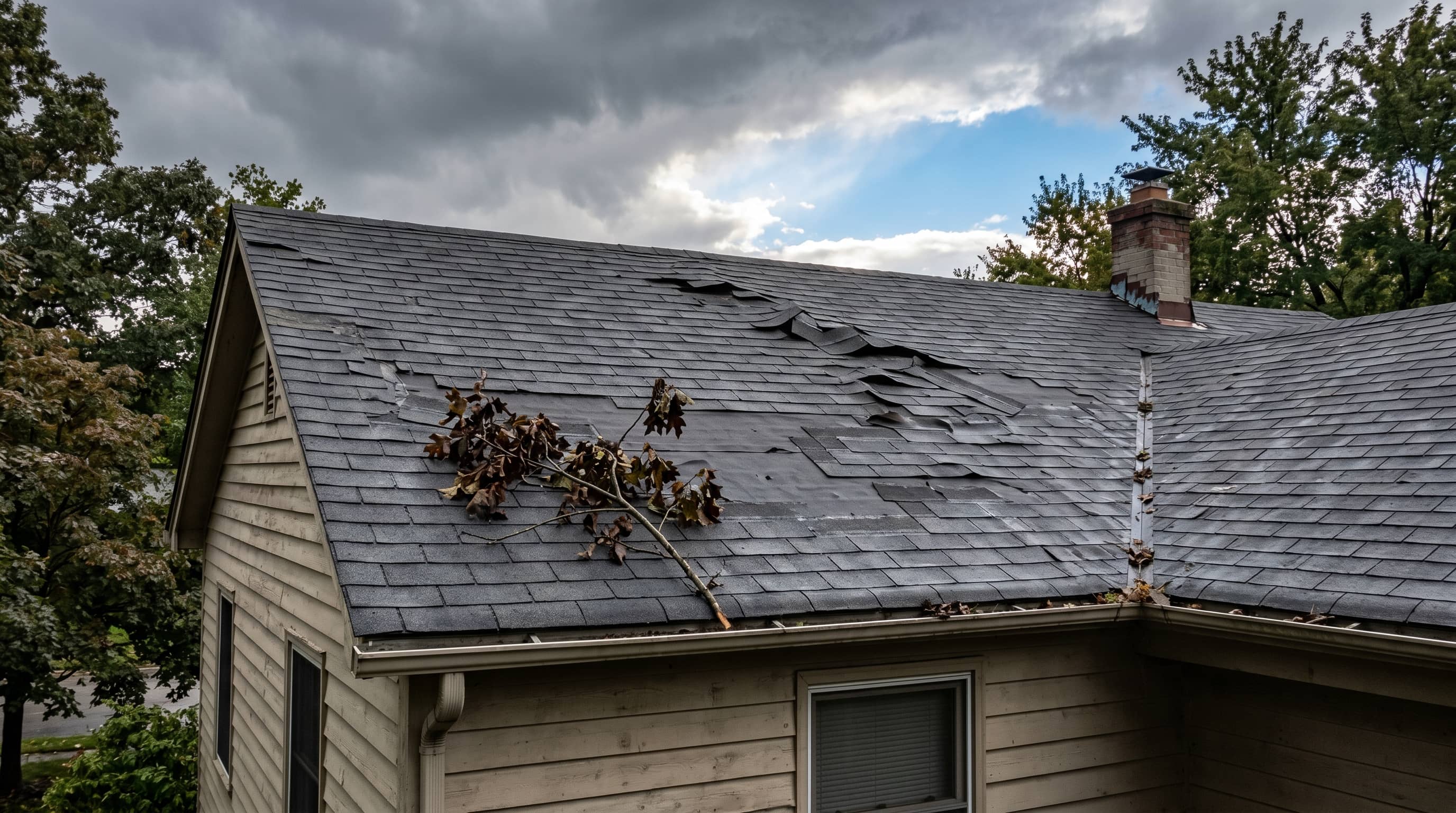
Most roof storm damage shows up as shingles knocked out of place. After a strong blow you may see shingles lifted, creased, or curled back where the wind broke the seal that holds them down, shingles missing entirely, or pieces scattered across the yard and driveway. Those are the signs that are easiest to spot from the ground.
A few others are worth knowing:
- A surge of granules. Finding a sudden pile of the sandy mineral granules in your gutters or at the bottom of a downspout right after a storm can mean wind or impact stripped the protective surface off the shingles.
- Dented or torn metal. Check the flashing around chimneys and valleys, the vents and pipe boots, and the gutters themselves for dents, bends, or tears.
- Impact marks and punctures. A fallen branch or wind-blown debris can scrape, crack, or punch through shingles — sometimes through the deck beneath.
- Hail bruising. Less common in New England, but possible. Hail leaves dark dimples or soft “bruises” where granules are knocked off in a random, peppered pattern.
- Fresh interior leaks or stains. A new water stain on an upstairs ceiling or in the attic that appears soon after a storm often traces back to roof damage.
These overlap with the everyday visible signs of a worn-out roof, so the timing matters: damage that appears right after a storm, on a roof that looked fine the week before, is the tell.
Not sure what you’re looking at?
Our 2-minute Roof Condition Assessment takes your roof’s age and what you’re seeing and gives you a straight read — monitor, plan ahead, or get it looked at.
Take the assessment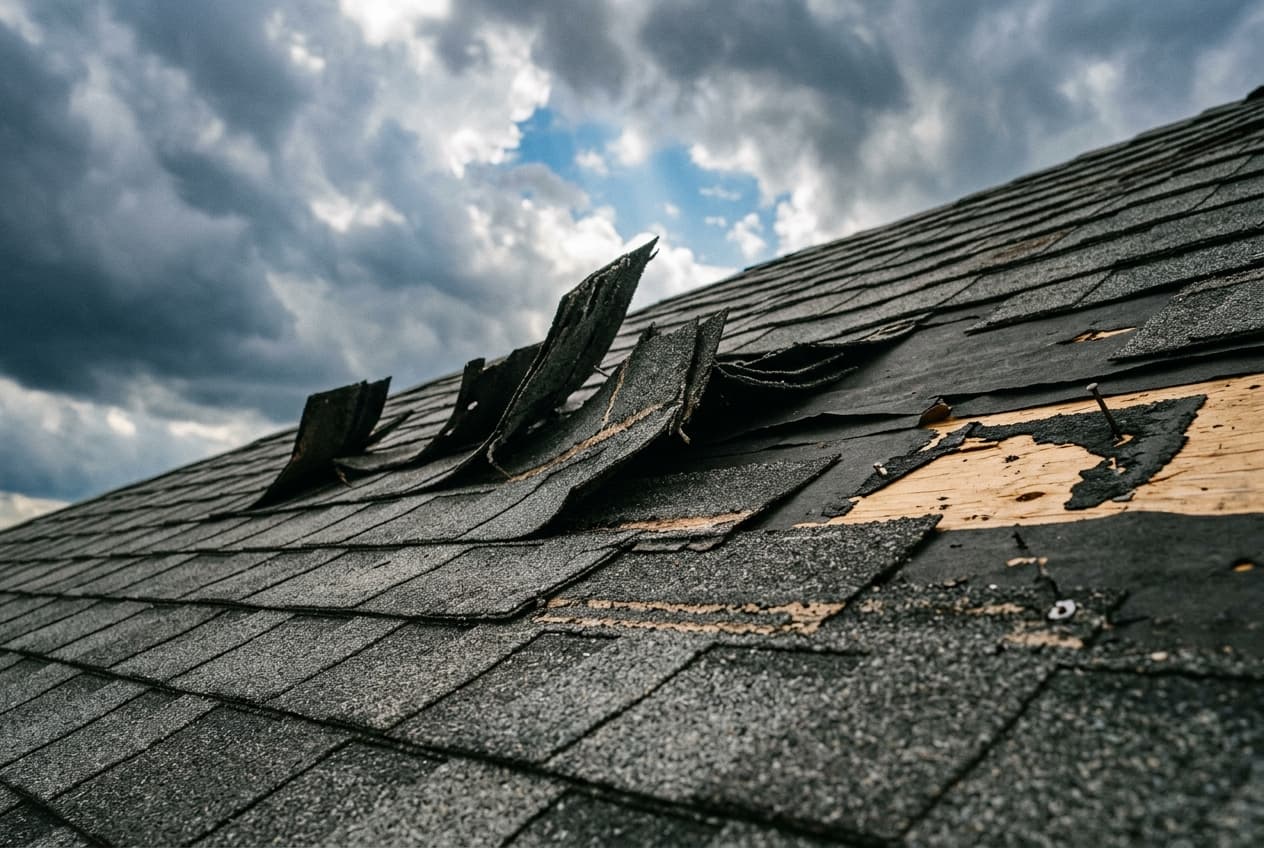
What kinds of storms damage roofs in New England?
New England roof damage is mostly about wind, not hail. According to the National Weather Service, the region’s biggest threats to a roof are high-wind events and nor’easters, which can drive sustained gusts strong enough to break shingle seals and peel back tabs along a whole slope.
The other repeat offenders here are seasonal:
- Heavy wet snow and ice. Late-season storms pile weight on the roof, and the freeze that follows can lead to ice dams that force water up under the shingles. If that’s your situation, our piece on whether winter ice-dam damage means you need a new roof goes deeper.
- Summer thunderstorms. Strong downdraft gusts — and the occasional hail — can lift or pit shingles in minutes.
- Falling limbs. Any of the above can bring a tree branch down, and a single heavy limb does more concentrated damage than wind alone.
The takeaway: unlike the central Plains, where large hail is the main concern, New England roofs are shaped by wind and winter. That changes what you’re looking for.
How do you tell storm damage from normal wear?
This is the question that trips up most homeowners, because a tired roof and a storm-hit roof can look similar from the curb. The difference is in the pattern and the edges.
Storm damage is sudden and uneven. It tends to concentrate on the slope that faced the wind, the breaks look fresh and clean, and shingles are pulled out of alignment or gone altogether. You can often connect it to a specific weather event.
Normal wear is gradual and even. It shows up across the whole roof at once — uniform granule loss, shingles that are curling or cupping with rounded, weathered edges, the slow aging of a roof reaching the end of its service life. Nothing about it points to a single day.
That distinction matters beyond curiosity. Inspector guidance from groups like InterNACHI is built around reading exactly these indicators, and a proper professional inspection documents which one you have. It’s also what an insurance claim hinges on — insurers look for damage tied to a covered event, not ordinary age, which is precisely what an adjuster looks for on the roof. So getting the cause documented correctly is worth doing right.
“Homeowners point at one bare patch and assume the whole roof is shot. We’re up there reading the pattern — is it one slope or all four, are the edges fresh or weathered? That’s what tells you whether a storm did it or the years did.”
Global Roofing field team — Massachusetts in-home estimates
What should you do after a storm?
Start safe and stay on the ground. From the yard and from inside the attic, walk through the signs above: scan the slopes for lifted or missing shingles, check the gutters for a fresh load of granules, and look at the ceilings and attic for new stains. Don’t climb a damaged roof — wet, loose, or storm-loosened shingles are dangerous, and you can make damage worse.
Photograph anything you find, with dates. Then get a professional inspection. A roofer can get up close safely and tell you whether you’re looking at storm damage or ordinary wear, and whether the underlying deck is affected. If there is real damage, it may be an insurance matter — and that process generally begins with documenting the damage and an inspection, so contacting your insurer and having a roofer assess it are the natural first steps. For how the claim itself works, our roof insurance claims guide walks through it, though your carrier is the source for your specific coverage.
What happens next depends on the extent. Localized damage — a few shingles off one slope, a dented section of flashing — is often a straightforward repair. Widespread damage, or damage on a roof already near the end of its life, can point toward a full replacement. Our main guide on how to know whether you need a new roof walks through where that line usually falls. And while you can always choose any roofer, a local, licensed Massachusetts contractor who’ll still be here next winter is the sensible place to start.
Frequently asked questions
What does roof storm damage look like?
The most common signs are shingles lifted, creased, or curled back by the wind, shingles missing or scattered in the yard, and a sudden surge of granules in the gutters after a storm. You may also see dented flashing or gutters, punctures from a fallen branch, and fresh water stains inside. Hail bruising is less common in New England but possible.
What kinds of storms damage roofs in New England?
Mostly wind: nor’easters and high-wind events, plus heavy wet snow and ice in winter, summer thunderstorm gusts and occasional hail, and falling limbs from any of them. New England damage is wind-driven rather than the frequent large-hail pattern of the Plains.
How can I tell storm damage from normal wear?
Storm damage is sudden, often hits one slope, and leaves fresh, clean break edges. Normal wear is gradual and even across the whole roof, with rounded, weathered edges. Because it’s hard to judge from the ground, a professional inspection documents which one you have — and that’s also what an insurance claim is built on.
What should I do after a storm damages my roof?
Look from the ground and attic, photograph anything you find, and don’t climb the roof. Get a professional inspection. If there’s real damage it may be an insurance matter, so contact your insurer and have a roofer assess it — the process starts with documentation. Localized damage is often a repair; widespread damage can mean replacement.
How we wrote this guide
This article reflects what Global Roofing sees on real Massachusetts and New England roofs after storms, checked against National Weather Service guidance on regional wind and winter storms, National Roofing Contractors Association practice, and InterNACHI inspector guidance on wind and hail damage indicators. It was reviewed for accuracy by a licensed Massachusetts roofing contractor on our team. See our full editorial process for how we research and update every article.
Sources
- National Weather Service / NOAA — New England wind, nor’easter, and winter storm hazards. weather.gov
- InterNACHI — visual indicators of wind and hail damage to roofing. nachi.org
- National Roofing Contractors Association — storm damage assessment and roof inspection practice. nrca.net