
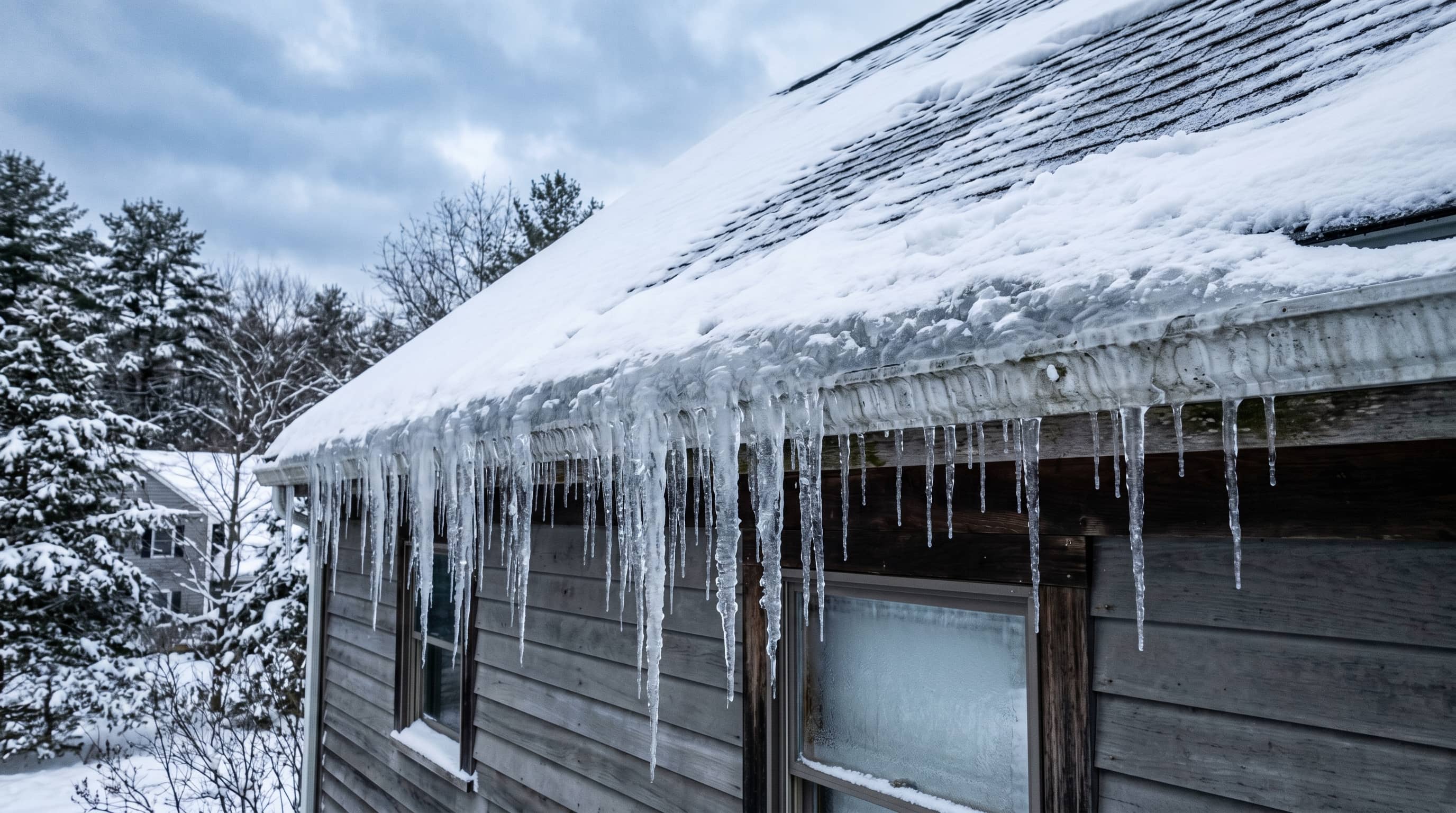

Key Takeaways
- Most of the time, ice dams don’t mean you need a new roof. They’re a symptom of attic heat loss and poor ventilation — not proof the roof is finished.
- They form when warm attic air melts snow on the upper roof, the melt-water refreezes at the cold eaves, and water then backs up under the shingles.
- The real fix is the attic: air-sealing, insulation, and balanced ventilation — with ice-and-water shield at the eaves (required on new MA roofs) as a backup.
- Ice dams tip toward replacement only when they keep recurring on an aging roof, or when years of backed-up water have rotted the deck or damaged the interior.
Do ice dams mean you need a new roof?
Most of the time, no. An ice dam is a symptom, not a verdict. It tells you that heat is leaking into your attic and that the roof isn’t venting the way it should — and the fix for that is usually targeted repair plus better insulation and ventilation, not a whole new roof. A sound 12-year-old roof that grows an ice dam doesn’t need to come off; it needs the attic addressed.
There’s a real exception, though. Ice dams tip toward replacement when they keep coming back on a roof that’s already near the end of its life, or when years of water backing up under the shingles have rotted the deck or soaked the interior. At that point you’re not fixing a dam — you’re dealing with accumulated damage. Our full guide on how to tell whether it’s time for a new roof walks through where that line sits.
Why do ice dams form?
An ice dam is a melt-and-refreeze problem, and it can happen even when the air outside stays well below freezing. Here’s the cycle:
- Heat escapes into the attic. Warm air from the living space, plus sun on the roof, warms the upper part of the roof deck above freezing.
- Snow melts on the upper roof. That warmth melts the bottom layer of snow, and the melt-water trickles down the slope.
- It refreezes at the cold eaves. The overhang past the exterior wall has no warm air beneath it, so the water hits that cold edge and freezes into a growing ridge of ice.
- Water pools and backs up. More melt-water piles up behind the ice ridge, finds the seams between shingles, and works its way under them into the deck, insulation, and walls.
The U.S. Department of Energy describes the root cause the same way: uneven roof temperatures driven by attic heat loss. That’s why a cold snap alone doesn’t cause dams — a leaky, warm attic does. It’s the same New England climate pressure that shows up in other ways too, from what wind and winter storm damage look like to the everyday wear our freeze-thaw winters put on shingles.
Not sure if your dams are a fix or a flag?
Our 2-minute Roof Condition Assessment takes your roof’s age and what you’re seeing and gives you a straight read — monitor, plan ahead, or get it looked at.
Take the assessment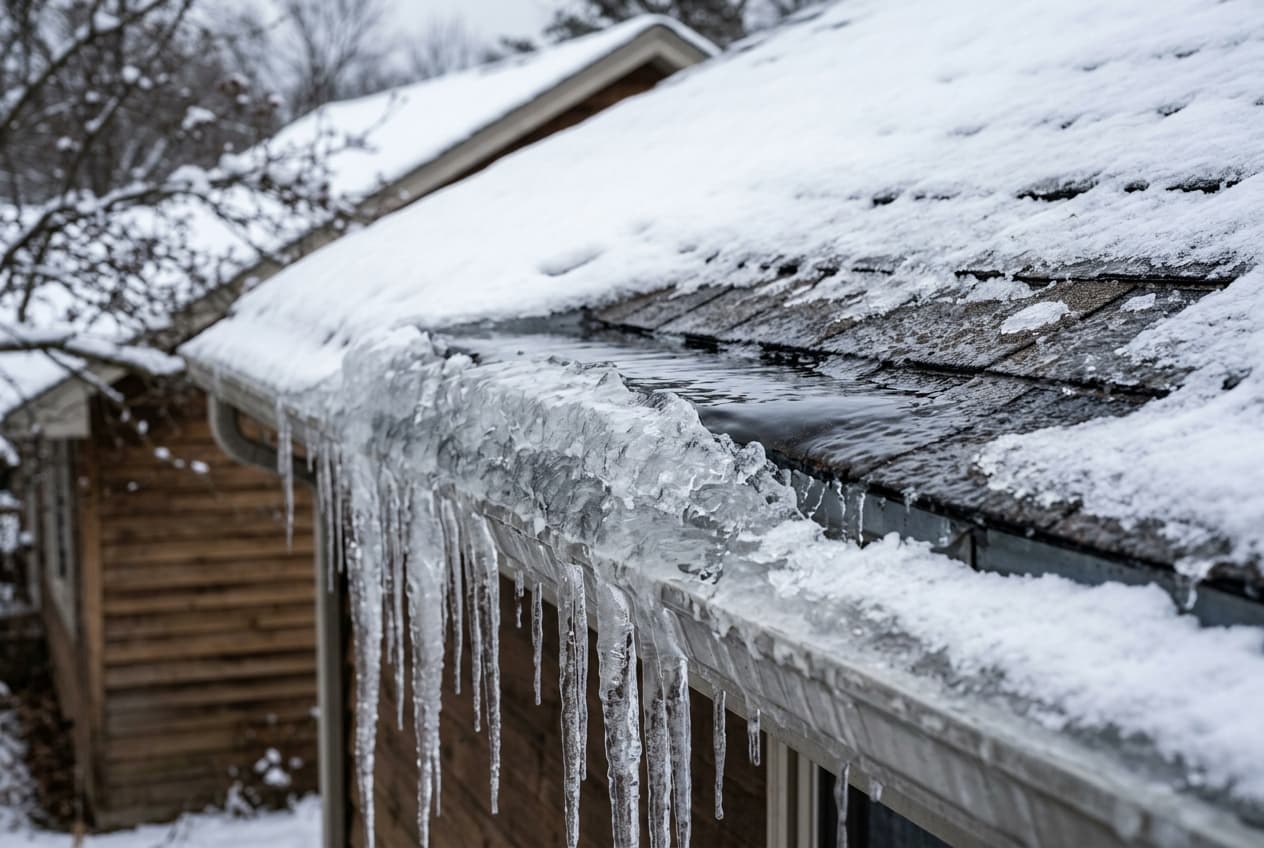
What damage do ice dams cause?
The ice you can see from the driveway is rarely the real problem. The damage happens out of sight, where backed-up water gets in and sits. Over a winter or two, that shows up as:
- Leaks and stains on upstairs ceilings and the tops of exterior walls, often days after a thaw.
- Peeling paint and bubbled drywall near the eaves and along the upper walls.
- Soaked insulation and mold, which quietly cut the attic’s effectiveness and can spread before you notice.
- Rotted fascia, sheathing, and roof edges, the most expensive kind of ice-dam damage because it weakens the deck itself.
- Buckled or lifted shingles at the eaves and gutters torn loose by the sheer weight of the ice.
If you’ve seen these in past winters — stains that reappear, paint that keeps peeling in the same corner, a gutter that pulled away — that’s a history of ice dams, and it’s worth a closer look. Many of those same clues show up in our rundown of the visible signs a roof is wearing out, which helps you tell normal aging from dam damage. And if a dam has driven water into your ceilings or walls, whether that damage is covered is its own question — our guide to whether insurance covers ice dam and snow-load damage explains where insurers draw the line.
“Homeowners point at the icicles, but we’re looking at the attic. Nine ice-dam calls out of ten trace back to heat getting up there and air not moving. Fix the venting and the insulation and the dams usually just stop coming back.”
Global Roofing field team — Massachusetts in-home estimates
How do you actually stop ice dams?
The real fix is the attic, not the roof surface. Because ice dams start with heat escaping into the attic, the goal is to keep that attic cold so the snow on the roof melts evenly from the sun and air rather than from below. Three things do that, and they work together:
- Air-sealing. Close off the hidden gaps — around light fixtures, chimneys, attic hatches, and top plates — where warm house air sneaks up into the attic. This is usually the highest-impact step.
- Insulation. Bring the attic floor up to a proper insulation level so the heat that does reach it can’t warm the roof deck.
- Balanced ventilation. Steady airflow — intake at the soffits, exhaust at the ridge — flushes out any heat and moisture that gets through, keeping the whole deck close to the outside temperature.
That ventilation point matters far beyond ice dams: balanced attic airflow is the single biggest factor in how long an asphalt roof lasts in New England, because it keeps the shingles from baking from underneath. As a backup, Massachusetts code (780 CMR) requires an ice-and-water shield membrane along the eaves of new roofs — a self-sealing layer that blocks dam water even if it gets past the shingles. It’s a safety net, not a cure, which is why a roof done right pairs it with the attic work above.
Roof rakes (to clear snow off the lower roof after a storm) and heat cables can help in a pinch, but they treat the symptom, not the cause. The lasting answer is the attic. And if your roof is already aging and the dams keep returning, replacing it the right way is a chance to build in those defenses — proper venting, fresh ice-and-water shield, and a clean install — from the start.
Frequently asked questions
Do ice dams mean I need a new roof?
Usually no. An ice dam signals attic heat loss and poor ventilation, not a worn-out roof, and the fix is normally air-sealing, insulation, and better venting plus any repair to leak-damaged spots. They tip toward replacement only when they keep recurring on an aging roof or have rotted the deck or soaked the interior over time.
Why do ice dams keep forming on my roof?
Heat leaking into the attic melts snow on the upper roof; the melt-water runs to the cold eaves and refreezes into a ridge, and water then pools behind it and backs up under the shingles. If the dams return every winter, the cause is steady heat loss and weak ventilation — not the weather.
Can ice dams damage the roof permanently?
They can. Backed-up water soaks the deck, insulation, and ceilings, leading to stains, mold, and rotted fascia and edges, while the ice’s weight can bend gutters and lift shingles. One mild winter rarely ruins a roof, but repeated ice dams left alone can shorten its life.
How do I stop ice dams for good?
Fix the attic, not just the roof. Air-seal the gaps where warm air leaks up, add enough insulation to keep the attic cold, and balance the ventilation (soffit intake, ridge exhaust). Ice-and-water shield at the eaves — required on new MA roofs — is a backup, and roof rakes or heat cables are only short-term stopgaps.
How we wrote this guide
This article reflects what Global Roofing sees on real Massachusetts and New England roofs, checked against U.S. Department of Energy guidance on attic insulation and ventilation, National Roofing Contractors Association recommendations, and the Massachusetts State Building Code (780 CMR) ice-barrier requirement. It was reviewed for accuracy by a licensed Massachusetts roofing contractor on our team. See our full editorial process for how we research and update every article.
Sources
- U.S. Department of Energy / Energy.gov — attic insulation, air-sealing, and ventilation to prevent ice dams. energy.gov
- UMass Extension — how ice dams form and how to prevent them. ag.umass.edu
- Massachusetts State Building Code (780 CMR) — ice-barrier (ice-and-water shield) requirement at roof eaves. mass.gov