

Key Takeaways
- Most New England policies cover water damage from ice dams forcing melt-water under the shingles, and sudden structural damage from the weight of ice and snow.
- What’s usually excluded is cosmetic staining on its own and damage an insurer can tie to poor maintenance.
- The grey area is whether an ice dam was preventable. Insurers may argue clogged gutters or poor attic ventilation made it foreseeable.
- Documentation that ties the damage to a specific freeze-thaw event keeps the claim on covered ground. Your policy and agent decide your specific case.
Does insurance cover ice dam and snow damage?
For most New England homeowners, the answer is yes for the sudden stuff: water that an ice dam drives up under the shingles and into the house, and structural damage from the sheer weight of ice and snow, are covered perils on a standard policy. Where coverage gets thin is the slow, cosmetic, or preventable end of the spectrum — staining alone, or damage an insurer can pin on maintenance.
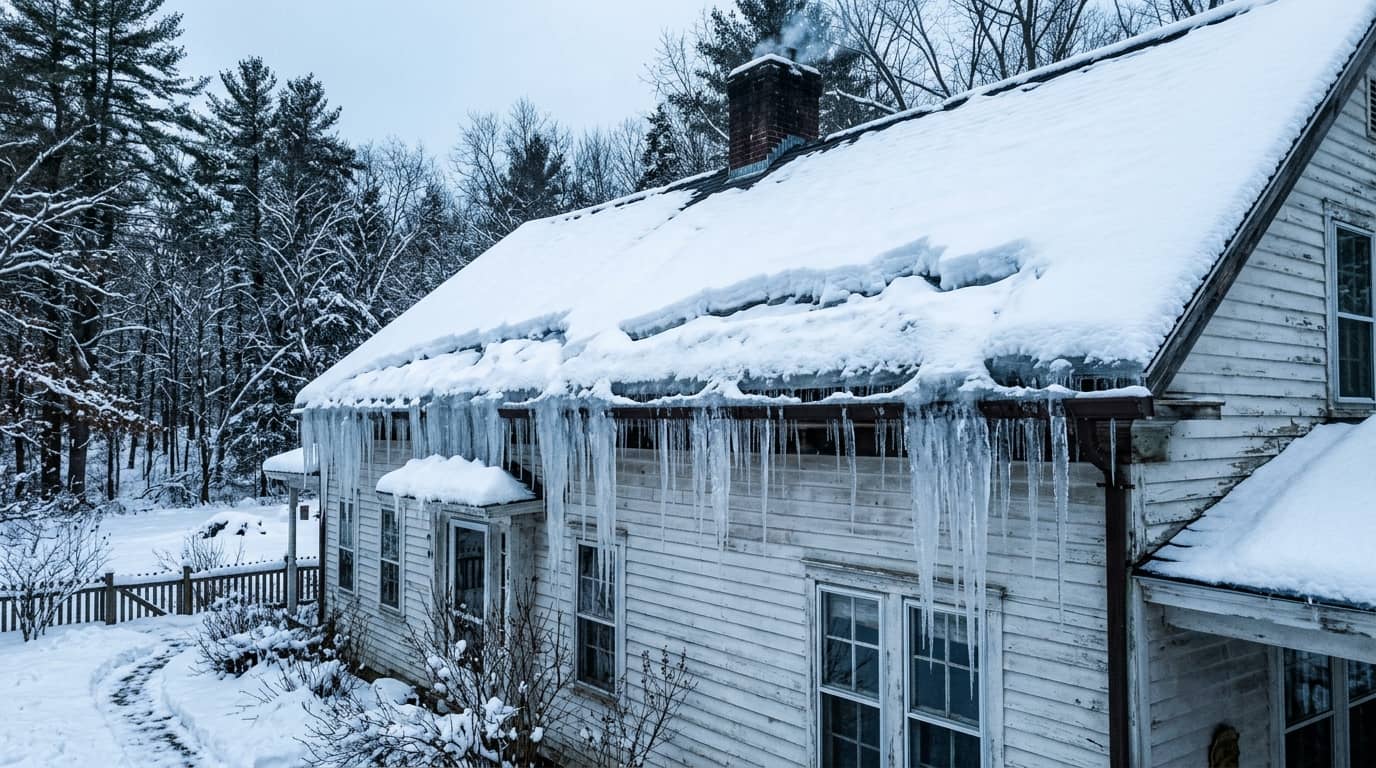
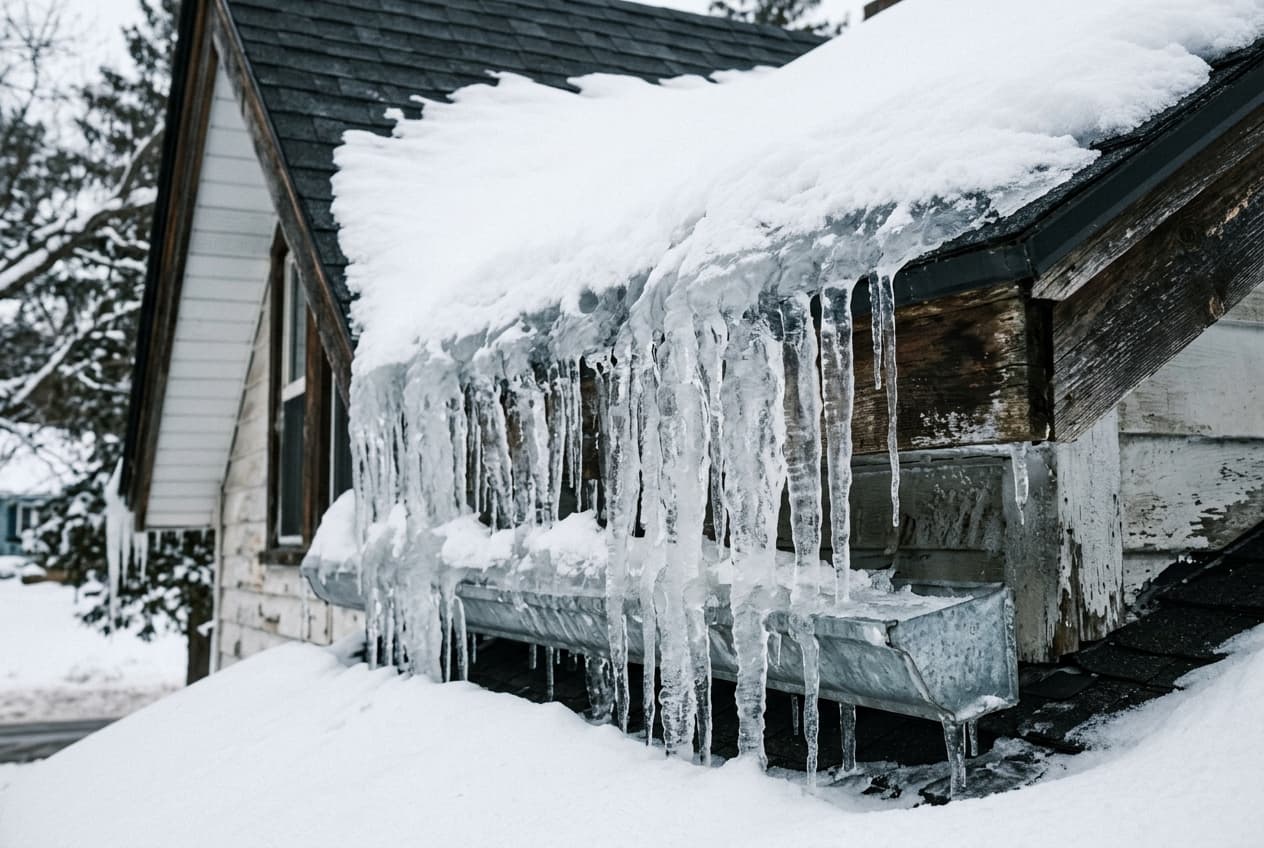
Ice dams are the signature New England roof claim. A warm attic melts snow on the upper roof; the melt-water runs down to the cold eaves, refreezes into a ridge of ice, and the next round of melt-water pools behind that dam until it’s forced up under the shingles. From there it finds the ceilings. The pillar guide on how roof insurance claims work covers the broader process — this article is about the line that decides ice and snow claims specifically.
What ice and snow damage is usually covered?
These causes generally read as sudden and accidental, which is the test for coverage:
- Ice-dam water backup into the home. When melt-water is forced under the shingles and damages ceilings, walls, insulation, or flooring, that interior damage is commonly covered.
- Weight of ice and snow (structural). Sagging, cracked rafters, or collapse from a heavy snow load is a named peril on most standard policies.
- Sudden roof damage during the event. Shingles, flashing, or gutters torn or bent by ice movement and heavy accumulation.
- Reasonable emergency mitigation. Many policies reimburse the cost of stopping further covered damage once a leak has started — including emergency ice-dam removal. Keep every receipt.
If your ceiling stained after a hard freeze-thaw stretch, you may well have a covered claim — and the same documentation habits that work after a windstorm apply here. Because ice-dam leaks are easily mistaken for a worn-out roof, it’s worth reading how insurers decide whether a roof leak is covered alongside this.
What’s usually not covered?
The exclusions tend to cluster at the cosmetic and the preventable:
- Cosmetic-only staining. A faint mark with no real damage behind it may not clear your deductible or may fall under a cosmetic exclusion.
- Gradual or long-term moisture. Damage that built up over several winters, rather than from one event, reads as wear.
- Maintenance-related damage. If the insurer can tie the ice dam to clogged gutters, a roof in poor condition, or obvious neglect, they can argue it was preventable.
- Mold and rot from an old leak. The gradual-damage exclusion again — which is why a winter leak isn’t something to leave until spring.
The maintenance grey area
Ice dams sit on a fault line in insurance: they’re caused by a weather event, but they’re also influenced by things a homeowner can manage — attic insulation, ventilation, and clean gutters. That gives insurers room to argue an ice dam was foreseeable and therefore partly a maintenance issue rather than a pure accident.
You don’t need to win that argument in the abstract — that’s between you, your adjuster, and your agent. What helps is showing the damage came from a real freeze-thaw event and that the roof was maintained. Records of past inspections and gutter cleaning, plus clear photos of the dam and the interior damage, keep the claim anchored to a covered cause. If a claim does get turned down on a maintenance theory, our piece on why roof claims get denied and what your options are covers what comes next.
And because ice dams are as much a roof-and-attic problem as an insurance one, it’s worth understanding the damage itself — our Assess article on whether ice dams mean you need a new roof and our overview of the signs of roof storm damage both help you read what you’re seeing.
“After a bad freeze-thaw week we see a lot of stained ceilings. The claims that go smoothly are the ones where the homeowner photographed the ice dam and the interior damage right away and could show the roof and gutters were kept up. The ones that stall are where it sat for a month and the line between storm and wear got blurry.”
Global Roofing field team — Massachusetts in-home estimates
Hit by a winter leak?
Our Post-Storm Checklist works just as well for ice and snow — it walks you through photographing the dam, the leak, and the interior damage, and logging the date, so the cause is captured while it’s clear.
Get the Post-Storm ChecklistWhat to do after an ice-dam leak
- Stop the water safely. Catch drips, move belongings, and have an ice dam professionally removed if it’s actively causing damage. Don’t climb an icy roof. Keep mitigation receipts.
- Photograph the dam and the damage. The ice at the eaves, the interior staining, and the date — before anything melts or gets cleaned up.
- Don’t wait for spring. A winter leak left alone drifts from “sudden” toward “gradual” in an insurer’s eyes, and the damage only grows.
- Call your agent. Ask how your policy treats ice-dam water damage and mitigation costs, and how your deductible applies, before deciding whether to file.
Frequently asked questions
Does homeowners insurance cover ice dam damage?
Most New England policies cover water damage from ice dams forcing melt-water under the shingles and into the home — it’s treated as a sudden loss. Cosmetic staining alone and damage tied to poor maintenance are commonly excluded. Confirm with your agent how your policy applies.
Does insurance cover roof damage from the weight of snow?
Generally yes — sudden structural damage from the weight of ice and snow, like sagging or collapse, is a covered peril on most standard policies. Gradual sagging or damage to a roof already in poor condition is harder to claim.
Why would an ice dam claim be denied?
Usually because the damage is judged cosmetic only, tied to a maintenance issue, or attributed to an already-worn roof. Documentation linking the damage to a specific freeze-thaw event helps keep the claim on covered ground.
Does insurance pay to remove an ice dam?
Many policies reimburse reasonable steps to prevent further covered damage, which can include emergency removal once a leak has started — keep the receipts. Routine removal before any damage has occurred is usually treated as maintenance.
How we wrote this guide
This article explains how homeowners policies generally treat ice dam and snow-load damage; it is not a coverage determination for your home. It was researched against Insurance Information Institute guidance and Massachusetts Division of Insurance consumer materials, and reviewed for accuracy by a licensed Massachusetts roofing contractor on the Global Roofing team. For how your specific policy applies, talk to your insurer or agent. See our full editorial process for how we research and update every article.