

Key Takeaways
- Insurance covers a roof leak based on what caused it, not the leak itself. A sudden, accidental cause is usually covered; age or neglect usually isn’t.
- Wind, a falling tree, hail, and ice forcing water under the shingles are typical covered causes. A roof that simply wore out and started leaking is typically excluded.
- The water-damaged ceiling or drywall inside is often covered when the leak’s cause was a covered event — even in cases where part of the roof is debated.
- The fastest way to know where you stand is to have the cause identified, then ask your agent how your policy applies. This article explains how the line is drawn — your insurer decides your specific claim.
Does homeowners insurance cover a roof leak?
A homeowners policy covers a roof leak when the leak was caused by a sudden and accidental event the policy names — and it doesn’t when the leak was caused by age, wear, or a problem that was left to get worse. The leak itself isn’t what the insurer judges. They look behind it, at the cause, and that cause decides the claim.
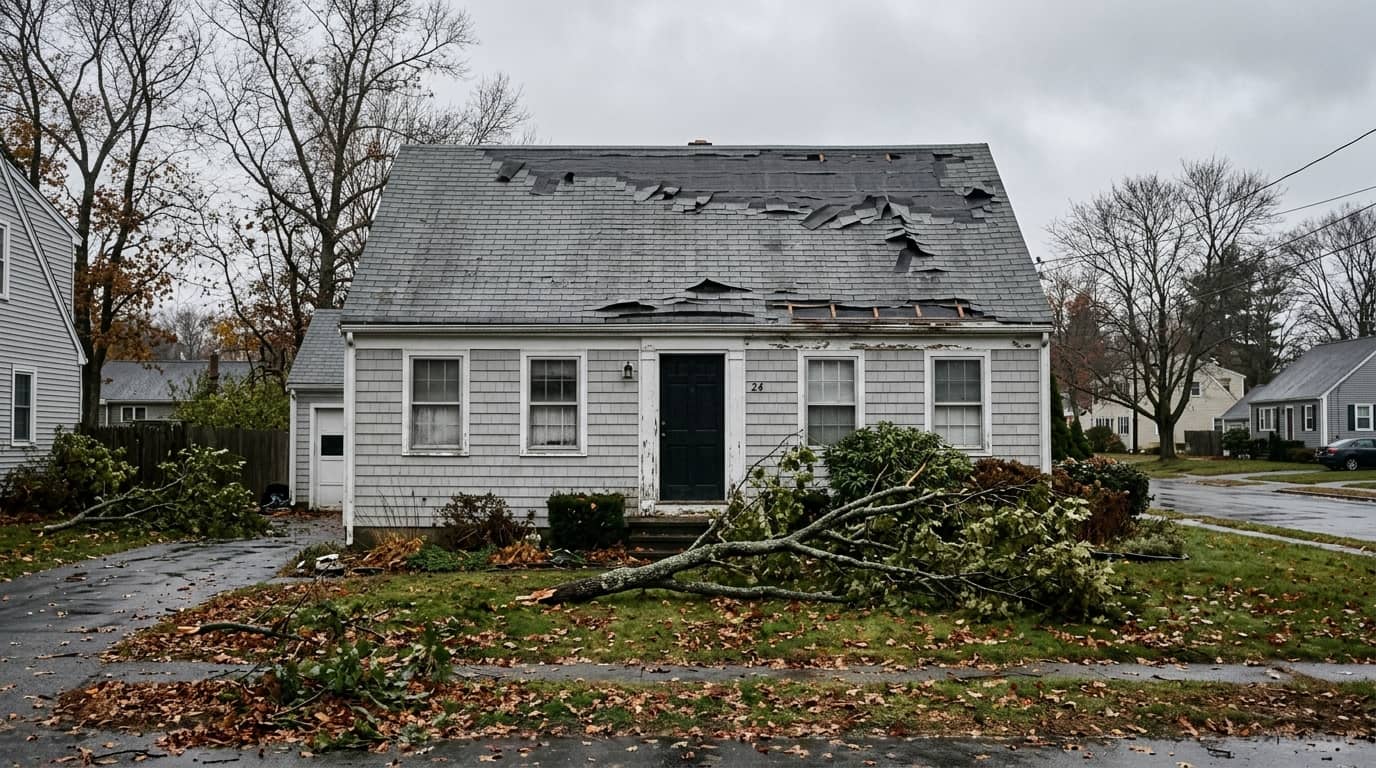
That’s why two homes with the same wet ceiling can get two different answers. A branch punched through one roof in a windstorm last week; the other has been quietly losing granules for fifteen years until the deck finally gave up. The first is a covered loss. The second reads to an insurer as deferred maintenance — the homeowner’s responsibility, not the policy’s. The pillar guide on how roof insurance claims work walks through the full process; this article focuses on the one question that decides leak claims first.
When is a roof leak usually covered?
These are the causes insurers generally treat as sudden and accidental — the kind tied to a date you can point to:
- Wind damage. A storm lifts, creases, or tears off shingles, and water gets in through the gap. Wind is one of the most common covered roof causes in New England.
- Impact from a falling tree or branch. Including damage to the decking and framing underneath, not just the shingles.
- Hail. Bruised or fractured shingles that let water through — often invisible from the ground.
- Weight of ice and snow, and ice-dam backup. When ice forces melt-water up under the shingles, or accumulation causes structural damage. (This one has a maintenance grey area worth understanding on its own — see below.)
- Fire, lightning, and vandalism. Less common on roofs, but covered causes when they happen.
In each of these, the leak is the symptom and the event is the cause. If your leak started right after a storm you can name, you likely have a claim worth documenting. A leak that traces to ice has its own rules — we cover those in whether insurance covers ice dam and snow-load damage.
When is a roof leak usually not covered?
Policies are built to cover accidents, not upkeep. These causes generally fall outside coverage:
- Age and normal wear. Shingles reach the end of their service life, lose their seal, and start letting water in. That’s expected deterioration, not a sudden loss.
- Lack of maintenance. Clogged gutters, failed sealant around a vent, a flashing problem that was visible for years — insurers view these as preventable.
- Long-term leaks. A slow leak that caused mold, rot, or staining over months tends to be excluded, because the damage was gradual rather than sudden.
- Pre-existing damage. If the carrier can show the damage was there before the event — or before the policy — they can deny on that basis.
- Animal or insect damage. Squirrels, woodpeckers, and carpenter bees aren’t covered causes.
Age is the one that confuses people most, because an old roof can still have a covered storm claim — it’s just more likely to be settled on a depreciated basis. We unpack that in whether insurance covers an old roof. And if your claim has already been turned down, the reason usually falls into the list above — our piece on why roof claims get denied and what your options are explains what comes next.
“Homeowners call us about ‘the leak.’ The insurer never asks about the leak — they ask what caused it. Our job at the inspection is to trace the water back to its source and document whether that source is storm damage or just a roof that’s reached the end. That one finding usually decides the whole claim.”
Global Roofing field team — Massachusetts in-home estimates
What about the water damage inside the house?
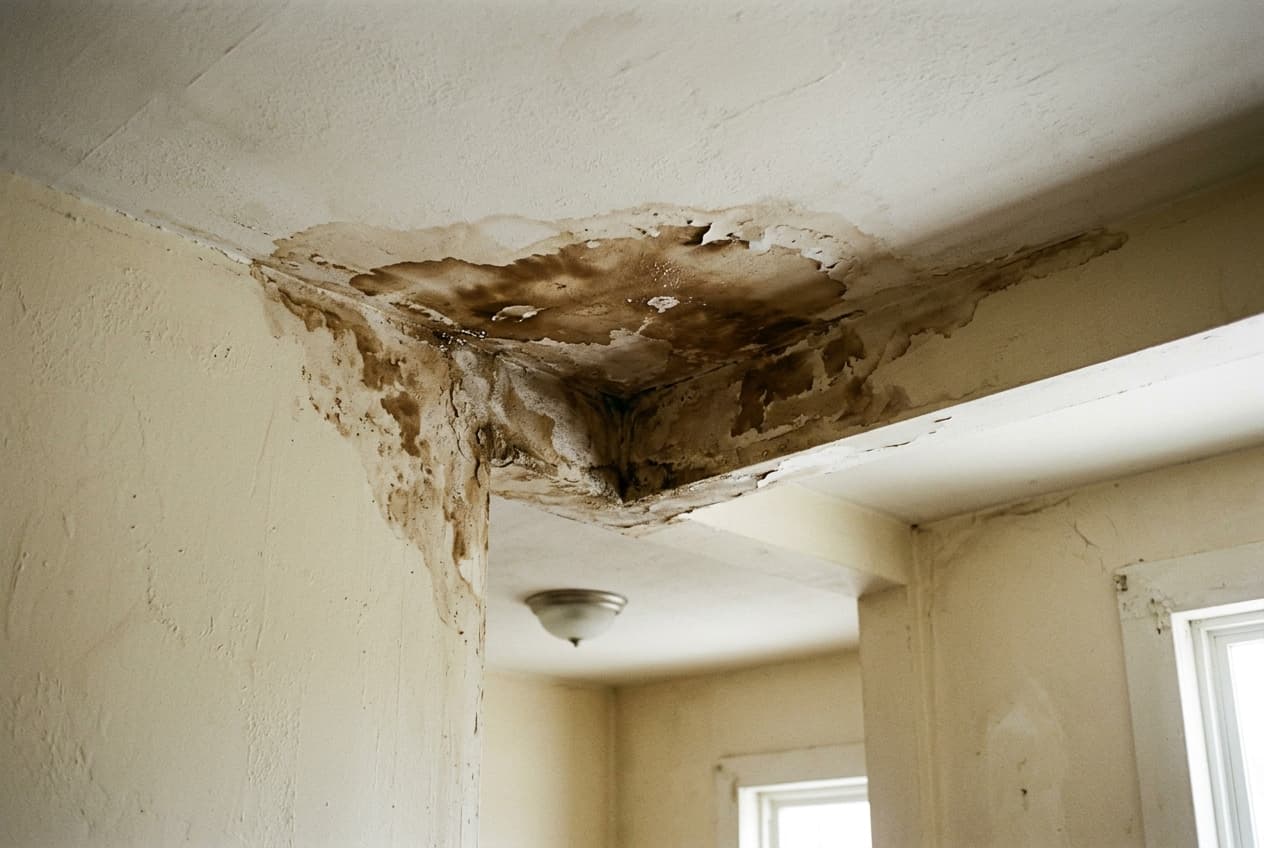
The water-stained ceiling, the ruined drywall, the warped floor below — this interior damage is usually treated as resulting damage. If the leak’s cause was a covered event, many policies will pay to repair the inside even in situations where the scope on the roof itself is being debated. The logic is that the interior damage flowed from a covered loss.
The big exception is the long-term leak. Once water has been getting in for months and has grown mold or rotted framing, insurers lean on the gradual-damage exclusion, and the interior claim gets harder. That’s one practical reason not to sit on a leak: beyond the damage itself, waiting can move a loss from “sudden” toward “gradual” in an insurer’s eyes.
Document the leak the right way
Our Post-Storm Checklist walks you through photographing the damage, logging the date it started, and saving the records an adjuster looks for — so the cause of your leak is captured while it’s still clear.
Get the Post-Storm ChecklistWhat to do when you find a roof leak
Whether or not the leak turns out to be covered, the first moves are the same — and they protect both your home and any claim you might file:
- Stop the damage from spreading. Catch water, move belongings, and tarp the area if you safely can from inside. Insurers expect reasonable steps to limit damage, and they reimburse reasonable mitigation costs on a covered claim — keep the receipts.
- Document everything. Photograph the interior damage, note the date and the weather, and build the documentation an adjuster needs before anything gets cleaned up or repaired.
- Get the cause identified. A licensed roofer can trace the leak to its source and tell you whether it reads as storm damage or wear — the finding that decides coverage. Avoid making permanent repairs before that’s documented.
- Call your agent. Ask how your policy treats the cause you’re looking at, and how your deductible would apply, before you decide whether to file.
Notice what’s not on that list: deciding the claim yourself. Whether a specific leak is covered, and whether filing makes sense, are questions for your insurer and agent — this article explains how the line is drawn, not how your policy will land.
Frequently asked questions
Does homeowners insurance cover a roof leak?
It depends on the cause. A leak from a sudden, accidental event the policy names — wind, a falling branch, hail, ice forcing water under the shingles — is usually covered. A leak from age, wear, or a neglected problem usually isn’t. Insurers judge the cause behind the leak, not the leak itself.
Will insurance cover a roof leak from an old roof?
Age alone doesn’t void coverage, but it matters. An old roof damaged by a storm may still have a claim, though it’s more likely to settle on a depreciated (actual cash value) basis. A roof that simply wore out and began leaking reads as normal deterioration, which policies exclude.
Does insurance cover the ceiling damaged by a roof leak?
Often, when the leak’s cause was covered. Interior water damage is generally treated as resulting damage from the covered loss. Long-term leaks that caused mold or rot over time are usually excluded as gradual damage.
Should I file a claim for a small roof leak?
That’s a call for you and your agent. Get the cause identified first, then ask how your deductible and policy would apply. Either way, stop further damage and save your documentation.
How we wrote this guide
This article explains how homeowners policies generally treat roof leaks; it is not a coverage determination for your home. It was researched against guidance from the Insurance Information Institute and the Massachusetts Division of Insurance and reviewed for accuracy by a licensed Massachusetts roofing contractor on the Global Roofing team. For how your specific policy applies, talk to your insurer or agent. See our full editorial process for how we research and update every article.
Sources
- Insurance Information Institute — what homeowners insurance covers and the sudden-vs-gradual distinction. iii.org
- Massachusetts Division of Insurance — homeowners coverage and consumer guidance. mass.gov
- National Roofing Contractors Association — roof leak causes and inspection best practices. nrca.net