
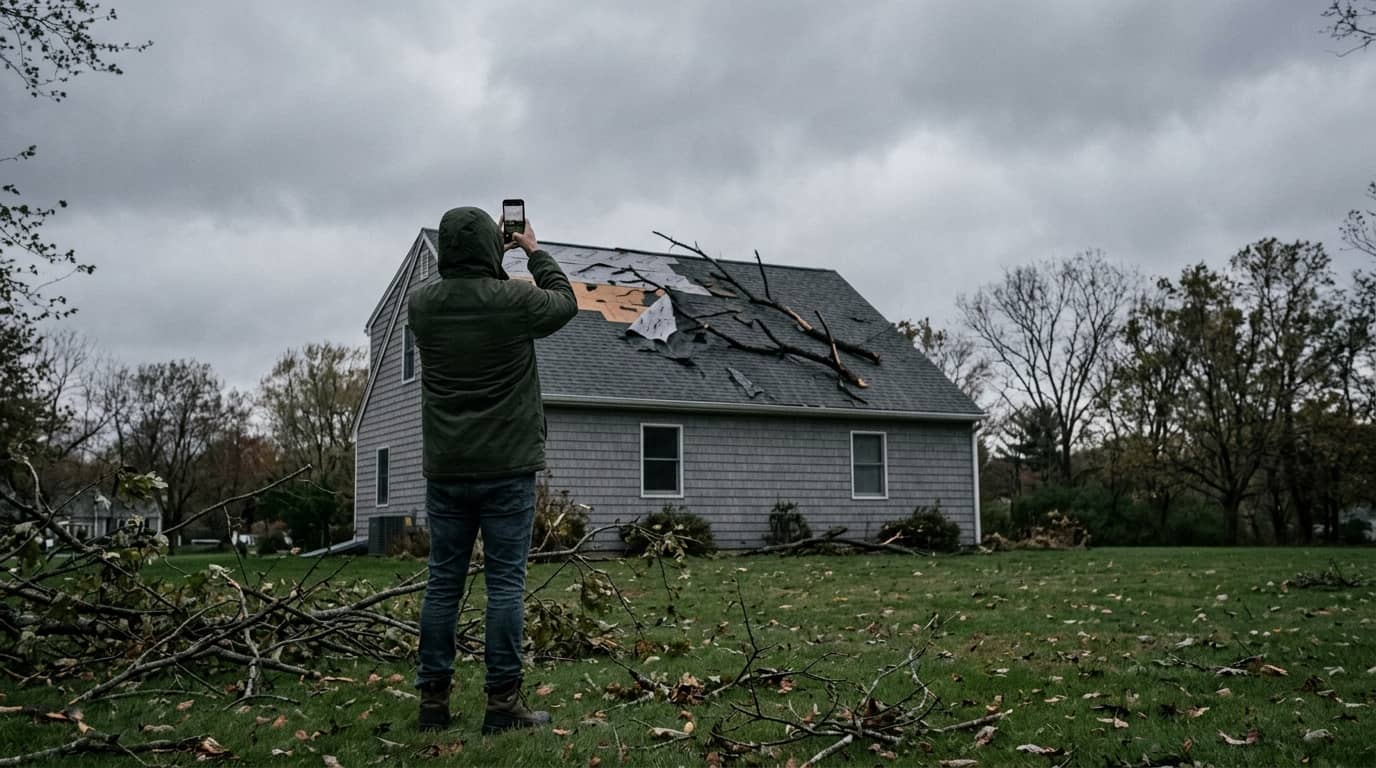

Key Takeaways
- Documentation is what ties damage to a covered event — it’s the difference between a paid claim and a denied one more often than anything else.
- Capture wide shots and close-ups, the date of loss, the weather that day, and any interior damage.
- Do it fast — within a day or two — so the damage reads as sudden, not gradual wear.
- Document from the ground. For the roof itself, let a licensed professional inspect safely. Never climb a wet or damaged roof.
Why documentation decides roof claims
Of all the things that swing a roof claim, documentation is the one entirely in your control — and it’s the cheapest. An insurer pays based on what it can connect to a covered event, on a date, with proof. Photos and records build that connection. Their absence is why so many real losses get questioned or denied as “wear” or “can’t tie it to the storm.”
Think of it as freezing the evidence in time. The day after a storm, the cause is obvious — fresh tears, a branch on the lawn, a wet ceiling. Weeks later, with the debris cleared and the roof dried out, that same damage is far easier for an insurer to chalk up to age. Good documentation keeps the story clear. This pairs with the broader roof insurance claims process — documentation is step one of nearly every claim.
What to photograph and record
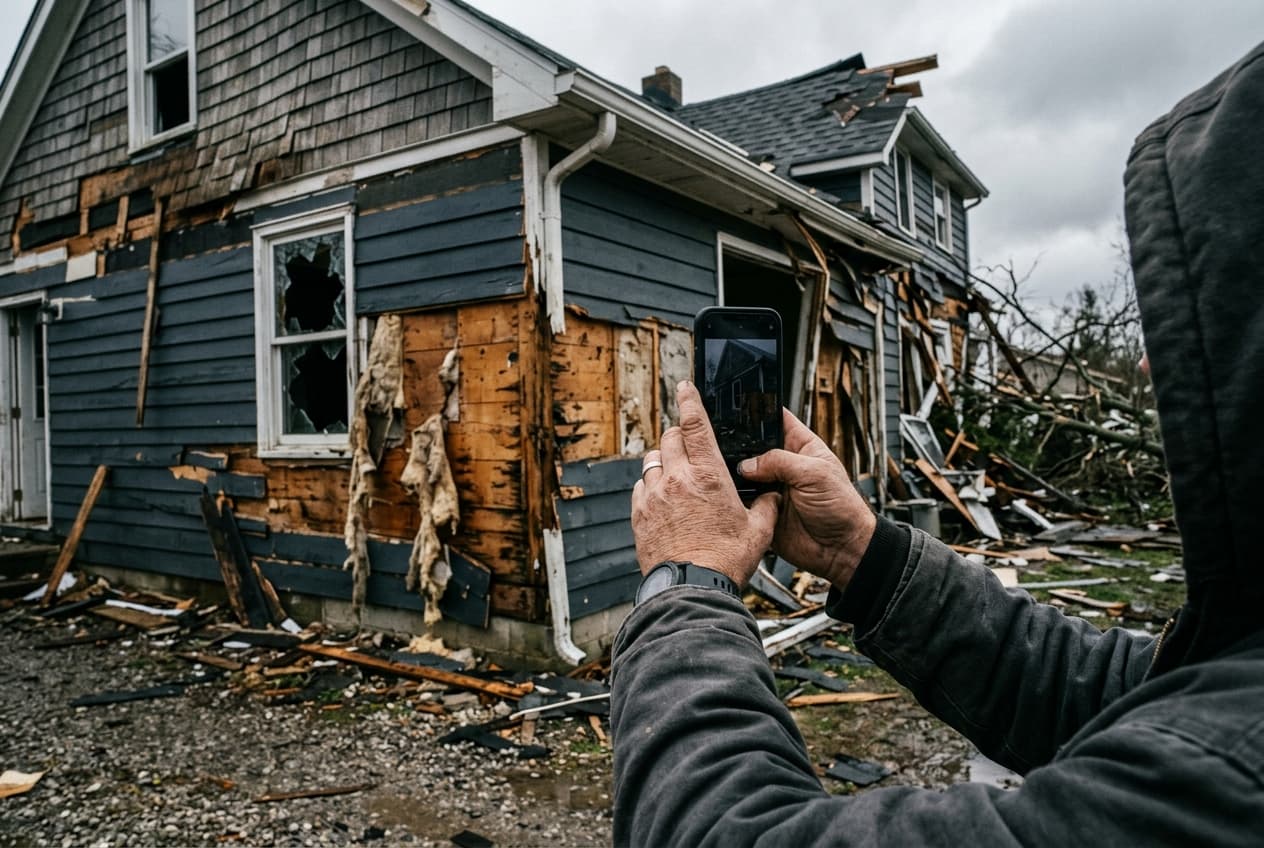
Aim for a mix of context and detail. A useful file usually includes:
- Wide shots of the whole roof and house — from a few angles, showing where the damage sits.
- Close-ups of specific damage — missing or creased shingles, dented gutters, torn flashing. Use zoom from the ground rather than climbing.
- Anything on the ground from the event — fallen branches, shingles in the yard, granules washed into gutters or downspouts.
- Surrounding context — a downed tree, neighbors’ damage, debris — that corroborates the storm.
- The date on every photo. Most phones timestamp automatically; confirm yours does, since the date is doing real work here.
- Receipts for emergency repairs — tarps, board-up, ice-dam removal. Reasonable mitigation is generally reimbursable on a covered claim.
If you’re not sure what counts as damage, our Assess overview of what roof storm damage actually looks like helps you recognize it from the ground.
Nailing down the date of loss
Insurers anchor a claim to a date of loss — the day the damaging event happened. Getting this right matters, because the carrier checks the damage against the weather on that date. To pin it down:
- Note the specific date of the storm, not just “sometime last week.”
- Save weather records for that day — a screenshot of the forecast or a local news report covering the storm.
- If a named storm or a wind/hail event was in the news, save that coverage too.
This is also why speed matters. The longer you wait, the blurrier the date gets, and a vague timeline is one of the easiest reasons for a claim to stall — something we cover in why roof claims get denied. Ice and snow claims have the same need for a clear date — see how insurers treat ice dam and snow-load damage.
The printable version of this page
Our Post-Storm Checklist turns all of this into a simple, ground-level routine — what to photograph, what to write down, how to log the date of loss — in a format that holds up with an adjuster. Print it and keep it with your policy.
Get the Post-Storm ChecklistDon’t forget the inside
Roof damage doesn’t stop at the roof. If water got in, the interior damage is often part of the claim — and it needs its own documentation:
- Ceiling and wall stains — photograph them as they appear and again if they spread, with dates.
- Attic moisture — wet insulation or staining on the underside of the deck, if you can see it safely.
- Damaged belongings — anything ruined by the water, which may be covered under your contents coverage.
Capturing the interior matters because that damage is usually treated as resulting from the covered roof loss — the connection we explain in whether insurance covers a roof leak.
“The homeowners with clean claims are the ones who photographed everything the next morning — the branches in the yard, the missing shingles, the stain starting on the ceiling — before they cleaned a thing. You can’t re-create that later. Once the yard’s cleared and the roof’s dry, the easiest story for an insurer to tell is ‘old roof.’”
Global Roofing field team — Massachusetts in-home estimates
Do it safely — from the ground
None of this is worth getting hurt over. A storm-damaged roof is often wet, slick, or structurally compromised, and a fall is far worse than any claim outcome. So:
- Stay on the ground. Use your phone’s zoom, shoot from upper windows, or step back across the street for angles.
- Let a professional inspect the roof itself. A licensed roofer can safely get up there — or send up a drone for a documented inspection — and capture damage you can’t see from below, identify the cause, and put it in a written report, the kind of documentation that strengthens a claim. It’s also part of why having a roofer at the adjuster’s inspection helps.
- Tarp, don’t repair. Stop active leaks if you safely can, but don’t make permanent repairs before the damage is documented and the adjuster has seen it — that erases the evidence.
Frequently asked questions
How do I document roof damage for an insurance claim?
Photograph from the ground with both wide shots and close-ups, capture the date of loss and the weather that day, photograph any interior damage, and save receipts for emergency repairs. Do it within a day or two, and don’t make permanent repairs before the damage is documented and seen by an adjuster.
Should I get on the roof to photograph damage?
No. Shoot from the ground with a zoom, from a window, or have a licensed professional inspect the roof itself. A wet or damaged roof is dangerous, and a fall is far worse than any claim.
How soon should I document roof damage after a storm?
As soon as it’s safe — ideally within a day or two. Quick documentation ties the damage to the storm and keeps it from being mistaken for gradual wear. Waiting weeks makes the link harder to prove.
Does a professional roof inspection help my claim?
Yes. A licensed roofer can safely inspect the roof, document damage you can’t see from the ground, identify the cause, and provide a written report and scope. That, alongside your own photos, gives an adjuster a clear, credible record.
How we wrote this guide
This article explains how to document roof damage for a claim; it is not a coverage determination for your home. It was researched against Insurance Information Institute claims guidance, Massachusetts Division of Insurance consumer materials, and National Roofing Contractors Association inspection practices, and reviewed for accuracy by a licensed Massachusetts roofing contractor on the Global Roofing team. See our full editorial process for how we research and update every article.