
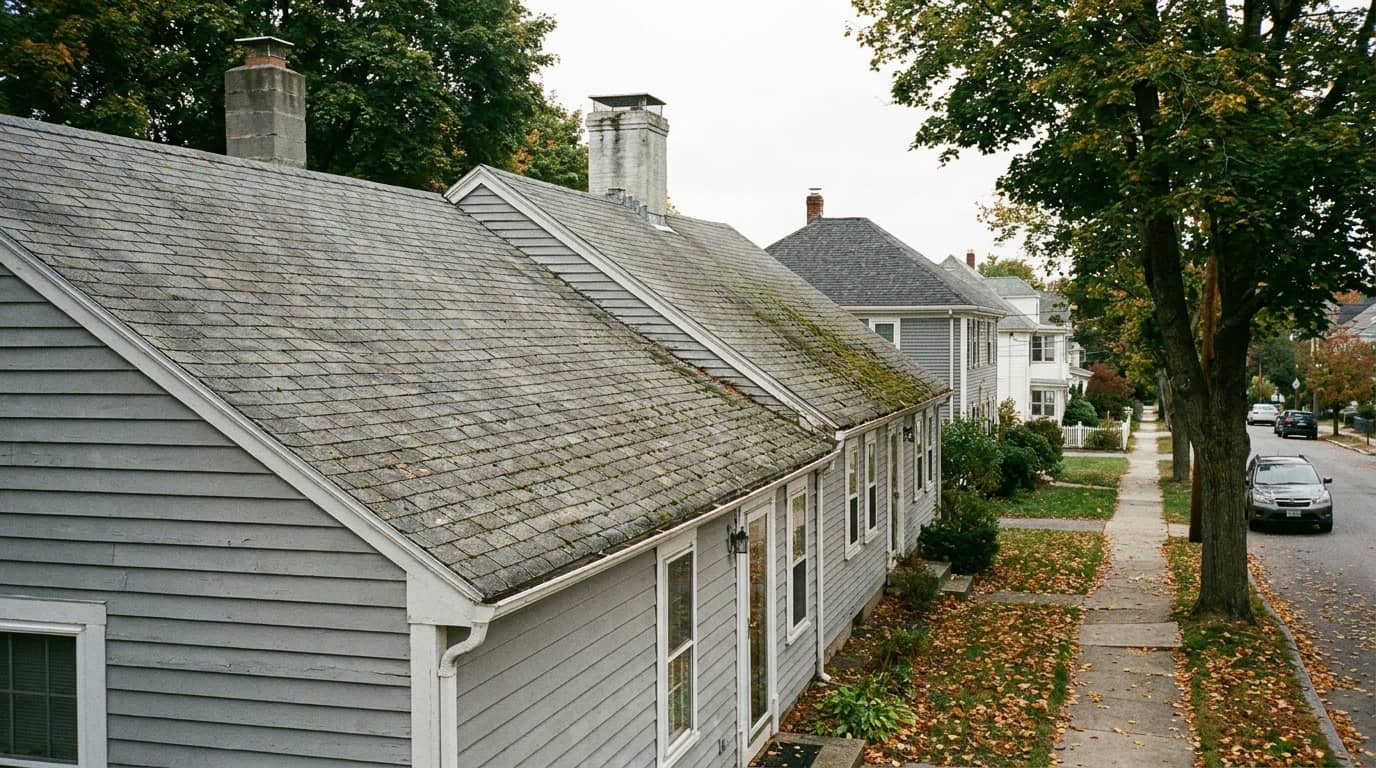

Key Takeaways
- Most homeowners who think they need a new roof actually need a repair. Age alone is not a reason to replace — condition is. Replacement makes sense when damage is widespread or the deck is compromised.
- The clearest replacement signs are visible from inside the attic: daylight through the boards, sagging deck, water stains across multiple rafters. From the ground, the clearest sign is widespread curling and granule loss across multiple slopes — not a single bad spot.
- Algae streaks, a missing shingle, a small leak around a vent, and moss in shaded patches are repair-or-clean problems — not replacement triggers. A reputable roofer will tell you so.
- In Massachusetts, real-world asphalt shingle life runs 3 to 5 years shorter than the manufacturer rating because of freeze-thaw cycles, ice dams, and nor’easter exposure. Poor attic ventilation can cut that life in half.
- Use the 30% rule for the financial decision: if a repair estimate is more than 30% of a full replacement, replacing usually saves money over the next 10 years.
Do I actually need a new roof, or is someone trying to sell me one?
The honest answer most homeowners do not hear: probably not. Most of the people who type “do I need a new roof” into a search bar are responding to one of three things — a single visible problem (a missing shingle, a stain on a ceiling), a storm that just blew through, or a salesperson who knocked on the door and said the roof looks bad. None of those, by themselves, mean replacement.
A new roof is a $15,000 to $40,000 decision in Massachusetts. It deserves a real diagnosis, not a sales pitch. There are signs that mean replacement, signs that mean a repair under $1,000, and signs that mean absolutely nothing. The rest of this guide walks through all three, in plain language, so you can tell which one you are looking at before you call anyone.
We will say up front: in an industry where cutting corners is common, “you need a full replacement” is the easiest sales line in roofing. If a contractor reaches that conclusion in under 15 minutes, without going in your attic, treat the diagnosis the same way you would treat a doctor who recommends surgery without an exam.
How long should my roof last?
The first question to answer is age. Different materials have different real-world lifespans, and the “watch closely” window starts well before the roof actually needs to come off. The numbers below reflect Massachusetts and New England conditions specifically — they are slightly shorter than the manufacturer ratings you will see in marketing material.
| Material | Typical lifespan (MA) | Watch closely | Likely replace |
|---|---|---|---|
| 3-tab asphalt | 15–20 years | 12+ years | 18+ years |
| Architectural asphalt | 22–28 years | 20+ years | 25+ years |
| Cedar shakes | 30–40 years | 25+ years | 35+ years |
| Standing-seam metal | 40–70 years | 35+ years | 50+ years |
| Slate | 75–100+ years | 60+ years | 80+ years |
Two things shift these numbers more than anything else. The first is attic ventilation. A poorly vented attic traps heat and moisture against the underside of the deck, which can cut an architectural shingle roof from 25 years to under 12. If your home is from before the 1990s and no one has touched the ventilation, that is the single biggest factor on this list. The second is whether the original roof was installed correctly — full ice and water shield, drip edge, new flashing versus reused. A roof installed cheap usually fails 5 to 10 years early. For asphalt specifically — the roof on most Massachusetts homes — we go deeper on how long an asphalt shingle roof really lasts in New England and what stretches or shortens that number.
If your roof is in the “watch closely” window, that does not mean it has failed. It means a yearly inspection from the ground (or from the attic) is worth doing, and you should start budgeting for replacement so you are not making the decision under emergency pressure when a leak appears. If you want to put a number on it, here’s how to estimate your roof’s remaining life.
What signs actually mean I need a full replacement?
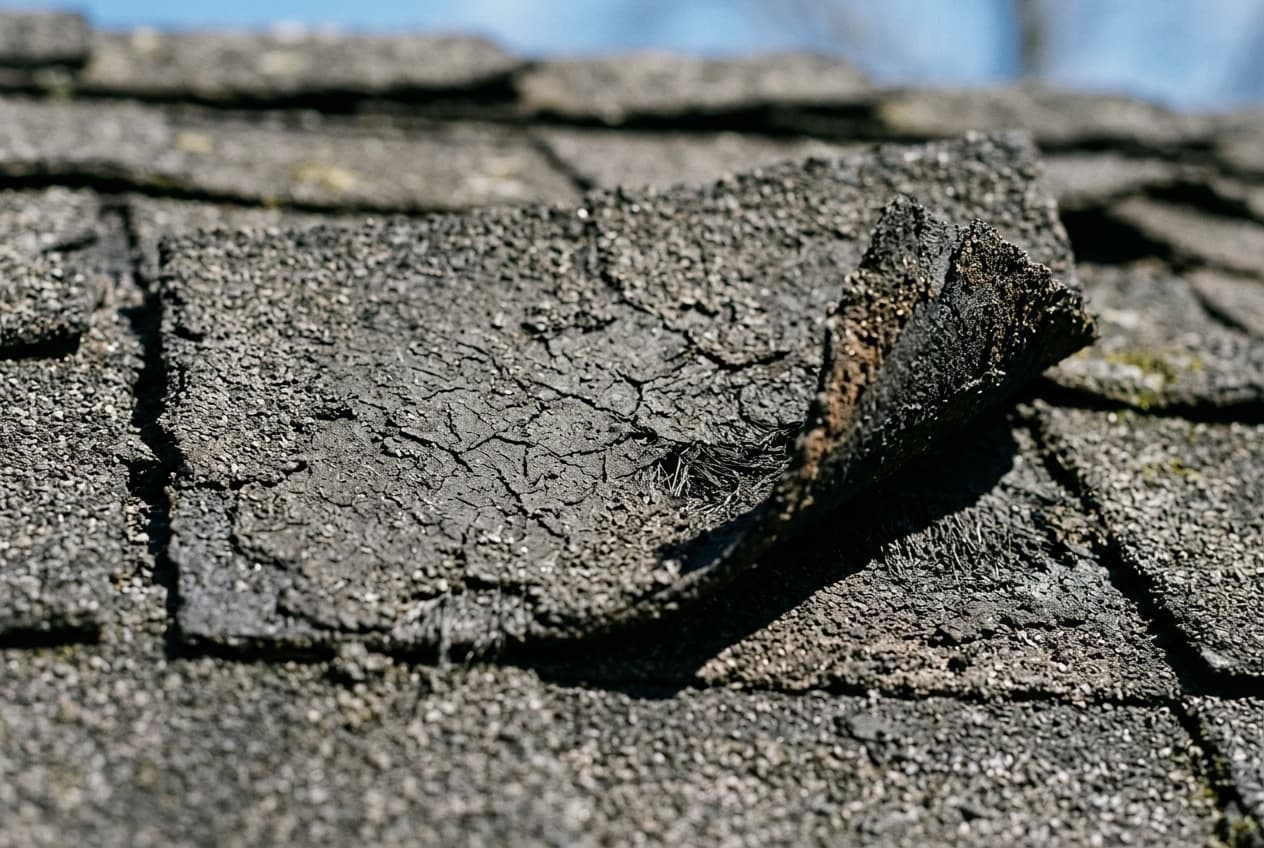
These are the signs that, when present, point to replacement rather than repair. They share a common feature: they are widespread (not isolated to one spot) or they involve the structural deck underneath the shingles.
- Widespread curling shingles. Two patterns to look for. “Cupping” means the edges turn up and the center stays flat. “Clawing” means the center rises and the edges stay flat. Either pattern across multiple slopes means the asphalt has lost its flexibility and the roof is at end of life. A few curled shingles in one area is repairable; curling everywhere you look is not.
- Bald patches and heavy granule loss. The colored granules on asphalt shingles are the UV protection. When you can see large areas of black asphalt mat exposed, or when coarse black sand is piling up at every downspout, the shingles have 1 to 3 years of useful life left.
- Daylight visible through the roof boards from inside the attic. Go up with a flashlight on a bright day, turn the flashlight off, and look at the underside of the deck. If you see pinholes of daylight, the roof has failed at the deck level. This is urgent.
- Sagging or bowing roof deck. Step back across the street and look at the ridge line and the planes. They should be straight. A visible dip, wave, or sag means the deck is compromised — usually from long-term water intrusion that has rotted the plywood. This is the most urgent sign on this list.
- Multiple active leaks in different parts of the house. One leak around a chimney is a flashing repair. Stains showing up in three different rooms, on different sides of the house, after the same rainstorm means the roof is failing in multiple places at once.
- Cracked or broken shingles across the roof. Cracking from age (not impact) usually appears as long hairline splits running with the grain of the shingle. When you see it on multiple slopes, the asphalt is brittle and the next big wind event will start tearing pieces off.
- The roof is past the “likely replace” age in the table above and shows any of the signs above. Age alone is not a trigger. Age plus visible deterioration is.
For a closer look at each of these end-of-life signs — what they mean and how serious each one is — see the visible signs your roof needs replacing. If your worry started with a leak, we cover whether a leak really means a new roof, and after a big blow, what roof storm damage looks like.
“The single most reliable sign that a roof needs to come off is what we see in the attic, not on the surface. A roof that looks tired from the ground but has a dry, well-vented attic underneath usually has years left. A roof that looks fine from the ground but has water-staining across multiple rafters and soft decking has already failed — the homeowner just hasn’t seen the leak yet.”
Global Roofing field team — from inspections across the South Shore and MetroWest
What signs mean a repair is enough?
These are the signs that, with a competent repair, do not require replacement. Most are isolated to a single area or a single component (flashing, vent boot, one valley) rather than affecting the roof system as a whole.
- A few missing shingles after a wind event. Common after nor’easters. A roofer can replace 1 to 10 shingles for a few hundred dollars. The match will not be perfect on a sun-aged roof, but it will be watertight.
- A leak traced to one identifiable point. Usually a vent pipe boot (the rubber collar around plumbing vents — these crack with age), a chimney flashing seam, or a single nail pop. Replacing one pipe boot is a $200–$500 job. It is not a reason to replace 30 squares of shingles.
- Granule loss in one small area. Often under a tree branch that has been brushing the roof, or downstream of a metal valley where runoff erodes the granules. Repair the cause (trim the branch, address the valley) and patch the affected area.
- Storm damage on one slope. When a tree limb lands on a single section, that section needs repair or partial reroof. The undamaged slopes usually do not.
- Damage isolated to flashing. Step flashing around a chimney, sidewall flashing where a dormer meets the main roof, valley flashing — these can be replaced without taking up the surrounding shingles.
- Roof under 10 years old with localized damage. If the roof is young and otherwise in good shape, repair and move on. Do not let anyone talk you into replacing a 6-year-old roof because of one bad spot.
Take the 2-minute Roof Assessment
Answer 6 questions about what you can see from the ground and from your attic. We will give you an honest read on whether you are looking at a replacement, a repair, or something to monitor. No phone number required to see the result.
Open the Roof Assessment ToolWhat signs mean nothing — even though they look bad?
These are the things that send homeowners into a panic and make door-knocking salespeople very effective. Almost none of them mean the roof is failing.
- Dark streaks on north-facing slopes. This is algae, technically Gloeocapsa magma. It is cosmetic. The shingles underneath are usually fine. A roof-safe soft wash removes it; zinc or copper strips at the ridge prevent it from coming back. Ignore anyone who points to algae as a reason to replace.
- A small amount of moss in a shaded patch. Treatable. Trim back the trees that cause the shade, apply a moss treatment, and install zinc strips. Only when moss has been growing under the shingles for years (lifting the edges and trapping moisture) does it become a real problem.
- A few granules in your gutters. Normal — especially in the first 12 months after a new roof and after every big storm. A handful of granules is not a sign of failure. Coarse piles at every downspout are.
- Slight color variation between shingles. Asphalt shingles are made in batches and the color can vary slightly. Sun exposure also fades them at different rates depending on slope orientation. Cosmetic.
- Lichen spots on cedar or asphalt. Visually ugly, hard to remove, but rarely a structural threat. They can be treated; replacement is not necessary because of lichen alone.
- One displaced or lifted shingle tab on an otherwise healthy roof. A roofer can re-seal it with roofing cement in 5 minutes. This does not cost anything close to a new roof.
The bigger version of this worry is age itself — plenty of homeowners assume an older roof has to go even when nothing is actually wrong with it. It usually doesn’t: whether you need to replace an old roof that isn’t damaged walks through when age really matters and when it doesn’t.
What does New England weather change about my roof’s lifespan?
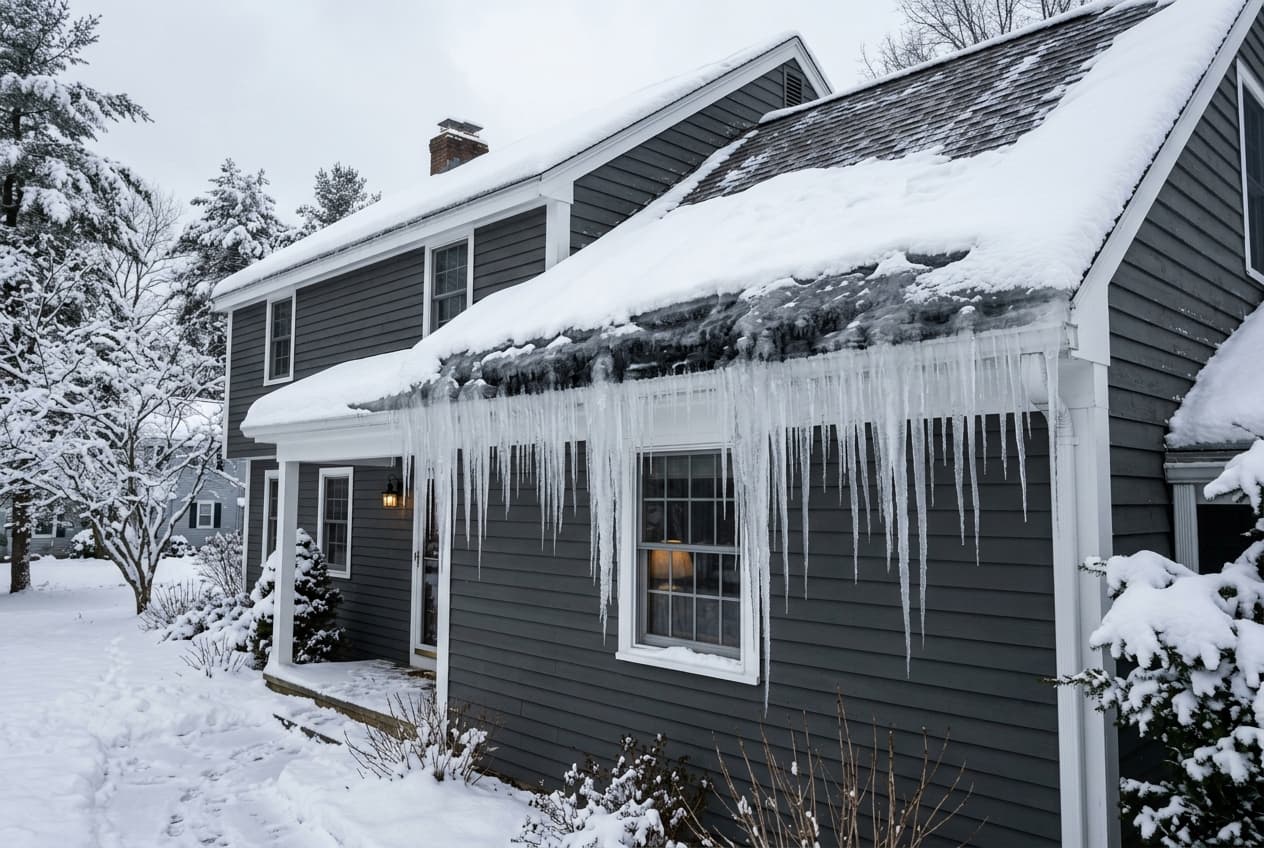
Massachusetts and New England roofs deal with conditions that most national averages do not capture. The four that matter most:
Ice dams
An ice dam forms when heat escaping through a poorly insulated attic melts snow on the upper roof, the meltwater runs down to the cold eaves, and refreezes there. The ridge of ice that builds up traps the next round of meltwater behind it, and that trapped water backs up under the shingles and into the deck, insulation, and walls. Even when air temperatures stay well below freezing, sun on a snow-covered roof plus heat loss from the attic can keep the cycle going. Signs of past ice dam damage: water stains on upper-floor ceilings near exterior walls, peeling paint at the eaves, buckled shingles along the lower edge, and rotted fascia boards. The fix is attic ventilation and air sealing — not a new roof, unless the ice dam history has destroyed the deck. We go deeper on whether ice dams mean you need a new roof and how to actually stop them.
Freeze-thaw cycles
Boston averages 80–100 freeze-thaw cycles per winter. Water works its way into hairline cracks in shingles, freezes, expands, widens the crack, thaws, and the cycle repeats. This is why asphalt shingle roofs in Massachusetts age faster than the same product installed in Virginia. It also hits gutters and flashing — which is why MA roofs typically need new flashing during replacement, not reused.
Nor’easter wind and snow loads
A late-season nor’easter dropping wet snow on a roof already loaded with dry powder can put real stress on the structure. Watch for doors that suddenly stick, visible sagging in the ridge, or new cracking sounds during a storm. When snow accumulation passes 2 feet, a roof rake (used from the ground) is worth doing for safety.
Coastal salt air
South Shore and Cape homes sit in salt-air conditions that corrode metal flashing, fasteners, and vents faster than inland homes. Cedar shakes also weather faster near the coast. If you are on the coast, the lifespans in the table above run on the lower end of the range.
How do I decide between repair and replacement financially?
The simplest test is the 30% rule. Get a written repair estimate and compare it to a written replacement estimate. If the repair is more than 30% of the cost of replacement, replacement is usually the better long-term call. Below 30%, repair almost always wins.
The reason: a $4,000 repair on a 22-year-old roof gets you maybe 3 more years before you face the replacement decision anyway, at which point you have spent $4,000 you cannot recover. A $1,500 repair on a 12-year-old roof gets you another 10–15 years of useful life — that math works.
There is one exception: if you are planning to sell the house in the next 1–2 years and the roof is visibly worn but not actively failing, repairs are usually the better call even at higher percentages. A new roof rarely returns 100% of its cost at sale (the 2024 Cost vs. Value Report puts the return for an asphalt replacement at roughly 56% nationally), so spending $25,000 to recover $14,000 at closing is a poor trade.
Still weighing it? Our walk-through of how to decide between repairing and replacing makes the call by condition, not just cost.
“We turn down replacement work every week. Someone calls worried about a stain on the ceiling, we go up, find a cracked vent boot, charge them $350 to fix it, and tell them the rest of the roof is in good shape. That is the job. Selling a $28,000 replacement to someone who needs a $350 repair is how the industry got its bad reputation.”
Global Roofing field team — on the most common service call we run
When is a professional inspection worth paying for?
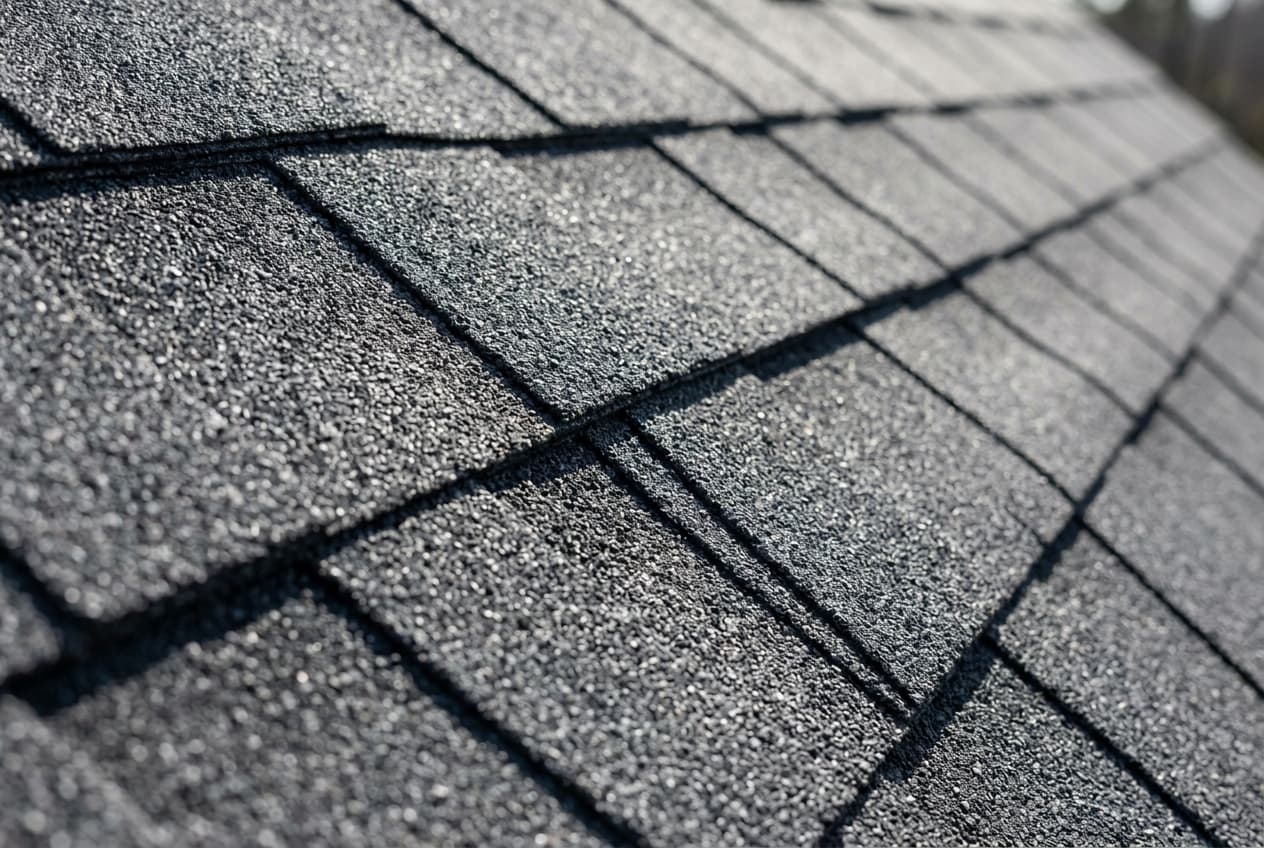
A reputable roofer in Massachusetts will inspect for free if you are considering work. Paid inspections are typically only worth it in three specific cases.
- You are buying a home. A roof inspection is separate from a general home inspection and can save you tens of thousands. Pay for an independent roofer (one not bidding on the work) to give you a written condition report. Expect to pay $200–$500.
- You have an active insurance claim. The adjuster will do their own inspection, but having a contractor walk the roof first means you know whether the claim has merit and what to argue for.
- You are at the “watch closely” age and want a baseline. A documented inspection at year 15 or 20 of an asphalt roof gives you a written record of condition and a timeline for budgeting. Useful for planning.
For everyone else, a free assessment from a contractor with good reviews gets you the same information. The catch: you need to pick a contractor who is willing to tell you the roof is fine. The free 360-degree drone inspection some contractors offer is a real upgrade over a ladder-only walk — it documents conditions on slopes that are hard to access and creates the photo record you would want for an insurance claim or for a second opinion.
Frequently asked questions
How do I know if my roof needs to be replaced or just repaired?
Replacement is the right call when damage is widespread (curling or missing shingles across multiple slopes), when you can see daylight through the roof boards from inside the attic, when the deck sags, or when the roof is past the typical lifespan for its material. Repair is enough when damage is isolated to one area, the rest of the roof is in good shape, and the underlying deck is sound. Use the 30% rule for the financial test: if a repair costs more than 30% of a full replacement, replacing usually saves money over the next 10 years.
How long does an asphalt shingle roof last in Massachusetts?
An architectural asphalt shingle roof in Massachusetts typically lasts 22–28 years — slightly less than the 25–30 year manufacturer rating because of freeze-thaw cycles, ice dams, and nor’easter exposure. A 3-tab shingle roof usually lasts 15–20 years. Poor attic ventilation can cut either lifespan in half.
Are dark streaks on my roof a sign I need a new one?
Almost never. The dark streaks running down north-facing slopes are algae, and they are cosmetic. The shingles underneath are usually structurally fine. A soft wash with a roof-safe cleaner removes the streaks; installing zinc or copper strips at the ridge prevents them from coming back. Algae on a 5-year-old roof does not mean the roof is failing.
Can I get a new roof when the old one is only 15 years old?
You can, but you usually shouldn’t unless there is real damage. A 15-year-old architectural shingle roof in good condition has another 7–13 years of useful life. The exception: if the roof is leaking, if there is widespread curling or granule loss, or if a storm caused significant damage that an insurance claim covers. Age alone is not a reason to replace.
What does granule loss look like and when is it a problem?
Granules are the colored sand-sized particles bonded to the surface of asphalt shingles. A small amount in your gutters is normal — especially in the first year after a new roof and after big storms. A problem looks like coarse black sand piling up at every downspout, plus visible bare patches on the roof itself where the black asphalt mat shows through. Widespread granule loss usually means the roof is in its last 2–3 years.
Do I need to replace my roof if it has one missing shingle?
No. A single missing shingle on an otherwise healthy roof is a repair, not a replacement. Most roofers can match a replacement shingle close enough that the patch is hard to spot, and the cost is usually under $400. Get the repair done quickly though — the exposed area can leak in the next storm.
Will insurance pay for a new roof if mine is just old?
No. Homeowners insurance covers sudden, accidental damage — wind, hail, fallen trees, fire — not gradual wear. A 25-year-old roof failing because of age is the homeowner’s responsibility. The exception is when a covered storm event accelerates failure on a roof that was previously functional; in that case, insurance usually pays for the storm damage portion, sometimes the full replacement depending on the policy and adjuster findings.
How we wrote this guide
This guide was researched against National Roofing Contractors Association (NRCA) installation and inspection guidance, manufacturer warranty and lifespan documentation from CertainTeed and Owens Corning, the Massachusetts State Building Code (780 CMR), and Remodeling Magazine’s 2024 Cost vs. Value Report for the replacement-vs-repair financial framing. It was reviewed for technical accuracy by a licensed Massachusetts roofing contractor on the Global Roofing team. See our full editorial process for how we research, write, and update every guide.
Sources
- National Roofing Contractors Association — residential roof inspection and lifespan guidance. nrca.net
- Massachusetts State Building Code, 780 CMR — ice and water shield, ventilation, and roofing requirements. mass.gov
- Remodeling Magazine 2024 Cost vs. Value Report — national and regional benchmarks for asphalt shingle roof replacement resale value. remodeling.hw.net
- CertainTeed Landmark architectural shingle product specifications and warranty terms. certainteed.com
- CertainTeed Landmark shingle warranty and lifespan documentation. certainteed.com