

Key Takeaways
- Quotes look different because they represent different value — better or cheaper materials, a complete system or a partial one, a skilled in-house crew or day labor — not just different prices.
- Compare what each quote actually gives you: the materials and their warranty tier, the completeness of the roofing system, the quality of the crew, the warranties, and the company behind the work.
- A quote that won’t name the shingle, describe the ventilation plan, or put the warranties in writing isn’t really a quote — it’s a sales document.
- Three quotes is the standard. The lowest is almost never the best value, and the most expensive isn’t either. Weigh value first, then price.
- Eliminate anyone who demands more than 50% upfront, won’t show proof of insurance, or quotes without inspecting the roof in person.
Why do roofing quotes look so different?
You called three reputable roofers, walked them through the same project, and got back three quotes that look nothing alike. One is a single number on a one-page document. One is a short proposal. One is a 4-page packet with material spec sheets. The prices are wildly different.
This is normal. It’s also the reason most homeowners pick the wrong contractor.
Roofing quotes look different because they represent different roofs — different materials, a different scope, and a different crew behind them — not just different prices. One contractor specs a premium architectural shingle, synthetic underlayment, and new flashing throughout. Another quotes the bare minimum and reuses what they can. One includes ventilation, cleanup, and the permit; another leaves them off and adds them later. Until you can see what each price actually buys, comparing the numbers is meaningless.
The good news: once you know what creates the value in a roof, the comparison gets simple. For a closer look at what a complete quote should spell out, see what should be included in a roofing estimate. And if you’re staring at two numbers that look nothing alike, we break down why two quotes for the same roof come back so different.
What are you actually comparing?
A roof isn’t a commodity. Two quotes for “a new roof” can buy genuinely different things. These are the five places the real value lives — and where the difference between quotes actually comes from.
1. The materials and the complete system
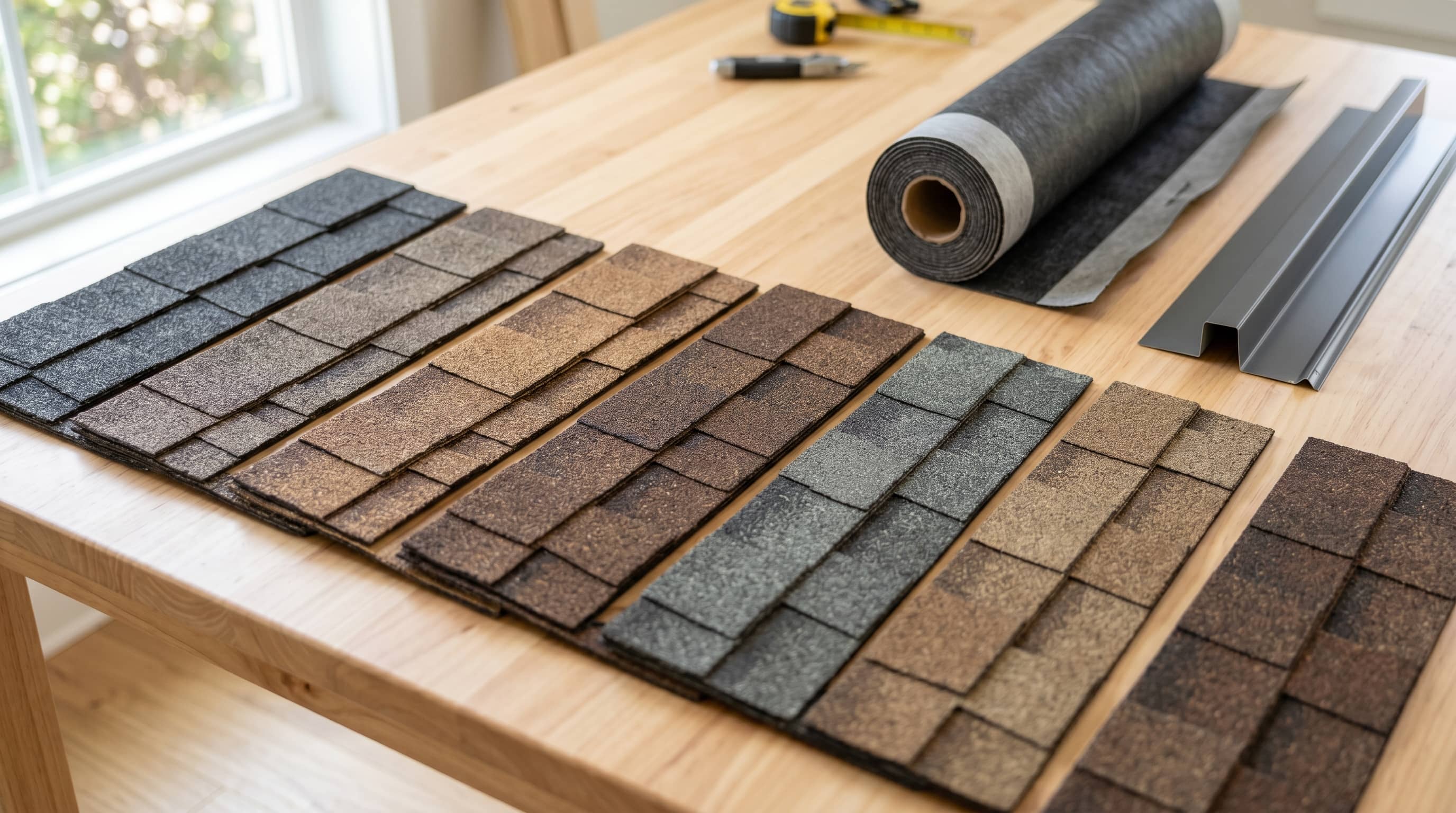
A roof is a layered system, not just the shingles you see. A quote worth comparing describes all of it: the shingles by manufacturer and product line (not just “architectural shingles”), synthetic underlayment, ice-and-water shield, new flashing and drip edge, fresh pipe boots, and a balanced ventilation system. The cheaper quote often gets to its number by leaving parts of this out — felt instead of synthetic, old flashing reused, no ventilation upgrade. That’s not a lower price for the same roof; it’s a smaller roof.
2. The workmanship and the crew
The best materials only perform if they’re installed correctly, and this is where the biggest quality gap hides — because you can’t see it on paper. Find out whether the company runs its own crews or subcontracts the labor, how experienced that crew is, and whether the company holds manufacturer certifications (CertainTeed SELECT ShingleMaster, Owens Corning Platinum). Those credentials take training and a clean track record to earn — and they unlock better warranties.
3. The warranties
There are two kinds, and the difference is real money. A manufacturer warranty covers the materials; a workmanship warranty covers the installation and is only as good as the contractor’s longevity. Certified installers can offer enhanced, manufacturer-backed warranties that cover both material and labor. A quote’s warranty depth is part of what you’re paying for — the full breakdown is in the warranty section below.
4. The company behind it
You’re hiring a company as much as buying a roof. Compare the license and insurance (workers’ compensation and general liability), how long they’ve been in business, whether they have a real local office, and recent references from work in your area. A workmanship warranty from a contractor who won’t be around in five years isn’t worth much. It’s worth knowing exactly which licenses and insurance a Massachusetts roofer should hold — and the honest tradeoffs in choosing a local contractor versus a national roofing company.
5. The scope details that should be spelled out
Beyond the materials, a complete quote describes the work around them: tear-off and disposal of the old roof, how rotted decking will be handled if it’s found during tear-off, the building permit (pulled by the contractor), property protection for your landscaping and AC unit, and a full cleanup with a magnetic nail sweep. None of these are extras — leaving them off the quote is exactly how they turn into surprise costs later.
Line up your quotes side by side
Our Quote Comparison Tool helps you see what each quote actually includes — the materials, the scope, and the warranties — so you can spot the gaps and ask better questions. Free, no signup required.
Open the Quote Comparison ToolHow to compare quotes the right way

Once you have three quotes, here’s how to actually compare them — by value, not by price tag:
- List what each quote gives you. For each contractor, note the materials and warranty tier, how complete the system is, the crew and any certifications, the warranties, and the company’s credentials.
- Find the gaps. If one quote specs synthetic underlayment and another specs felt, that’s not a price difference — it’s a value difference. The same goes for reused flashing, a skipped ventilation upgrade, or a thinner warranty.
- Level the field. Ask the lighter quotes to match the materials and scope — same shingle tier, synthetic underlayment, new flashing, a real ventilation plan — so you’re comparing the same roof.
- Now weigh price against value. Once the roofs match, the price difference reflects what you’re actually paying for: crew quality, warranty depth, manufacturer certifications, and the company’s track record.
- Don’t pick on price alone. The cheapest of three matched quotes isn’t automatically the right call. Certifications, references, warranty depth, and how the contractor communicated through the process are all part of the value.
“The contractors cutting corners are the ones who won’t tell you exactly what’s going on your roof. A real quote takes time to put together and spells out the materials, the system, and the warranty. If someone hands you a one-line price after a 15-minute look, that’s a sales pitch, not a bid.”
Global Roofing field team — based on thousands of MA estimates
Red flags that should eliminate a contractor

Some red flags are dealbreakers — meaning you should stop considering that contractor entirely, regardless of price. The short list:
- A price with nothing behind it. No named materials, no scope, no warranty terms. You can’t tell what you’re getting, can’t compare it to another quote, and have no recourse if they upcharge mid-project.
- No mention of permits. Permits are legally required in Massachusetts. A contractor planning to skip the permit is also planning to skip an inspection.
- No proof of insurance. Workers’ compensation AND general liability — both. If a worker gets hurt on your property and the contractor doesn’t have workers’ comp, the claim can come back to you.
- Demanding more than 50% upfront. 10–30% is standard for material ordering. Anything more is either a cash-flow problem or worse.
- “I’ll call my manager” pricing games. Theatrical discounts (“normally $30,000, but if you sign today...”) are sales tricks, not honest pricing.
- No physical roof inspection before quoting. A satellite-only quote is a guess. Find the rotted decking later, double the price.
- Unusually low price (30%+ below the others). The contractor is either planning to cut corners on materials or to upcharge you for “unforeseen” work mid-project. There’s no third option — more on whether you should ever hire the cheapest roofer.
- Vague material descriptions. “Premium shingles” isn’t a spec. “CertainTeed Landmark Pro” is.
- No mention of ventilation. Either they’re planning to ignore it (which voids the warranty) or they’re going to spring the cost on you later.
Questions to ask every contractor
Ask each contractor the same questions. Their answers — and how they answer — tell you a lot about the value behind the price. For the deeper version, with how to read the answers you get back, see our full guide to the questions to ask a roofing contractor before hiring.
About the company
- Are you licensed and insured in Massachusetts? Can I see proof of workers’ comp and general liability?
- How long have you been in business? Where’s your physical office?
- Are you manufacturer-certified (CertainTeed SELECT ShingleMaster, Owens Corning Platinum, etc.)?
- Can you give me 5–10 recent local references — projects done in the last 12 months?
- Do you use your own crews or subcontract the labor?
About the work and materials
- Walk me through exactly what’s going on my roof, start to finish.
- What brand, product line, and warranty tier of shingles?
- Where is the ice & water shield being installed, and how much coverage?
- What underlayment — synthetic or felt?
- Are you replacing all flashing, or reusing any?
- What’s the ventilation plan — intake and exhaust?
- If you find rotted decking during tear-off, is replacing it included, and how do you handle the cost?
- Is the building permit included? Will you pull it in your name?
- What’s your cleanup process? Magnetic nail sweep included?
About warranties
- What’s your workmanship warranty — duration and what’s covered?
- What manufacturer warranty tier am I getting?
- Is an enhanced (manufacturer-backed) warranty available? What does it cost extra?
- What voids the warranty?
Understanding warranty types
Roofing warranties confuse almost everyone. Here’s what each one actually covers.
| Warranty type | What it covers | Duration | Honored by |
|---|---|---|---|
| Manufacturer material | Material defects only — premature shingle failure, delamination, etc. Does not cover labor. | 25–50 years (most architectural shingles are 30 years). Often prorated after 10–15 years. | The manufacturer |
| Workmanship (contractor) | Installation errors — leaks, flashing failures, fastener problems caused by how the roof was installed. | 1–10+ years. Reputable contractors offer 10 years or more. | The contractor — only as reliable as their longevity. |
| Enhanced (manufacturer-backed) | Combines material + workmanship. Manufacturer pays full replacement cost (including labor) if there’s a failure. | Typically 50 years non-prorated material, 25 years workmanship. | The manufacturer (requires a certified installer and post-install registration). |
The big one to understand: a standard manufacturer warranty does not cover labor. If a shingle fails in year 12, the manufacturer will send you replacement shingles — but you’ll pay a contractor to install them. An enhanced warranty covers both material and labor, which is why it’s worth the modest upcharge if you plan to be in your home long-term.
Payment structures: what’s normal
There are two normal ways a Massachusetts roofing contractor structures payment:
Simple two-payment
- 10–30% deposit at signing (covers material ordering)
- Balance due at completion / final walkthrough
Milestone
- 10% at signing
- 30% on material delivery
- 30% at midpoint (typically tear-off and dry-in complete)
- 30% at completion / final walkthrough
Either is fine. What’s not fine:
- Anything over 50% upfront.
- 100% upfront. (We’ve seen this. Don’t do it. Once they have 100% of your money, your project competes with every other project for crew time.)
- Cash-only. Pay by check or credit card so there’s a paper trail.
- No final-walkthrough hold. Always hold 10–30% until you’ve walked the property and confirmed cleanup, that the magnetic nail sweep was done, and that any decking repairs match what was billed.
Massachusetts-specific notes
A few details that matter specifically for Massachusetts homeowners:
- Ice & water shield is code. 780 CMR requires coverage at least 24 inches past the line of the interior of the exterior wall. Many older homes have less than that — your new roof will need more.
- Permits are required. Every full replacement needs a permit pulled by the contractor. Fees vary by town ($100–$500 typical).
- Roofing season is short. April through November is the working window. Demand spikes in spring after winter damage, and again in late summer before the season closes. Booking ahead helps.
- Labor costs run higher. Roofing labor in Massachusetts averages roughly 15% above the national baseline.
- Material prices have moved. Asphalt shingle manufacturers raised prices 6–10% in 2025–2026. Steel and aluminum components (drip edge, flashing) have been hit harder by tariff-driven increases. Quotes more than 60 days old should be re-confirmed — here’s how long a roofing quote stays good for and why a re-quote isn’t a bait-and-switch.
Frequently asked questions
How many roofing quotes should I get?
Three is the standard. Two doesn’t give you enough range to spot an outlier; four or more usually doesn’t change the picture and starts to waste contractor and homeowner time. The point isn’t volume — it’s getting three quotes you can compare on equal footing, where each one describes the materials, the scope, and the warranties behind the price.
What should a roofing quote describe in Massachusetts?
The company (license, insurance, and warranties), the materials by brand and product line, and the full scope of work — tear-off, synthetic underlayment, ice-and-water shield (24 inches past the exterior wall per 780 CMR), new flashing and drip edge, fresh pipe boots, a balanced ventilation plan, a contractor-pulled permit, and cleanup — plus both warranties and a payment schedule.
Is the lowest roofing quote usually the best deal?
Almost never. A quote 30% below the others usually means lighter value — cheaper underlayment, reused flashing, no ventilation upgrade, a thinner warranty, or a plan to upcharge you for decking repairs they already expect to find. Compare the value each quote represents before you compare price.
How much deposit should a roofer ask for?
10–30% at signing is normal — that covers material ordering. Anything over 50% upfront is a red flag. Hold 10–30% until the final walkthrough.
What’s the difference between a manufacturer warranty and a workmanship warranty?
The manufacturer warranty covers the materials (defects, premature failure) for 25–50 years and is honored by the manufacturer. The workmanship warranty covers installation errors and is honored by the contractor — which means it’s only as good as the contractor’s longevity. Reputable contractors offer 10+ years on workmanship; some manufacturer-certified installers can offer enhanced warranties that combine both.
Do I need a permit for a roof replacement in Massachusetts?
Yes. Every full roof replacement in Massachusetts requires a building permit pulled from your local building department. Permit fees typically run $100–$500. A reputable contractor pulls the permit (it should be in their name, not yours) and includes the fee in the quote.
How we wrote this guide
This guide was researched against Massachusetts Building Code (780 CMR), manufacturer documentation from CertainTeed and Owens Corning, and Remodeling Magazine’s 2024 Cost vs. Value Report. It was reviewed for technical accuracy by a licensed Massachusetts roofing contractor on the Global Roofing team. See our full editorial process for how we research, write, and update every guide.
Sources
- Massachusetts State Building Code, 780 CMR — ice and water shield, drip edge, ventilation requirements. mass.gov
- National Roofing Contractors Association — installation best practices. nrca.net
- Remodeling Magazine 2024 Cost vs. Value Report — regional cost benchmarks for asphalt shingle roof replacement. remodeling.hw.net
- CertainTeed Landmark Pro product specifications and warranty terms. certainteed.com
- CertainTeed SureStart PLUS enhanced warranty terms. certainteed.com