

Key Takeaways
- A leak usually does not mean a full replacement. Most leaks trace to one fixable point, not a worn-out roof.
- The usual culprits are failed flashing, a cracked vent boot, a popped nail, a few missing shingles, or an ice dam — all repairs.
- It’s likely time to replace when leaks show up in several places at once, keep coming back after repairs, or appear on a roof that’s already worn out.
- Don’t panic, but don’t wait — even a small leak rots decking and feeds mold, turning a cheap fix into an expensive one.
Does a leak always mean a full replacement?
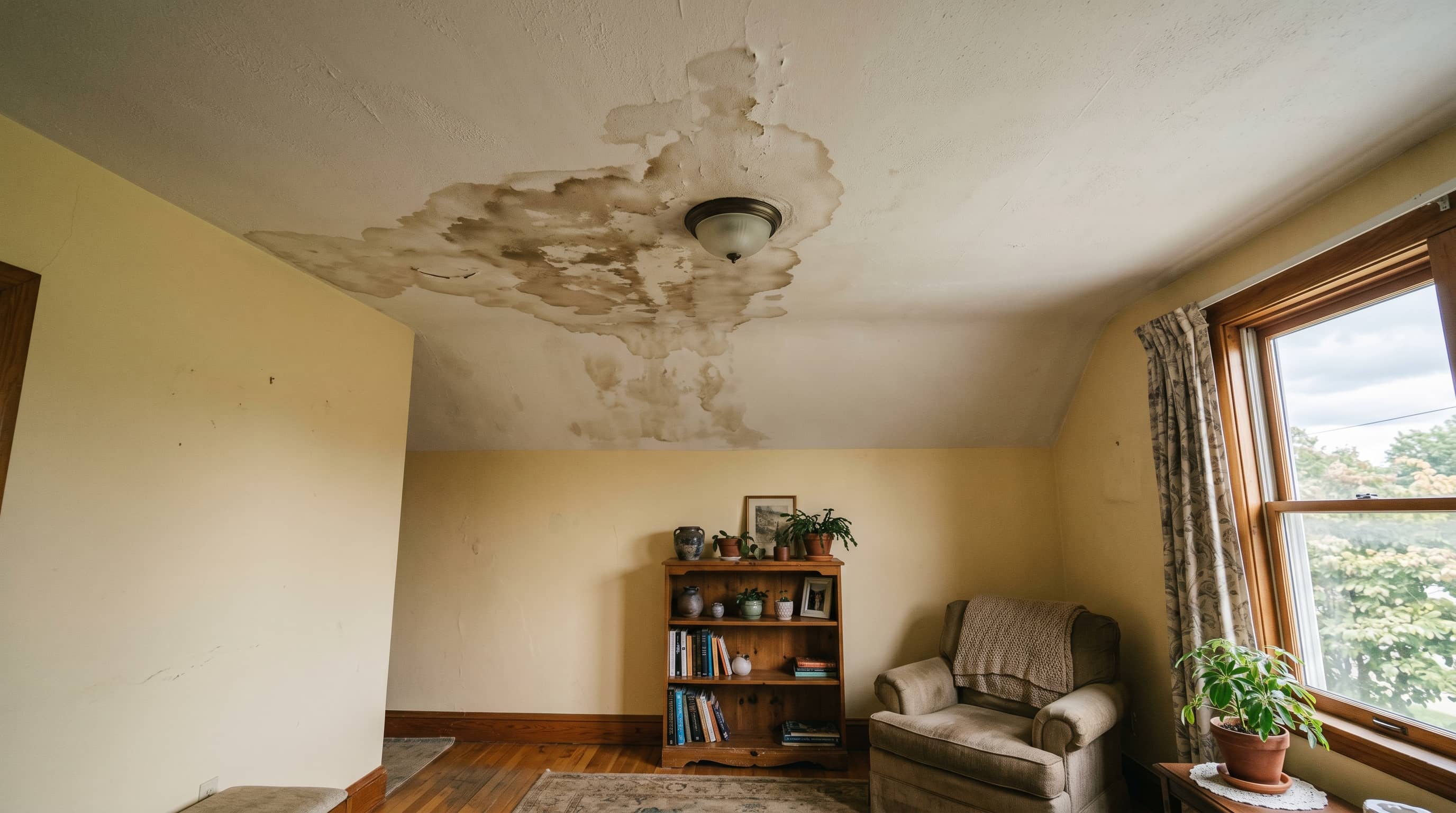
No. In most cases a roof leak does not mean you need a whole new roof. The large majority of leaks trace back to a single, fixable failure point — a spot where flashing has lifted, a vent boot has cracked, a nail has backed out, or a few shingles have blown off. Fix that one spot and the leak stops. A worn-out roof is the exception, not the rule, when a stain shows up on the ceiling.
The catch is finding the real source, because water travels. It enters at one point on the roof, runs down the underside of the deck or along a rafter, and drips through the ceiling somewhere else entirely — often feet away from where it got in. That’s why chasing the stain almost never works, and why pinning down the actual entry point is the whole job. Our guide on how to tell whether you need a new roof walks through how a single problem compares with a roof that’s genuinely at the end of its life.
What usually causes a roof leak?
Leaks tend to start at the joints and penetrations — the places where shingles alone can’t keep water out. The most common causes are all repairable:
- Failed flashing. Flashing is the metal that seals where the roof meets a chimney, a wall, a skylight, or a valley. When it lifts, corrodes, or pulls loose, water finds the gap. This is the single most common source of roof leaks.
- Cracked vent boots. The rubber collar around a plumbing vent pipe dries out and splits over time, letting water run straight down the pipe into the attic.
- Popped or backed-out nails. A nail that works its way loose leaves a small hole and lifts the shingle above it just enough to let water under.
- Missing or wind-blown shingles. A gust can tear off a handful of shingles, exposing the underlayment or deck at that spot.
- Ice dams. A New England classic — melt-water refreezes at the cold eaves, backs up under the shingles, and leaks into the wall or ceiling below.
- Clogged gutters. When water can’t drain, it pools at the eaves and works back under the lowest shingles.
One thing that often gets blamed on the roof isn’t a leak at all: attic condensation. A poorly ventilated attic can sweat in winter and drip onto the insulation, mimicking a leak even when the roof is sound. A good inspection rules that in or out before anyone touches a shingle.
Not sure if it’s one spot or the whole roof?
Our 2-minute Roof Condition Assessment takes your roof’s age and what you’re seeing and gives you a straight read — monitor, repair, or get it looked at.
Take the assessment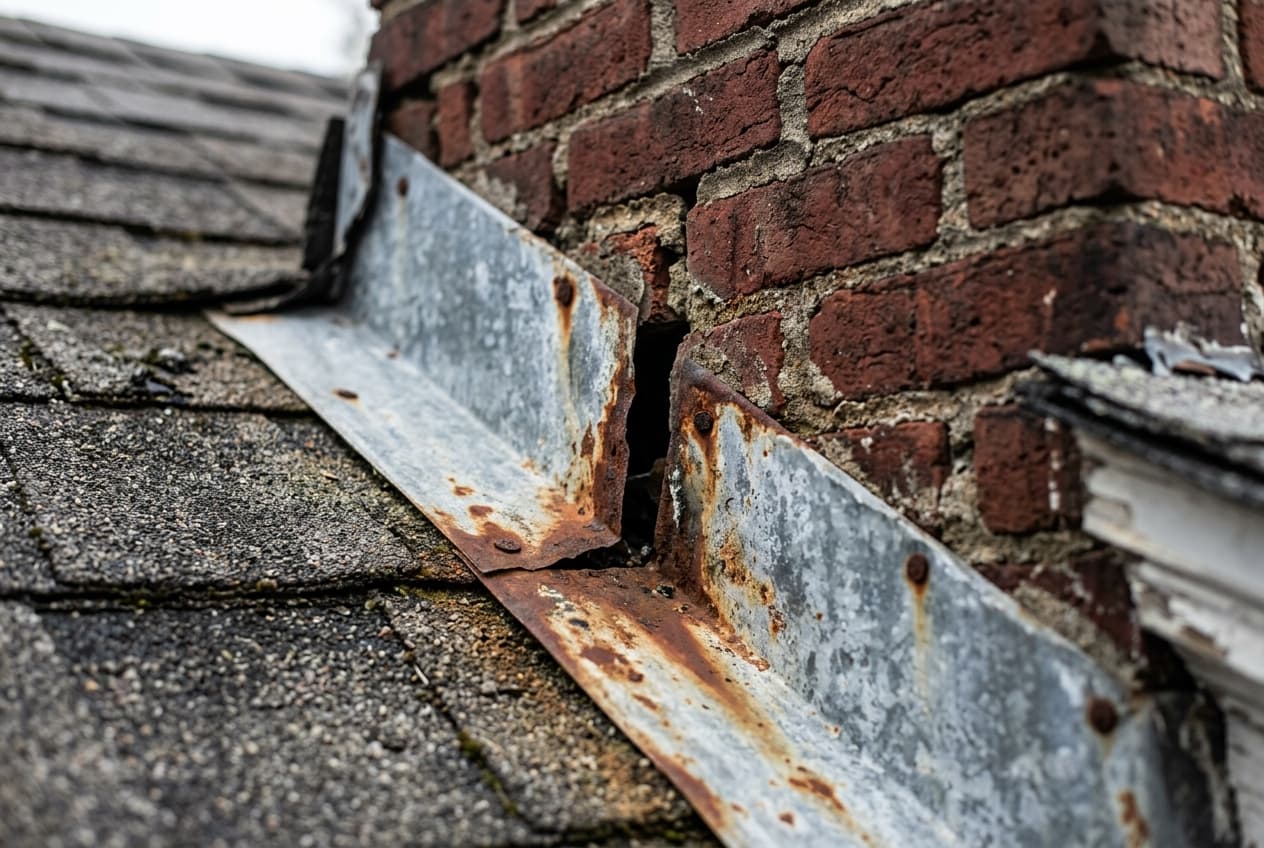
When does a leak mean it’s time to replace?
A leak tips from “repair” to “replace” when it’s a symptom of a roof that’s wearing out rather than a single fault. The signs that point that way usually show up together:
- Several leaks at once. Multiple drips appearing in the same season is rarely a coincidence — it usually means the whole roof surface is giving up.
- The same spot leaks again after a repair. When a proper fix doesn’t hold, the problem is broader than the patch.
- Leaks on different slopes. Water getting in on more than one face of the roof points to age and wear, not one bad joint.
- A roof already near or past its expected life with widespread wear — curling, bare patches, cracked shingles. On a 25-plus-year roof, a leak is often the last straw.
- A sagging or rotted deck. Soft, spongy decking or a visible dip means water has already done structural damage, and that’s a replacement conversation.
In other words, the leak itself isn’t the deciding factor — the condition of the roof around it is. Those visible signs of a worn-out roof are what separate a one-time fix from a roof that’s done. If you’re weighing the two, our breakdown of how to decide between repair and replacement lays out how to think it through.
“Homeowners see one stain and assume the worst. Most of the time it’s a five-foot stretch of flashing or a cracked vent boot — a morning’s work. The roof we actually replace is the one leaking in three places on a deck that’s already soft. The leak is the messenger, not the verdict.”
Global Roofing field team — Massachusetts in-home estimates
What happens if you ignore a roof leak?
A small leak rarely stays small. Once water gets past the shingles, it soaks the wood deck, wicks into the insulation, and feeds mold and rot in the framing — all out of sight until the damage is done. The ceiling below stains, sags, and eventually fails. A leak that would have been a quick flashing repair can turn into deck replacement and interior work if it’s left for a season or two. The honest takeaway isn’t to panic over a single stain — it’s to get a known leak looked at before the next storm rather than after.
If the leak started with a storm — a wind event that tore off shingles or drove water in — it may be an insurance matter rather than a routine repair. Whether a leak is covered comes down to what caused it; our guide to whether insurance covers a roof leak explains how insurers draw that line. How it plays out depends on your policy and the cause of the damage, so the right move is to document what you can and talk it through with a licensed roofer and your insurer — the roof insurance claims process can tell you whether it’s worth filing. A written estimate from a roofer gives you a clear total and a full description of the scope and materials to bring to that conversation.
Frequently asked questions
Does a roof leak always mean I need a new roof?
Usually not. Most leaks trace to one failure point — flashing, a vent boot, a popped nail, a few missing shingles — and those are repairs. A leak points to replacement mainly when the roof is already worn out, several spots leak at once, or the deck has rotted.
What is the most common cause of a roof leak?
Failed flashing — the metal that seals where the roof meets a chimney, wall, or valley. When it lifts or corrodes, water finds the gap. Cracked rubber vent boots and ice dams forcing water under the shingles are close behind.
Can a roof leak be repaired instead of replaced?
Often, yes. If the rest of the roof is sound and the leak has one identifiable source, a targeted repair usually solves it. Repair makes less sense when leaks keep coming back, appear on more than one slope, or show up on a roof that’s already worn out.
What happens if I ignore a small roof leak?
It rarely stays small. Water soaks the deck, wicks into insulation, and feeds mold while ceilings stain and weaken. A simple repair becomes a larger job once the deck rots — so a known leak is worth addressing before the next storm.
How we wrote this guide
This article reflects what Global Roofing sees diagnosing real leaks on Massachusetts and New England roofs, checked against National Roofing Contractors Association guidance on flashing and roof penetrations and InterNACHI inspection findings on common leak sources. It was reviewed for accuracy by a licensed Massachusetts roofing contractor on our team. See our full editorial process for how we research and update every article.
Sources
- National Roofing Contractors Association — flashing, roof penetrations, and leak diagnosis guidance. nrca.net
- International Association of Certified Home Inspectors (InterNACHI) — common roof leak sources and inspection findings. nachi.org
- CertainTeed — flashing, ventilation, and shingle installation specifications. certainteed.com