

Key Takeaways
- The decision is about condition, not age alone — weigh the roof’s age against its expected life, how widespread the damage is, the deck underneath, and repeat leaks.
- Repair when the roof is young, the damage is in one spot, and the deck is sound. Replace when wear is everywhere, the deck is rotting, or leaks keep coming back.
- A useful rule of thumb: if a repair would cost a large share of a full replacement, replacing is usually the smarter move.
- Repair is cheaper today; replacement costs more up front but resets the roof’s lifespan and warranty and ends the patch cycle.
How do you decide between repairing and replacing?
The right call comes down to the roof’s condition, and it usually answers itself once you walk through five questions. None of them is a price tag — they’re about what the roof is actually doing.
- How old is the roof, relative to its life? A roof a decade into a 25-plus-year life has years left; one near that mark is living on borrowed time. (Here’s how long an asphalt roof lasts in New England.)
- How widespread is the damage? One trouble spot is very different from wear showing up across every slope.
- What shape is the deck in? The wood underneath the shingles has to be solid. Soft, rotted, or sagging decking changes the answer fast.
- How many separate problems are there? A single fix is one thing; repeat leaks chasing each other around the roof are another.
- How does the repair cost compare? Not the exact numbers — the relationship. If a repair would eat up a large share of what a replacement costs, replacing is usually the smarter move. That’s the idea behind the “30% rule”: once a repair approaches roughly a third of replacement cost, you’re often better off starting over. We hand off the dollars below.
If you want the full inside-and-out checklist behind these questions, our guide on how to tell whether you need a new roof walks through every sign in one place.
Not sure which way yours leans?
Our 2-minute Roof Condition Assessment takes your roof’s age and what you’re seeing and gives you a straight read — repair, plan ahead, or get it looked at.
Take the assessmentWhen is a repair the right call?
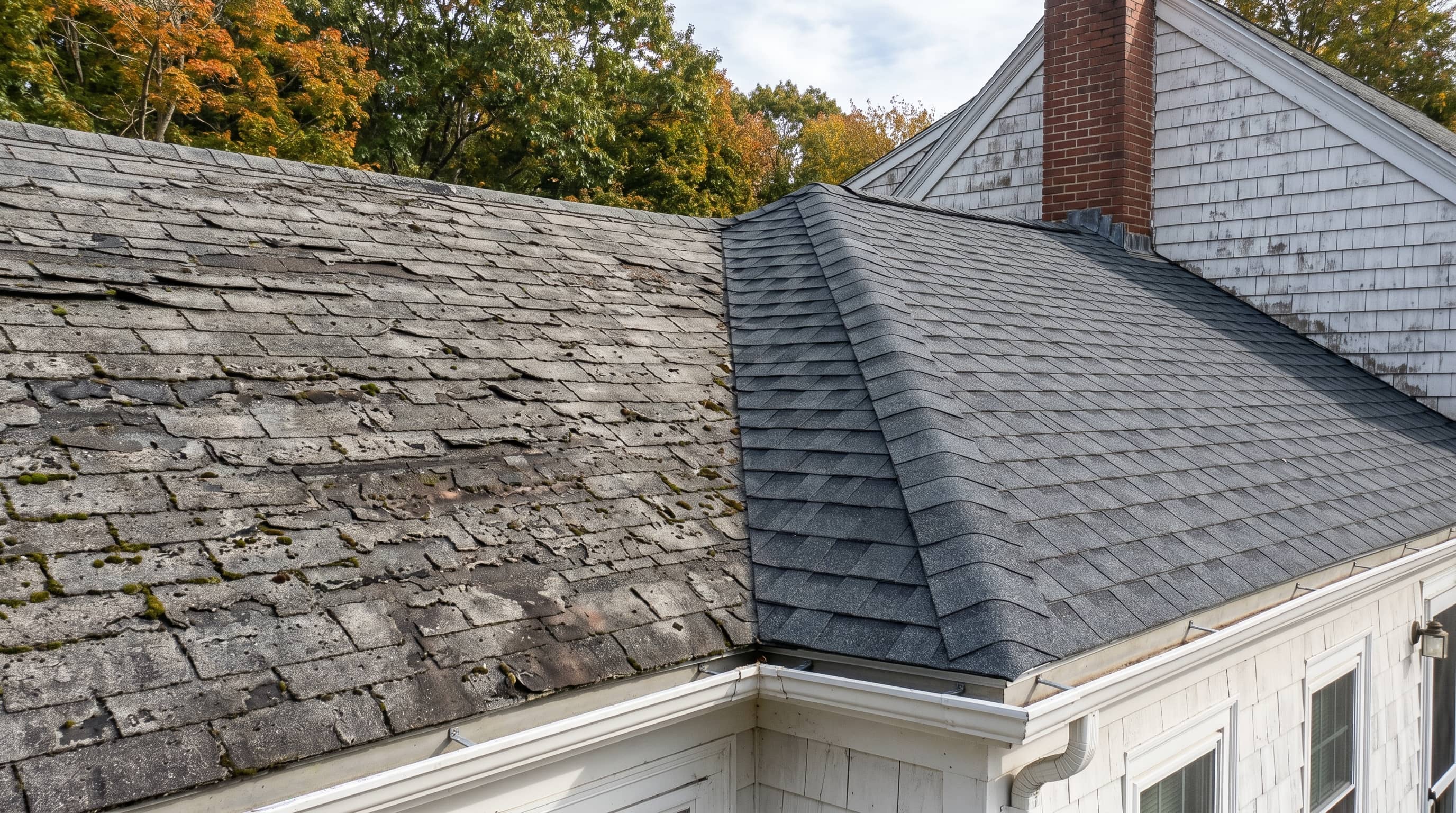
Repair is the smart choice when the roof is still well within its lifespan and the damage is contained. The signs that point to a repair tend to show up together:
- A young roof. If it’s only a handful of years into its expected life, one problem area rarely justifies replacing the whole thing.
- Isolated, localized damage. A few wind-blown or cracked shingles, one flashing point, a single leak source you can trace — damage you can put your finger on.
- A sound deck. The wood underneath is solid, with no soft spots or sag.
- No widespread granule loss. The shingles elsewhere still have their protective surface and aren’t curling or balding across the roof.
In these cases, a quality repair restores the roof and buys you the years you paid for when it went on. There’s one practical catch worth knowing: matching brand-new shingles to a roof that’s already weathered a few seasons is rarely perfect, so a repair patch can be visible up close. That’s usually a fair trade for not replacing a roof that isn’t done yet. And a leak on its own doesn’t change the answer — it’s worth reading whether a leak actually means you need a new roof before you assume the worst.
When does replacement make more sense?
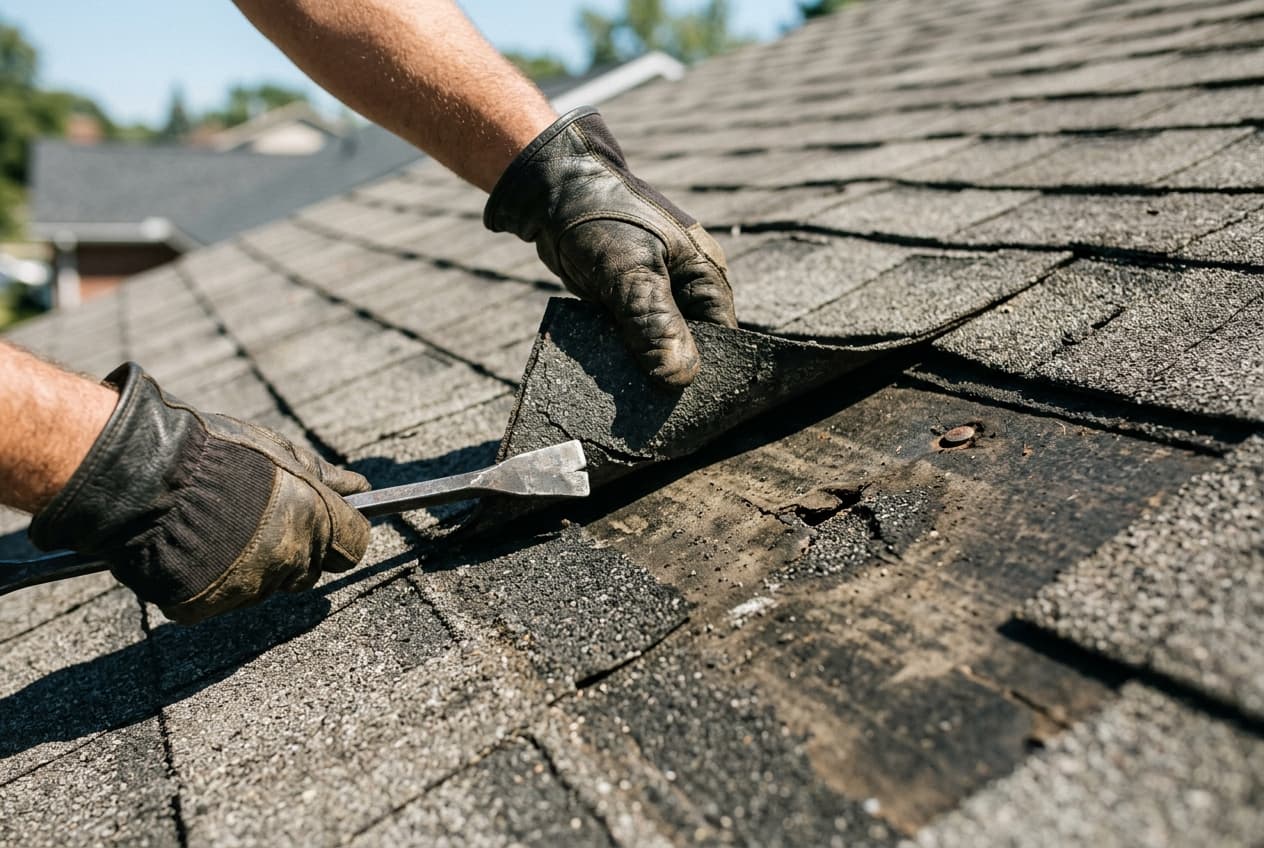
Replacement moves ahead when the roof is failing as a system rather than in one spot. The picture usually includes some mix of:
- A roof at or past its expected life. Age alone isn’t a verdict, but near the end of its range a roof is wearing out everywhere at once.
- Widespread wear. Curling, cupping, and granule loss across multiple slopes — not one patch, the whole field.
- Rotted or sagging decking. If the wood base is going soft, new shingles over it solve nothing.
- Repeated or multiple leaks. When the next leak is never far behind the last, you’re chasing a failing roof.
- Repair cost approaching the 30% line. When a fix would cost a large share of a replacement, the math favors starting over.
Replacement does more than swap shingles. It resets the roof’s clock, restores the full warranty — Global Roofing backs a new roof with a 50-year transferable shingle warranty and a 30-year workmanship warranty — and lets the crew fix the underlayment, flashing, and attic ventilation all at once instead of patching around them. Age by itself, though, doesn’t force the issue; whether an old but undamaged roof really needs replacing is its own question.
“Homeowners ask us to settle it as repair or replace, but the roof usually settles it for them. If the damage is in one spot and the deck’s solid, we repair it. When we’re seeing wear on every slope and soft decking, no patch is going to hold — and we’ll tell you that straight.”
Global Roofing field team — Massachusetts in-home estimates
What about the cost?
Cost matters, but it works in opposite directions over different time frames, which is why it’s the last question, not the first. A repair is cheaper today — it’s less material and less labor than a full roof. The catch is that you’re spending that money on an aging roof, and if it’s near the end, you may be paying again before long.
A replacement costs more up front, but it resets the roof’s lifespan and warranty and ends the cycle of patch after patch. The honest comparison isn’t the price of a single repair against the price of a replacement on one day — it’s the total you’ll spend over the next several years, with the roof either solved or still failing at the end of it. That’s the whole point of the 30% idea above.
We keep this article on the decision and leave the dollars to the piece built for them. For how the two actually compare on price — what drives each, and when repeat repairs cross over into replacement territory — read whether it’s cheaper to repair or replace a roof. When you do get numbers, expect a single total price with a written description of the company, the scope of work, and the materials by brand and product line — not a line-item breakdown of labor and materials.
Frequently asked questions
How do you decide between repairing and replacing a roof?
Look at the roof’s condition, not its age alone: how old it is relative to its expected life, how widespread the damage is, the shape of the deck underneath, how many separate or repeat leaks you’ve had, and how the repair cost compares to a replacement. Isolated damage on a young roof with a sound deck is a repair; widespread wear with rot underneath points to replacement.
When is a roof repair the right call?
Repair when the roof is still well within its lifespan and the damage is contained — a few shingles, one flashing point, or a single traceable leak — and the deck is sound with no widespread granule loss. The one catch is that new shingles rarely match a weathered roof exactly, so a patch can show.
When does replacing a roof make more sense?
Replace when the roof is at or past its expected life, when wear is widespread across slopes, when the deck is rotted or sagging, or when leaks keep coming back. As a rule of thumb, if a repair would cost a large share of a full replacement, replacing is usually smarter — and it resets the warranty and fixes ventilation and underlayment at the same time.
Is it always cheaper to repair than to replace a roof?
Today, yes — a repair costs less than a full replacement. But on a roof near the end of its life, repeat repairs can add up to more than a replacement would have, and you still have to replace it. The right comparison is the total over the next several years, not the price of one visit.
How we wrote this guide
This article reflects how Global Roofing advises real Massachusetts and New England homeowners on the repair-versus-replacement decision, checked against National Roofing Contractors Association guidance on roof condition assessment and service life and InterNACHI inspection standards. It was reviewed for accuracy by a licensed Massachusetts roofing contractor on our team. See our full editorial process for how we research and update every article.
Sources
- National Roofing Contractors Association — roof condition assessment, repair, and replacement guidance. nrca.net
- International Association of Certified Home Inspectors (InterNACHI) — roof inspection and deck condition standards. nachi.org
- CertainTeed — shingle service life and warranty coverage. certainteed.com