
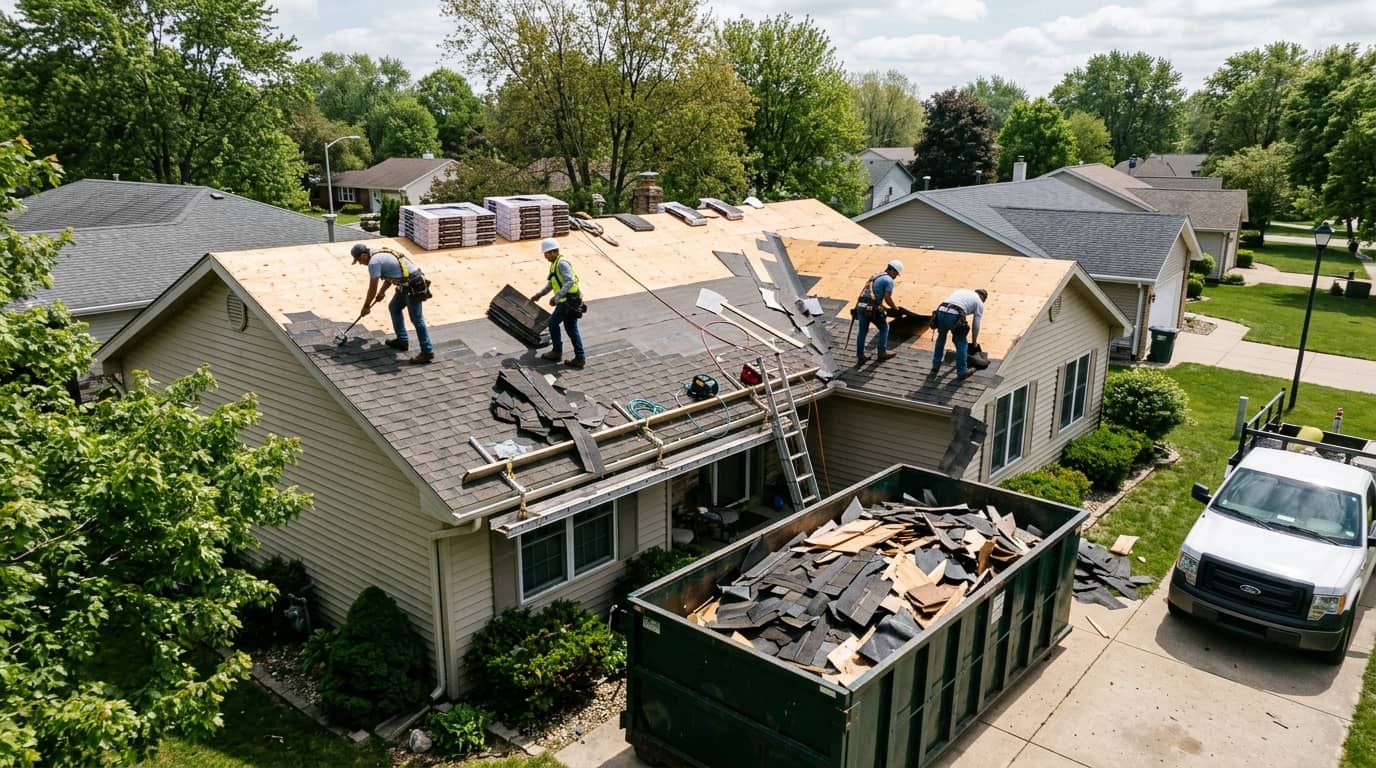

Key Takeaways
- The big “hidden” costs are rotted decking, the permit and inspection, disposal, ventilation fixes, multiple-layer tear-off, and code-required upgrades.
- They only feel hidden when a quote leaves them out — a detailed written estimate describes how each is handled before work starts.
- Some are genuinely unknowable until tear-off (decking); most are fully predictable and belong in any honest quote.
- A price far below the others is usually these costs postponed to the final invoice, not a real saving.
Are roof replacement costs really hidden?
Mostly, no — they’re only hidden if a quote hides them. The items that blindside homeowners are well known to any experienced roofer, and nearly all of them can be described in advance. The one true unknown is what’s under the old roof until it comes off. Everything else is predictable, which means a “surprise” bill is usually a sign the original quote was thin, not that the work was unforeseeable.
That’s the lens for this whole article: a hidden cost is really a described-or-not cost. For the full picture of what drives a roof’s price in the first place, start with our guide to what a new roof costs — then use this list to make sure your quote leaves nothing off.
What surprises homeowners most
These are the costs that show up after a thin quote, in rough order of how often they catch people off guard:
- Rotted decking. The biggest true unknown — the wood base can’t be confirmed until tear-off. It’s common enough to deserve its own breakdown in what replacing rotted decking adds to the cost.
- The permit and inspection. A roof replacement needs a building permit, and the licensed contractor should pull it. Skipping it skips the inspection — and can stall a home sale.
- Disposal of the old roof. Tearing off and hauling away the old shingles takes a dumpster and labor, more so if the roof carries several old layers.
- Ventilation correction. If the attic isn’t venting properly, fixing it during the job protects the new roof — and many warranties require it.
- Flashing and penetrations. New flashing at every chimney, wall, valley, and skylight — reusing old metal is a shortcut that shows up as a leak later.
- Code-required upgrades. Bringing an older roof up to current code can add work — much of it the climate-driven waterproofing behind why a roof costs more in Massachusetts.
Start from a complete number
Our Roof Cost Calculator gives you a realistic range for the whole job — a baseline to check any quote against so the extras aren’t a surprise.
Try the cost calculator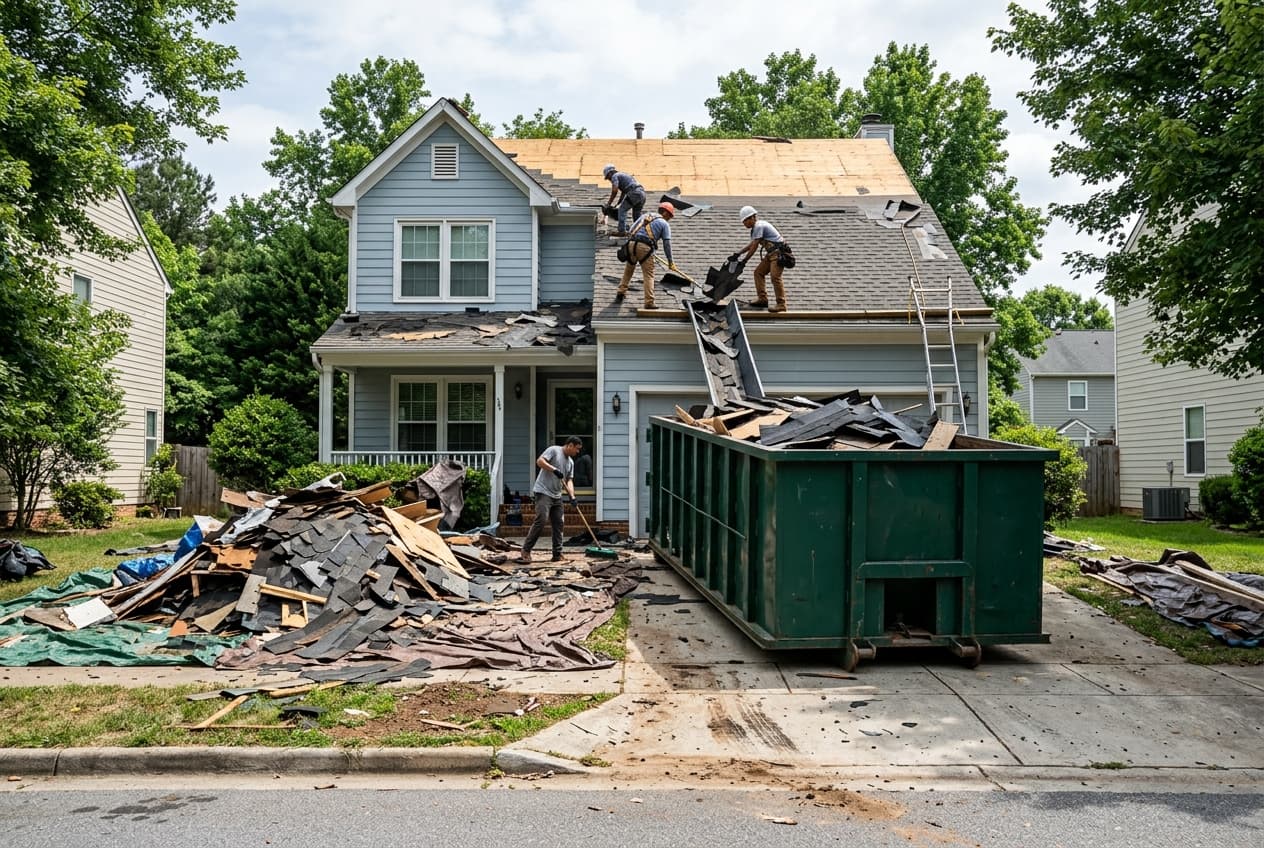
Which are avoidable, and which aren’t?
It helps to split the list in two. One of these is genuinely unknowable in advance; the rest are entirely predictable and should never be a surprise:
- Truly unknown until tear-off: the condition of the decking. A good contractor can’t price it exactly up front, but can — and should — document the process and get your approval before doing the work.
- Fully predictable: the permit, disposal, ventilation, flashing, layer count, and code upgrades. An experienced roofer knows these from the walk-through, so leaving them out of a quote is a choice, not an oversight.
That distinction is the whole game. An honest estimate is upfront about the one real unknown and complete about everything else. A quote that’s vague on both is setting up the “unforeseen” upcharge.
“Almost nothing on a roof is truly a surprise to us — we know what the permit costs, what disposal runs, what the ventilation needs. The only real unknown is the decking. So when a homeowner gets blindsided by ‘extras,’ it usually means the first quote was built thin on purpose. We’d rather put it all on paper and lose the lowball comparison.”
Global Roofing field team — Massachusetts in-home estimates
How to spot hidden costs before you sign
You don’t need to be a roofer to keep surprises off your invoice — you need a quote that does the work for you:
- Insist on a detailed written estimate. It should describe the full scope, name the materials, and cover the permit, disposal, and ventilation — exactly what should be included in a roofing estimate.
- Ask how decking is handled. A good answer describes the process and pricing in advance and promises photos of anything found.
- Compare on inclusions, not the bottom line. Line the quotes up by what each one actually covers; the cheapest is often the one that left the most out.
- Treat a far-lower price as a question. A quote well below the rest usually has the “hidden” costs still hiding in it — they’ll surface on the invoice.
Frequently asked questions
What are the hidden costs of a roof replacement?
The ones that surprise homeowners most are rotted decking found during tear-off, the permit and inspection, disposal of the old roof, ventilation correction, multiple-layer tear-off, and code-required upgrades. A detailed written estimate describes how each is handled before work starts, so nothing is a surprise.
Why does my final roofing bill differ from the quote?
Usually because something genuinely unseen turned up — most often rotted decking — or because the original quote was deliberately thin. The first is honest if it was documented and approved in advance; the second is why a suspiciously low quote often ends up costing more.
Does a roof replacement need a permit in Massachusetts?
Yes — and the licensed contractor should pull it. The permit covers the town inspection that confirms the work meets code. A quote that skips the permit isn’t saving money; it’s skipping the inspection and can stall a future sale, so it belongs in the estimate.
How do I avoid surprise costs on a new roof?
Get a detailed written estimate that describes the full scope, names the materials, and states how decking and other unknowns are handled. Compare quotes on what they include, and be wary of any price far below the others — that gap is usually the surprise costs, just postponed.
How we wrote this guide
This article reflects how Global Roofing scopes and writes real Massachusetts roofing estimates, checked against National Roofing Contractors Association guidance on roofing proposals, Massachusetts State Building Code (780 CMR) permit and roofing requirements, and the Massachusetts Home Improvement Contractor contract rules. It was reviewed for accuracy by a licensed Massachusetts roofing contractor on our team. See our full editorial process for how we research and update every article.