


Key Takeaways
- If your roof is near the end of its life, doing the roof and solar together usually beats doing them years apart.
- The biggest saving isn’t a discount — it’s avoiding a mid-life remove-and-reinstall of the array on an aging roof.
- Bundling also trims cost through one mobilization, coordinated scheduling, and installing the mounts during the roof job.
- The order matters: roof first, mounts flashed in during the roof work, panels last — under one coordinated plan.
Should you do both at once?
If your roof is getting on in years and you’re serious about solar, doing both together is usually the smart move. The logic is simple: a solar array is built to last about 25 years, and you want the roof under it to last about as long. Pairing a new roof with a new array puts them on the same clock, so the system goes up once and stays up.
This is really the flip side of putting solar on an aging roof. If the roof has plenty of life left, there’s little reason to tear it off early just to bundle. But if it’s on the older end — our general line is around 15 years for asphalt — replacing it as part of the solar project is almost always cheaper than doing it after the panels are already up. The main solar-and-roofing guide lays out the three paths (roof first, solar first, or bundle) in full.
Where the savings come from
“Cheaper together” gets thrown around a lot, so it helps to be precise about where the money actually comes from. There are two different kinds of saving, and they’re not the same size.
The smaller one is bundling efficiency. When the roof and solar happen as one coordinated project, you pay for one setup and cleanup instead of two, scheduling is coordinated across both trades, overhead is shared, and the solar mounting hardware gets installed during the roof job rather than drilled into a finished roof later. Those add up to a real, if modest, savings.
The bigger one is the cost you avoid entirely: taking the array off and putting it back on when an aging roof fails. That remove-and-reinstall step is labor paid twice, plus downtime and handling risk — and it dwarfs the bundling discount. Doing the roof first, while the panels aren’t up yet, is how you sidestep it. We cover that scenario in what happens to solar panels when you need a new roof.
Why sequencing matters
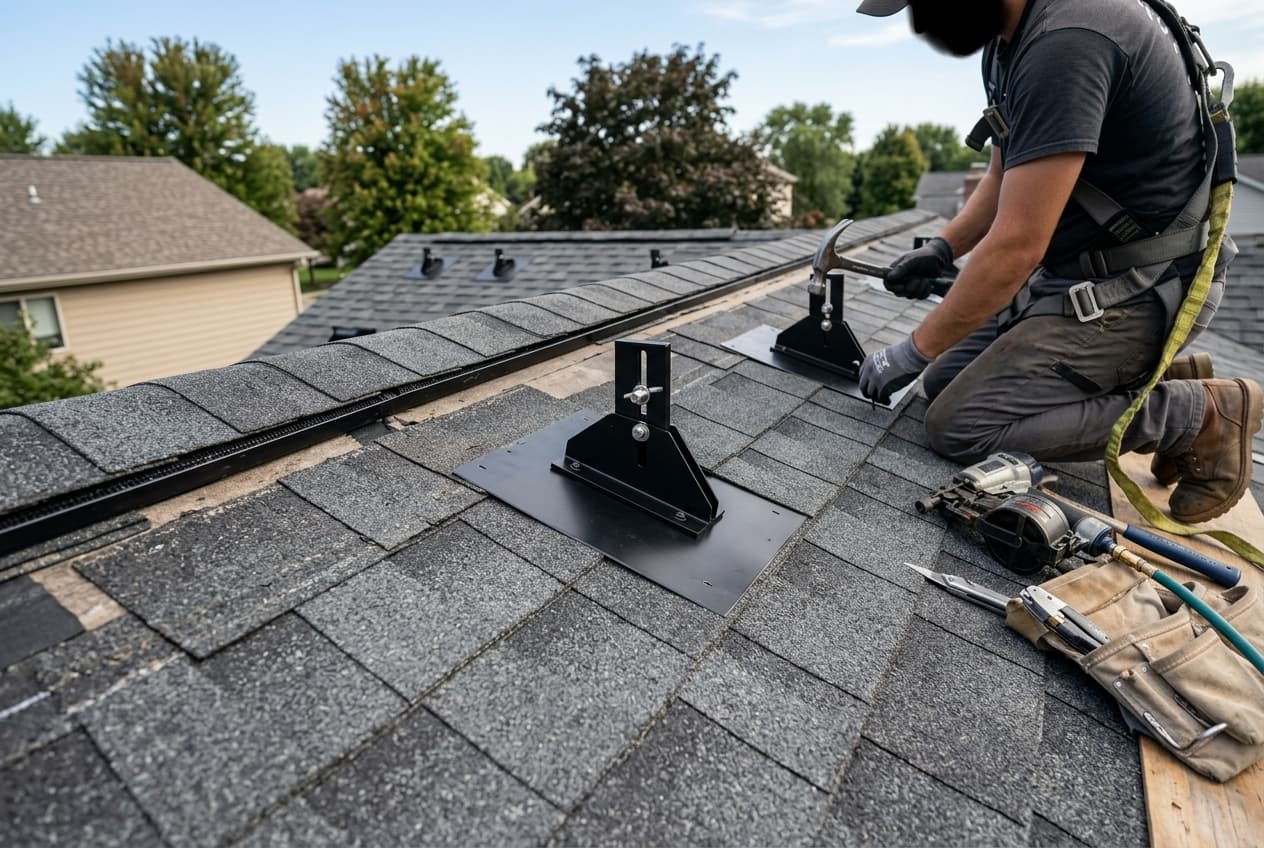
Bundling only pays off if the order is right. The single most common way a combined project goes wrong is the solar installer showing up after the new roof is done and drilling fresh penetrations into it. The clean sequence looks like this:
- Roof goes on first. The new roof is installed as normal — with one addition.
- Mounts are flashed in during the roof job. The roofing crew sets the solar mounting feet using the shingle manufacturer’s flashing spec, so every penetration is sealed as part of the new roof, not punched through it later. This is also what protects the roof warranty — more on that in whether solar voids your roof warranty.
- Panels go on last. The solar installer bolts the racking and panels to the pre-built, weatherproofed mounts.
That order is why the roof and solar work needs to sit under one coordinated plan — whether that’s a single company running both trades or a roofer and solar installer working from a shared layout. The solar mount positions have to be known before the roof crew starts.
Start the budget with a real roof number
Our Roof Cost Calculator gives you a realistic replacement range for your home in about a minute — the figure to plug into a combined roof-and-solar conversation. Free, no signup.
Open the Cost CalculatorWhen bundling makes sense (and when it doesn’t)
Doing both together is the right call when:
- The roof is near the end of its life or showing real wear, so it’d need replacing within the array’s lifespan anyway.
- You’re committed to solar and your roof is a good candidate for it — it gets enough sun and has the unobstructed space.
- You can coordinate both trades on one timeline (or hire a team that does).
It makes less sense when the roof is relatively new and sound — in that case the roof should outlast the first stretch of the array’s life on its own, and there’s no reason to replace it early. As for paying for a larger combined project, the roof side can be financed like any replacement; our guide to financing a roof walks through the options. The solar financing is a separate conversation with your installer.
“When the roof’s already tired, bundling is a no-brainer — you were going to replace it inside the array’s life anyway, so do it before the panels go up, not after. The part people miss is the sequence: we set the mount flashing while the roof’s open. Get that right and there’s nothing to drill, nothing to leak, and one warranty that stays intact.”
Global Roofing field team — Massachusetts in-home estimates
Frequently asked questions
Should you replace your roof and install solar at the same time?
If the roof is near the end of its life, usually yes — you avoid a future remove-and-reinstall of the array, capture bundling savings, and put the roof and solar on the same ~25-year clock. If the roof has plenty of life left, there’s less reason to bundle.
Is it cheaper to do roof and solar together?
It’s more efficient — one mobilization, coordinated scheduling, mounts set during the roof job. But the bigger saving is avoiding a mid-life remove-and-reinstall on an aging roof, which is the cost bundling is really designed to prevent.
Does the roof or the solar go on first?
The roof first. The crew flashes in the solar mounts during the roof install, then the solar installer attaches the panels to that weatherproofed foundation. That order protects the warranty and removes leak risk.
Do you need two separate contractors?
Not necessarily — but the work has to be coordinated under one plan, with a single point of accountability and the solar layout shared with the roofer before the roof job begins.
How we wrote this guide
This article reflects how Global Roofing’s licensed Massachusetts crews coordinate bundled roof-and-solar projects, alongside published research on the efficiency of combining the two trades. It’s explanatory, not a quote — your actual savings depend on your roof, your array, and how the work is coordinated. Reviewed by our team. See our full editorial process for how we research and update every article.
Sources
- National Renewable Energy Laboratory (NREL) — research on the cost efficiencies of combining roofing and solar installation.
- U.S. Department of Energy — Homeowner’s Guide to Going Solar (roof condition and project sequencing). energy.gov