

Key Takeaways
- Research suggests homes with owned solar tend to sell for more than comparable homes without it — a tendency, not a guaranteed figure.
- Ownership is the key variable: leased panels and PPAs add far less and can complicate a sale.
- A new roof carries its own resale appeal — it clears a looming expense and a common inspection red flag.
- Together, a new roof and owned solar tell a buyer the home’s biggest exterior systems are handled.
Does solar add to your home’s value?
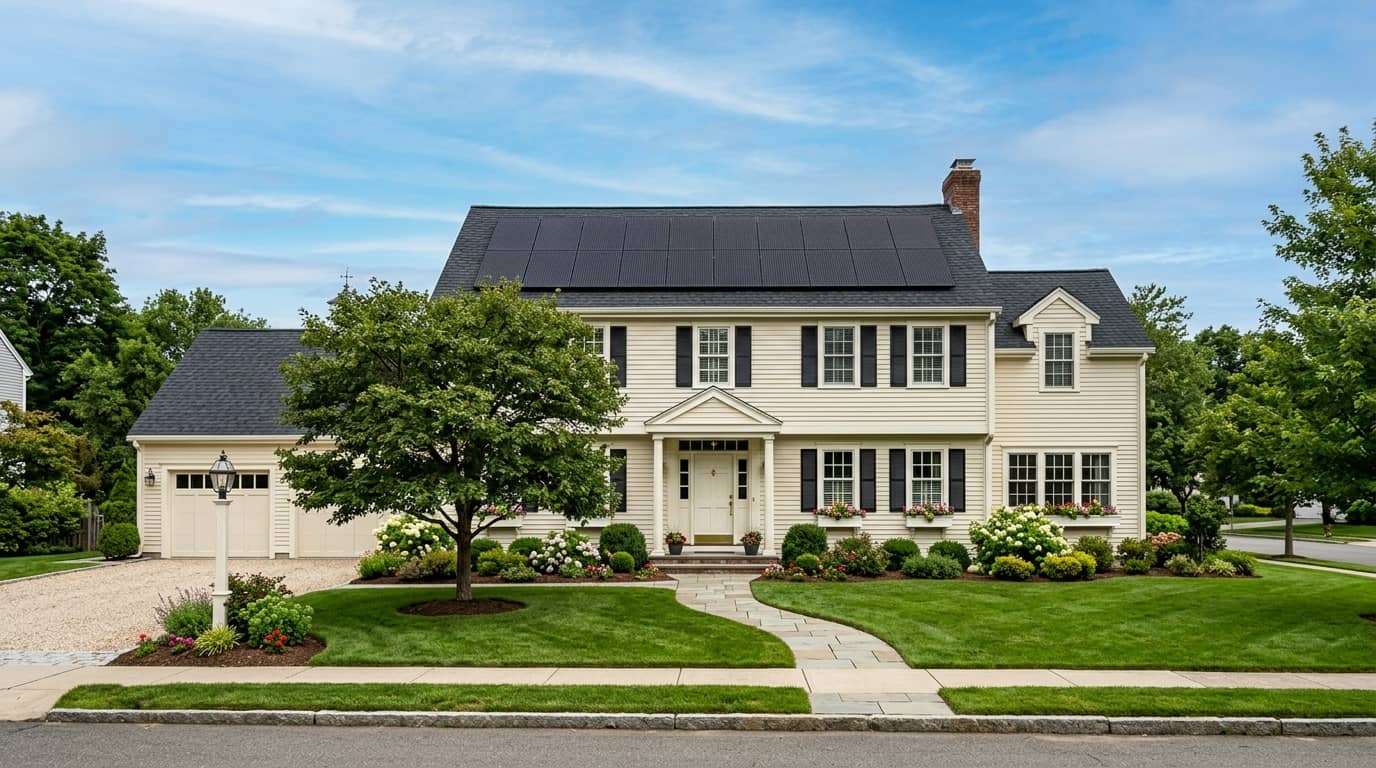
The research points the same direction: homes with owned solar tend to sell for more than comparable homes without it. Work from Lawrence Berkeley National Laboratory and others has found a resale premium associated with owned residential solar, and the reasoning is intuitive — a buyer is inheriting a system that lowers the energy bill for years to come.
Two honest caveats, though. First, it’s a tendency the studies show, not a fixed dollar amount you can bank on; the effect varies by market, by buyer, and by the system itself. Second, it hinges almost entirely on one thing: whether you own the panels. For the full picture of how solar fits a roof project, see the main solar-and-roofing guide.
Why ownership matters so much
The resale premium the research describes is tied to owned systems — panels you bought outright, or financed and paid off. When you own the array, it transfers to the buyer as an asset: theirs to keep, with the energy savings attached.
A leased system, or one on a power purchase agreement (PPA), is different. There, a third party owns the panels, and the buyer has to agree to take over the lease rather than inherit something free and clear. That can add value far less reliably, and in some sales it’s a sticking point — a buyer who doesn’t want the contract has to be worked around. None of that is a verdict on leasing as a way to go solar; it’s simply why, for resale specifically, owned systems are the ones research links to higher value.
The new roof’s part of the story
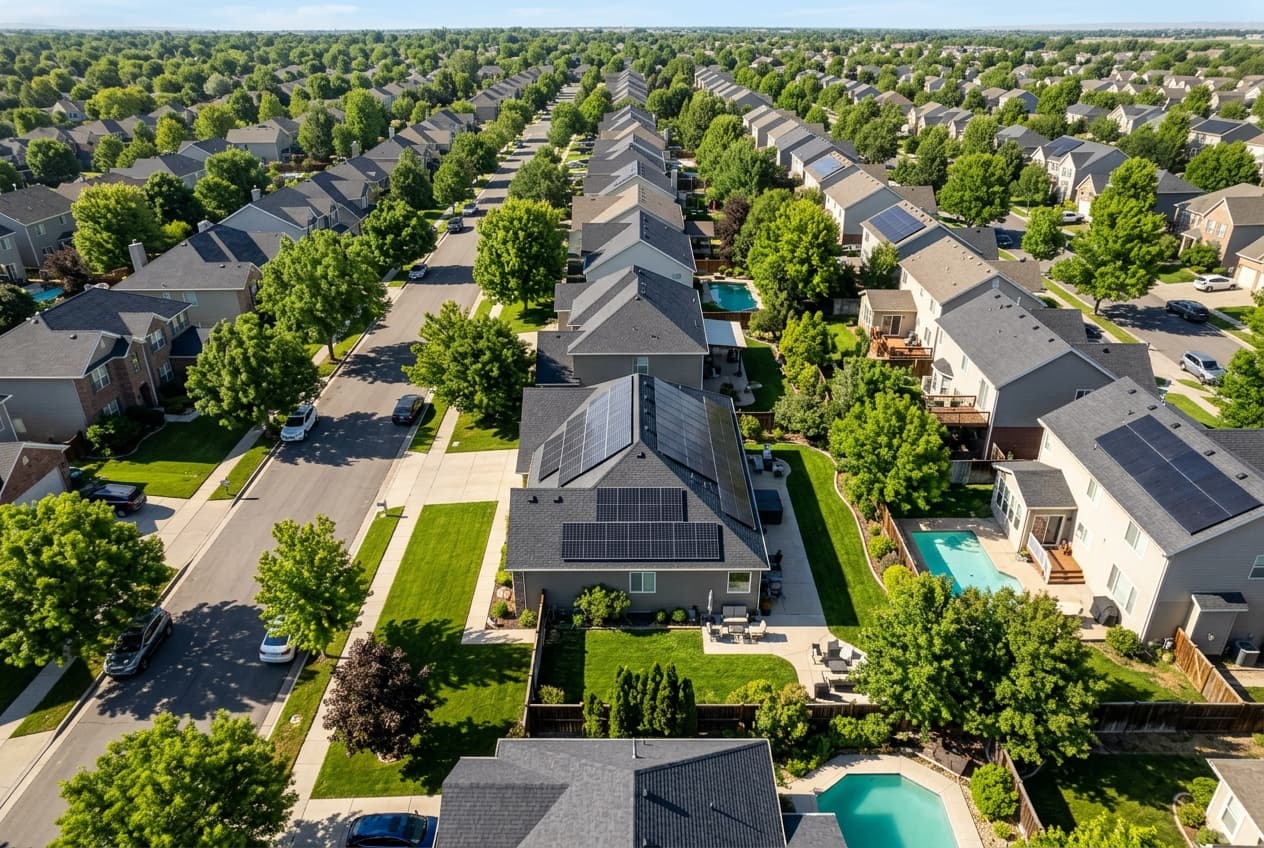
Solar gets the headline, but the roof underneath earns its own keep at resale. A new roof is one of the improvements buyers consistently respond to, because it removes two things they dislike: a looming expense and a classic home-inspection red flag. It tends to recover a meaningful share of its cost and makes a home easier to sell — the subject of our deeper look at whether a new roof increases home value.
Stack the two together and the signal to a buyer is strong: the home’s biggest exterior systems are squared away, on the same fresh clock, with nothing major looming. That’s also a practical reason to replace the roof and add solar together when the roof is due anyway — you avoid a future buyer (or inspector) flagging an aging roof beneath a young array. And because a careful, leak-free install is part of what keeps that roof an asset, it helps to know that solar panels don’t damage a roof when they’re mounted correctly.
Put a real number on the roof side
The roof is half the resale equation here. Our Cost Calculator gives you a realistic replacement range for your home in about a minute — free, no signup.
Open the Cost CalculatorWhat buyers actually value
It helps to separate “adds value” into the things buyers actually respond to:
- Lower running costs. Owned solar means a smaller energy bill — a tangible benefit a buyer keeps from day one.
- No looming expenses. A new roof and an owned array both remove near-term costs a buyer would otherwise have to plan for.
- A clean inspection. A sound, recent roof doesn’t generate the negotiation-killing findings an aging one does.
- Simplicity at closing. An owned system transfers cleanly; a leased one adds paperwork and a decision for the buyer.
Whether the numbers pencil out for your home and timeline is a question for a real estate professional who knows your market — this is an explainer, not personalized advice. What we can speak to is the roof: making sure it’s sound, recent, and not the weak link under a system meant to last decades.
“Buyers love seeing a new roof — it’s one less thing they have to worry about, and it never scares an inspector. Add owned panels on top and you’ve told them the expensive stuff is done. The only time we see it backfire is an old roof under new panels, because now the buyer’s doing the math on pulling the array to reroof.”
Global Roofing field team — Massachusetts in-home estimates
Frequently asked questions
Does adding solar panels increase a home’s value?
Research, including from Lawrence Berkeley National Laboratory, suggests homes with owned solar tend to sell for more than comparable homes without it, and buyers value the lower energy bills. The size varies by market and system, and it applies mainly to owned systems — a tendency, not a guaranteed figure.
Do leased solar panels add value?
Generally much less, and sometimes they complicate a sale. With a lease or PPA, a third party owns the panels, so the buyer takes over the contract rather than inheriting an asset. Owned systems are the ones research links most clearly to higher resale value.
Does a new roof add to home value?
Yes — a new roof is one of the improvements buyers consistently value, because it removes a looming expense and a common inspection red flag. Paired with owned solar, it signals the home’s biggest exterior systems are handled.
Is solar a good investment for resale if I might move?
It depends on your timeline and whether you own the system. Owned solar tends to help resale, but the payback math changes if you sell early. If resale is likely, owning rather than leasing keeps it an asset that transfers cleanly. A local real estate professional can speak to your numbers.
How we wrote this guide
This article draws on research into solar’s effect on home resale value (including Lawrence Berkeley National Laboratory) and Global Roofing’s experience with how a roof’s condition affects a sale. It’s explanatory, not personalized real estate or financial advice — figures vary by market, and a local professional can speak to your home. Reviewed by our team. See our full editorial process for how we research and update every article.
Sources
- Lawrence Berkeley National Laboratory — research on the resale value of homes with photovoltaic solar systems. emp.lbl.gov
- U.S. Department of Energy — Homeowner’s Guide to Going Solar (ownership, leases, and PPAs). energy.gov