

Key Takeaways
- Solar panels don’t damage a roof when they’re installed correctly — the mounts are sealed the same way any roof penetration is.
- The damage people fear comes from bad installs: wrong flashing, non-approved sealant, or mounts fastened into weak decking.
- A properly mounted array can actually shelter the shingles it covers from sun, rain, and hail — a small bonus, not a reason to go solar.
- The roof underneath has to be sound first. A careful installer following the shingle manufacturer’s spec is what keeps it leak-free.
Do solar panels damage your roof?
It’s the first worry almost everyone has, and the honest answer is reassuring: no, solar panels don’t damage a roof when they’re installed correctly. The panels themselves just sit on racking above the shingles. The only place they touch the roof is at the mounting points, and those are sealed and weatherproofed the same way a plumbing vent or a skylight is.
When a solar install does hurt a roof, the cause is almost never the panels — it’s how someone attached them. So the real question isn’t “will solar damage my roof,” it’s “is this install being done right, on a roof that’s in good shape to begin with.” This article covers the first half; the main solar-and-roofing guide covers the timing and coordination side.
How panels attach without leaking
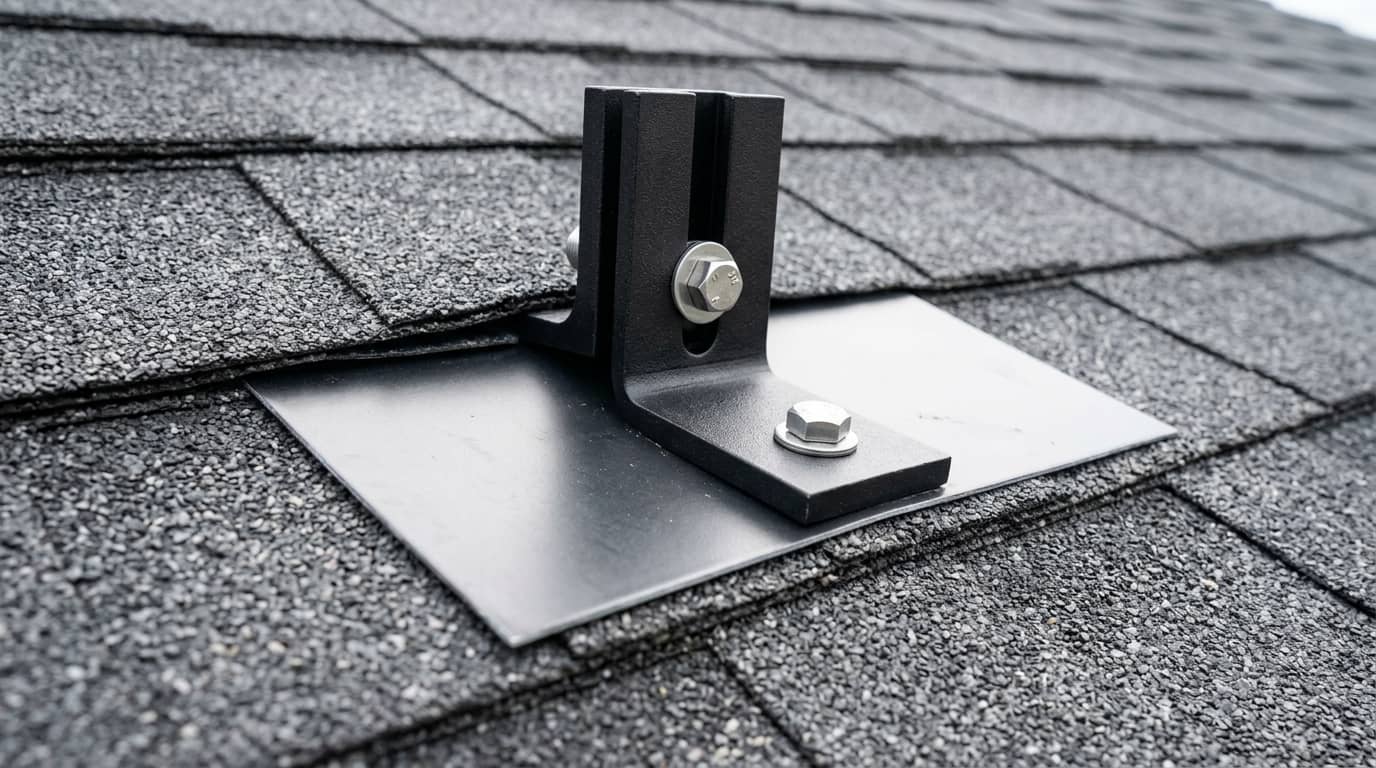
A solar array is held up by mounting feet that fasten through the shingles into the roof structure. Done to spec, each one is a sealed penetration, not an open hole. The process is straightforward when it’s followed properly:
- The mount fastens into solid structure. The feet are anchored into the rafters or properly fastened decking — not just the shingle surface — so they hold and don’t work loose over time.
- Manufacturer flashing seals each point. Each shingle manufacturer publishes a specific flashing kit for solar mounts. Installed correctly, the flashing tucks under the surrounding shingles and channels water over the penetration, just like the flashing around a vent.
- Approved sealant finishes it. The right sealant, used in the right place, backs up the flashing without degrading the shingle.
That’s why a well-installed array isn’t a leak risk: a roof already has penetrations all over it — vents, the chimney, skylights — and they don’t leak because they’re flashed correctly. Solar mounts are no different.
How panels can actually protect the roof
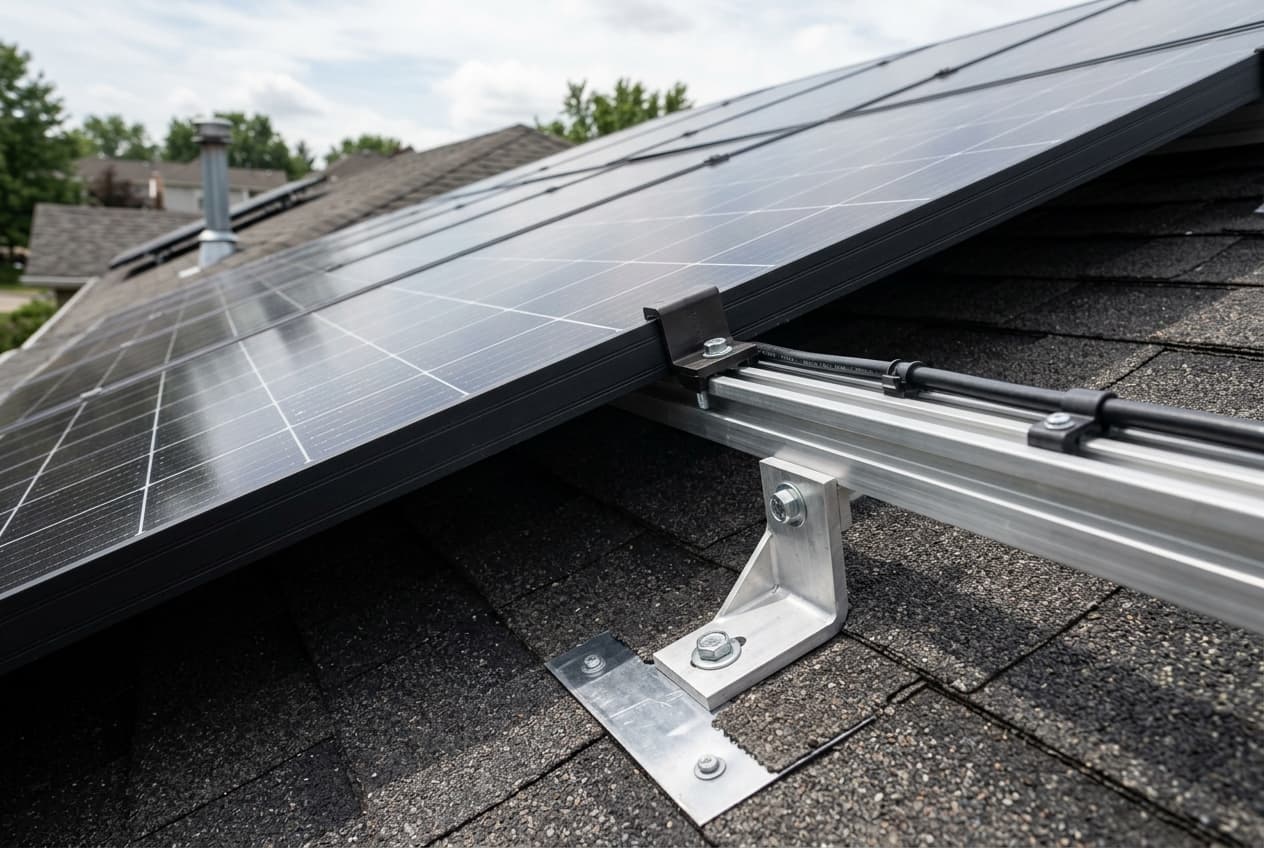
Here’s the part that surprises people: a solar array can be mildly good for the roof underneath it. The panels shade that section from direct sun — the UV exposure that slowly bakes and brittles asphalt shingles — and they take the first hit from rain, hail, and snow. Over years, the covered shingles can weather a little more slowly than the exposed ones around them.
It’s a modest effect, and it only applies to the area the array actually covers — so it’s a nice bonus, not a reason to install solar on its own. But it’s a useful counterweight to the fear: a proper array shelters the roof more than it stresses it.
Make sure the roof is sound first
A leak-free solar install starts with a roof in good condition. Our quick roof assessment helps you gauge whether yours is ready — free, no signup.
Try the roof assessmentWhat actually causes damage
If the panels aren’t the problem, the install can be. The damage and leaks that give solar a bad name almost always trace back to one of these shortcuts:
- Wrong flashing. Substituting a bead of caulk or generic flashing for the manufacturer’s spec kit is the most common cause of a leak around a mount.
- Non-approved sealant. The wrong sealant can degrade the shingle and open a path for water.
- Mounts in weak decking. Feet fastened into decking that isn’t solidly attached to a rafter eventually loosen — pulling at the roof around them.
- Field-cut or altered shingles. Modifying shingles to fit a mount can void coverage and create a weak spot.
- An old roof underneath. Putting an array on a roof near the end of its life invites trouble — best to settle the roof first.
Every one of those is an installer issue, not a panel issue — and every one is avoidable. That’s also why these same shortcuts are what can void your roof warranty. The protection on both fronts is the same: a sound roof, an installer who follows the manufacturer’s mounting spec, and documentation of the work.
“Panels don’t leak. Bad flashing leaks. A solar mount is just another penetration, and we flash hundreds of penetrations a year — vents, pipes, skylights — that never leak because they’re done to spec. The roofs we get called back to fix weren’t hurt by the solar; they were hurt by whoever rushed the mounts.”
Global Roofing field team — Massachusetts in-home estimates
Frequently asked questions
Do solar panels damage your roof?
Not when installed correctly. The mounts are sealed with manufacturer-spec flashing, so they’re weatherproofed like any roof penetration. Damage comes from bad installs — wrong flashing, bad sealant, or mounts in weak decking — not from the panels themselves.
Do solar panels cause roof leaks?
A correctly flashed mount shouldn’t leak any more than a vent or skylight. Leaks come from shortcuts: caulk instead of the proper flashing kit, the wrong sealant, or mounts placed over weak decking.
Can solar panels extend the life of a roof?
They can help a little. Panels shade and shield the shingles they cover from sun, rain, and hail, which can slow weathering. It’s a modest bonus that only applies to the covered area — not a reason to install solar by itself.
Will solar panels damage an older roof?
The risk is higher on an older roof, mostly because it’s closer to needing replacement. Adding penetrations to a roof near the end of its life complicates both the install and the warranty, so it’s usually better to replace first.
How we wrote this guide
This article reflects how Global Roofing’s licensed Massachusetts crews flash and inspect roof penetrations, alongside shingle-manufacturer solar mounting guidance and Department of Energy material on rooftop solar. It’s explanatory — the outcome on any roof depends on the installer and the roof’s condition. Reviewed by our team. See our full editorial process for how we research and update every article.
Sources
- U.S. Department of Energy — Homeowner’s Guide to Going Solar (rooftop mounting and roof considerations). energy.gov
- Shingle-manufacturer solar mount and flashing specifications (e.g. CertainTeed, Owens Corning, Malarkey).