


Key Takeaways
- Solar panels last 25–30 years. If your roof has fewer than 10 years of life left, replace it first — otherwise you’ll pay $3,800–$12,500 to remove and reinstall the array mid-cycle, on top of the new roof itself.
- Bundling roof replacement and solar typically saves $3,000–$5,000 versus doing them separately. The bigger savings is avoiding the future remove-and-reinstall cost entirely.
- The federal residential solar tax credit ended for systems placed in service after December 31, 2025. Homeowner-owned solar in 2026 no longer qualifies for the 30% credit. The business-side credit (Section 48E) still applies to third-party-owned solar (leases and PPAs) through 2027.
- Massachusetts homeowners still have meaningful incentives: the SMART per-kWh payment for 20 years, full-retail net metering, a 15% state tax credit (capped at $1,000), 100% property tax exemption for 20 years, and no state sales tax on solar equipment.
- Solar doesn’t automatically void your shingle warranty — but improper flashing, wrong sealant, or installs on roofs older than 15 years can void coverage on the affected area. Use an installer who knows your shingle brand.
Should you replace your roof before installing solar?
The honest answer is: it depends on how much life is left in your current roof. Solar panels are designed to last 25–30 years. If your roof can’t reasonably do the same, you’re setting yourself up to pay for the same labor twice — once to install the array now, and again to remove it, re-roof, and reinstall it.
That second cost surprises people. Removing and reinstalling a residential solar array runs $3,800–$12,500 depending on system size and whether the racking can be reused. Add the roof itself and you’re looking at a meaningfully larger total than if you’d sequenced the projects correctly. The one-line version: do it once, do it right.
That said — and this is the part most contractor guides skip — replacing a roof that has 15+ years of life left just because you’re going solar is also a bad call. A perfectly functional 8-year-old roof can carry a solar array for the rest of its useful life. Replacing it prematurely is real money you don’t need to spend.
Condition is only half the question, too. Whether your roof gets enough sun to make solar worthwhile at all is a separate one — covered in is my roof suitable for solar?
The framework below is how we sort this out for Massachusetts homeowners during a free assessment.
The remaining-life rule
The simplest decision tool we use is the remaining-life rule. It’s based on how many years your current roof has left versus how long the solar array is expected to last (call it 25 years).
- Less than 5 years remaining: Replace the roof first. Universal recommendation. The remove-and- reinstall cost will hit you within the array’s warranty window, which is the worst-case timing.
- 5–10 years remaining: Strongly consider replacing first. The math almost always favors a new roof, especially when bundling savings are factored in.
- 10–20 years remaining: Judgment call. Look at condition (not just age), how long you plan to stay in the home, whether bundling discounts close the gap, and whether SMART incentives are stepping down soon.
- 20+ years remaining: Generally safe to install solar without replacing. The roof will likely outlast or closely match the array’s useful life.
Condition factors that move the timing earlier regardless of age:
- Missing, cracked, or curling shingles across multiple slopes
- Visible sagging or bowing in the roof deck
- Daylight visible through attic boards
- Wood rot, dark staining, or mold in the attic
- Multiple previous leak repairs or patching
- Concerns around vents, skylights, or chimney flashing
If you’re not sure where your roof falls on this scale, a free in-person assessment (or a 360° drone inspection) can answer it definitively in about an hour. For the homeowner version of this question, see can you put solar panels on an old roof?
Three paths: roof first, solar first, or bundle them
Most homeowners considering solar have one of three sequencing options. Here’s the honest tradeoff on each. If bundling looks like your path, we go deeper in should you replace your roof and add solar at the same time?
| Path | When it makes sense | Tradeoffs | Typical added cost vs. baseline |
|---|---|---|---|
| Roof first, solar later | Your roof needs replacement now and you want to take the solar decision separately, possibly with a different installer or a longer evaluation period. | No bundling discount. Two mobilizations, two permits, two scheduling windows. Risk of drilling new mounts into a brand-new roof later. | Baseline (no premium, no discount) |
| Solar first, roof later | Your roof has 15+ years of life left and you want to capture solar incentives or production now without waiting. | Future remove-and-reinstall cost ($3,800–$12,500) is locked in if the roof reaches end of life within the array’s lifespan. Lost production during the future reroof downtime. | +$3,800–$12,500 (deferred, if roof needs replacement within 25 years) |
| Bundle them | Your roof has under 10 years of life left and you were planning solar anyway. Single coordinated project. | Larger upfront cost. Requires choosing both contractors (or one contractor who handles both) correctly. Tighter project timeline. | −$3,000–$5,000 vs. doing them separately |
The path most people miss is the second one — installing solar on a roof that has another 15–25 years of life. If that’s your situation, paying for a premature reroof just to bundle is a bad trade. Bundle when the roof needs to come off anyway.
“The conversation we have most often is with a homeowner who’s been told they need a new roof before going solar, when their existing roof has 18 years left in it. They don’t. The bundle is great when the roof is already due. It’s expensive insurance when the roof isn’t.”
Global Roofing field team — observations from MA bundling consultations
The cost of getting it wrong
The dollar costs of mis-sequencing are real and worth spelling out. Assume an 8-kW residential array on a typical MA single-family roof.
- Roof replacement (asphalt, tear-off): $14,000–$22,000 depending on size, pitch, and complexity in 2026 MA pricing.
- Solar array installation (8 kW): $20,000–$30,000 before incentives. Most MA installs in 2026 land in the middle of that range.
- Mid-life remove-and-reinstall (R&R): $3,800–$12,500. That’s pure additional cost — labor paid a second time for work the first install already covered.
- Lost solar production during R&R: Typically 1–3 weeks of system downtime. For an 8 kW array in MA, that’s roughly $30–$120 in lost production depending on season — small, but real.
- Risk of panel damage during R&R: Older panels are more fragile to handle. Some installers won’t warranty re-installed panels at the original output spec.
The bundling savings cited by NREL — typically $3,000–$5,000 per project — come mostly from one mobilization, coordinated scheduling, integrated mounting work done during the roof install rather than after, and shared overhead. They’re real, but they’re not the largest number on the page. The largest number is the avoided R&R cost when you’ve correctly sequenced an aging roof. We walk through that remove-and-reinstall in what happens to solar panels when you need a new roof, and the resale side in does adding solar increase your home’s value.
Get a roof cost estimate before you talk to a solar installer
Our Cost Calculator gives you a roof replacement range in 90 seconds based on your home’s size, pitch, and material choice. Use it to plug a real number into your solar quote conversation. Free, no signup required.
Open the Cost CalculatorWhat solar does to your roof warranty
The short version: properly installed solar mounts do not automatically void your shingle warranty. Improperly installed mounts can. The major asphalt shingle manufacturers — CertainTeed, Owens Corning, Malarkey — all publish detailed solar mount specifications. Following them keeps coverage intact. Skipping them creates exclusions that almost always come up when you need the warranty.
The most common warranty-voiding mistakes:
- Improper flashing around mount feet. The manufacturer spec calls for specific flashing kits. Substituting caulk or generic flashing is the most frequent voider.
- Non-approved sealants. Most manufacturers specify which sealants are compatible. Using the wrong one degrades the shingle and creates a leak path.
- Mount feet placed on poorly fastened decking. If the decking under the mount isn’t properly attached to the rafter, the mount eventually pulls free — voiding both the install warranty and the shingle warranty around it.
- Cutting or altering shingles outside spec. Some installers field-modify shingles to fit a mount. Most manufacturer warranties exclude any altered material.
- Installing on a roof older than 15 years. Many shingle warranties have age clauses that exclude coverage if penetrations are added on roofs already deep into their useful life. This is one of the strongest arguments for replacing first when the roof is on the older end.
The cleanest approach is to use a solar installer who is certified or experienced with the specific shingle brand on your roof, and to keep documentation of the install (photos, materials used, manufacturer-spec flashing kits). On bundled projects, this is one of the strongest reasons to use a single coordinated team — the roofer installs the mounting flashing during the roof job using the manufacturer’s exact spec, and the solar installer attaches to that pre-built infrastructure later.
For the homeowner-level versions of these questions, see will installing solar void my roof warranty? and do solar panels damage your roof?
Massachusetts solar incentives in 2026
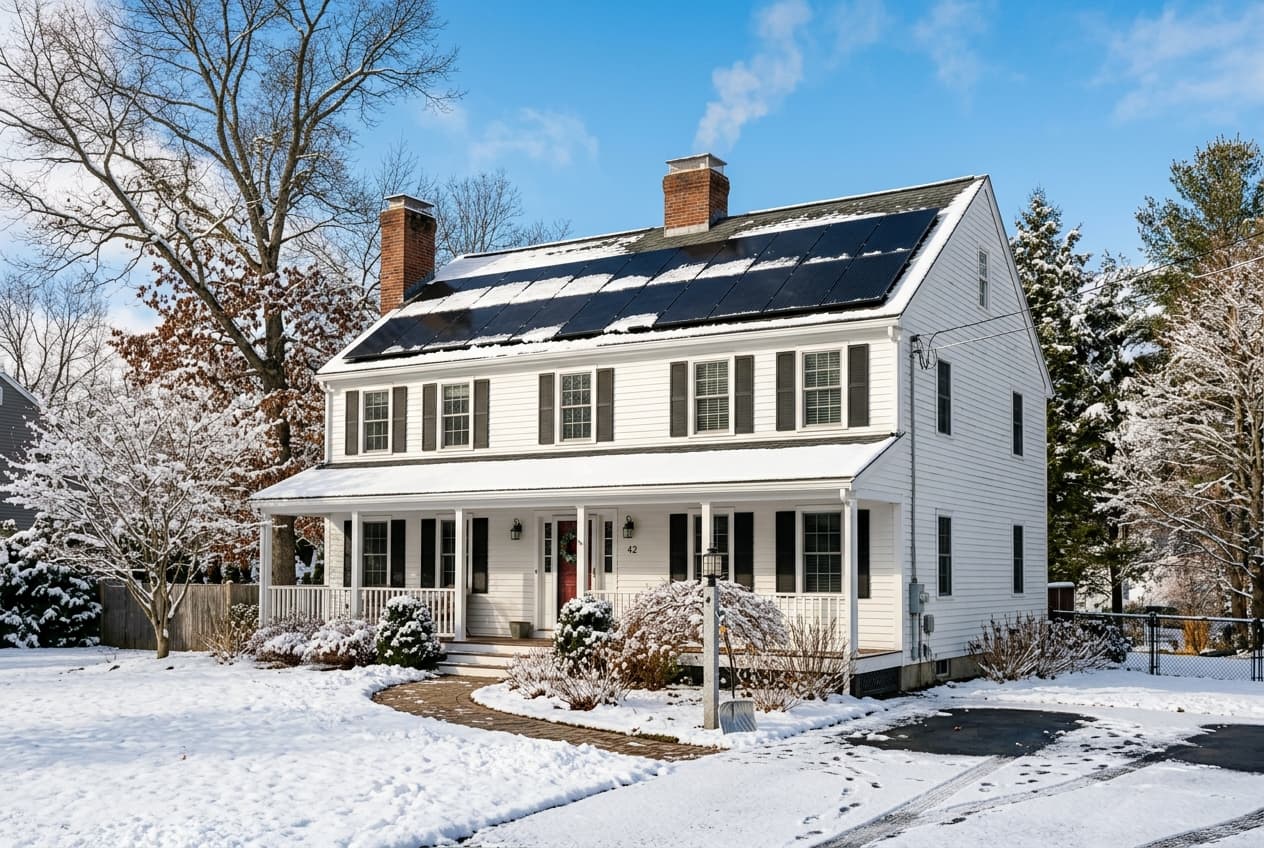
The 2026 incentive landscape is genuinely different than it was a year ago. Here’s where things stand as of this guide’s update.
Federal: the residential ITC has ended
The 30% residential solar tax credit (Section 25D) ended for systems placed in service after December 31, 2025 under the One Big Beautiful Bill Act signed in July 2025. Homeowner-owned solar systems installed in 2026 no longer qualify for the 30% federal credit. This is the single biggest change to residential solar economics in over a decade.
The business-side credit (Section 48E) remains available through the end of 2027. That means third-party-owned solar — leases and power purchase agreements (PPAs) — can still pass through tax-credit value to the homeowner in the form of lower monthly payments. If federal credit capture is important to your project economics, ask your installer about TPO options. Confirm any tax position with your own tax professional.
State: Massachusetts SMART 3.0
The Solar Massachusetts Renewable Target (SMART) program, administered by the MA Department of Energy Resources, pays residential solar owners a flat per-kilowatt-hour incentive for a 20-year term. Current residential rates:
- $0.03/kWh standard residential rate for systems up to 25 kW.
- $0.06/kWh income-qualifying rate for eligible low- and moderate-income households.
- Rates step down annually as program capacity blocks fill. Earlier installation tends to lock in higher rates.
State: net metering
Massachusetts homeowners with solar receive full retail-rate credit for excess solar production exported to the grid, under net metering rules administered by the major utilities (Eversource, National Grid, Unitil). Your monthly utility bill is effectively the difference between what you used and what your panels exported.
State: tax and property incentives
- 15% state tax credit, capped at $1,000 for solar installed on a primary residence.
- 100% property tax exemption for 20 years — the assessed value increase from solar is excluded from your property tax.
- State sales tax exemption — no 6.25% Massachusetts sales tax on solar equipment.
The combined MA-only stack is meaningful even without the federal credit. A typical 8 kW residential install in Massachusetts still produces a positive lifetime ROI, just with a longer payback period than 2024–2025 economics suggested. Run the numbers honestly.
How to coordinate both projects
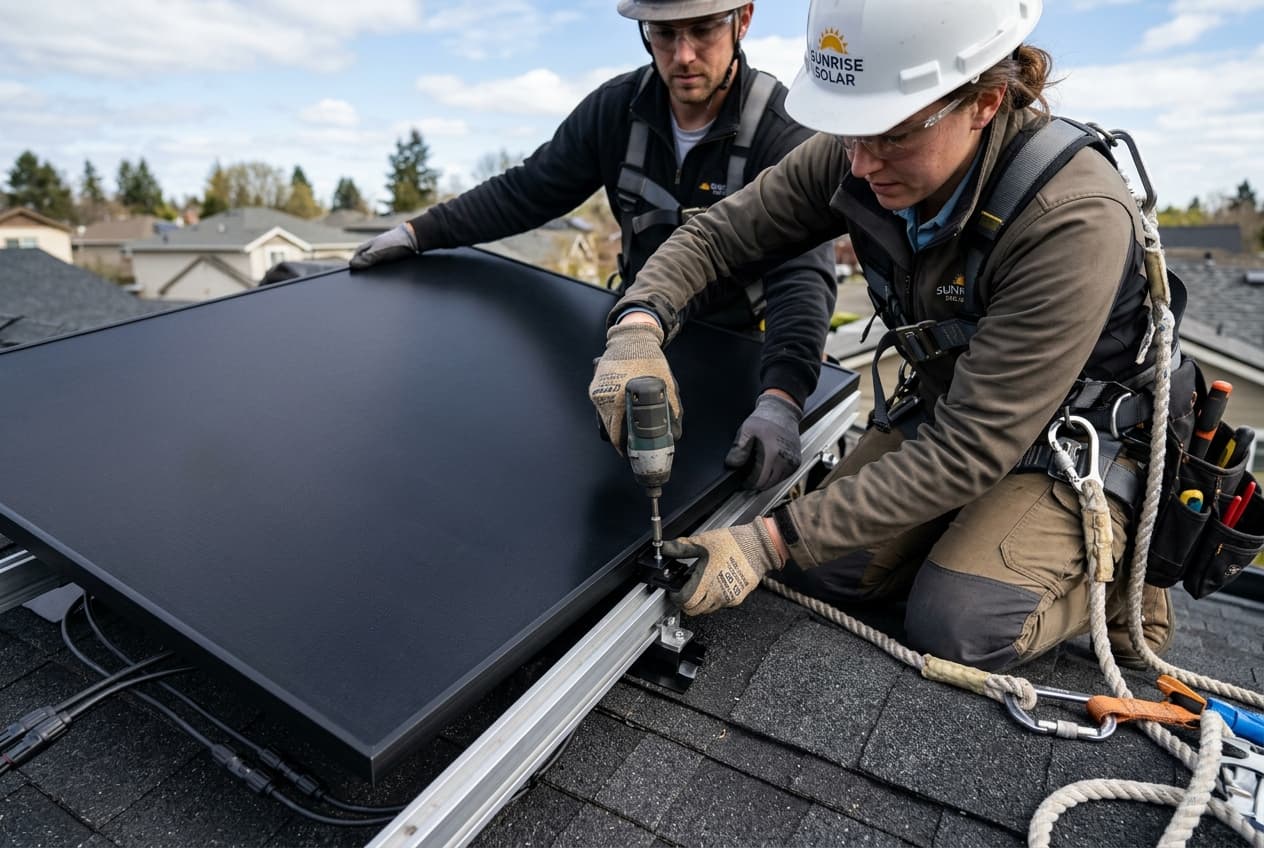
When the timing supports bundling, the project goes more smoothly when sequencing is set up correctly from the start.
- Pick the lead trade. Either the roofer coordinates the solar installer, or vice versa. One point of accountability matters more than which trade holds it.
- Confirm both scopes before either starts. The solar installer needs to give the roofer the array layout, mount positions, and flashing specifications before the roof job begins. This is the single most common bundling failure: the roof goes on, then the solar installer shows up and drills new penetrations into a brand-new roof.
- Install mounts during the roof job. The roofer flashes in the mount feet using the manufacturer’s solar flashing kit while the roof is being installed. The solar installer then bolts the racking to the pre-flashed mounts later. This sequence preserves the shingle warranty and eliminates leak risk at every penetration.
- File two permits. Massachusetts requires separate permits for the roof and the solar array (the solar permit is combined building + electrical). A coordinated team handles both filings, but they remain distinct documents.
- Plan a 4–6 week window. Materials ordering, permitting, and scheduling for both trades typically requires 4–6 weeks lead time. Tighter timelines are possible but increase the chance of a gap between roof completion and solar install.
- Document everything. Photos of mount flashing during install, materials receipts, both permit closings, manufacturer registration of the shingle warranty. This file becomes your insurance if anything fails later.
Common mistakes to avoid
The same mistakes show up over and over on retrofitted solar projects in Massachusetts. The short list:
- The “wait and see” install. Putting solar on a 17-year-old roof with the assumption you’ll deal with the roof “in a few years” — and then dealing with it three years later for $9,000 in remove-and-reinstall costs.
- Skipping the pre-install layout coordination. Roofer finishes the new roof. Solar installer shows up two months later and drills 24 new penetrations. Now the shingle warranty has 24 voided spots.
- Using non-approved flashing or sealant. Generic mount flashing or the wrong sealant is the fastest way to void the shingle warranty around every mount foot.
- Skipping permits on either project. Voids your homeowner’s insurance coverage on the affected work. Comes up at sale time when the buyer’s inspector pulls permit records and finds nothing.
- Hiring contractors who don’t know the other trade. A roofer who doesn’t know solar mounting specs will install the wrong flashing. A solar installer who doesn’t know shingle warranties will void coverage without realizing.
- Not budgeting for the combined scope. A new roof and solar together is $35,000–$55,000 in MA in 2026. Going in with only solar financing in mind is a budget shock waiting to happen.
- Treating bundling savings as the deciding factor. The $3,000–$5,000 bundling savings is real but small relative to the total project. Don’t let it pressure you into replacing a roof that doesn’t need replacing yet.
“If you remember one thing: don’t pay for the same roof labor twice. Get the timing right, and the rest of the decisions get easier.”
Global Roofing field team — bundled project consultations
Frequently asked questions
Should I replace my roof before installing solar panels?
If your roof has fewer than 10 years of useful life left, replace it first. Solar panels last 25–30 years, and removing and reinstalling an array mid-life costs $3,800–$12,500 on top of the roof itself. If your roof is under 10 years old and in good condition, you’re generally fine to install solar without replacing. Anything in between is a judgment call based on remaining life, condition, and how long you plan to stay in the home.
How much does it cost to remove and reinstall solar panels for a reroof?
Removing an existing solar array, replacing the roof, and reinstalling the panels typically runs $3,800–$12,500 on top of the roof replacement itself. The range depends on system size, panel type, and whether the racking can be reused. You also lose solar production during the downtime — typically 1–3 weeks.
Does installing solar panels void my roof warranty?
Not automatically — but it can. Major shingle manufacturers allow solar mounting if it follows their specifications: approved flashing details around mount feet, proper sealants, and no penetrations through structural components. Improper installation, or installation on a roof older than 15 years, can void coverage on the affected area. Use an installer experienced with your shingle brand and document the install.
Is the federal solar tax credit still available in 2026?
The residential federal solar tax credit (Section 25D) ended for systems placed in service after December 31, 2025. Homeowner-owned systems installed in 2026 no longer qualify for the 30% credit. The business-side credit (Section 48E) remains available through 2027, which means third-party-owned solar — leases and power purchase agreements — can still pass through tax-credit value. Confirm current rules with your tax professional before signing.
How much do you save by bundling roof replacement and solar installation?
Combined roof + solar projects typically save $3,000–$5,000 versus doing them separately. Savings come from a single mobilization, coordinated scheduling, integrated mounting, and (often) bundled financing. The largest single savings is avoiding the future remove-and-reinstall cost if your roof reaches end of life mid-array.
What is the MA SMART program?
Solar Massachusetts Renewable Target (SMART) is the state’s solar incentive program, administered by the Department of Energy Resources. Residential systems receive a flat per-kilowatt-hour incentive (currently around $0.03/kWh, $0.06/kWh for income-qualifying households) for a 20-year term, in addition to net metering credit on your utility bill. SMART rates step down over time, so the program rewards earlier installation.
Do I need a separate permit for solar if I’m replacing the roof?
Yes. Even when bundled, the roof replacement and solar installation each require their own permit in Massachusetts — a building permit for the roof and a combined building/electrical permit for the solar array. A coordinated contractor handles both filings, but they remain separate documents.
How we wrote this guide
This guide was researched against U.S. Department of Energy and NREL solar economics data, the MA Department of Energy Resources SMART program documentation, IRS guidance on residential and business solar tax credits (Sections 25D and 48E), and published mounting and warranty specifications from CertainTeed and Owens Corning. It was reviewed for technical accuracy by a licensed Massachusetts roofing contractor on the Global Roofing team. See our full editorial process for how we research, write, and update every guide.
Sources
- Massachusetts Department of Energy Resources — Solar Massachusetts Renewable Target (SMART) program documentation and current rate blocks. mass.gov
- Internal Revenue Service — Residential Clean Energy Credit (Section 25D) and Energy Credits guidance. irs.gov
- National Renewable Energy Laboratory (NREL) — U.S. Solar Photovoltaic System and Energy Storage Cost Benchmark, residential cost analysis.
- U.S. Department of Energy — Homeowner’s Guide to Going Solar. energy.gov
- Massachusetts net metering rules and utility tariff references — MA Department of Public Utilities. mass.gov
- CertainTeed — Roofing warranty documentation for asphalt shingle roofs. certainteed.com