

Key Takeaways
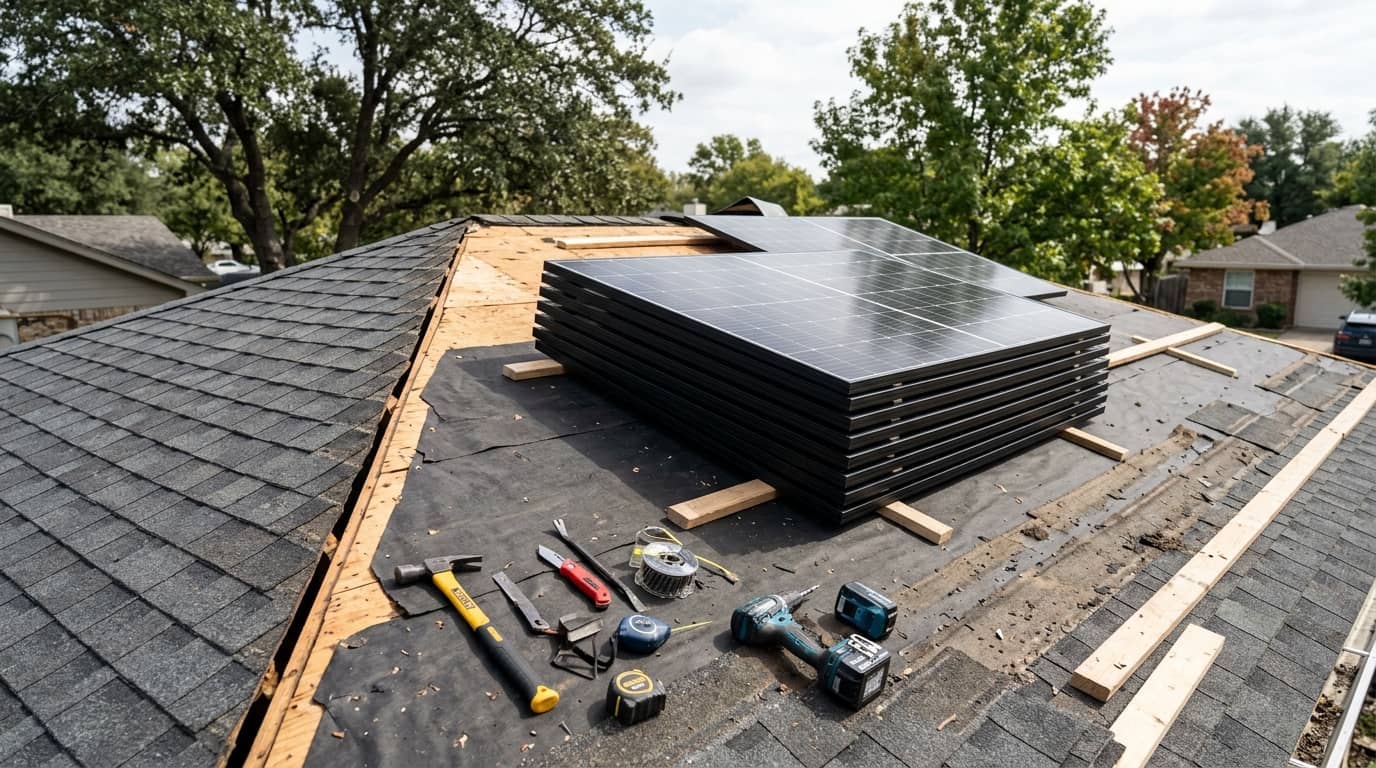
- If a roof under an existing array needs replacing, the panels are detached, removed, stored, and then reinstalled — a remove-and-reinstall, or R&R.
- Panels in good condition are usually reused; racking and worn hardware may be replaced, and the layout can change.
- R&R is pure added cost on top of the roof — labor paid a second time, plus downtime without production and some handling risk to older panels.
- It’s the exact scenario you avoid by replacing an aging roof before the panels go on.
What happens to the panels?
If you already have solar and the roof underneath reaches the end of its life, the panels don’t stay put while the roof gets replaced — they can’t. The array has to come off so the roofer can tear off the old roof and install the new one, and then it goes back on. The industry calls this a remove-and-reinstall, or R&R.
It’s a routine job for a coordinated roofing-and-solar team, but it isn’t free, and it isn’t instant. Understanding what’s involved is also the clearest argument for getting the sequence right in the first place — which is why the main solar-and-roofing guide and our piece on putting solar on an old roof both push so hard on timing.
How remove-and-reinstall works
An R&R is a coordinated handoff between a solar crew and the roofing crew. The basic sequence:
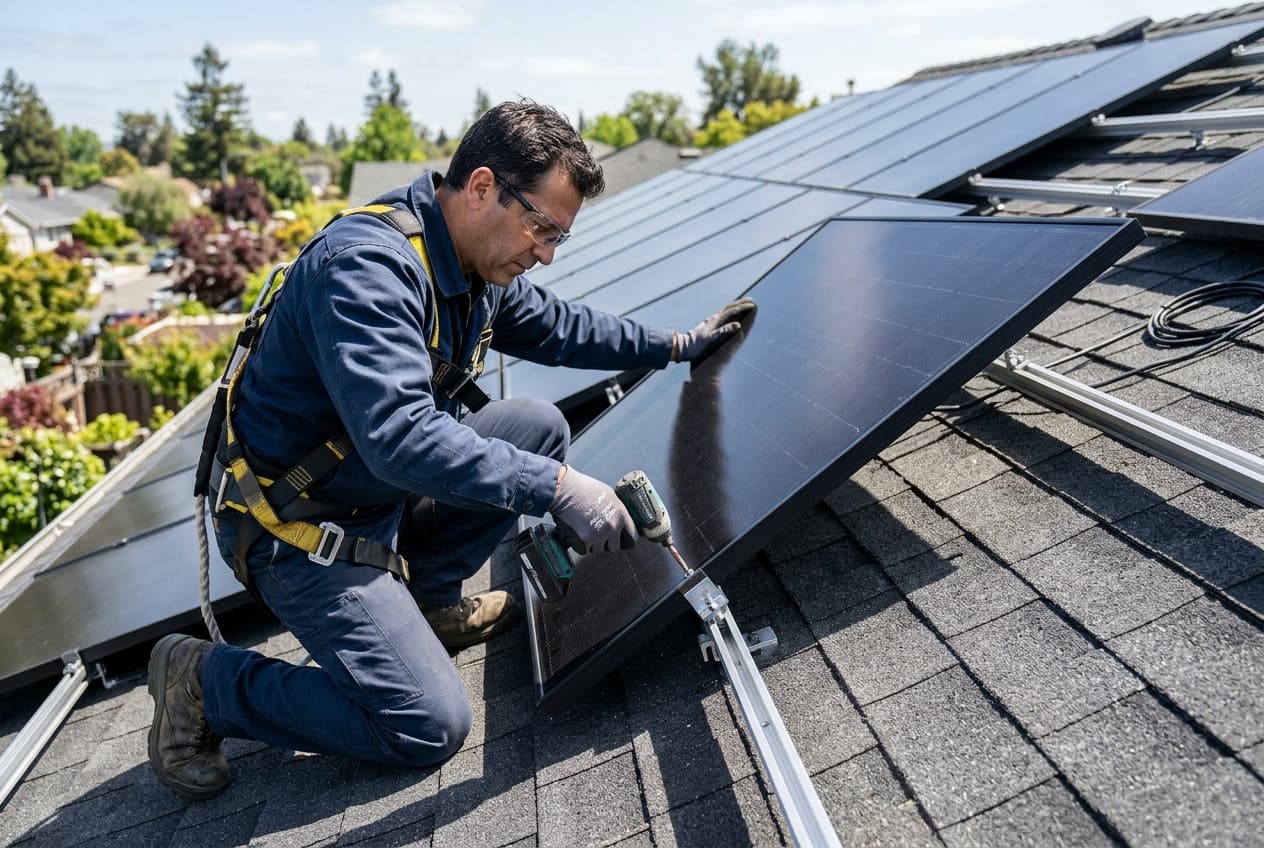
- Disconnect and detach. A qualified solar crew shuts the system down, disconnects the electrical, and removes the panels and racking from the roof.
- Store safely. The panels are set aside on site, protected from damage while the roof work happens.
- Replace the roof. The roofer tears off the old roof and installs the new one — ideally flashing in fresh mounting points to spec, so the panels reattach cleanly.
- Reinstall and recommission. The solar crew remounts the array, reconnects it, and brings the system back online.
Because two trades are involved, scheduling them together is the whole game — the panels can only come off and go back on around the roof work. A single point of accountability across both keeps the gap between “system off” and “system back on” as short as possible.
Can you reuse your panels?
In most cases, yes. If the panels are in good working order, they’re typically reinstalled on the new roof — there’s no need to buy a whole new array just because the roof changed. That said, a few things are worth confirming up front:
- Racking and hardware are sometimes replaced, especially if they’re worn or the new layout differs.
- Older panels are more fragile to handle, so careful removal matters more the older the array is.
- Output guarantees on a reinstalled array vary — some installers won’t warranty re-mounted panels at their original output spec, so ask before the work starts.
Get the roof number first
The R&R rides on top of a roof replacement. Our Cost Calculator gives you a realistic replacement range for your home in about a minute, so you can see the base cost before the panel work. Free, no signup.
Open the Cost CalculatorWhat drives the added cost
An R&R is an extra cost stacked on top of the roof replacement itself — and unlike the roof, there’s no single number for it, because it depends on the job. The factors that move it:
- Array size. More panels means more to detach, store, and remount.
- How it’s mounted. The racking system and roof complexity affect the labor.
- Panel age and fragility. Older arrays need more careful handling and are likelier to need hardware replaced.
- Downtime. While the system is off, it isn’t producing — a stretch of lost solar savings on top of the labor.
The thing to hold onto is why this cost exists at all: it’s labor being paid a second time for mounting work the original install already covered. That’s exactly the expense you sidestep by replacing a tired roof before the panels go up. It also keeps an aging roof from quietly undercutting the array’s value at resale — see does adding solar increase your home’s value. For current dollar ranges on an R&R, the main guide keeps those up to date.
“A remove-and-reinstall is straightforward work, but it’s money for nothing — you’re paying a crew to take down an array that was mounted perfectly well, just on a roof that ran out of life. If we’d replaced that roof first, the panels would have gone up once. That’s the whole argument for checking the roof’s age before you ever go solar.”
Global Roofing field team — Massachusetts in-home estimates
Frequently asked questions
What happens to solar panels when you replace your roof?
The array is detached and removed before the roof work, stored safely, then reinstalled on the new roof — a remove-and-reinstall (R&R). It’s coordinated between the roofer and a solar crew, and it adds time, cost, and downtime without production.
Can you reuse your existing solar panels on a new roof?
Usually yes — panels in good condition are typically reinstalled. Racking and worn hardware may be replaced, and older panels need careful handling. Confirm any output guarantee on the reinstalled array before the work starts.
How much does it cost to remove and reinstall solar?
It varies with array size, mounting, panel condition, and whether hardware is replaced — so there’s no flat figure. What’s certain is it’s an added cost on top of the roof, plus lost production while the system is down. The main guide carries current ranges.
Who removes the solar panels when replacing a roof?
A qualified solar crew handles the array and its electrical connections, coordinated with the roofing contractor. The two trades are scheduled together so the panels come off before the roof work and go back on after.
How we wrote this guide
This article reflects how Global Roofing’s licensed Massachusetts crews coordinate roof replacements on homes with existing solar, alongside standard remove-and-reinstall practice. It’s explanatory — the actual cost and timeline depend on your array and roof, and current dollar ranges live in the main solar-and-roofing guide. Reviewed by our team. See our full editorial process for how we research and update every article.
Sources
- U.S. Department of Energy — Homeowner’s Guide to Going Solar (system maintenance and roof considerations). energy.gov
- Global Roofing field coordination of roof replacements on homes with existing solar arrays.