

Key Takeaways
- Two quotes for “the same roof” usually aren’t the same roof at all — they describe different materials, a different scope, and a different crew behind the work.
- The price gap almost always lives in the materials and the scope — a premium shingle versus a builder-grade one, new flashing versus reused, a ventilation upgrade versus none.
- It’s rarely the labor. Roofing is close to a fixed-cost trade, so an honest crew costs about the same everywhere. A much lower price means lighter value, not cheaper hands.
- Level the quotes before you compare them: ask each contractor to describe the same materials and the same scope, then weigh the price that’s left.
Why don’t two roofing quotes for the same roof match?
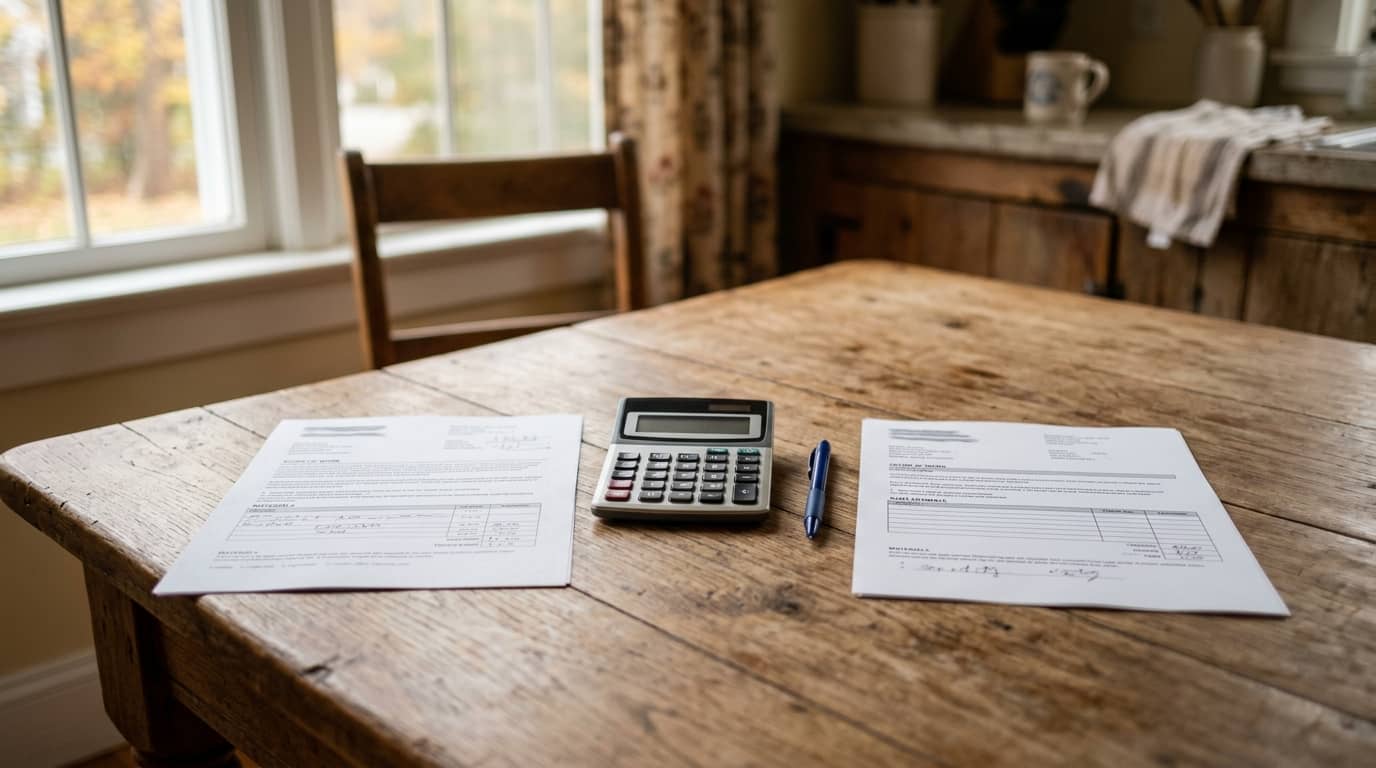
Two quotes for the same roof come back thousands of dollars apart because they aren’t pricing the same roof. They’re pricing different versions of it. One contractor specs a premium architectural shingle, synthetic underlayment, new flashing at every chimney and wall, a ventilation upgrade, the permit, and a full cleanup. Another quotes the lightest version that still gets called “a new roof” — a builder-grade shingle, felt instead of synthetic, the old flashing reused, ventilation left alone.
From the curb, both finish as a roof. On paper, they’re different products at different prices. The number that looks like a discount is usually a smaller roof.
This is the whole reason comparing roofing quotes the right way means comparing value first and price second. Until you can see what each price actually buys, the numbers don’t mean anything next to each other.
Where does the price gap actually live?
When two quotes diverge, the difference almost always traces back to a handful of places. These are the ones to check first:
- The shingle tier. A premium architectural line costs more than a builder-grade three-tab, and it carries a different look, wind rating, and warranty. “Architectural shingles” with no brand or line named hides which one you’re getting.
- A complete system versus a partial one. A roof is layered — underlayment, ice-and-water shield, flashing, drip edge, pipe boots, ventilation. The cheaper quote often reaches its number by leaving layers out.
- New flashing versus reused. Flashing is the most common leak point on a roof. Replacing it costs material and labor; reusing the old metal saves both — and shows up as a lower price that fails sooner.
- Ventilation. A proper intake-and-exhaust plan costs money and protects the roof’s life. Skipping it is cheaper today and can void the manufacturer warranty later.
- What’s left undescribed. The permit, decking repairs if rot is found, property protection, cleanup with a magnetic nail sweep — leave them off the quote and they become surprise costs mid-project.
For the full breakdown of what a complete quote should spell out — and what a vague one tends to hide — see what should be included in a roofing estimate.
Find the gap between your quotes
Our Quote Comparison Tool lines up two or three estimates so you can see, line for line, what each one includes — and where the price difference is actually coming from.
Open the Quote Comparison Tool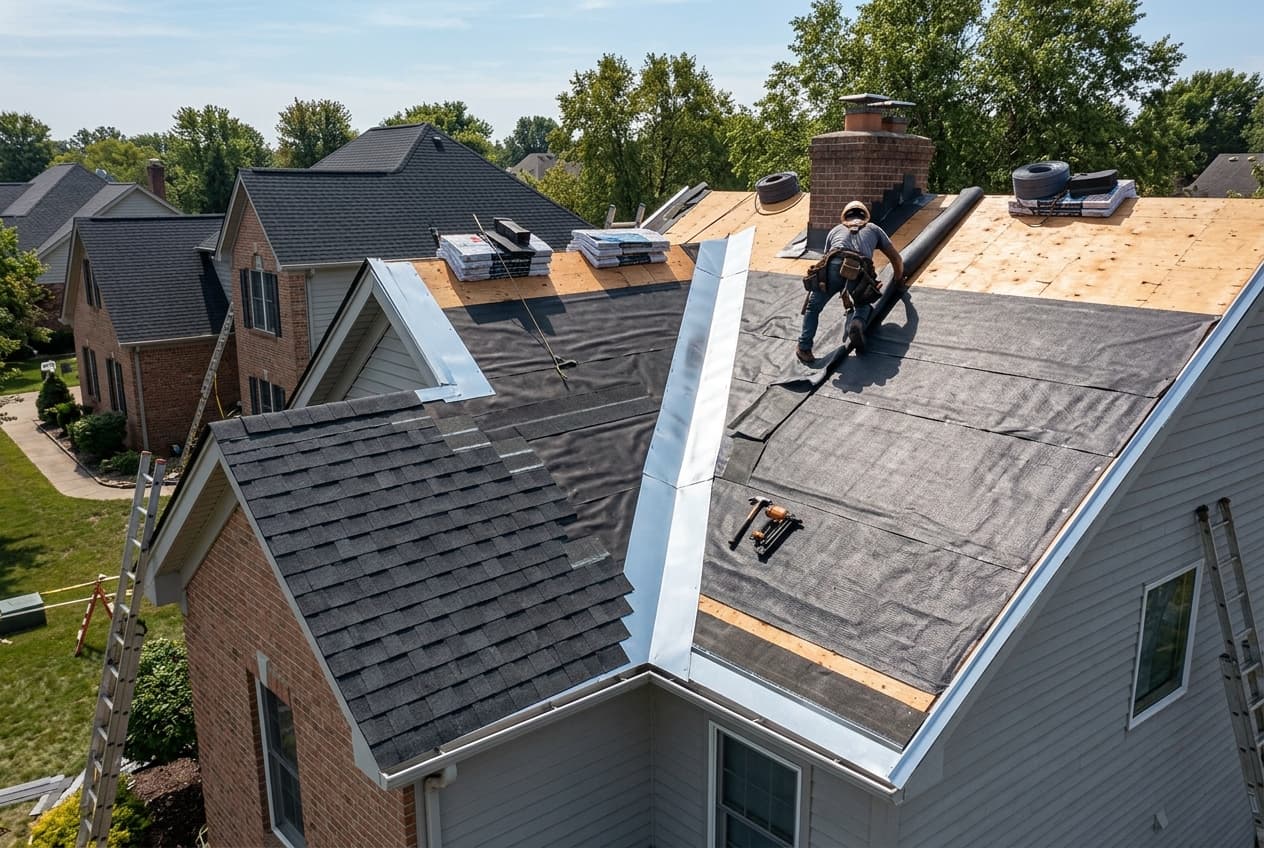
Why is the difference rarely the labor?
Most homeowners assume a higher quote means the crew charges more per hour. It almost never does. Roofing is close to a fixed-cost trade: the materials sell at similar prices, and an honest, experienced crew costs roughly the same from one reputable company to the next. In Massachusetts, roofing labor runs about 15% above the national baseline — but that’s true for every contractor quoting your roof, so it doesn’t explain a gap between two of them.
So when one quote is thousands less, the money came out of the materials or the scope — not the labor rate. A lower price built on a thinner shingle and reused flashing isn’t a deal. It’s a different roof that will need attention sooner.
“When a homeowner asks why our number is higher than the one next to it, we don’t talk about labor. We read the two proposals together and point to what’s on ours that isn’t on theirs — the named shingle, the new flashing, the ventilation. That’s the gap, every time.”
Global Roofing field team — Massachusetts in-home estimates
How do you compare quotes that look so different?
You make them describe the same roof, then look at what’s left. The steps:
- Find the most complete quote. The one that names the shingle, spells out the full system, and lists the permit and cleanup is your baseline.
- Ask the lighter quotes to match it. Same shingle line, synthetic underlayment, new flashing throughout, a real ventilation plan, the permit, the cleanup. Get the revised number in writing.
- Now compare price. Once every quote describes the same roof, the difference that remains reflects crew quality, warranty depth, manufacturer certifications, and the company’s track record — the things actually worth paying for.
A quote that can’t or won’t match the scope is telling you something useful: it was never the same roof to begin with. For the deeper questions to put to each contractor before you decide, see what to ask a roofing contractor before hiring.
Frequently asked questions
Why are two roofing quotes for the same roof so different?
Because they don’t buy the same roof. One spells out a premium shingle, synthetic underlayment, new flashing, ventilation, and the permit; the other reuses flashing, skips ventilation, and leaves cleanup or the permit off. The gap is materials, scope, crew, and warranty depth — not the labor rate.
Is a cheaper roofing quote always lower quality?
Not always, but a much lower price almost always means something was downgraded or left out. Roofing costs about the same for every honest contractor, so a price well below the others usually points to thinner materials, a partial system, or work that comes back as a surprise charge later.
Should I ask roofers to match each other’s quotes?
Yes. Ask the lighter quotes to match the most complete one — same shingle line, synthetic underlayment, new flashing, a ventilation plan, the permit, and cleanup. Once every quote describes the same roof, the price that remains reflects the value you’re actually choosing between.
Why is the most expensive roofing quote not always the best?
A higher number only means more value if it’s backed by something — better materials, a more complete system, certifications, a longer workmanship warranty, or a stronger local track record. Read what the expensive quote describes. More roof is worth more; a bigger number on the same scope isn’t.
How we wrote this guide
This article reflects how Global Roofing scopes and prices real Massachusetts roofing projects, checked against National Roofing Contractors Association guidance on roofing systems and proposals and Massachusetts State Building Code (780 CMR) requirements for ice-and-water shield, flashing, and ventilation. It was reviewed for accuracy by a licensed Massachusetts roofing contractor on our team. See our full editorial process for how we research and update every article.